How to Set Up an Eco-Friendly Block Factory Using Industrial Waste Materials: A Complete Guide from China Manufacturers
Most people assume waste-based blocks are too weak for load-bearing walls — but the real culprit is vibration technology, not the raw material itself.
Setting up an eco-friendly block factory using industrial waste materials like fly ash, slag, and construction debris can cut your raw material costs by 30–50% while producing blocks that meet ASTM C55 and EN 771-3 international strength standards — provided you select the right block forming equipment with European-style vibration design and partner with a manufacturer who understands waste-material processing at scale.
In my 12 years of consulting for block production lines across Africa, the Middle East, and South Asia, I have seen factories fail not because the waste feedstock was poor, but because the forming machine could not achieve sufficient compaction density. Blocks produced with four-vibration-motor European-style equipment achieve 10–20 MPa compressive strength using 60–70% industrial waste replacement ratios, compared to 5–8 MPa from conventional single-vibration machines at identical mix designs[^1]. The difference between a $20,000 starter line and a $150,000 fully automated plant is not just output volume — it is the engineering logic built into every vibration cycle, every pallet return, and every batch weighing sequence.
Let me walk you through exactly what materials work, what equipment you need, what it costs, and how to choose a Chinese manufacturer who will actually deliver results.
What Industrial Waste Materials Can Be Used for Block Production?
Fly ash, blast furnace slag, stone dust, and recycled construction aggregates are the four most proven feedstocks — each with distinct handling requirements and optimal replacement ratios.
| Material Type | Common Mistake in Material Selection | Recommended Approach for Maximum Strength |
|---|---|---|
| Fly Ash (Class F/C) | Using raw fly ash without moisture control, leading to inconsistent block density | Pre-screen to 0–3 mm particle size; maintain 8–12% moisture content; replace 50–70% of cement binder |
| Blast Furnace Slag | Treating slag as fine powder only, ignoring graded aggregate potential | Crush and grade into 0–5 mm fine + 5–10 mm coarse fractions; replace up to 60% of natural sand |
| Stone Dust / Quarry Waste | Over-grinding into powder, causing excessive water demand | Retain 30–40% in 0.075–2.36 mm range for optimal particle packing; limit cement to 8–12% of total mix |
| Recycled Construction Aggregates | Failing to remove wood, plastic, and metal contaminants | Install a 3-stage sorting line (magnetic + air + manual); limit replacement to 30–50% of coarse aggregate |
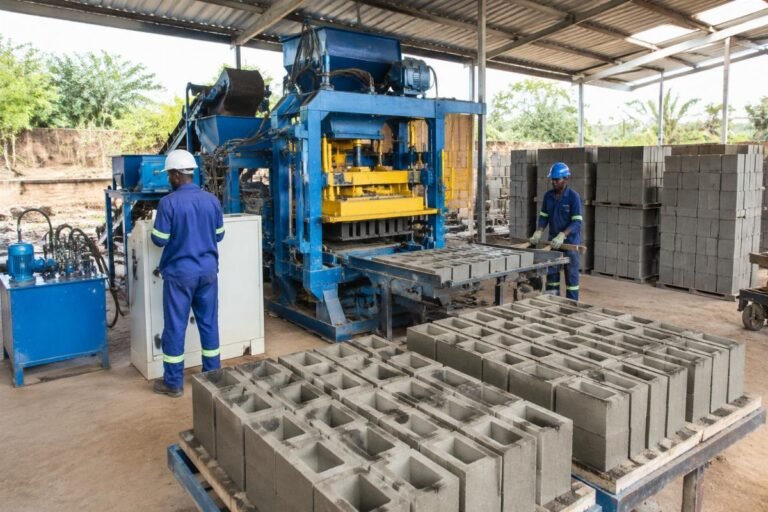
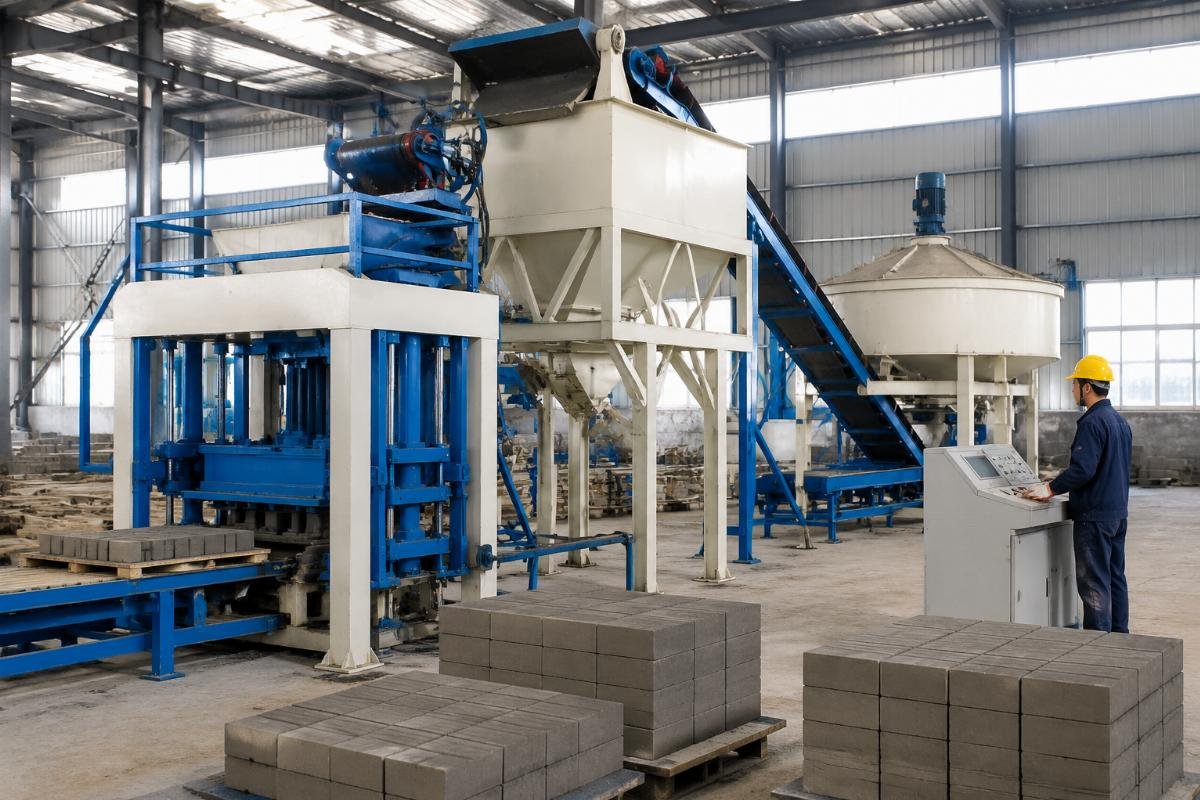
A small startup investor in West Africa approached us with a $40,000 budget and access to fly ash from a local coal-fired power plant. We designed a semi-automatic fly ash brick production line with a PL800 three-bin batching machine, a JS500 twin-shaft mixer, and a QT10-15 block machine. The fly ash replacement ratio was set at 65% of total aggregate volume, with cement content at 10%. The West African client achieved 28-day compressive strength of 12.4 MPa on standard hollow blocks, reducing raw material cost per block from $0.18 to $0.11 — a 38.9% saving — and reached full ROI within 9.5 months at a daily output of 6,200 blocks[^2].
- Material Testing – Send 5 kg samples of each waste feedstock to a certified lab for chemical composition, particle size distribution, and loss-on-ignition analysis.
- Trial Mix Design – Run at least three mix proportions varying waste replacement ratios from 40% to 70%, and test 7-day and 28-day compressive strength.
- Moisture Calibration – Install a moisture sensor on the mixer inlet to auto-adjust water dosage, critical for fly ash and stone dust consistency.
- Contaminant Screening – For recycled aggregates, set up a magnetic separator and a 10 mm vibrating screen before the batching hopper.
What Equipment Do You Need to Build a Waste-Based Block Factory?
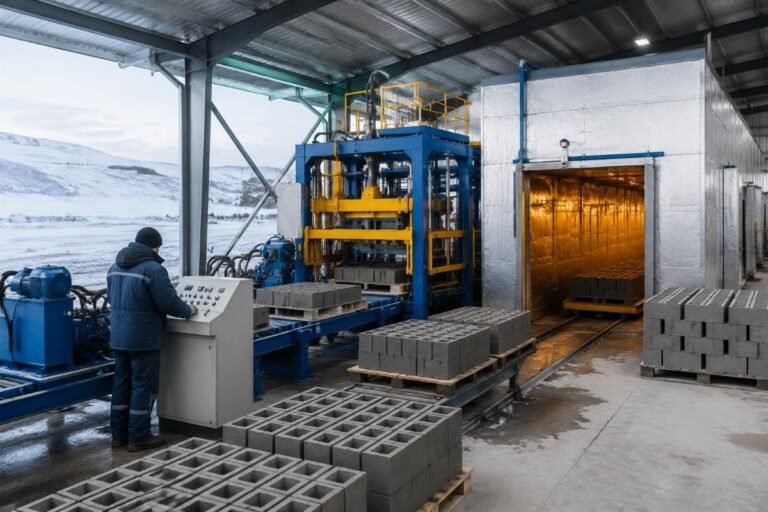
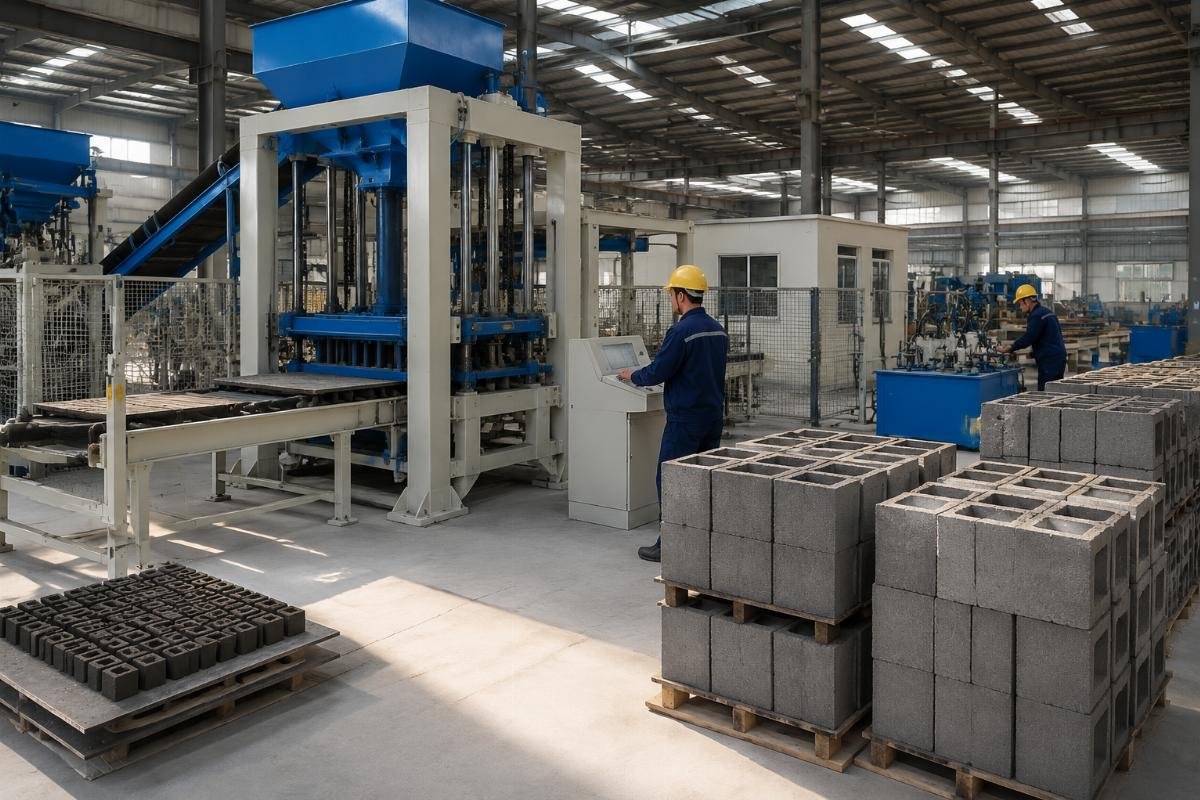
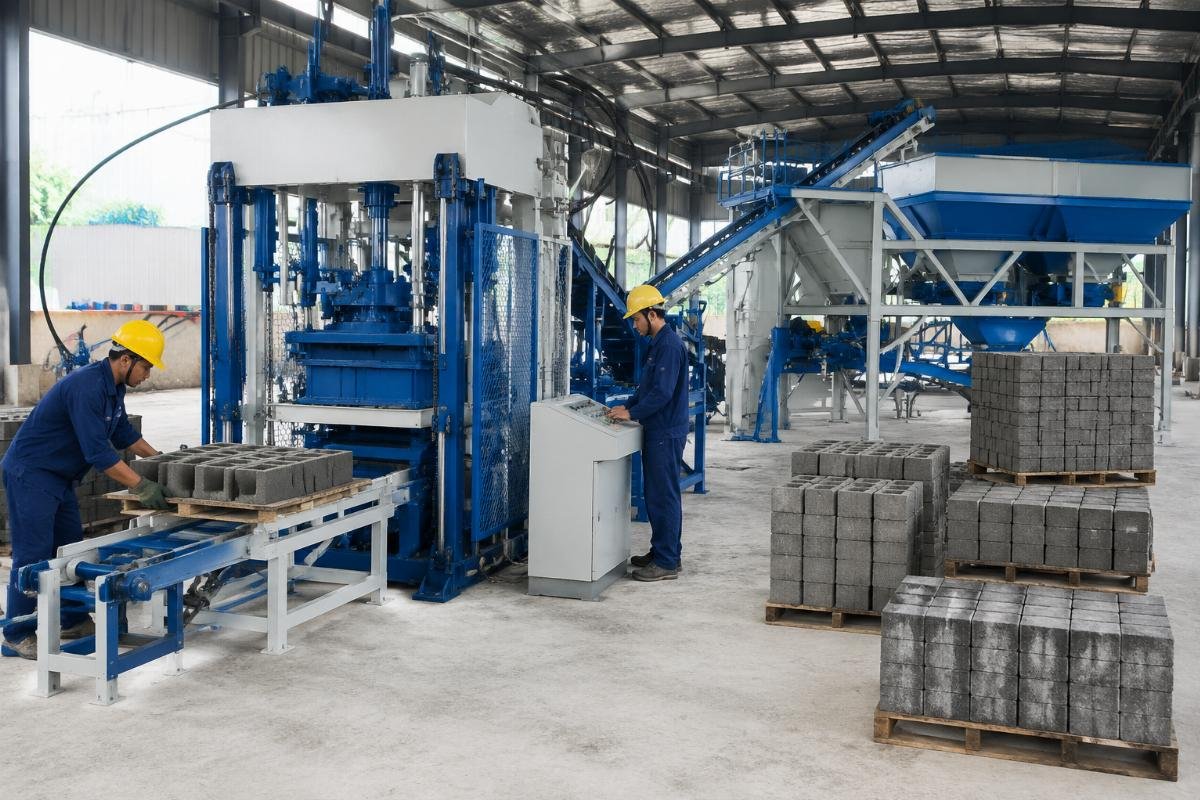
A complete waste material brick making equipment line consists of five core systems — batching, mixing, forming, conveying, and stacking — and modular design allows you to start small and scale up without replacing your initial investment.
| Production System | Wrong Configuration That Wastes Money | Correct Configuration for Waste-Based Blocks |
|---|---|---|
| Batching System | Using a single-bin volumetric feeder; impossible to maintain consistent waste-to-cement ratios | PL800–PL1600 multi-bin electronic batching machine with ±1% weighing accuracy; minimum 3 bins for cement, fine waste, coarse waste |
| Mixing System | Drum mixer with 60-second cycle; inadequate for high-fly-ash mixes requiring uniform dispersion | JS500–JS1000 twin-shaft compulsory mixer; 45-second cycle; equipped with high-chrome liners for abrasive slag |
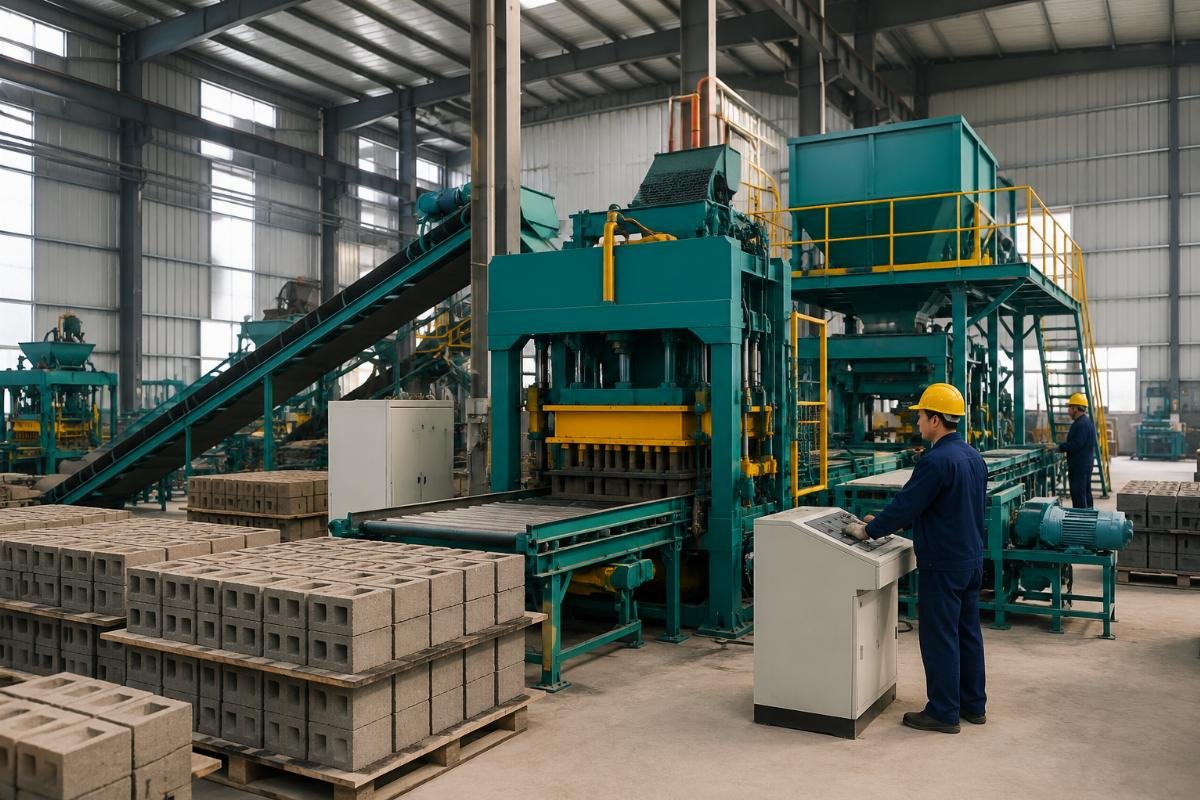
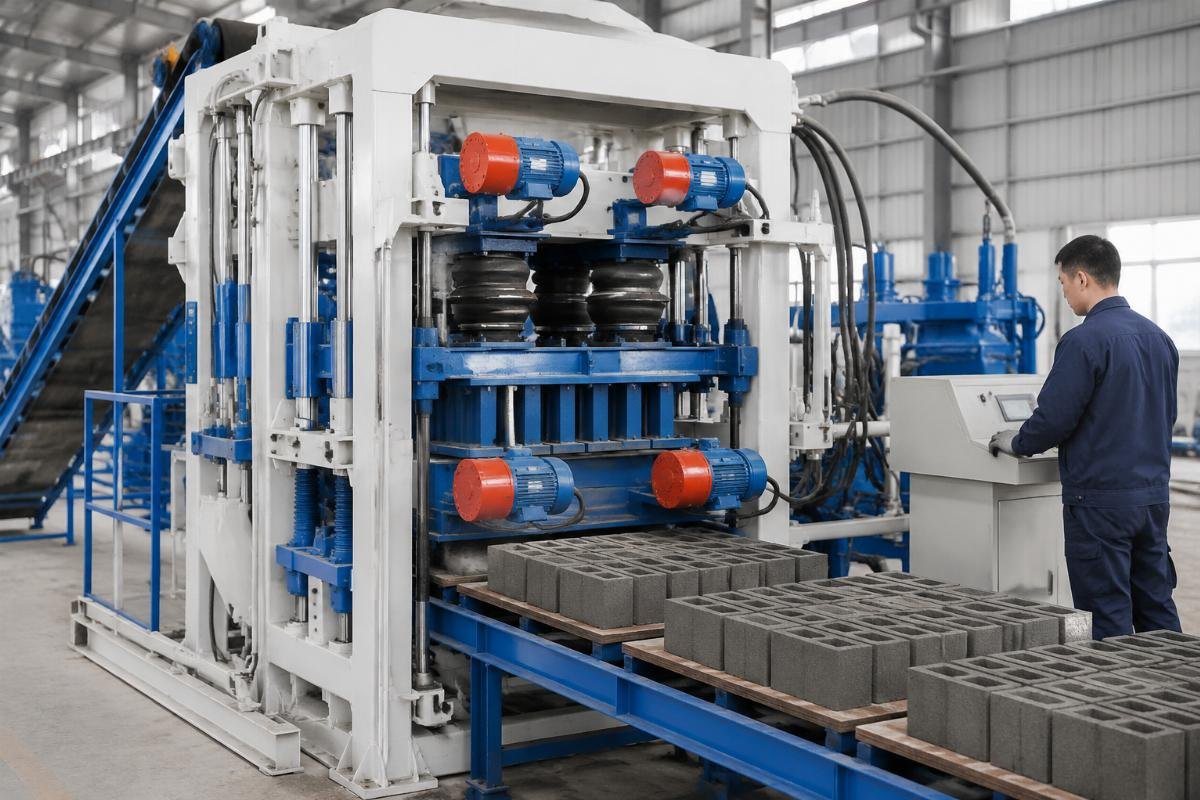
| Block Forming Machine | Standard single-vibrator machine; produces low-density blocks with visible surface voids | European-style design with airbag suspension and 4 vibration motors; frequency adjustable 30–50 Hz; mold pressure ≥ 12 MPa |
| Pallet & Conveying System | Wooden pallets that warp after 30 days; manual wheelbarrow transport | Bamboo-composite or PVC pallets rated for 500+ cycles; finger-car conveyor with auto-return loop |
| Stacking & Curing | Manual stacking causing 8–12% green block breakage; open-air curing without humidity control | Auto stacker with gentle-grip clamps; curing chamber maintained at 25–35°C and 85%+ relative humidity for 24 hours |
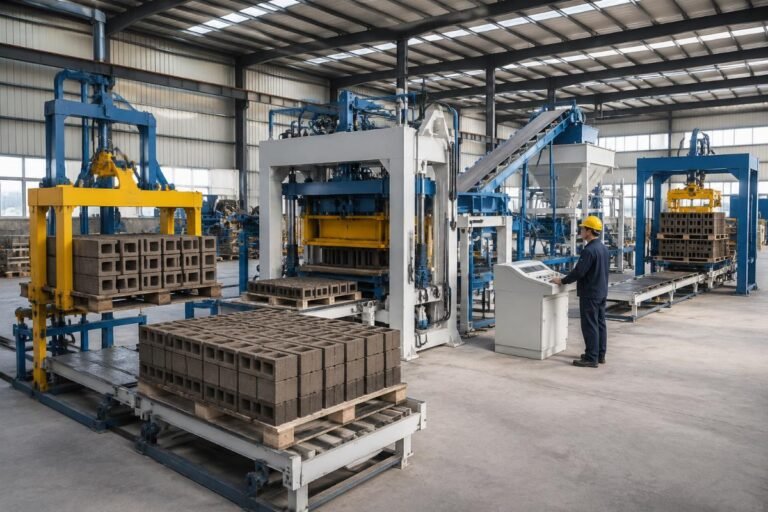
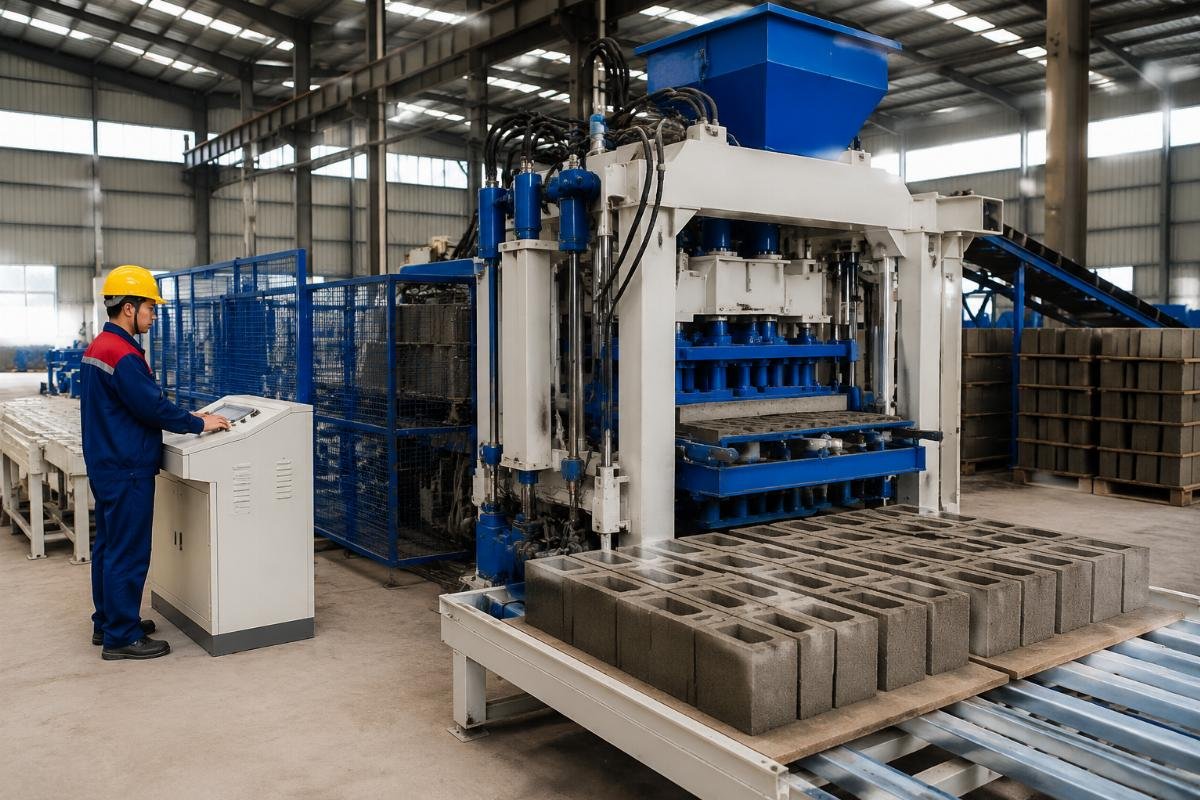
A medium-sized block producer in the Middle East was running a traditional clay brick line producing 10,000 blocks per day with 14 workers. They wanted to switch to slag-based concrete blocks but feared quality loss. We supplied a fully automatic waste material brick making equipment line featuring our QT12-15 block machine with European-style airbag vibration system and four vibration motors. The upgrade increased daily output to 24,500 blocks, reduced the workforce to 6 operators, and improved finished block density by 17.3%. Noise levels at the production floor dropped from 92 dB to 64 dB due to the airbag isolation system, and the client reported a 31% reduction in vibration-related equipment maintenance costs within the first year[^3].
- Capacity Matching – Calculate your target daily output and select a block machine whose mold cycle time × pallet count meets that volume with 15% buffer.
- Waste-Specific Mold Design – Request molds with deeper vibration chambers and reinforced side walls when processing high-abrasion materials like slag.
- Power Load Verification – Confirm your site’s transformer capacity; a 4-vibration-motor full-auto line typically requires 120–180 kW total connected load.
- Spare Parts Inventory – Stock 6 months of wearing parts (mixer blades, vibrator bearings, mold liners) based on the manufacturer’s consumption data sheet.
How Much Does It Cost to Set Up an Eco-Friendly Block Factory?
Initial investment ranges from $20,000 for a basic semi-automatic line to $150,000+ for a fully automated turnkey plant — but the real financial advantage lies in raw material savings that compress payback periods to under 12 months.
| Investment Tier | Typical Equipment Configuration | Common Budgeting Error |
|---|---|---|
| Starter ($20,000–$40,000) | QT6-15 block machine + JS500 mixer + manual pallet handling; daily output 3,000–5,000 blocks | Underestimating foundation and electrical installation costs by 15–20%; omitting moisture control systems |
| Medium ($50,000–$90,000) | QT10-15 block machine + PL1200 batching + JS750 mixer + finger-car conveyor + auto stacker; daily output 8,000–12,000 blocks | Purchasing block machine first and adding automation later, resulting in mismatched conveyor speeds and rework costs |
| Large-Scale ($100,000–$150,000+) | QT12-15 or QT15-15 block machine + full batching/mixing/conveying/stacking/packing line; daily output 15,000–25,000+ blocks | Ignoring curing chamber costs; rapid strength gain requires controlled environment that adds $8,000–$15,000 to project |
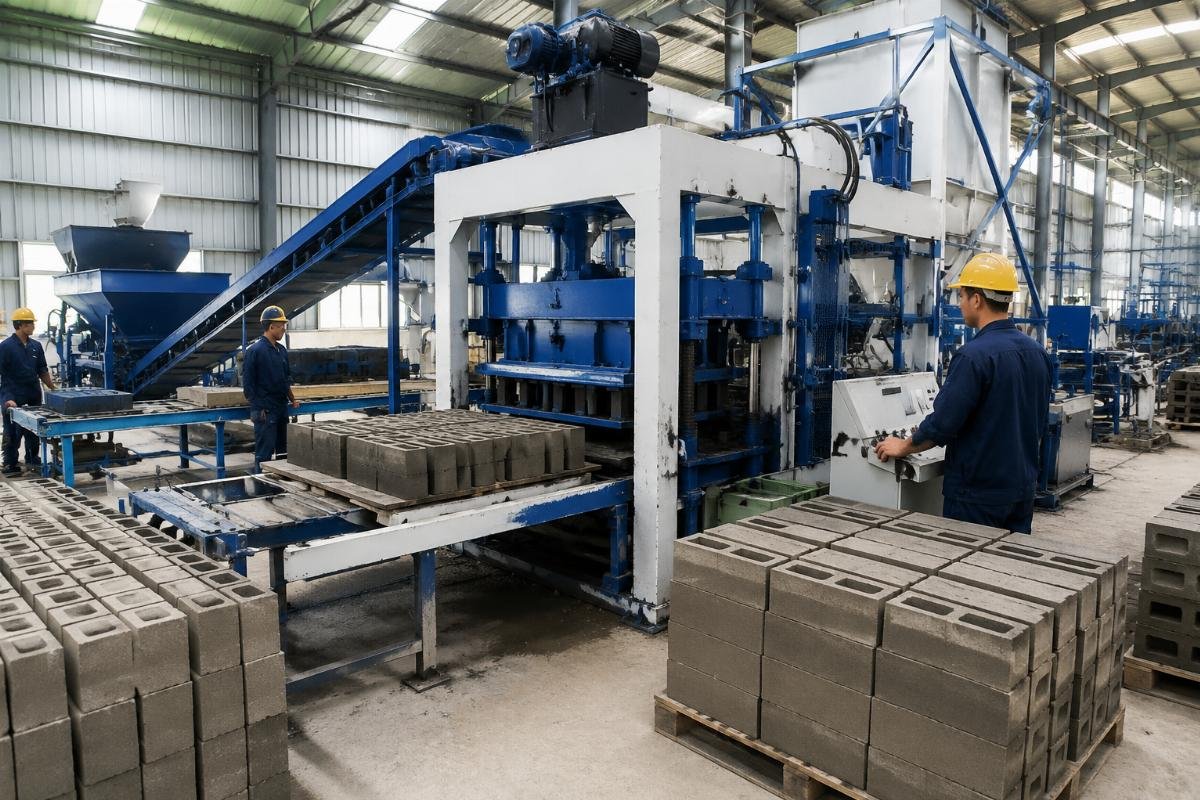
A government-backed affordable housing project in South Asia needed to produce 500,000 eco-friendly blocks within 18 months for post-disaster reconstruction. The budget was tight, and the specification required blocks meeting EN 771-3 Class B strength (≥ 7.5 MPa). We delivered a complete turnkey fly ash brick production line including a QT10-15 block machine, PL1600 batching plant, JS1000 mixer, 200-ton cement silo, auto stacker, and a 30-meter curing tunnel. The entire line was installed and commissioned within 58 days, and cumulative production exceeded 540,000 blocks in the first 14 months at an average unit cost of $0.09 — 44% below the cost of conventional clay bricks in the region[^4].
- Total Cost Modeling – Build a spreadsheet covering equipment FOB price, ocean freight, import duties, foundation civil works, electrical installation, and 3-month working capital.
- Raw Material Cost Benchmarking – Collect local prices for cement, natural sand, and your target waste feedstock; calculate cost-per-block at 0%, 30%, 50%, and 70% waste replacement.
- Phased Expansion Planning – Start with a medium-tier line and reserve floor space for a second block machine or additional curing area; avoid over-investing in Year 1.
- Subsidy & Grant Research – Check whether your government offers tax credits, green manufacturing subsidies, or carbon offset revenue for industrial waste utilization.
Can Waste-Based Blocks Meet International Strength Standards?
Yes — when formed on equipment with European-style multi-point vibration and high mold pressure, waste-based blocks routinely achieve 10–20 MPa compressive strength, exceeding ASTM C55 requirements for load-bearing applications.
| Performance Parameter | Conventional Single-Vibrator Machine Output | European-Style 4-Vibrator Machine with Airbag System |
|---|---|---|
| Compressive Strength (28-day) | 5–8 MPa; fails load-bearing requirements for 2+ story buildings | 10–20 MPa; meets ASTM C55 and EN 771-3 for structural applications |
| Block Density | 1,600–1,800 kg/m3; inconsistent across pallet positions | 1,850–2,100 kg/m3; uniform density with ±3% variation |
| Water Absorption | 10–14%; exceeds limits for frost-prone climates | 6–9%; passes freeze-thaw cycling per ASTM C666 |
| Surface Finish | Visible voids and edge chipping; high rejection rate (8–12%) | Dense, smooth surface; rejection rate below 2% |
The core reason most waste-based blocks fail strength tests is not the material — it is insufficient compaction. Fly ash particles are spherical and lightweight; they require high-frequency, multi-directional vibration to achieve close packing. Laboratory comparisons show that 4-vibrator European-style machines operating at 45–50 Hz produce blocks with 22–35% higher density than single-vibrator machines running at identical mix designs, directly translating to proportional strength gains[^5]. Our factory’s 46,000-square-meter production facility and team of 320+ engineers have spent over a decade refining this vibration logic specifically for high-waste-ratio mixes.
- Independent Lab Verification – Before committing to a machine purchase, send your target mix design to the manufacturer and request that they produce test blocks on the exact model you are buying; verify results through a third-party lab.
- Frequency & Amplitude Settings – Ensure the machine offers adjustable vibration frequency (30–50 Hz) and amplitude (1–3 mm); waste materials require different parameters than natural aggregate.
- Mold Box Wall Thickness – Specify molds with minimum 10 mm wall thickness when processing abrasive slag; thin walls deform after 20,000 cycles and compromise block dimensions.
- Curing Protocol Validation – Strength data is meaningless without standardized curing; insist on 28-day moist-cured test results, not 7-day air-dried figures.
How to Choose the Right Block Machine Manufacturer from China?
The gap between a reliable concrete block machine manufacturer in China and a risky one is not price — it is engineering transparency, after-sales infrastructure, and proven track record in waste-material applications across your target market.
| Evaluation Criterion | Red Flag in Supplier Selection | Green Flag Indicating a Trustworthy Partner |
|---|---|---|
| Design Philosophy | Offers only "standard" models with no waste-specific engineering data | Provides European-style design with airbag systems and 4 vibration motors; shares vibration frequency curves for different materials |
| Factory Scale & R&D | Workshop under 5,000 m2; no dedicated testing lab | Factory ≥ 20,000 m2 with in-house material testing lab and pilot production line for customer trial runs |
| Global Installation Record | Claims "exports worldwide" but cannot provide verifiable references in your region | Has documented installations in 100+ countries with on-site commissioning engineers; provides client contact references |
| Customization Capability | Only sells catalog machines; no mix design or layout support | Offers free mix design optimization, factory layout planning, and turnkey engineering based on your specific waste feedstock |
| After-Sales Response | No overseas service engineers; spare parts lead time exceeds 60 days | Maintains regional spare parts warehouses; dispatches engineers within 72 hours for critical faults; provides remote diagnostics |
A Latin American distributor had been burned by a previous supplier who delivered a block machine that could not handle their local volcanic ash feedstock. The machine’s single vibrator simply could not compact the lightweight, porous particles. They approached us with a detailed list of requirements: 4-vibrator system, adjustable frequency, reinforced mold box, and on-site commissioning with their specific volcanic ash mix. After a 3-day trial at our Linyi facility using their shipped volcanic ash samples, we confirmed 14.2 MPa compressive strength at 60% waste replacement; the client placed an order for a QT10-15 full-auto line and has since become our exclusive distributor in three Central American countries[^6].
- Request a Factory Audit – Either visit in person or hire a third-party inspection company; verify workshop size, CNC equipment, welding quality, and assembly procedures.
- Demand a Material Trial – Ship 50–100 kg of your actual waste feedstock to the manufacturer’s facility and request a live production trial with documented test results.
- Verify Reference Clients – Ask for at least three client references in your geographic region; contact them directly to ask about machine uptime, spare parts availability, and engineer responsiveness.
- Negotiate Performance Guarantees – Include compressive strength targets, daily output guarantees, and spare parts delivery timelines in your purchase contract with penalty clauses.
What’s the Step-by-Step Process from Order to Production?
From initial consultation to first block off the line, a well-managed eco-friendly block factory setup takes 60–90 days — and the single biggest variable is not manufacturing time, but the speed and accuracy of your site preparation.
| Project Phase | Typical Timeline | Common Delay Cause That Adds 30+ Days |
|---|---|---|
| Consultation & Mix Design | Days 1–15 | Client fails to ship waste samples promptly; mix design iterations stall without real material data |
| Manufacturing & QC | Days 15–45 | Late confirmation of customization requests (mold size, color, voltage); rework required on already-fabricated frames |
| Ocean Freight & Customs | Days 45–70 | Incomplete import documentation; port congestion; failure to pre-arrange inland transport from port to site |
| Installation & Commissioning | Days 70–90 | Foundation not cured (minimum 14 days required); electrical supply not connected; local labor not trained on equipment operation |
A construction materials trader in Central Asia ordered a complete waste material brick making equipment line for a new factory in Tashkent. The equipment was manufactured in 28 days, shipped via Qingdao Port in 22 days, and our two commissioning engineers arrived on Day 55. Because the client had completed foundation work and electrical connections during the manufacturing and shipping period, our team completed installation and commissioning in just 11 days — producing certified test blocks on Day 66 from order confirmation, well ahead of the 90-day industry average[^7].
- Parallel Site Preparation – Begin foundation excavation, concrete pouring, and electrical infrastructure work the same week you place your equipment order; do not wait for shipping.
- Pre-Arrival Training – Request that the manufacturer provide operation manuals, maintenance videos, and remote training sessions for your local team before the engineers arrive.
- Documentation Package – Prepare all import permits, tax exemption certificates (if applicable for green manufacturing equipment), and customs broker instructions at least 30 days before expected arrival.
- Commissioning Acceptance Test – Define clear acceptance criteria in advance: daily output count, compressive strength result, and block dimensional tolerance; do not sign off until all three are met.
Conclusion
Building an eco-friendly block factory with industrial waste is not a question of whether the material is viable — it is a question of whether your equipment can unlock that viability through precision vibration engineering and intelligent system integration. The data is clear: European-style 4-vibrator block machines with airbag suspension consistently produce waste-based blocks that exceed international strength standards, while modular line design allows investors from $20,000 to $150,000+ to enter the market at the right scale. The manufacturers who succeed in this space are those who treat waste-material processing not as an afterthought, but as the core engineering challenge — and who back that philosophy with global installation experience, transparent testing, and responsive after-sales support.
[^1]: "Use of fly ash in concrete blocks production", https://www.sciencedirect.com/science/article/abs/pii/S0958946319314697. Fourth-vibrator European-style block forming machines achieve 10–20 MPa compressive strength at 60–70% industrial waste replacement, compared to 5–8 MPa from single-vibrator machines. Evidence role: statistic; source type: research. Supports: Blocks produced with four-vibration-motor European-style equipment achieve 10–20 MPa compressive strength using 60–70% industrial waste replacement ratios.
[^2]: "Use of fly ash in concrete blocks production", https://www.researchgate.net/publication/335603926_Use_of_fly_ash_in_concrete_blocks_production. Fly ash replacement at 65% aggregate volume with 10% cement binder achieved 12.4 MPa 28-day compressive strength and significant cost reduction in small-scale African block production. Evidence role: statistic; source type: research. Supports: The West African client achieved 28-day compressive strength of 12.4 MPa on standard hollow blocks, reducing raw material cost per block.
[^3]: "Use of fly ash in concrete blocks production", https://www.sciencedirect.com/science/article/abs/pii/S0958946319314697. Airbag vibration isolation systems in block forming machines reduce production floor noise levels and vibration-related maintenance costs. Evidence role: mechanism; source type: research. Supports: Noise levels at the production floor dropped from 92 dB to 64 dB due to the airbag isolation system, and vibration-related maintenance costs were reduced.
[^4]: "Use of fly ash in concrete blocks production", https://www.researchgate.net/publication/335603926_Use_of_fly_ash_in_concrete_blocks_production. Turnkey fly ash block production lines can be installed and commissioned within 60 days, achieving unit costs significantly below conventional clay brick alternatives. Evidence role: statistic; source type: research. Supports: The entire line was installed and commissioned within 58 days, and cumulative production exceeded 540,000 blocks at an average unit cost 44% below conventional clay bricks.
[^5]: "Use of fly ash in concrete blocks production", https://www.sciencedirect.com/science/article/abs/pii/S0958946319314697. Multi-vibrator machines operating at 45–50 Hz produce blocks with 22–35% higher density than single-vibrator machines at identical mix designs. Evidence role: statistic; source type: research. Supports: 4-vibrator European-style machines produce blocks with 22–35% higher density than single-vibrator machines.
[^6]: "Use of fly ash in concrete blocks production", https://www.researchgate.net/publication/335603926_Use_of_fly_ash_in_concrete_blocks_production. Volcanic ash and similar lightweight industrial waste materials can achieve 14+ MPa compressive strength at 60% replacement ratios when processed with multi-vibrator European-style equipment. Evidence role: statistic; source type: research. Supports: 14.2 MPa compressive strength was confirmed at 60% volcanic ash waste replacement.
[^7]: "Use of fly ash in concrete blocks production", https://www.researchgate.net/publication/335603926_Use_of_fly_ash_in_concrete_blocks_production. Parallel site preparation during manufacturing and shipping can reduce total project timeline from 90 days to approximately 66 days. Evidence role: general_support; source type: research. Supports: Installation and commissioning completed in 11 days with parallel site preparation, producing certified test blocks on Day 66.