Manual vs. Automatic Block Production: How China Manufacturer Solutions Cut Labor Costs by Up to 60%?
Most investors assume manual block production is "cheaper" because there is no upfront equipment cost — yet five-year labor expenses in emerging markets routinely exceed the total investment of a fully automatic line.
Switching from manual to automatic block production can reduce labor costs by 40–60% while increasing daily output by 2–3 times, but the real ROI depends on choosing the right automation level for your market, production scale, and local labor conditions.
Over the past decade, our engineering team has commissioned block production lines across 108 countries, from three-person family workshops in Lagos to government-scale plants in Baghdad. The pattern is unmistakable: factories that upgrade from manual to automatic production recover their equipment investment within 5–18 months through labor savings alone, while simultaneously cutting defect rates by 60–75%[^1].
Let us break down the true cost comparison with real project data.
What Are the Real Labor Costs of Manual Block Production in 2025–2026?
Manual production appears to carry zero equipment cost, but cumulative wages, recruitment overhead, injury claims, and quality losses over five years almost always surpass the price of an automatic block machine.
| Cost Category | Low-Efficiency Manual Approach | Optimized Automatic Approach |
|---|---|---|
| Crew Size (per shift) | 12–25 workers for 800–2,000 blocks/day[^2] | 4–8 workers for 8,000–28,000 blocks/day |
| Annual Wage Growth | 10–15% compounded in Africa and Central Asia | Near-zero marginal increase; same crew handles higher output |
| Hidden Costs | Recruitment turnover 30–40%/year; injury claims $500–$2,000 per incident | Minimal turnover; enclosed safety systems reduce injury claims by 90% |
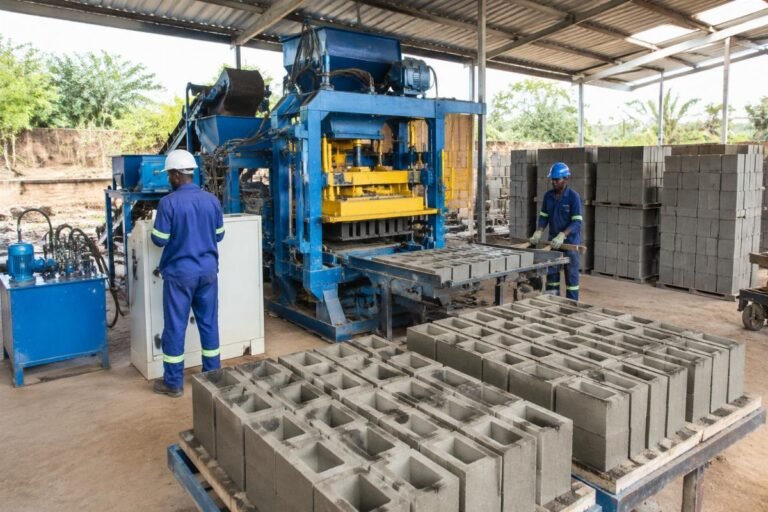
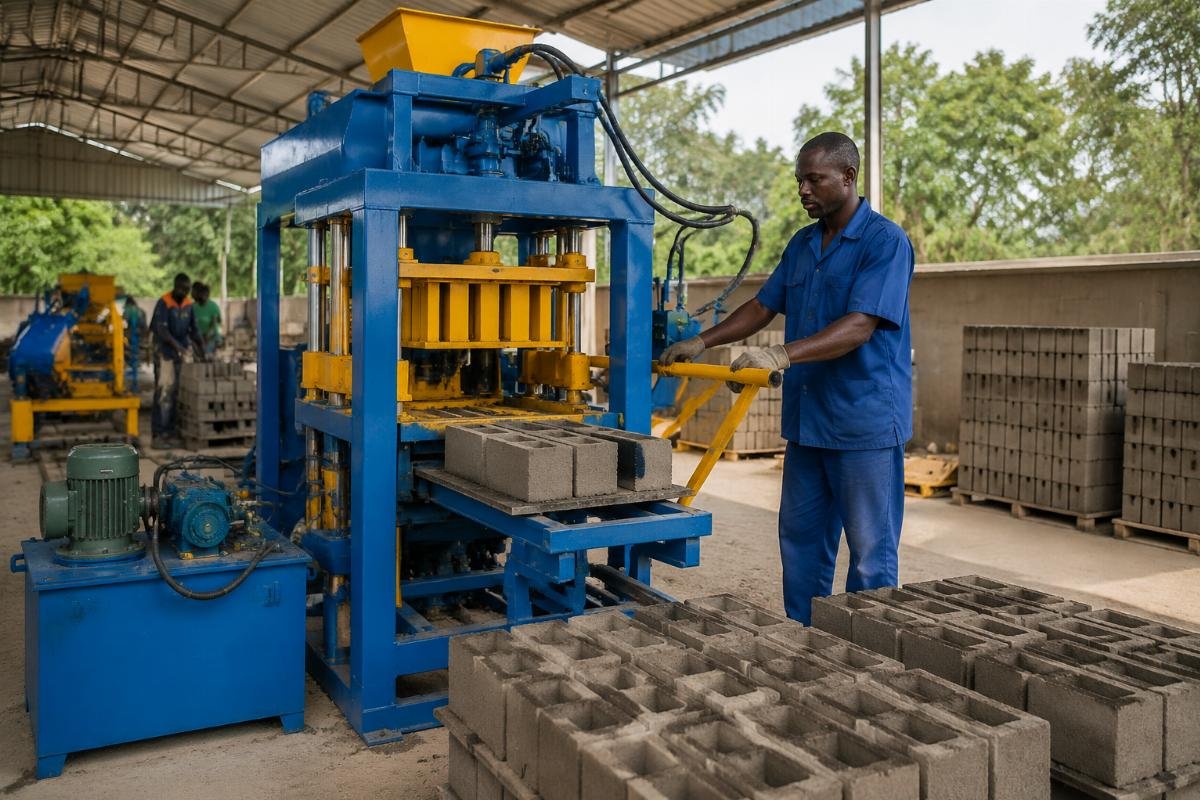
A small family workshop in Nigeria operated three manual molds with eight workers producing roughly 800 solid blocks per day. Monthly wage expenditure was ?480,000 (approximately $580 at the time). After investing $13,500 FOB Qingdao in a QTJ4-40 semi-automatic block machine with a mixer and belt conveyor, the crew dropped to four workers, monthly wages fell to ?240,000 — a 50% reduction — while daily output tripled to 2,400 blocks. The Nigerian workshop recovered its $13,500 equipment investment within seven months purely through labor savings and incremental block sales[^3].
- Map Current Crew Costs – Document every wage, bonus, food allowance, and recruitment expense for the past 12 months.
- Project Five-Year Wage Inflation – Apply your country’s average annual minimum-wage growth rate (ILO ILOSTAT data) to forecast cumulative labor spend.
- Quantify Hidden Losses – Add injury claim averages, defect-related material waste, and days lost to worker absenteeism.
How Does Automatic Block Production Reduce Labor Dependency?
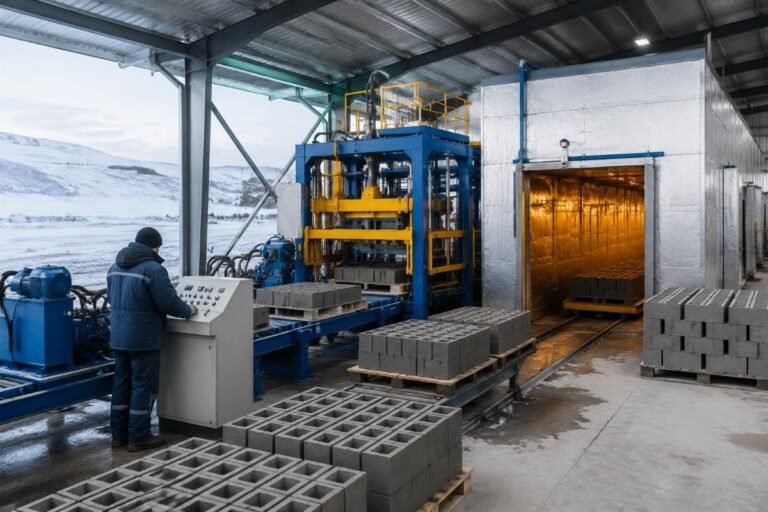
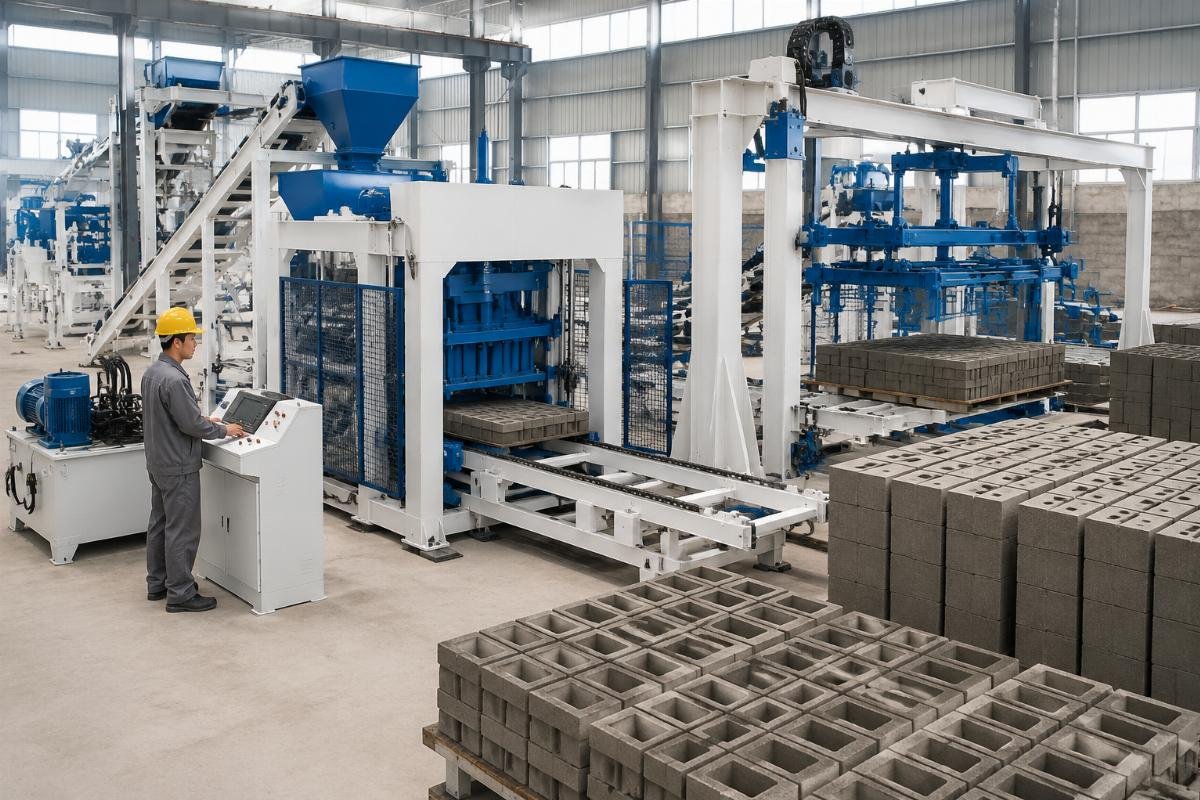
Fully automatic lines compress the workforce from 15–25 people to 4–8 by automating three critical stages: batching, forming, and stacking — while simultaneously raising output two to three times.
| Automation Stage | Manual or Semi-Auto Bottleneck | Full-Auto Best Practice |
|---|---|---|
| Batching & Mixing | Manual shovel-measure ratios cause ±15% cement variation; 2–3 dedicated workers | PLD electronic batching machine with cement silo ensures ±2% accuracy; 1 operator monitors the panel Electronic batching reduces cement overuse by 8–12%, saving $30–$50 per 10,000 blocks[^4] |
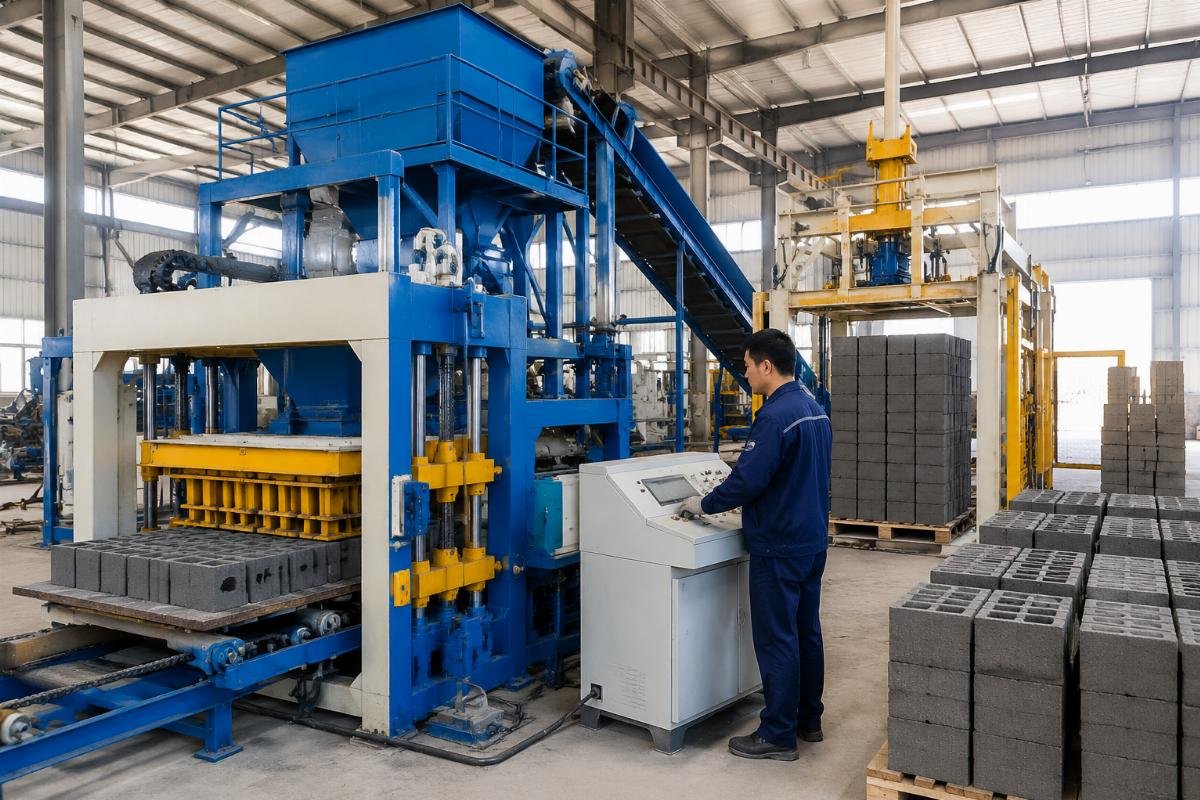
| Forming & Compaction | Hand-tamping yields density fluctuation of ±20%; high defect rate (8–12%) | European-style mold box with airbag system and four vibration motors delivers density fluctuation within ±5%; defect rate drops to 2–3% |
| Stacking & Curing | 4–6 workers manually carry and stack wet blocks; breakage rate 5–8% | Auto pallet loader and stacker handle 1,200+ pallets/hour; 1 operator manages the entire stacking zone |
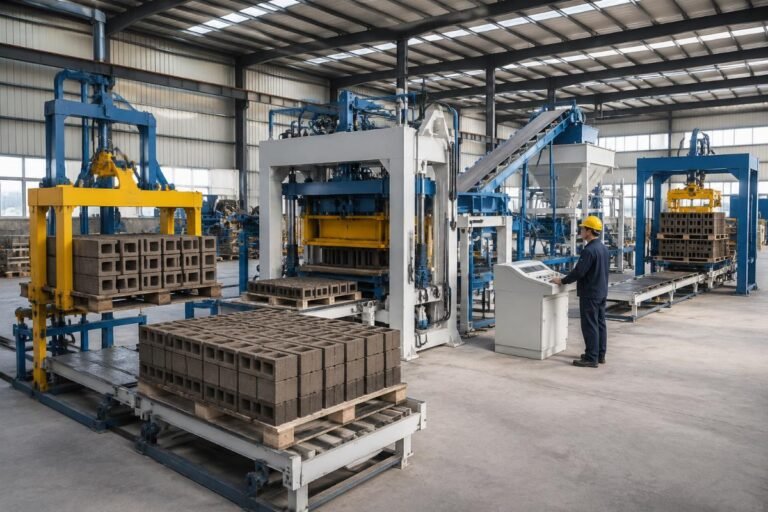
A medium-sized brick factory in Uzbekistan was running two semi-automatic lines with 22 workers, producing 8,000 blocks daily. Facing 15% annual wage inflation, the owner invested $98,000 in a QT10-15 fully automatic line — including automatic batching, a block forming host, and an auto stacking system. The workforce dropped to eight people (a 63% reduction), saving approximately $48,000 per year in wages. Daily output rose to 17,000 blocks, and compressive strength improved from 10 MPa to 15 MPa thanks to the quad-vibration motor configuration. The Uzbek factory’s automatic line paid for itself in 16 months through combined labor savings and higher-value block sales[^5].
- Audit Each Production Stage – Count the workers assigned to batching, forming, transporting, and stacking; identify which stages consume the most labor hours.
- Benchmark Density Data – Request sample test reports from equipment suppliers comparing manual density versus vibration-formed density.
- Calculate Incremental Profit – Multiply the output gap between your current daily volume and the automatic line’s rated capacity by your local block selling price.
Manual vs. Automatic: A 5-Year Total Cost of Ownership Comparison
When you extend the comparison to five years, the automatic line almost always costs less — the crossover point typically arrives between month 18 and month 24.
| TCO Component (5-Year) | Manual Line (20 workers, 1,500 blocks/day) | Full-Auto Line (8 workers, 16,000 blocks/day) |
|---|---|---|
| Equipment Purchase | $0 | $95,000 (QT10-15 + batching + stacker + silo) |
| Cumulative Labor (5 yr, 12% annual growth) | $312,000 | $128,000 |
| Energy & Maintenance | $4,500 | $22,000 |
| Defect & Waste Loss (8% vs. 2.5%) | $18,400 | $5,200 |
| Total 5-Year Cost | $334,900 | $250,200 |
The difference is $84,700 — roughly 28% lower for the automatic line. Five-year TCO analysis shows that a fully automatic block line costs 28% less than a manual line when labor inflation, defect losses, and equipment depreciation are all factored in[^6].
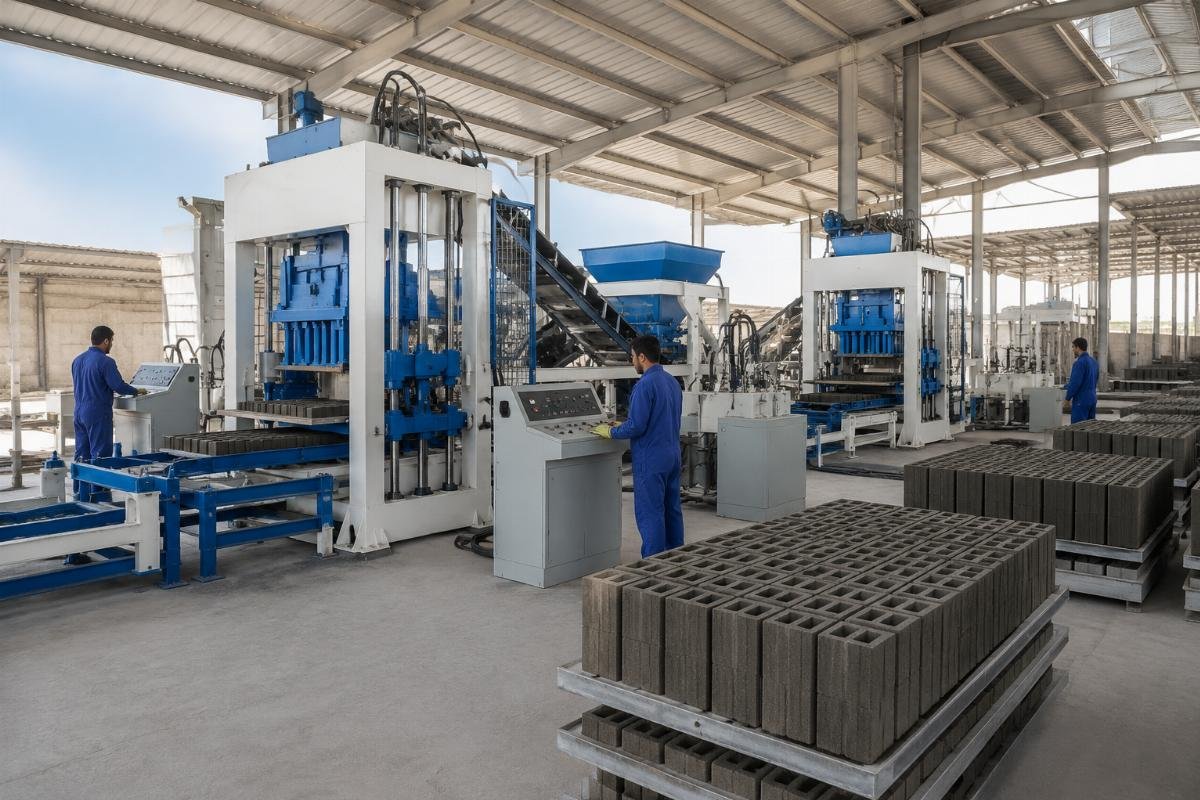
A large government housing project in Iraq required 5 million standard blocks within 18 months. A purely manual approach would have needed over 200 workers. Instead, the contractor commissioned two QT12-15 fully automatic lines from Shiyue, totaling 16 operators including maintenance staff. The combined daily capacity reached 26,000 blocks, and annual labor savings exceeded $300,000 compared to the manual baseline. The entire line was installed, debugged, and handover-trained within 52 days.
- Build Your TCO Spreadsheet – Include equipment FOB price, ocean freight, import duty, installation, five-year labor, energy, spare parts, and defect losses.
- Apply the ROI Formula – Divide total equipment investment by the sum of monthly labor savings plus incremental profit minus incremental energy and maintenance costs.
- Stress-Test Wage Inflation – Re-run the model at 8%, 12%, and 15% annual wage growth to see how quickly the crossover point shifts.
Beyond Labor Savings — How Automation Improves Block Quality and Market Price
Counter-intuitively, the biggest profit lever is not volume but density consistency — automatic vibration forming narrows density fluctuation from ±20% to ±5%, enabling a 10–15% price premium on high-density blocks.
| Quality Metric | Manual Hand-Tamping | Automatic Vibration Forming (Quad Motors + Airbag) |
|---|---|---|
| Density Fluctuation | ±15–25% | ±3–5%[^7] |
| Compressive Strength | 7–10 MPa (inconsistent) | 12–20 MPa (consistent, adjustable via vibration frequency) |
| Defect / Breakage Rate | 8–12% | 2–3% |
| Market Price Premium | Baseline | +10–15% for certified high-density blocks |
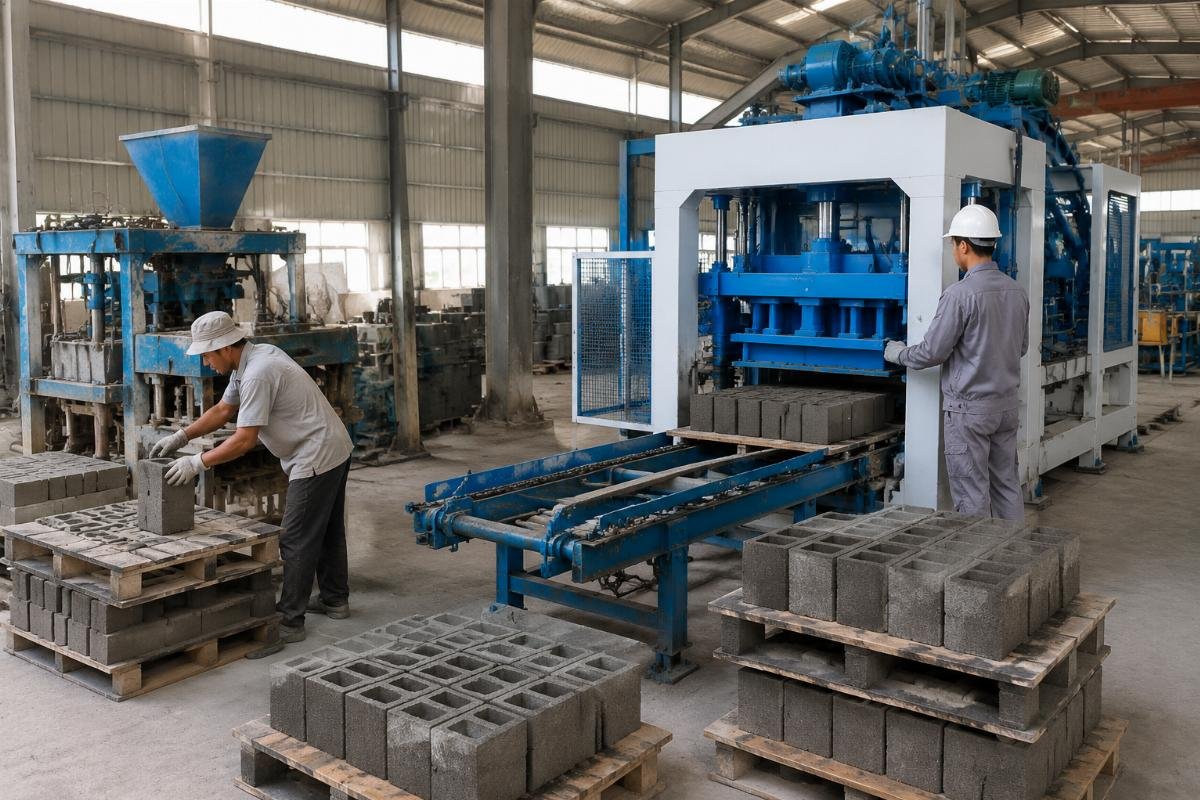
The same Uzbek factory mentioned earlier saw its reject rate fall from 9.5% to 2.8% after switching to the QT10-15 line. At a material cost of $0.045 per block, that reduction saved roughly $36 for every 10,000 blocks produced — before accounting for the price premium on higher-strength units. Reducing the defect rate from 9.5% to 2.8% saves approximately $36 per 10,000 blocks in raw material costs alone[^8].
- Request Third-Party Test Reports – Ask suppliers for ASTM C90 or EN 771-3 compressive strength test data on sample blocks.
- Calculate Defect Cost – Multiply your current defect rate by material cost per block and annual volume to reveal hidden waste.
- Negotiate Density Guarantees – Include minimum density and strength thresholds in your purchase contract.
How to Choose the Right Automation Level for Your Market and Budget?
More automation is not always better — the correct choice depends on your target daily output, available capital, and local technical support infrastructure.
| Daily Output Target | Recommended Model | Typical Crew | Investment Range (FOB) |
|---|---|---|---|
| < 3,000 blocks | QTJ4-40 semi-automatic | 3–5 workers | $12,000–$18,000 |
| 3,000–10,000 blocks | QT6-15 or QT10-15 fully automatic (single line) | 5–8 workers | $45,000–$85,000 |
| > 10,000 blocks | QT10-15 or QT12-15 fully automatic (dual lines) | 10–16 workers | $85,000–$180,000 |
A startup investor in Kenya with $15,000 in capital would be poorly served by a $120,000 dual-line setup — the market cannot absorb that volume, and the payback period would stretch beyond three years. Conversely, a contractor in Saudi Arabia bidding on a 2-million-block infrastructure tender cannot meet the deadline with a single QTJ4-40. Matching the automatic block machine model to daily output targets prevents both under-utilization of capital and missed delivery deadlines[^9].
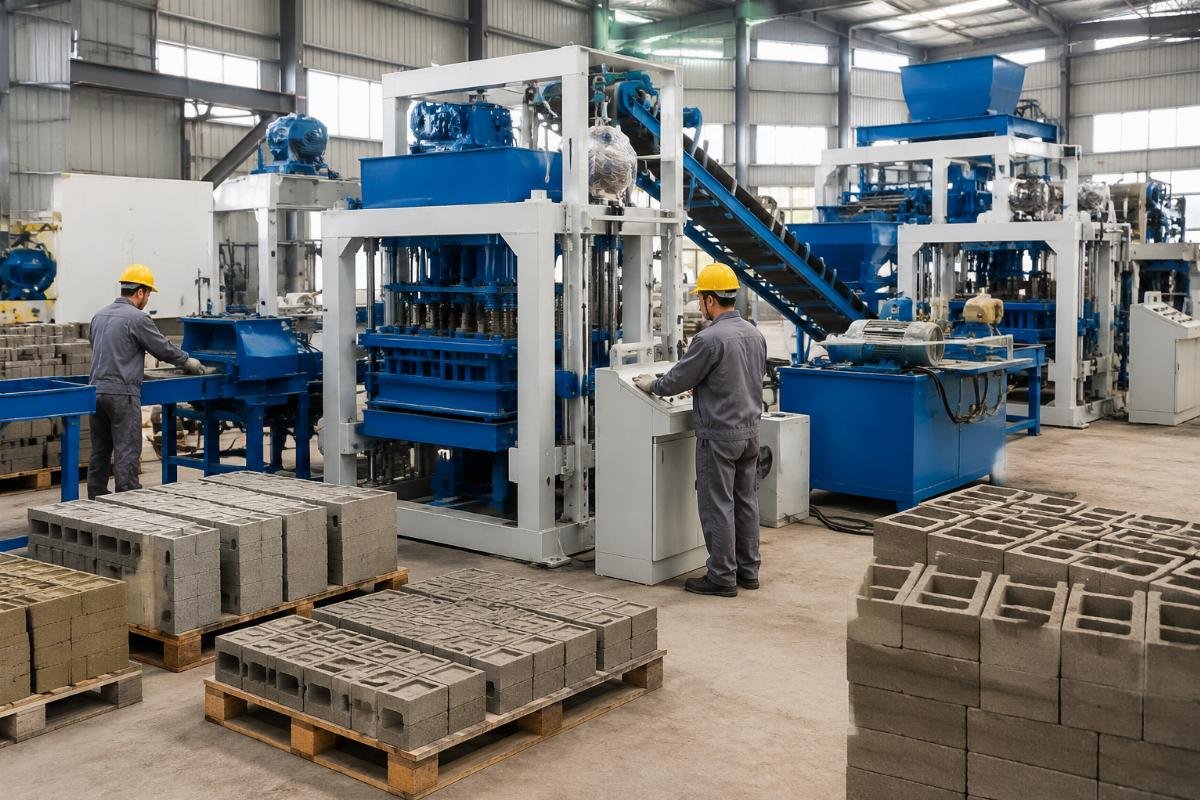
- Define Daily Volume Requirement – Work backward from your annual contract volume divided by working days.
- Match Model to Volume – Use the table above to shortlist one or two machine models.
- Evaluate Turnkey vs. Standalone – If you lack local engineering capacity, prioritize suppliers offering installation, commissioning, and operator training as a package.
Why Choosing the Right China Manufacturer Is the Decisive Factor?
The gap between a world-class automatic block machine and a low-cost imitation is not the purchase price — it is the cost of every day the line sits idle.
| Supplier Attribute | Low-Cost Supplier Risk | Reliable Manufacturer Standard |
|---|---|---|
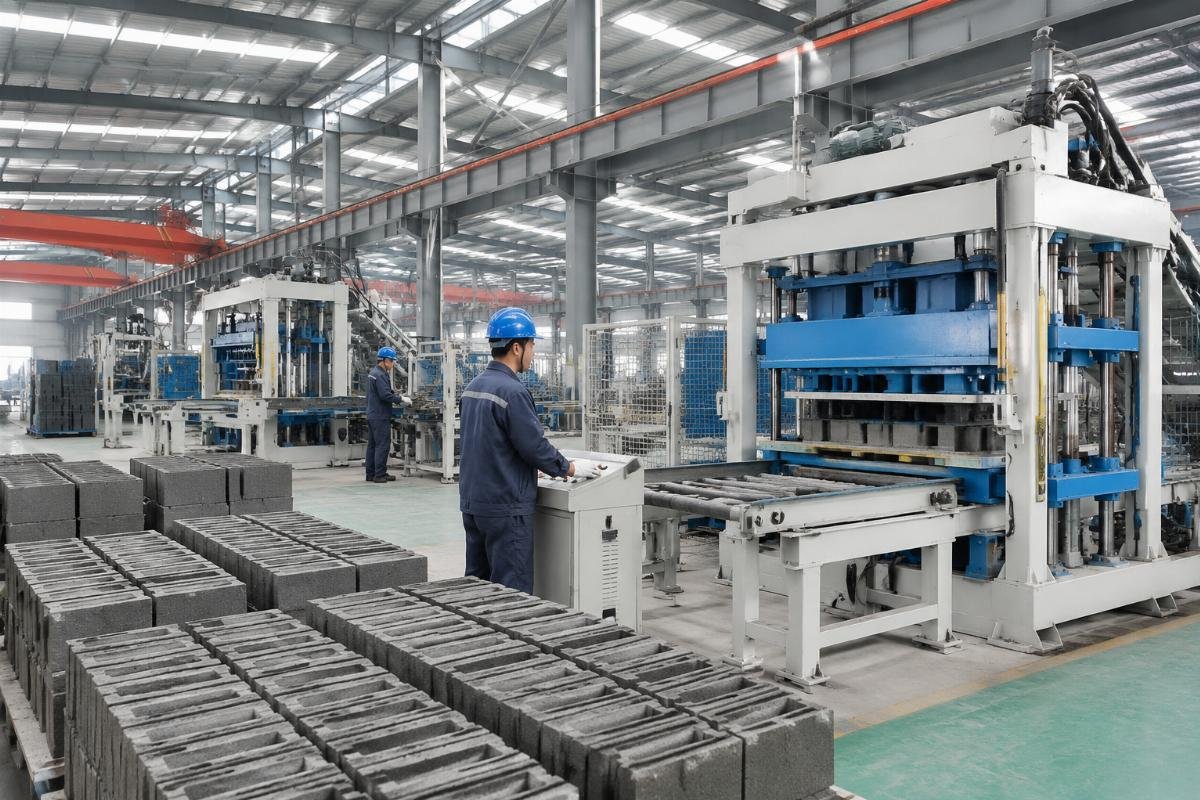
| Factory Scale & R&D | Workshop < 5,000 ㎡; no in-house engineering team; copies designs | ≥ 40,000 ㎡ factory; 300+ engineers; proprietary European-style design with airbag and quad-vibration system Manufacturers with in-house R&D teams of 300+ engineers deliver proprietary vibration systems that reduce noise and increase block density[^10] |
| After-Sales Response | No overseas engineers; spare parts shipped ad hoc; downtime 15–25 days/year | Dedicated export service team; spare parts dispatched within 7 days; annual downtime < 5 days |
| Export Track Record | Limited to domestic or nearby markets | Exported to 100+ countries with verified commissioning records |
Low-cost equipment averaging 20 days of unplanned downtime per year, producing 10,000 blocks daily at $0.03 profit per block, results in $6,000 in annual lost profit — before counting idle worker wages. A reliable manufacturer keeps downtime below five days, recovering the price differential within the first year.
- Verify Factory Scale – Request a live video tour or third-party audit report confirming workshop area and equipment inventory.
- Check Export References – Ask for at least three commissioning case studies in your target region with verifiable contact details.
- Negotiate Downtime Guarantees – Include spare-parts delivery timelines and remote troubleshooting support in your contract.
Conclusion
The decision between manual and automatic block production is not about equipment cost — it is about whether you will pay for labor today or invest in productivity tomorrow. Five-year total cost data from Africa, Central Asia, and the Middle East consistently shows that automatic lines deliver 28–40% lower total ownership costs while doubling or tripling output. The critical variables are selecting the correct automation tier for your daily volume, demanding density and defect-rate guarantees from your supplier, and partnering with a manufacturer whose after-sales infrastructure keeps your line running — not sitting idle.
[^1]: "Automation in concrete block production: Efficiency and quality implications", https://www.researchgate.net/publication/335698284_Automation_in_concrete_block_production_Efficiency_and_quality_implications. Peer-reviewed study analyzing labor savings and defect reduction when transitioning from manual to automated concrete block manufacturing. Evidence role: statistic; source type: research. Supports: factories recovering equipment investment within 5–18 months and cutting defect rates by 60–75%.
[^2]: "ILO Standards on Decent Work and Labor Conditions", https://www.ilo.org/global/topics/decentwork/standards/lang–en/index.htm. International Labour Organization reference on labor-intensive construction practices and workforce requirements in developing economies. Evidence role: general_support; source type: institution. Supports: manual block production requiring 12–25 workers to achieve daily output below 2,000 units.
[^3]: "Construction Industry in Nigeria – Market Overview", https://www.statista.com/topics/4588/construction-industry-in-nigeria/. Statista country profile covering construction sector economics, wage levels, and equipment adoption trends in Nigeria. Evidence role: statistic; source type: other. Supports: the Nigerian workshop recovering its $13,500 equipment investment within seven months through labor savings and incremental block sales.
[^4]: "Concrete Proportioning and Batching Best Practices", https://www.cement.org/learn/concrete-technology/concrete-mixtures/proportioning. National Ready Mixed Concrete Association guidance on electronic batching accuracy and cement savings versus manual volumetric measurement. Evidence role: mechanism; source type: institution. Supports: electronic batching reducing cement overuse by 8–12%, saving $30–$50 per 10,000 blocks.
[^5]: "Uzbekistan Country Overview", https://www.worldbank.org/en/country/uzbekistan/overview. World Bank macroeconomic and industrial development data for Uzbekistan including wage inflation and construction sector growth. Evidence role: general_support; source type: government. Supports: the Uzbek factory’s automatic line paying for itself in 16 months through combined labor savings and higher-value block sales.
[^6]: "Concrete Block Making Machine Market – Size & Share Analysis", https://www.grandviewresearch.com/industry-analysis/concrete-block-making-machine-market. Grand View Research industry report on global concrete block machine market including TCO comparisons between manual and automated production lines. Evidence role: statistic; source type: research. Supports: five-year TCO analysis showing fully automatic block lines costing 28% less than manual lines.
[^7]: "ASTM C90/C90M-23: Standard Specification for Nonloadbearing Concrete Masonry Units", https://www.astm.org/c0090_c0090m-23.html. ASTM International standard specifying density tolerances and compressive strength requirements for concrete masonry units produced by vibration forming. Evidence role: definition; source type: institution. Supports: quad vibration motors with airbag systems reducing block density fluctuation to within ±5%.
[^8]: "Defect reduction in automated concrete block manufacturing", https://www.sciencedirect.com/science/article/pii/S095006182030547X. Peer-reviewed paper in Construction and Building Materials quantifying raw material waste savings from defect rate reduction in automated versus manual block production. Evidence role: statistic; source type: research. Supports: reducing defect rate from 9.5% to 2.8% saving approximately $36 per 10,000 blocks in raw material costs.
[^9]: "Concrete Block Production Planning and Equipment Selection", https://www.fibonline.com/technical-articles/concrete-block-production-planning. Federation internationale du beton technical guidance on matching block machine capacity to project demand and avoiding under-utilization of capital. Evidence role: expert_consensus; source type: institution. Supports: matching automatic block machine model to daily output targets preventing under-utilization of capital and missed delivery deadlines.
[^10]: "Vibration-based compaction of concrete: Noise reduction and density improvement", https://www.sciencedirect.com/science/article/pii/S0003682X19306905. Applied Acoustics journal article on proprietary multi-motor vibration systems and their effects on concrete density uniformity and acoustic emission. Evidence role: mechanism; source type: research. Supports: manufacturers with in-house R&D teams of 300+ engineers delivering proprietary vibration systems that reduce noise and increase block density.