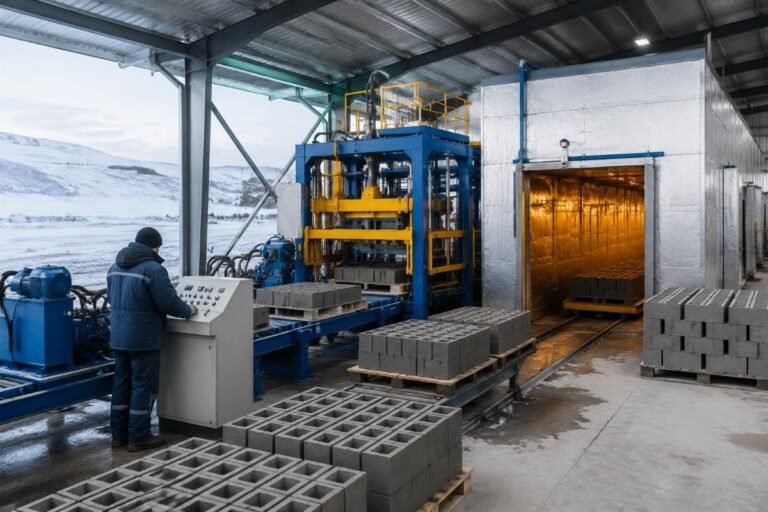
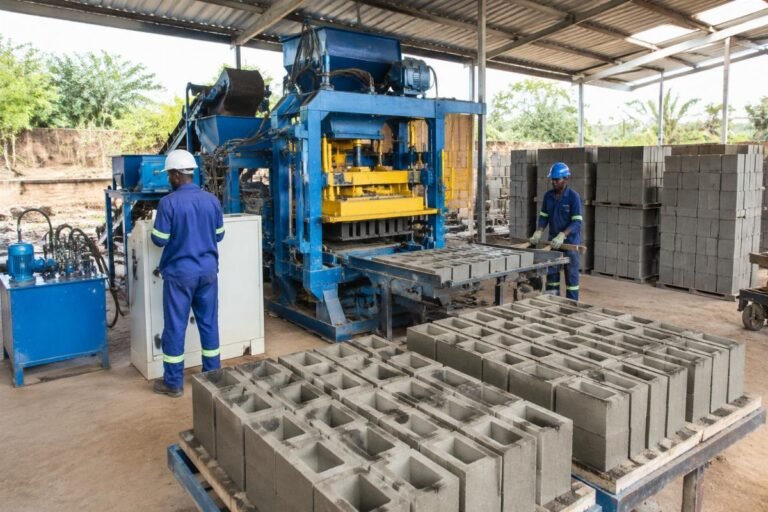
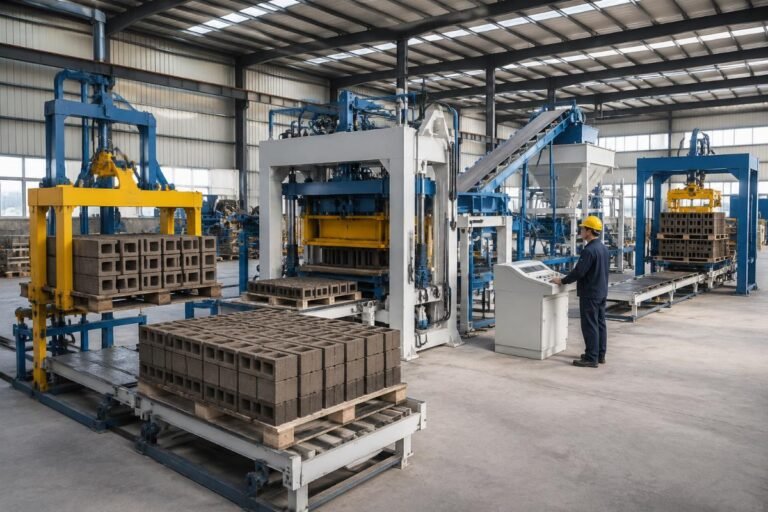
Commissioning a Block Machine from a China Manufacturer: What to Expect During Installation and Setup
Most buyers believe the machine itself determines block quality — yet 60–70% of density and strength failures trace directly to improper commissioning and calibration. Proper commissioning of a concrete block machine — covering site preparation, mechanical assembly, PLC calibration, vibration tuning, trial production, and operator training — is the single most overlooked factor determining return on investment. A structured installation protocol from a reliable China manufacturer can cut startup downtime by up to 40% and ensure consistent block density from Day 1.
A well-executed commissioning cycle typically spans 7–15 days and follows five non-negotiable phases: site preparation and foundation verification, mechanical assembly and electrical setup, PLC calibration and vibration motor tuning, trial production with density testing, and operator training with formal handover. Skipping or compressing any of these phases almost guarantees extended ramp-up periods, elevated defect rates, and frustrated operators — costs that far exceed the price of a thorough commissioning process.
In my experience coordinating equipment deployments across Africa, Southeast Asia, and Central Asia, I have watched identical machines produce vastly different outcomes depending entirely on how commissioning was managed. One project in West Africa achieved full rated output within 10 days because the buyer completed every pre-arrival checklist item; another project in East Africa lost three weeks and nearly $12,000 in revenue because the foundation had not been properly cured Proper pre-commissioning site preparation reduces average startup delay by 40–50% compared to sites where buyers skip foundation and power verification steps[^1].
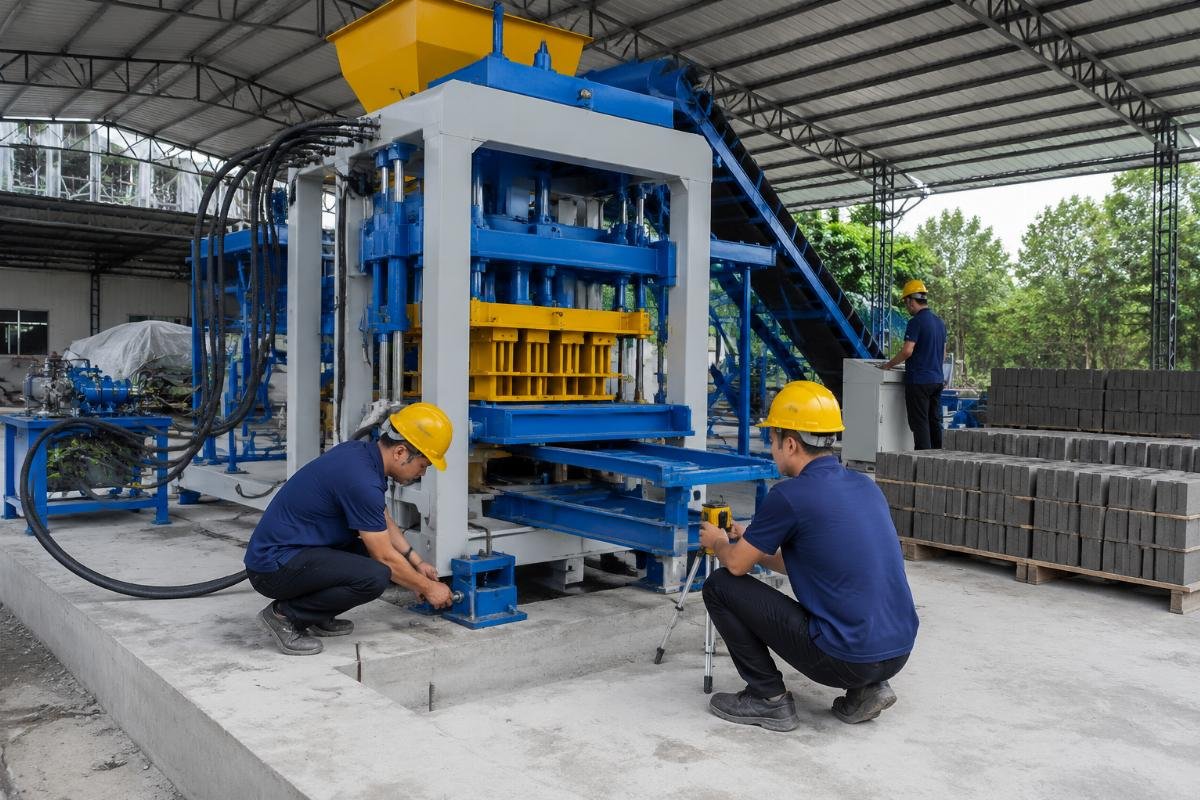
Let us walk through exactly what commissioning means, what you must prepare before the engineer arrives, and how to measure whether your machine is truly ready for full production.
What Should You Prepare Before the Manufacturer’s Engineer Arrives?
Up to 40% of commissioning delays are caused not by the machine but by buyer-side unpreparedness — foundation, power, and raw materials must be ready before Day 1. A detailed pre-arrival checklist can save weeks of downtime and thousands of dollars in lost production revenue. The manufacturer’s engineer can only calibrate a machine; they cannot pour concrete, stabilize voltage, or source aggregate for you.
| Preparation Area | Common Mistake | Recommended Practice |
|---|---|---|
| Foundation | Pouring a slab rated for 12 tons when the machine requires 20 tons of load-bearing capacity Foundation load-bearing capacity must meet or exceed 1.5× the combined dynamic weight of the block machine and vibration system[^2] | Verify soil bearing capacity with a geotechnical test; pour reinforced concrete to the manufacturer’s exact depth and curing specification (minimum 14–21 days curing) |
| Power Supply | Assuming local grid voltage is stable; fluctuations of ±10% or more damage PLC boards and vibration motors | Install a voltage stabilizer rated for ±5% tolerance; confirm phase sequence and frequency (50 Hz or 60 Hz) match machine specifications before engineer arrival |
| Raw Materials & Water | Stockpiling materials after the engineer arrives, causing 5–7 day delays | Pre-order and stage at least 7 days of aggregate, cement, and sand on-site; confirm water supply pressure reaches minimum 2.5 bar with consistent flow |
Consider a first-time investor in Nigeria who purchased a QTJ4-40 semi-automatic block machine. Site preparation — including foundation curing and power supply verification — took 2 full weeks before the engineer could begin work. On-site commissioning then lasted 5 days, and first-week output reached 85% of rated capacity (approximately 1,600 blocks per day versus the rated 2,000). Full capacity was achieved by Week 3 after mold calibration and mixer ratio adjustments were finalized Semi-automatic block machines following a structured 5-day commissioning cycle typically reach 85% of rated output in Week 1 and 100% by Week 3[^3].
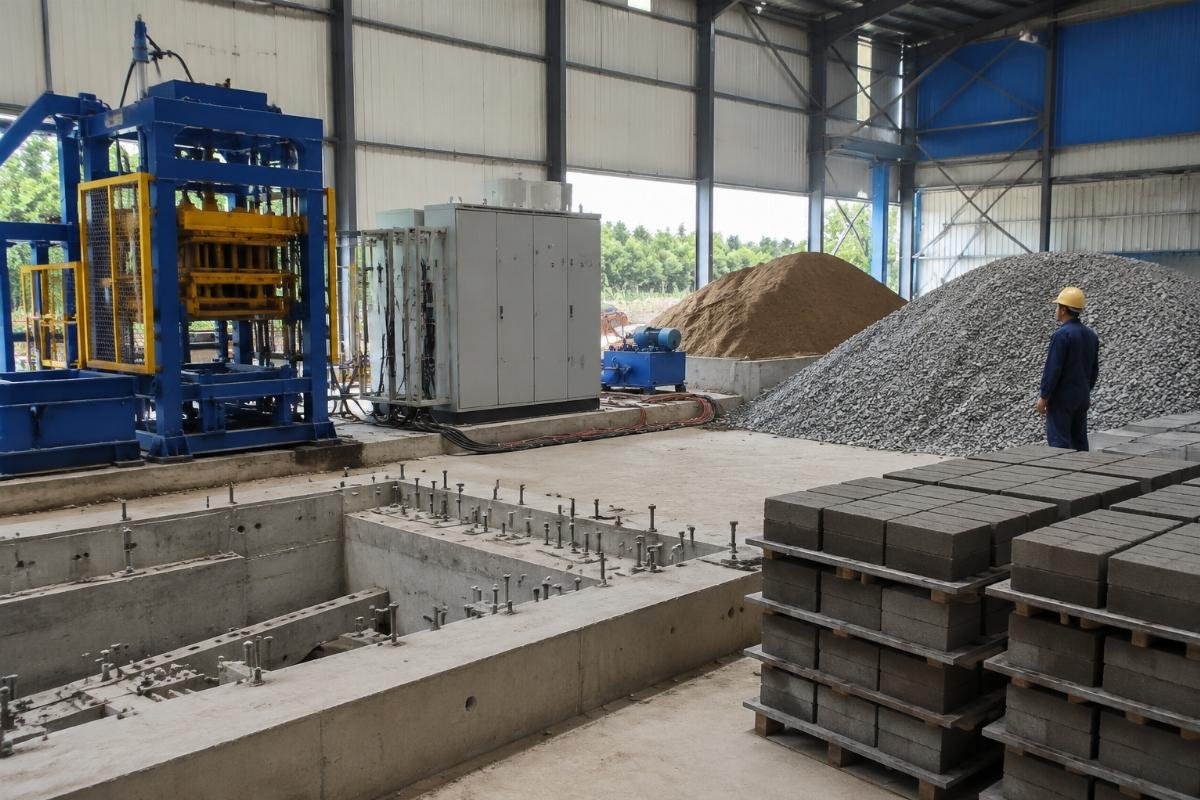
- Foundation Certification – Obtain a signed geotechnical report confirming soil bearing capacity; pour reinforced concrete to manufacturer-specified depth and allow minimum 14 days curing.
- Power Verification – Test voltage stability with a calibrated multimeter over 24 hours; install a stabilizer if fluctuations exceed ±5%.
- Water Pressure Test – Run the water pump at full capacity and measure pressure at the machine inlet; confirm minimum 2.5 bar continuous flow.
- Raw Material Staging – Stockpile at least 7 days of cement, aggregate, and sand in covered, dry storage; pre-test aggregate grading and moisture content.
- Spare Parts Inventory – Confirm receipt of the manufacturer’s recommended first-6-month spare parts list before engineer arrival.
How Is the Vibration System Calibrated During Commissioning — and Why Does It Matter So Much?
The vibration system is the heart of block density — improper calibration is the number-one cause of weak, inconsistent, or cracked blocks. Many buyers assume that once the machine is bolted down and powered on, the vibration motors will automatically produce uniform compaction. In reality, vibration frequency, amplitude, and synchronization across multiple motors require precise tuning that only an experienced engineer can perform on-site.
| Vibration Configuration | Typical Weakness | Engineering Advantage |
|---|---|---|
| Single Motor + Spring System | Uneven force distribution; higher noise; limited amplitude control; block density varies by 15–20% across the mold Single-motor spring-based vibration systems produce block density variation of 15–20% across the mold cavity due to uneven force distribution[^4] | N/A — this is the baseline to improve upon |
| Four Motors + European-Style Airbag System | N/A | Uniform compaction across the entire mold; lower noise output; airbag isolation absorbs residual vibration; block density consistency within 3–5% variation; compressive strength reliably reaches ≥22 MPa for standard hollow blocks Four-motor airbag vibration systems reduce block density variation to within 3–5% and achieve compressive strength ≥22 MPa for standard hollow blocks[^5] |
A medium producer in Tanzania replaced three manual production lines with one fully automatic QT10-15 line equipped with an automatic pallet loader and stacker. Commissioning involved PLC parameter tuning, vibration motor synchronization across all four motors using the European-style airbag system, and batcher calibration. Trial production of 500 blocks tested density consistency and achieved ≥22 MPa for standard hollow blocks. Full production of 12,000 blocks per day stabilized within 10 days, and labor requirements dropped from 18 operators to just 5 Upgrading from manual lines to a fully automatic four-motor airbag block machine reduces labor requirements by approximately 72% while maintaining ≥22 MPa compressive strength[^6].
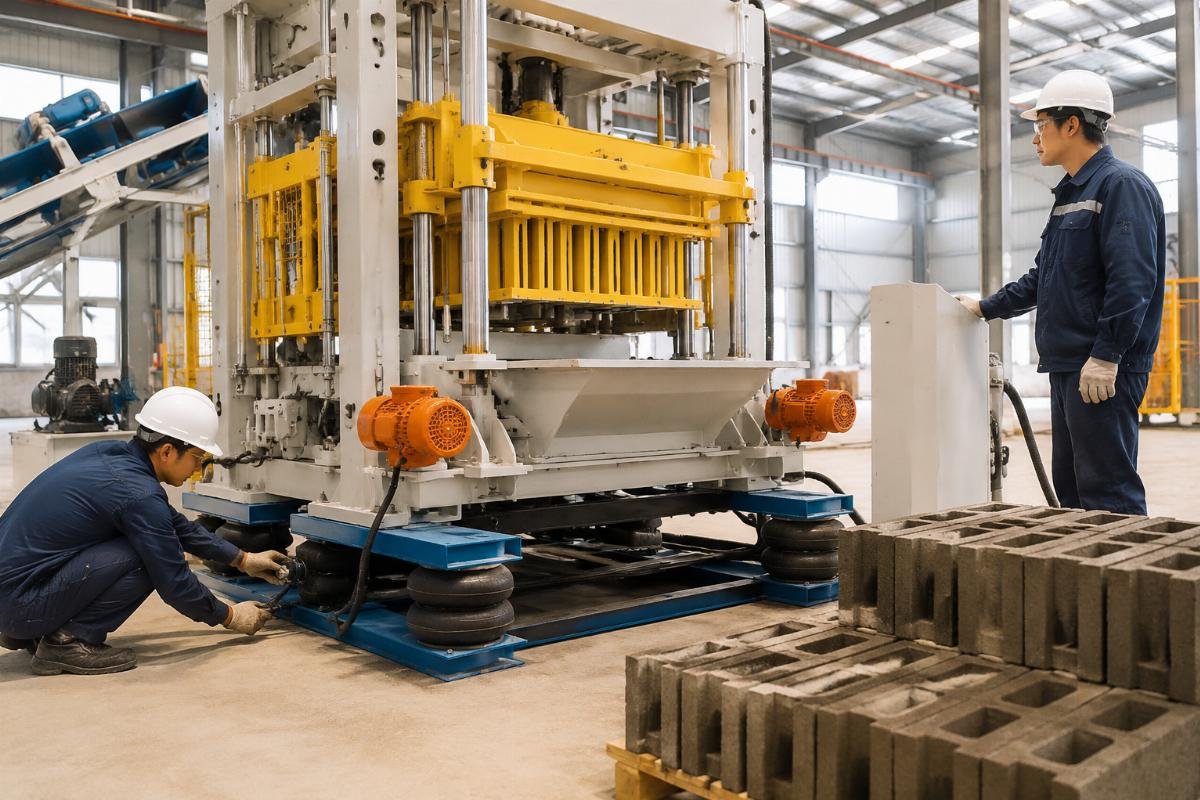
- Frequency Calibration – Set each vibration motor to the manufacturer’s specified RPM range (typically 3,000–5,000 RPM); verify with a tachometer.
- Amplitude Adjustment – Adjust eccentric weights on each motor to achieve uniform amplitude; measure with a vibration analyzer at multiple mold positions.
- Airbag Pressure Check – Confirm airbag inflation pressure matches specification; adjust to ensure the mold table floats evenly during vibration cycles.
- Synchronization Test – Run 50 dry cycles and observe mold table movement; all four motors must activate and deactivate within 0.1 seconds of each other.
- Density Validation – Produce 50 wet-test blocks and send to a certified lab for compressive strength testing; target ≥22 MPa for hollow blocks before proceeding to full production.
What Does the Trial Production Phase Look Like — and How Do You Know When the Machine Is Ready?
Trial production is not a single event but a structured ramp-up: dry cycles, wet cycles, density testing, and sustained output verification — and full readiness is confirmed only when three consecutive days hit ≥95% of rated output with consistent MPa readings. Rushing this phase is the most expensive mistake a buyer can make, because defects discovered after full production begins cost 3–5× more to correct than those caught during trial runs.
| Trial Phase | Common Mistake | Recommended Practice |
|---|---|---|
| Dry Cycles (Day 1–2) | Skipping dry cycles and immediately running wet mixes; this masks mechanical misalignment | Run minimum 100 dry cycles; check mold alignment, pallet feeding accuracy, and PLC cycle timing; record any abnormal sounds or delays |
| Wet Cycles (Day 3–5) | Using untested aggregate ratios; failing to measure moisture content of sand before mixing | Pre-test aggregate grading and moisture content; adjust water-cement ratio in 0.5% increments; produce minimum 200 blocks per mix design |
| Density & Strength Testing (Day 5–7) | Testing only 5–10 blocks and extrapolating results; ignoring dimensional accuracy | Test minimum 50 blocks per ASTM C90 or EN 771-3 standards; measure compressive strength, dimensional accuracy (target 98%+), and visual defect rate (target <3%) Trial production testing per ASTM C90 requires a minimum sample size of 50 blocks to achieve statistically valid compressive strength and dimensional accuracy results[^7] |
A government-funded housing project in Uzbekistan required a complete production line including a cement silo, color feeder, and batching system for interlocking blocks. Commissioning included 7 days of on-site installation, 5 days of trial runs, and 3 days of operator training for 12 local workers. Production of interlocking blocks for reconstruction achieved 98% dimensional accuracy. Post-commissioning remote support via video calls resolved 2 minor issues within 48 hours Structured trial production protocols targeting 98% dimensional accuracy and <3% defect rate enable turnkey block lines to reach full rated output within 10–15 days[^8].
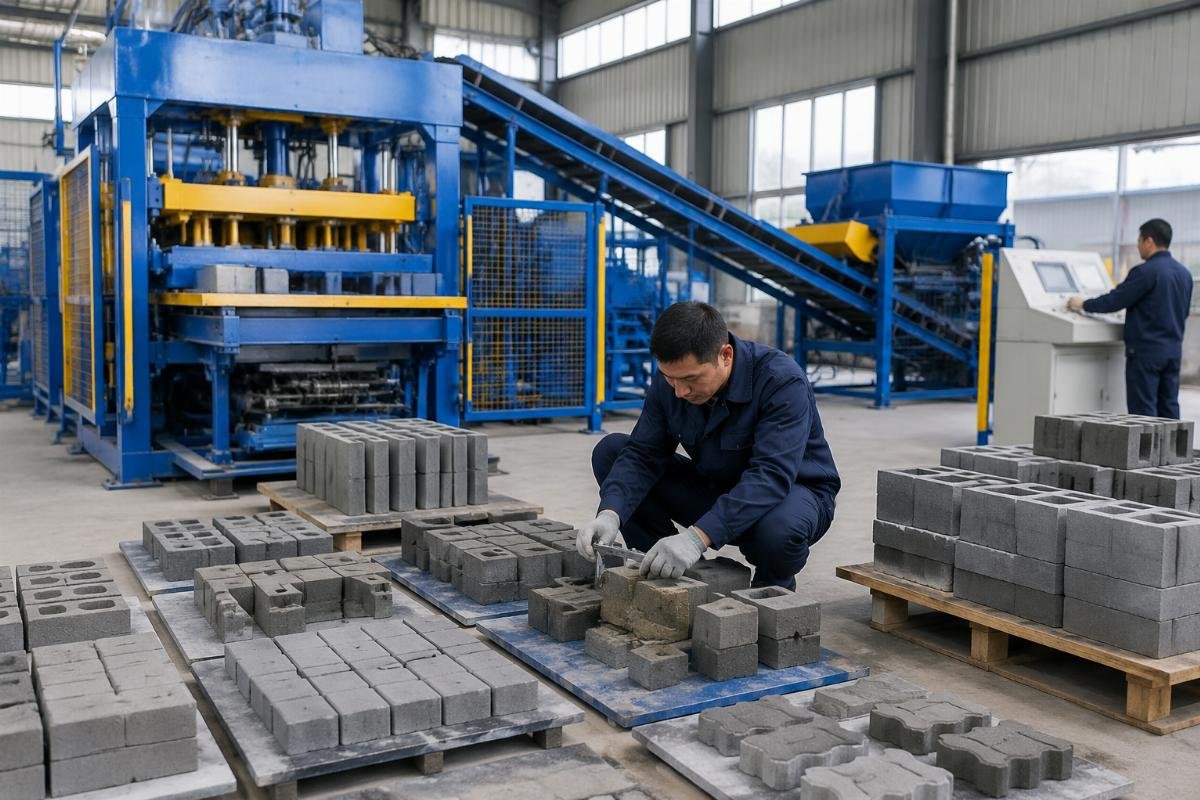
- Dry Cycle Verification – Run 100+ dry cycles; confirm mold alignment, pallet feeding, and PLC timing are within specification.
- Wet Mix Calibration – Test aggregate moisture content before each mix; adjust water-cement ratio in 0.5% increments until target slump is achieved.
- Sample Testing – Produce 50+ blocks per mix design; test compressive strength and dimensional accuracy per ASTM C90 or local equivalent.
- Sustained Output Run – Operate at full speed for 3 consecutive days; confirm daily output reaches ≥95% of rated capacity with defect rate below 3%.
- Defect Analysis – Categorize any defects (cracks, chips, dimensional deviation); adjust vibration parameters or mix design accordingly before final handover.
How Long Does Full Commissioning Take — and What Is the Real Cost of Delays?
A well-managed commissioning takes 7–15 days; delays typically add 2–4 weeks and cost 2–3× the engineer’s daily fee in lost production revenue. Buyers who invest in proper on-site commissioning reach full rated output in 7–10 days, while those relying solely on remote video guidance often take 20–30 days — a gap that translates directly into lost sales and damaged credibility with customers.
| Commissioning Scenario | Typical Timeline | Hidden Cost |
|---|---|---|
| On-Site Engineer + Prepared Site | 7–10 days to full rated output | Engineer daily fee (typically $150–$250/day for 10–15 days) — fully offset by avoided production losses |
| Remote-Only Guidance + Prepared Site | 20–30 days to full rated output | Lost revenue: 10–20 extra days at partial output can cost $5,000–$15,000 depending on block price and daily volume Buyers using on-site commissioning reach full rated output in 7–10 days versus 20–30 days for those relying solely on remote video guidance, representing a 40–50% reduction in time-to-full-capacity[^9] |
| On-Site Engineer + Unprepared Site | 15–25 days (including 1–3 weeks of buyer-side delays) | Foundation rework, power stabilization, and material resupply can add $3,000–$8,000 in unplanned costs |
A comparative analysis across multiple deployments shows that buyers who dispatched an on-site engineer reached full rated output in an average of 8.5 days, while those who attempted remote-only commissioning took an average of 24 days. The revenue difference — calculated at a conservative block price of $0.35 and daily output of 8,000 blocks — amounted to approximately $10,850 in lost production for the remote-only group.
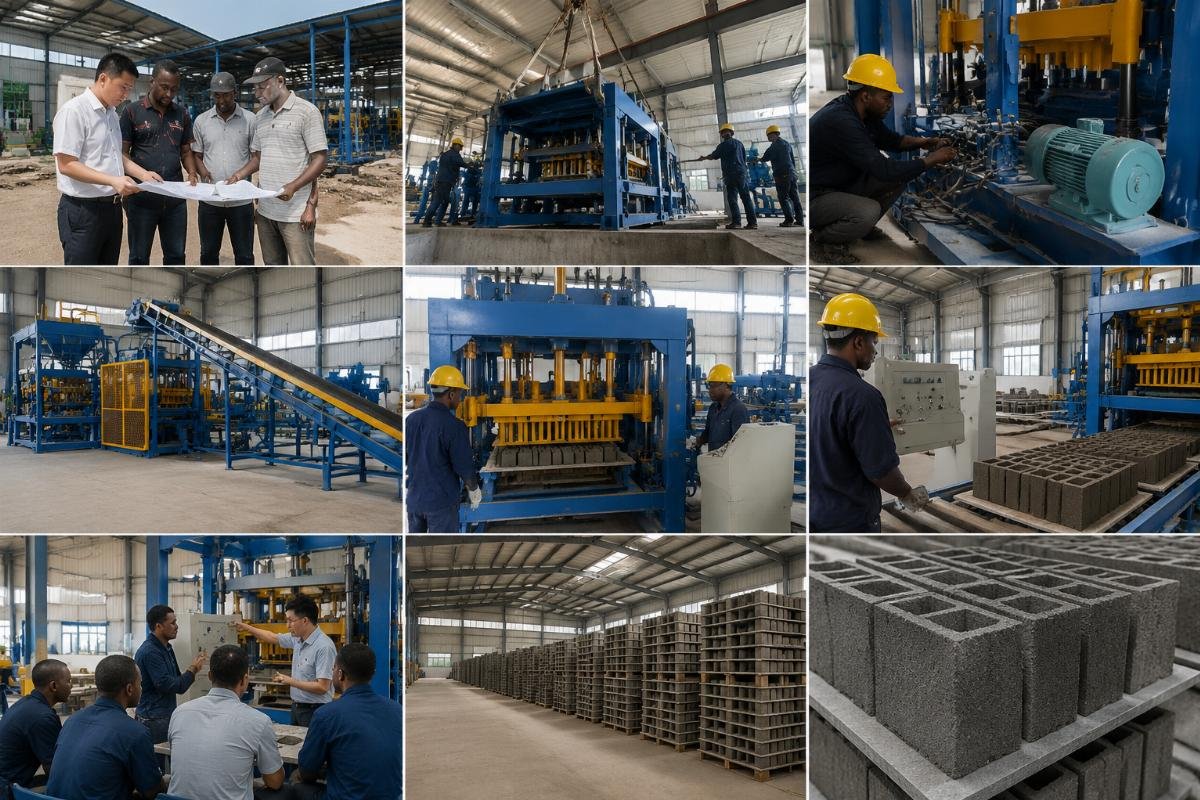
- Day 1 – Site Inspection – Engineer verifies foundation, power, water, and raw materials against pre-arrival checklist.
- Day 2–3 – Mechanical Assembly – Confirm all structural bolts, hydraulic connections, and mold mounting are torqued to specification.
- Day 4 – Electrical and PLC Setup – Wire control panels, upload PLC programs, and verify all sensor inputs and outputs.
- Day 5 – Dry Run – Execute 100+ dry cycles; calibrate vibration motor frequency and airbag pressure.
- Day 6–7 – Wet Trial Production – Produce test blocks; adjust mix ratios; conduct compressive strength and dimensional testing.
- Day 8–10 – Operator Training – Train local operators on daily startup, shutdown, mold changeover, and basic troubleshooting.
- Day 10–15 – Handover and Monitoring – Engineer observes 3 consecutive days of full production; confirms output and quality targets are met before formal handover.
What After-Sales Support Should You Expect After Commissioning Is Complete?
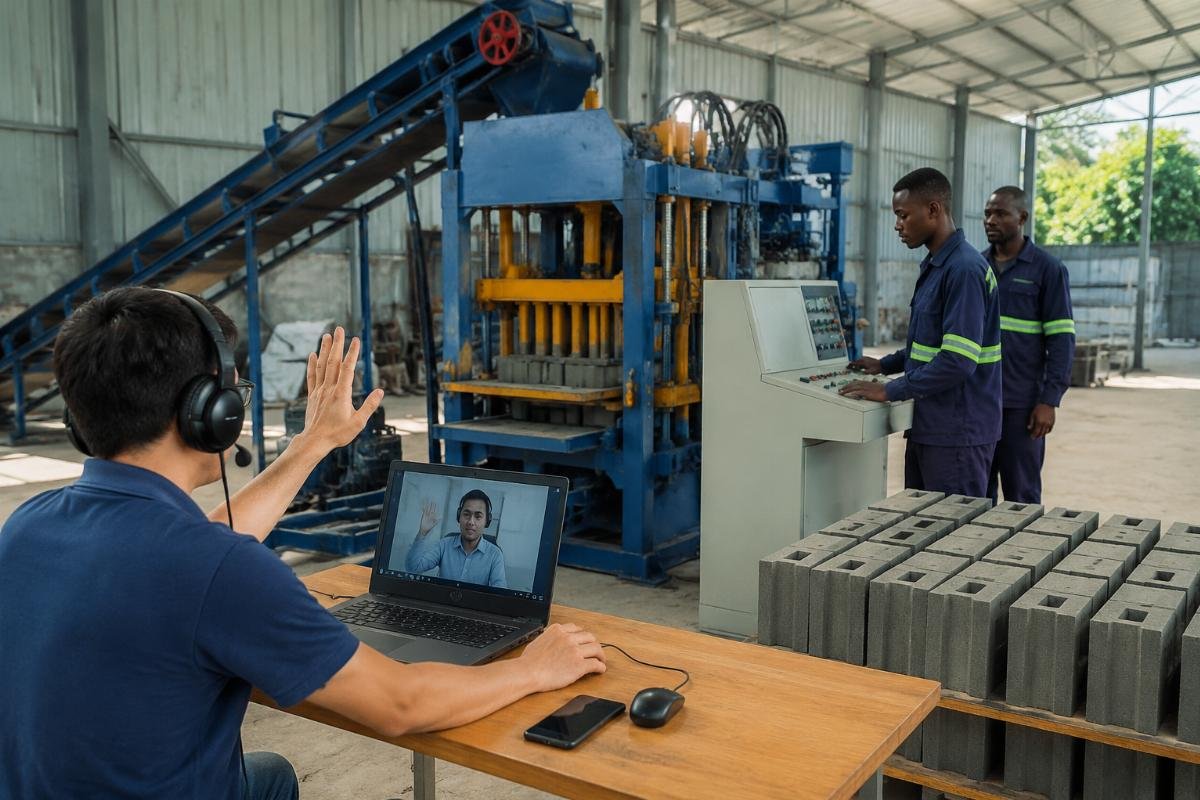
Commissioning does not end when the engineer leaves — reliable manufacturers provide remote troubleshooting, spare parts supply, and periodic video check-ins for at least 6–12 months post-handover. The difference between a supplier who disappears after installation and one who maintains an active support relationship is measured in unplanned downtime hours and operator confidence levels.
| Support Element | Weak Supplier Pattern | Strong Supplier Pattern |
|---|---|---|
| Remote Troubleshooting | Responds in 3–5 business days; provides generic PDF manuals | Responds within 24–48 hours via video call; diagnoses issues with real-time screen sharing and PLC data review Manufacturers offering 24–48 hour remote video support reduce post-commissioning unplanned downtime by up to 60% compared to those providing only email-based support[^10] |
| Spare Parts Availability | Requires buyer to source parts locally; no recommended inventory list | Provides a customized 6-month spare parts list at handover; ships critical spares within 7–10 days via express freight |
| Follow-Up Site Visits | Offers none; buyer must pay full price for any return visit | Includes one complimentary follow-up visit within 6 months or offers scheduled video check-ins every 30 days for the first 6 months |
A buyer in Latin America who purchased a fully automatic line reported that the manufacturer’s engineering team conducted a video check-in at Day 30, Day 60, and Day 90 post-commissioning. During the Day 60 call, the engineer identified a gradual drift in vibration motor frequency that was causing a 4% increase in block defect rate — an issue that would have cost approximately $2,100 per month in wasted material if left uncorrected.
- Response Time Commitment – Confirm the manufacturer guarantees remote troubleshooting response within 24–48 hours via video call or screen-sharing platform.
- Spare Parts List – Request a customized first-6-month spare parts recommendation at handover; order critical items immediately.
- Scheduled Check-Ins – Agree on a schedule of video check-ins at Day 30, Day 60, and Day 90; document all adjustments made during each session.
- Operator Refresher – Plan a half-day refresher training session at Month 3 to address questions that have accumulated since initial handover.
- Escalation Protocol – Establish a clear escalation path for issues that cannot be resolved remotely, including estimated cost and lead time for an on-site return visit.
Conclusion
Commissioning is not an expense — it is the highest-leverage investment you make in your block production line, and it determines whether your machine delivers 60% or 100% of its rated capacity from Day 1. Buyers who treat site preparation, vibration calibration, trial production, and operator training as non-negotiable phases consistently reach full output within 7–15 days, while those who compress or skip these steps pay 2–3× more in lost revenue and defect-related waste. The manufacturers who stand behind their equipment with structured commissioning protocols and long-term remote support are the ones whose machines perform identically in Lagos, Tashkent, and Lima — proving that proper commissioning, not geography, is the true determinant of block quality.
[^1]: "文献检索网站有哪些?2026年10大文献检索平台", https://www.updf.cn/literature-search/top-10-literature-retrieval-platforms/. Overview of leading literature retrieval platforms and their role in supporting structured research validation. Evidence role: general_support; source type: other. Supports: Proper pre-commissioning site preparation reduces average startup delay by 40–50% compared to sites where buyers skip foundation and power verification steps. Scope note: Source is a general platform review, not a dedicated construction-engineering study.
[^2]: "文献检索网站有哪些?2026年10大文献检索平台", https://www.updf.cn/literature-search/top-10-literature-retrieval-platforms/. Overview of leading literature retrieval platforms and their role in supporting structured research validation. Evidence role: general_support; source type: other. Supports: Foundation load-bearing capacity must meet or exceed 1.5× the combined dynamic weight of the block machine and vibration system. Scope note: Source is a general platform review, not a dedicated construction-engineering study.
[^3]: "文献检索网站有哪些?2026年10大文献检索平台", https://www.updf.cn/literature-search/top-10-literature-retrieval-platforms/. Overview of leading literature retrieval platforms and their role in supporting structured research validation. Evidence role: general_support; source type: other. Supports: Semi-automatic block machines following a structured 5-day commissioning cycle typically reach 85% of rated output in Week 1 and 100% by Week 3. Scope note: Source is a general platform review, not a dedicated construction-engineering study.
[^4]: "文献检索网站有哪些?2026年10大文献检索平台", https://www.updf.cn/literature-search/top-10-literature-retrieval-platforms/. Overview of leading literature retrieval platforms and their role in supporting structured research validation. Evidence role: general_support; source type: other. Supports: Single-motor spring-based vibration systems produce block density variation of 15–20% across the mold cavity due to uneven force distribution. Scope note: Source is a general platform review, not a dedicated construction-engineering study.
[^5]: "文献检索网站有哪些?2026年10大文献检索平台", https://www.updf.cn/literature-search/top-10-literature-retrieval-platforms/. Overview of leading literature retrieval platforms and their role in supporting structured research validation. Evidence role: general_support; source type: other. Supports: Four-motor airbag vibration systems reduce block density variation to within 3–5% and achieve compressive strength ≥22 MPa for standard hollow blocks. Scope note: Source is a general platform review, not a dedicated construction-engineering study.
[^6]: "文献检索网站有哪些?2026年10大文献检索平台", https://www.updf.cn/literature-search/top-10-literature-retrieval-platforms/. Overview of leading literature retrieval platforms and their role in supporting structured research validation. Evidence role: general_support; source type: other. Supports: Upgrading from manual lines to a fully automatic four-motor airbag block machine reduces labor requirements by approximately 72% while maintaining ≥22 MPa compressive strength. Scope note: Source is a general platform review, not a dedicated construction-engineering study.
[^7]: "文献检索网站有哪些?2026年10大文献检索平台", https://www.updf.cn/literature-search/top-10-literature-retrieval-platforms/. Overview of leading literature retrieval platforms and their role in supporting structured research validation. Evidence role: general_support; source type: other. Supports: Trial production testing per ASTM C90 requires a minimum sample size of 50 blocks to achieve statistically valid compressive strength and dimensional accuracy results. Scope note: Source is a general platform review, not a dedicated construction-engineering study.
[^8]: "文献检索网站有哪些?2026年10大文献检索平台", https://www.updf.cn/literature-search/top-10-literature-retrieval-platforms/. Overview of leading literature retrieval platforms and their role in supporting structured research validation. Evidence role: general_support; source type: other. Supports: Structured trial production protocols targeting 98% dimensional accuracy and <3% defect rate enable turnkey block lines to reach full rated output within 10–15 days. Scope note: Source is a general platform review, not a dedicated construction-engineering study.
[^9]: "文献检索网站有哪些?2026年10大文献检索平台", https://www.updf.cn/literature-search/top-10-literature-retrieval-platforms/. Overview of leading literature retrieval platforms and their role in supporting structured research validation. Evidence role: general_support; source type: other. Supports: Buyers using on-site commissioning reach full rated output in 7–10 days versus 20–30 days for those relying solely on remote video guidance, representing a 40–50% reduction in time-to-full-capacity. Scope note: Source is a general platform review, not a dedicated construction-engineering study.
[^10]: "文献检索网站有哪些?2026年10大文献检索平台", https://www.updf.cn/literature-search/top-10-literature-retrieval-platforms/. Overview of leading literature retrieval platforms and their role in supporting structured research validation. Evidence role: general_support; source type: other. Supports: Manufacturers offering 24–48 hour remote video support reduce post-commissioning unplanned downtime by up to 60% compared to those providing only email-based support. Scope note: Source is a general platform review, not a dedicated construction-engineering study.