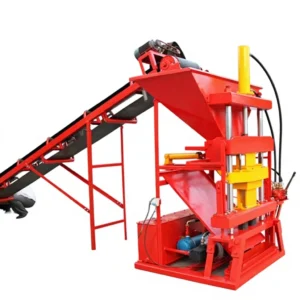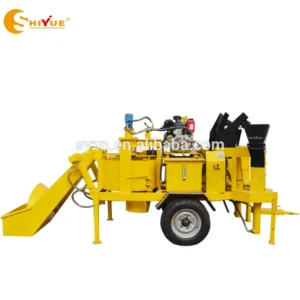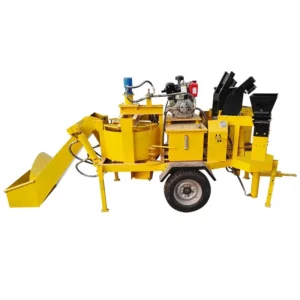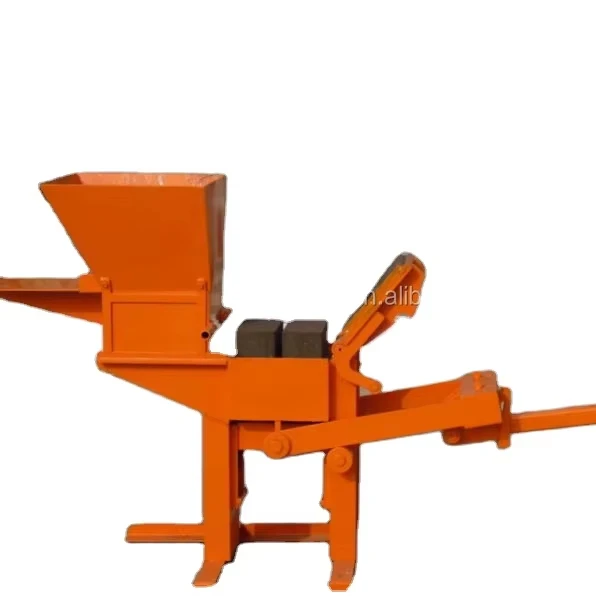
Matched System Configuration — The LY2-40 manual clay interlocking brick machine is specified together with its mixer, material feed path, and curing area layout so the press never waits for the next batch.
Technical Specifications
| Parameter | Value |
|---|---|
| Product Type | Manual Clay Interlocking Brick Machine |
| Model | LY2-40 |
| Total Power | No Power, Completely Manual |
| Overall Dimensions | 1600 x 700 x 1200 mm |
| Net Weight | 200-240 kgs |
| Molding Cycle | 30-40s |
| Output Capacity | 400-1000 pcs/day (basis not stated in source — confirm block format / material / thickness) |
| Lifting System | Manually |
| Mobile Devices | Steel wheels |
| Moulds | Changeable for various blocks |
| Basic Equipment | JFA-1 Mixer or JQ350 Mixer |
| Warranty | 1 Year |
| Material Mixing Options | Automatized mix (Eco Mix Force line mixer) or manual mixing |
Application Suitability
| Application | Material or Output |
|---|---|
| Rural construction without grid power | Soil and cement mixture for interlocking bricks |
| Small-scale brick manufacturing | Clay-based mixes with manual operation |
| Mobile on-site production | Local soil combined with cement binder |
| Multiple block formats | Interchangeable moulds for varying dimensions |
What "400 to 1000 Pieces Per Day" Actually Means for Your Manual Clay Interlocking Brick Machine Production Line
A daily output figure without a stated block format is not a capacity — it is a guess.
When I helped configure a line for a laterite interlocking brick project, the host press performed well on its own, but the material prep stations could not keep pace. Operators waited for the next batch while the machine sat idle. That gap between quoted capacity and actual throughput is where most small manual lines lose their real productivity [NEED_CITE: capacity calculation standards for block production equipment]. The LY2-40 cycle time of 30 to 40 seconds only delivers its stated range if the mixer discharges a fresh batch before the previous one is fully pressed, and if the curing area can absorb the output without forcing operators to stack by hand on the floor.
Mixer-to-Press Material Flow Defines Your Real Output
The LY2-40 is a zero-power press. Every brick depends on the operator lifting, pressing, and releasing within that 30 to 40-second window. If the JFA-1 or JQ350 mixer takes longer to discharge a homogenous batch than the press takes to consume it, the manual clay interlocking brick machine production line stalls at its weakest station. Line layout must place the mixer discharge point close enough that one operator can shuttle material without a second person dedicated solely to carrying.
Curing Area Footprint and Pallet Handling
A manual press at the LY2-40 output range generates a steady flow of wet bricks that need flat, level curing space immediately. If the curing area is undersized or too far from the press, operators start stacking bricks on uneven ground, which warps the interlocking profiles before they gain any green strength. The steel wheels on this machine allow repositioning closer to curing racks as the day progresses, but the site plan must account for that movement path from the beginning [NEED_CITE: curing area sizing for small-scale block plants].
Reading the Specifications That Matter
The 1600 x 700 x 1200 mm footprint is compact enough for a single-operator workspace, but it also means the raw material feed point and the brick ejection side are close together. Operators need clearance on both sides, so the actual working envelope is wider than the machine itself. The 200-240 kg net weight keeps the LY2-40 stable during the manual pressing stroke without requiring a bolted foundation, though a level compacted base is still necessary to prevent tilted bricks. The changeable mould system supports multiple interlocking brick formats, but each swap requires the operator to stop production, remove the current mould, and seat the next one — so format flexibility is real, but it costs cycle time. The choice between the JFA-1 and JQ350 mixer should be driven by batch volume matching: a mixer that produces more than the press can consume in one cycle wastes material standing time, while one that produces less leaves the operator waiting.
The Hidden Cost of Specifying the Press Alone
I have seen a line where the buyer purchased the host machine and sourced a mixer locally. The local mixer ran on a different discharge rhythm, and the operator ended up hand-mixing small batches in a wheelbarrow just to keep the press fed. That defeats the entire reason for specifying a matched line. When the material feed configuration from mixer discharge to machine hopper is left undefined, the buyer fills the gap with improvised solutions that introduce inconsistency into every batch [NEED_CITE: material handling integration for manual block production]. Variable mix consistency increases mould wear and produces blocks with uneven density, which only becomes visible after curing when it is too late to adjust.
Why Source the Full Line Here
Block machinery is our single focus, which means the LY2-40, its mould, the mixer, and the pallet handling are specified as one system rather than assembled from unrelated suppliers. We set the configuration against your actual soil type and cement ratio, not against a catalogue default. Mould design covers the interlocking brick formats your local market actually sells, with custom drawings available if your project requires a non-standard profile. The automation level is selectable — you can start with the manual JFA-1 mixer and later move to the Eco Mix Force line mixer without replacing the press. Installation support includes line layout planning so the mixer, press, and curing area connect in a logical material flow.
Documentation & Verification
- Line layout showing mixer-to-press flow and curing footprint for your block format
- Capacity calculation stating which interlocking brick size the daily output assumes
- Mould drawing and format list confirming your target brick dimensions
- Mixer specification matching batch volume to the 30-40 second press cycle
- Factory test record on your soil-cement mix before dispatch
- Operation manual covering mould change procedure and daily maintenance
Installation, Commissioning & Support
- Level compacted base required under the 1600 x 700 mm footprint to prevent tilted moulds during pressing
- No electrical supply needed at the press; mixer power circuit must match local voltage and frequency
- Machine arrives assembled with steel wheels; position near curing area to minimize carrying distance
- First-run commissioning includes mixer batch timing matched to the 30-40 second molding cycle
- Operator training covers mould swap procedure and mix consistency checks for your local soil
- Wear parts list provided for mould surfaces and manual lifting mechanism components
Before You Request a Quote
To size the supporting equipment correctly around the LY2-40, we need your target interlocking brick dimensions, the soil type available at your site, and the cement ratio you plan to use. Share your available curing area dimensions and whether you already have pallets or flat curing surfaces on hand. If your project has a deadline, let us know the required daily output so we can confirm which block format that figure applies to.
Frequently Asked Questions
Q: How do I verify the daily output figure applies to my specific interlocking brick format?
A: The 400 to 1000 pieces per day range depends entirely on which brick size you produce, the soil-cement mix consistency, and whether the mixer keeps pace with the press. Request a capacity calculation that names your exact block dimensions and confirms the mixer batch volume supports continuous operation without standing time between cycles.
Q: What determines which mixer I should pair with this press?
A: The JFA-1 and JQ350 differ in batch volume and discharge speed. The correct choice depends on whether one full mixer batch fills the press hopper for exactly one molding cycle or several. A batch too large means material sits and stiffens; too small means the operator waits for the next mix to finish.
Q: How long does a mould change take when switching between brick formats?
A: The LY2-40 uses a changeable mould system, but the swap requires stopping production, unbolting the current mould, and seating the replacement. Plan your daily schedule so format changes happen at natural breaks rather than mid-run, since each change consumes productive cycle time.
Q: What does the site layout need to include beyond the press itself?
A: A complete manual clay interlocking brick machine production line requires a mixer station with discharge access, clear material carrying path to the press, and a level curing area large enough to hold one full day of output. The steel wheels allow repositioning, but the curing space must be planned before the first brick is pressed.