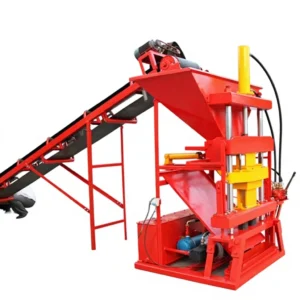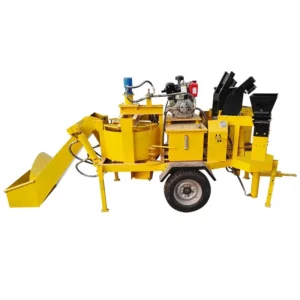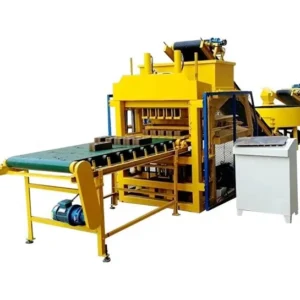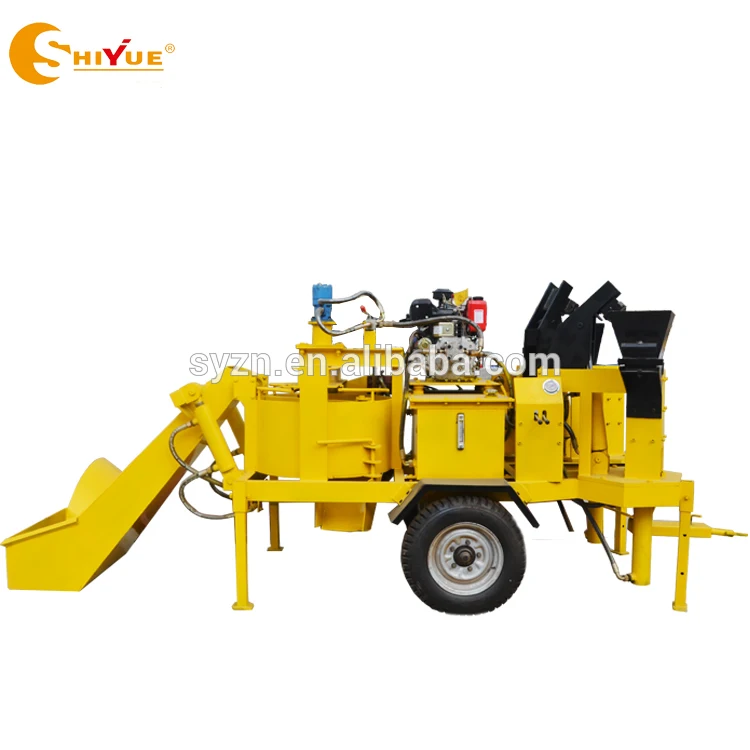
Matched Cycle Times Across Stations — The M7MI TWIN SUPER integrates a pan mixer and diesel-driven press on one mobile frame so material feed keeps pace with the 20-second molding cycle and no station sits idle.
Technical Specifications
| Parameter | Value |
|---|---|
| Model | M7MI TWIN SUPER |
| Product Type | Mobile Clay Interlocking Block Making Machine |
| Block Size | 300×150×100 mm |
| Molding Cycle | 20 s |
| Qty / Mould | 2 pcs |
| Output Capacity | 400 pcs/h (based on 300×150×100 mm interlocking block format) |
| Daily Output | 3,200 pcs / 8 hr (based on 300×150×100 mm interlocking block format) |
| Monthly Output | 45,000 blocks (basis not stated in source — confirm block format and working days) |
| Integrated Mixer | Pan mixer |
| Power Source | Diesel engine |
| Frame Type | Mobile frame |
| Hydraulic Pressure | (basis to be confirmed) |
| Vibration Force | (basis to be confirmed) |
| Pallet Size | (basis to be confirmed) |
| Mould Change Time | (basis to be confirmed) |
| Automation Level | (basis to be confirmed) |
| Overall Dimensions | (basis to be confirmed) |
| Net Weight | (basis to be confirmed) |
| Voltage & Frequency | Diesel-powered unit — no grid connection required |
| Control System | (basis to be confirmed) |
Application Suitability
| Application | Material or Output |
|---|---|
| On-site housing development | Clay interlocking blocks produced locally in phased project areas |
| Mobile construction sites | Block production relocated between sites without fixed plant |
| First-time clay block enterprise | Integrated mixing and pressing for entrepreneurs entering the market |
| Remote-area infrastructure | Diesel-powered operation independent of grid electricity |
Why "Output per Hour" Means Nothing Without the Rest of the Line
A press that waits for material produces a fraction of its rated capacity regardless of what the nameplate says.
I have watched a contractor invest in a clay interlocking block making machine production line and then feed it with a wheelbarrow and a shovel because the quotation stopped at the press. The host machine was rated for a respectable cycle, but the pan mixer was missing and no one had thought about how clay would travel from stockpile to hopper. Actual output fell to roughly one-third of the expected figure, and workers spent most of the shift moving raw material by hand instead of operating the equipment [NEED_CITE: typical output shortfall when material feed stations are omitted from block line quotations].
How the Integrated Pan Mixer Closes the Feed Gap
On this clay interlocking block making machine production line, the pan mixer sits directly on the mobile frame beside the press. Mixed clay drops into the hopper by gravity, eliminating the need for a separate conveyor or manual transfer. The mixing batch size and cycle are matched to the 20-second molding rhythm so that a fresh batch is ready before the mould closes again. This removes the single biggest bottleneck I have seen on mobile block sites — the press standing idle while workers scramble to prepare the next batch.
Matching Every Station So the Press Never Waits
A complete clay interlocking block making machine production line extends beyond the mixer and press. Clay stockpile positioning, aggregate pre-weighing, water supply, and block handling after ejection all have to fit within the same cycle window. When the integrated pan mixer delivers material on time, but the operator still carries finished blocks to the curing area by hand, throughput drops just as surely as when the feed side is under-equipped. Planning the line means asking what happens to each block in the seconds between ejection and stacking, and specifying handling equipment accordingly [NEED_CITE: block handling and curing logistics for mobile production setups].
Reading the Specs That Actually Matter
The 300×150×100 mm block format and 2-piece mould define the output rate: two blocks every 20 seconds yields the stated 400 pcs/h figure. Change the mould to a larger format or a different interlocking profile and the cycle time and hourly count shift — any capacity discussion must therefore name the block format first. The diesel engine removes dependence on site voltage and frequency, which is significant for remote or phased housing projects where grid power is unreliable or absent. Pallet size, vibration force, and hydraulic pressure are not yet confirmed in the available data, and each of these directly affects block density and demoulding quality, so they should be locked down before the purchase order is placed.
The Cost of Leaving Stations Off the Quotation
When a buyer focuses only on the press and treats the rest of the line as optional extras, the consequences show up within the first week on site. Workers hired to hand-feed and hand-stack add ongoing labour cost that was never in the project budget. Blocks cured on uneven ground because no pallets or racks were specified come back with inconsistent strength, triggering rejection at the building inspection stage. The contractor then retrofits a mixer, buys pallets, and builds curing racks — paying twice for equipment that should have been in the original scope [NEED_CITE: hidden costs of incomplete block production line specifications].
What Sets This Line Configuration Apart
Block machinery is the sole focus here, so the press, pan mixer, and frame are specified as one matched unit rather than sourced from separate vendors and bolted together on arrival. The configuration is set against the buyer’s actual clay source and target block format, not pulled from a catalogue default. Mould design covers the interlocking profiles that sell in the buyer’s market, with custom drawings available when a standard profile does not fit. Automation level can be selected so a buyer starts with manual handling and adds pallet feed or stacking later as volume grows. Installation support includes operator training on site, which matters especially when the crew has not run a mobile block line before.
Documentation & Verification
- Line layout and capacity calculation naming the 300×150×100 mm format at every station
- Machine specification sheet listing cycle time per block format, not a single generic number
- Mould drawing and interlocking profile list matching the buyer’s market requirements
- Diesel engine specification sheet with fuel consumption and service intervals
- Factory test record showing press and pan mixer running together before dispatch
- Packing photographs and customs documentation support for export shipment
Installation, Commissioning & Support
- Site preparation for the mobile frame, including level ground and drainage for the clay stockpile area
- Diesel engine first-start checks covering fuel grade, oil specification, and coolant fill
- Pan mixer and press cycle synchronization verified during on-site commissioning
- Operator training on mould change procedure and daily greasing points
- Wear parts list covering mould liners, mixer blades, and hydraulic seals with reorder codes
- Routine maintenance schedule aligned to diesel engine service intervals and press vibration checks
What to Include With Your Inquiry
Share the interlocking block profile and dimensions you intend to produce, along with your target daily volume and the number of working hours per shift. Describe your clay source and any aggregate you plan to blend, because the pan mixer configuration depends on material plasticity and moisture content. Confirm whether the curing area will use pallets on open ground or rack systems, so handling equipment can be matched to the output rate.
Frequently Asked Questions
Q: How is daily output calculated and which block format does the 3,200 pcs/8hr figure assume?
A: The 3,200 pieces per eight-hour shift is based on producing 300×150×100 mm interlocking blocks with a 20-second molding cycle and two blocks per mould. Switching to a larger or different profile changes the cycle time and pieces-per-mould count, so daily output must be recalculated for each format you plan to run.
Q: What supporting equipment is needed around the mobile press?
A: Beyond the integrated pan mixer, you will need a water supply for mixing, pallets or a flat curing surface, and a method to move finished blocks from the ejection point to the curing area. Specify pallet size and handling equipment early so that block throughput after the press does not become a second bottleneck.
Q: Can the pan mixer handle locally sourced clay without adjustment?
A: Locally sourced clay varies in plasticity, moisture, and sand content. The mixer blade geometry and batch time can be adjusted once a sample of your raw material is tested. Providing a clay sample or a soil analysis report before final configuration helps ensure consistent block density and surface finish from the first production run.
Q: How do cycle times across stations need to match so the press is not idle?
A: The pan mixer must complete a batch within the same window as the molding cycle so fresh material is available when the mould opens. If mixing takes longer than pressing, the press waits and throughput drops. Line layout should state the assumed cycle at every station, not only at the press.
Q: What site preparation does the mobile frame require?
A: The mobile frame needs firm, level ground with adequate drainage around the clay stockpile and mixer area. No fixed foundation is required, but soft or waterlogged soil can cause frame settling that affects block dimensional accuracy. Plan access for delivery trucks and for relocating the unit between phased project zones.