
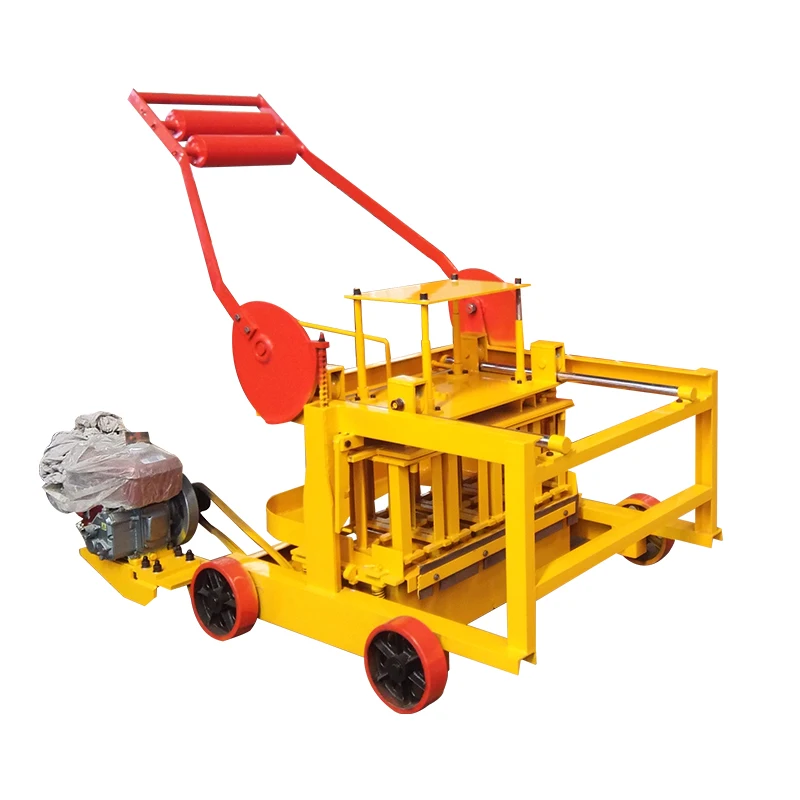
Matched system sourcing — the QMR4-45 mobile egglaying block making machine production line is quoted with its feeder, mixer and curing layout specified together, not assembled from separate catalog pages.
Technical Specifications
| Parameter | Value |
|---|---|
| Model | QMR4-45 |
| Product Type | Mobile Egglaying Block Making Machine |
| Power Source | Diesel powered (basis not stated in source — confirm engine rating) |
| Automation Level | Manual |
| Machine Type | Mobile / Egglaying |
| Mould Format | Block and mold sample available (basis not stated in source — confirm block format and dimensions) |
| Output Capacity | Productivity data referenced in source images (basis to be confirmed) |
| Control System | Manual operation |
| Pallet Size | Not applicable (egglaying type produces directly on ground) |
| Stacking Method | Manual (egglaying, no pallet required) |
| Optional Parts | Available (details in source image — verify against manufacturer catalog) |
Application Suitability
| Application | Material or Output |
|---|---|
| Small-scale block production for on-site construction | Solid blocks from locally sourced crushed stone and cement |
| Entrepreneur-level block plant startup | Hollow blocks from sand, gravel and cement blends |
| Remote or off-grid housing projects | Interlocking bricks from laterite or soil-cement mixes |
| Contractor producing blocks on project site | Paving blocks and kerbstones depending on installed mould |
What "Blocks Per Hour" Leaves Out in Mobile Egglaying Production
Capacity only means something when tied to a specific block format, mix design and curing workflow.
Many quotations for mobile block machines quote a cycle count without stating which block size that number assumes, and buyers arrive on site to find their actual daily output falls far short of expectation. The egglaying method removes the pallet from the equation, but it introduces a different constraint: the ground space needed for curing and the sequence of manual stacking [NEED_CITE: realistic daily output calculation methods for mobile block machines]. A diesel-powered mobile egglaying block making machine production line must be planned around the exact block format the buyer intends to sell, not a generic catalogue figure.
How Egglaying Changes the Line Layout
The mobile egglaying block making machine production line does not require pallets, curing racks or a fixed plant foundation. The machine moves forward along a prepared ground surface, depositing blocks directly as it goes. This means the upstream stations — raw material feeding and mixing — must be positioned so that mixed material reaches the hopper at a pace matching the machine’s travel speed. If the mixer discharge is slower than the press cycle, the operator stands idle and the quoted capacity becomes theoretical.
Where the Diesel Power Source Fits the Site
Diesel operation places this machine on remote development sites, rural housing projects and locations where grid electricity is unreliable or absent. The engine must be matched to the vibration and hydraulic demands of the block format being produced. An undersized engine will cause inconsistent compaction, leading to blocks that fail strength tests after curing [NEED_CITE: diesel engine sizing for mobile block forming equipment]. Buyers should confirm the engine specification against the heaviest mix design they plan to run.
Reading the Specs That Actually Matter
The QMR4-45 operates as a manual egglaying machine, meaning the operator controls material feed, machine travel and mould release. The vibration force and hydraulic pressure — where fitted — determine the density and compressive strength of the finished block. Without confirmed figures for these parameters in the source data, buyers should request test records that show block strength results for the specific mix they intend to use. The mould format list defines which block types the machine can produce, and mould change time on a manual machine depends on the bolt pattern and lifting equipment available on site. Pallet size is not a factor here, but curing area layout is critical: the ground must be level, and sufficient space must be allocated so that freshly laid blocks are not disturbed before initial set.
The Hidden Cost of Ignoring Upstream Timing
When the mixer output does not match the press rhythm, the entire mobile egglaying block making machine production line stalls. I have seen contractors in West Africa lose half a shift because the pan mixer could not discharge fast enough, and the crew spent the gap moving cured blocks by hand to clear ground space for the next run. The quotation looked complete, but the line was never timed as a system [NEED_CITE: production line synchronization for manual block machines]. The fix is simple — calculate material volume per cycle, then match mixer batch size and discharge interval to that number — but it must happen before the order is placed.
Why This Machine Is Sourced as Part of a Line
The QMR4-45 is specified alongside its supporting stations rather than sold as an isolated press. The raw material feeder, mixer and ground preparation requirements are calculated together so that no single station bottlenecks the others. Mould options are selected based on the block formats the buyer’s local market actually sells, with drawings provided before production. Where electrical auxiliaries are added later, voltage and control language are confirmed at the quotation stage. Installation support includes on-site sequencing of the curing area and stacking workflow, not just bolting down the machine. Wear parts and mould replacement lists are supplied with the first shipment so that downtime for the first changeover is measured in hours, not weeks.
Documentation & Verification
- Line layout drawing showing mixer position, feed path and curing area dimensions for the QMR4-45
- Capacity calculation sheet stating the exact block format and mix design assumed for daily output
- Mould drawing and format list confirming all block types producible on this machine
- Diesel engine specification sheet with fuel consumption data for the installed unit
- Operation and maintenance manual with wear parts list and recommended replacement intervals
- Factory test record showing block samples produced during pre-shipment inspection
Installation, Commissioning & Support
- Ground preparation guidance specifying level tolerance and curing area dimensions for the QMR4-45 egglaying travel path
- Diesel engine commissioning checklist covering fuel line priming, oil grade and cold-start procedure
- Mould change procedure documented with bolt torque values and lifting point locations for the QMR4-45
- Operator training covering manual feed timing, vibration duration and release technique for consistent block density
- Wear parts supply list including mould liner, vibration springs and diesel consumables for first-year operation
- Maintenance schedule aligned with engine service intervals and mould wear inspection checkpoints
What to Prepare Before Requesting a Quotation
Share the block formats your local market sells most, along with the daily volume you need to hit. Provide details on your local aggregate type and cement supply so the mix design can be factored into the capacity calculation. Confirm whether the site has any electrical supply for auxiliary equipment or if the entire mobile egglaying block making machine production line must run on diesel. Include the dimensions of your available ground space so the curing area layout can be planned before shipment.
Frequently Asked Questions
Q: How is daily output calculated for the QMR4-45, and which block format is it based on?
A: Daily output is calculated by multiplying cycles per hour by the number of blocks per mould, then adjusting for realistic operating time including mould changes, material refills and ground clearing. The figure must state the specific block format — for example, a 400×200×200mm hollow block produces fewer pieces per cycle than a smaller solid paver. Always request the capacity sheet with the format assumption written on it.
Q: What block formats can the QMR4-45 produce, and how long does a mould change take?
A: The machine accepts different moulds for solid blocks, hollow blocks and other formats depending on the mould design supplied. Mould change on a manual egglaying machine involves unbolting the current mould, lifting it clear, and securing the replacement — a task that typically requires basic hand tools and a lifting aid. Request the format list and mould change procedure to plan production changeovers.
Q: How does the egglaying method affect curing area layout and stacking workflow?
A: Blocks are produced directly on the ground, so the curing area must be level, clean and large enough to hold at least one full day’s output before blocks are moved. Stacking is done manually once blocks reach initial set strength. Planning the curing area as a loop — where the machine deposits fresh blocks on one section while cured blocks are cleared from another — keeps production continuous.
Q: Can the QMR4-45 be upgraded with supporting line equipment such as a mixer or conveyor later?
A: The manual egglaying design allows supporting equipment to be added incrementally. A powered mixer can replace hand mixing, and a small belt conveyor can move material from the mixer to the machine hopper. Each addition must be timed to match the press cycle so that upstream equipment does not outpace or starve the machine.
Q: What is the diesel fuel consumption, and are there electrical alternatives for the same model?
A: Fuel consumption depends on the engine rating and operating hours per day — request the engine specification sheet for the installed unit. Electrical versions of similar egglaying machines exist for sites with stable grid power, which removes fuel logistics but requires confirmed voltage and frequency matching. The choice between diesel and electric should be based on site conditions, not catalogue defaults.


