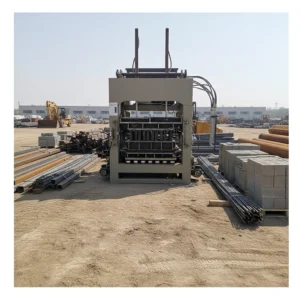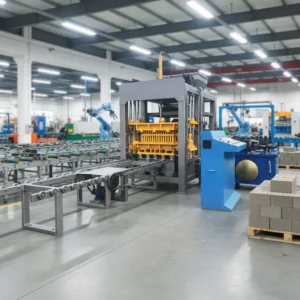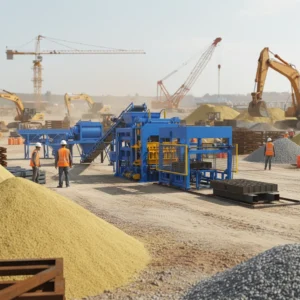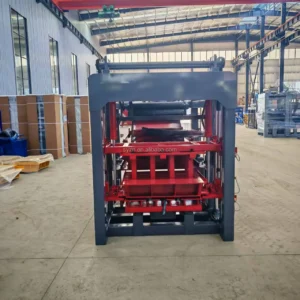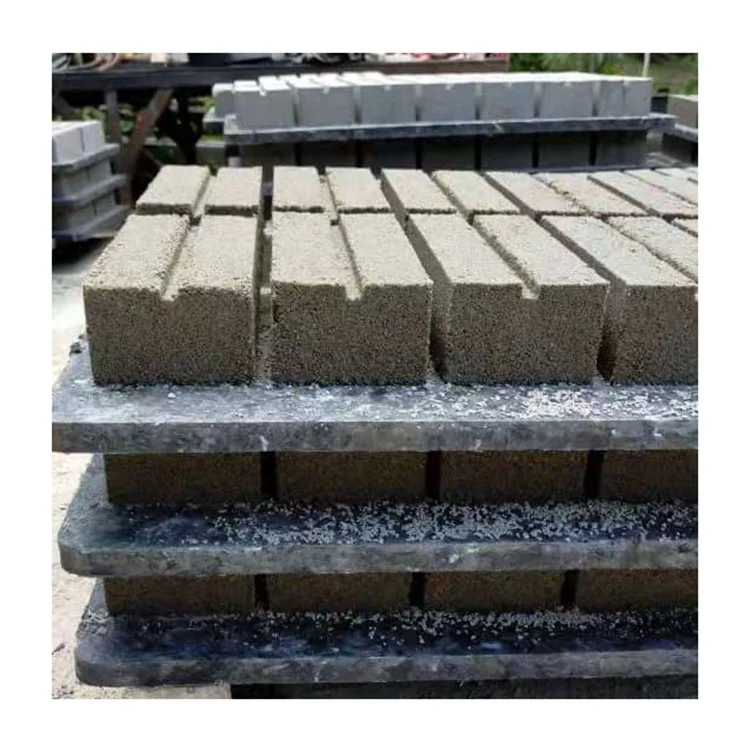
Line-Synchronized Configuration — every upstream feeder and downstream pallet return loop is sized around the press cycle so the host never idles waiting for material or pallets.
Technical Specifications
| Parameter | Value |
|---|---|
| Model | Qt4-25a |
| Product Type | Automatic Block Making Machine |
| Overall Dimensions (L×W×H) | 7100 × 1600 × 2610 mm |
| Net Weight | 5800 kg |
| Rated Power | 27.5 kW |
| Voltage & Frequency | 380V or configured to buyer requirements (frequency to confirm) |
| Control System | PLC or relay logic (to confirm) |
| Vibration Force | 60 kN |
| Pallet Size | 1020 × 850 × 40 mm |
| Mould Formats Available | 400×200×200 mm (4 pcs), 400×150×200 mm (6 pcs), 225×112.5×53 mm (16 pcs) |
| Output Capacity | 960 pcs/h (400×200×200 mm hollow block, 4 pcs/mould) |
| Daily Output | 7680 pcs/day (400×200×200 mm, assumed 8 h shift) |
| Automation Level | Semi-automatic with hydraulic system (stacking method to confirm) |
| Warranty | 1 year |
| Standards | ISO 9001:2008, CE |
Application Suitability
| Application | Material or Output |
|---|---|
| Standard hollow block production | Crushed stone, river sand, and cement mix |
| Solid brick manufacturing | Fly ash, quarry dust, and cement blend |
| Smaller-format masonry unit output | Locally sourced aggregate with cement binder |
| On-site construction block supply | Project-specific mix using available regional materials |
What a Block Making Machine Production Line Actually Means Beyond the Press
A press rated in cycles per hour only delivers that throughput when every station feeding it and clearing its output can keep pace.
On a Qt4-25a installation in West Africa, the host cycle was faster than the mixer discharge and pallet feeder combined. Cured blocks piled on the workshop floor while the press sat idle waiting for return pallets. The rated output of the block making machine production line dropped to less than half its nameplate figure because nobody had matched the upstream batch size or the downstream pallet return speed to the press rhythm [NEED_CITE: block plant throughput losses from station mismatch]. The machine was not at fault — the line around it was.
Sizing the Mixer and Feeder Around the Press Cycle
When planning a block making machine production line, the first calculation is the press cycle time per block format, then working backward to the mixer. A 400×200×200 mm hollow block at four pieces per mould means the mixer must deliver a fresh batch to the hopper before the next cycle begins. If the mixer batch is too small, the press starves; if too large, the mix sits and begins to set before it reaches the mould.
Pallet Return and Curing Rack Geometry
The 1020×850×40 mm pallet dimension sets the geometry for the entire downstream end. Curing rack spacing, forklift fork width, and the pallet return conveyor roller pitch must all align with this size. A pallet that does not match the existing curing racks forces a plant owner to rebuild the curing area or handle pallets by hand, both of which cut daily throughput [NEED_CITE: pallet handling bottlenecks in semi-automatic block plants].
Reading the Specifications That Matter for Line Integration
The 60 kN vibration force combined with hydraulic pressure determines how densely the mix is compacted in the mould cavity. Higher compaction produces stronger blocks but demands a mix with the right moisture and aggregate grading — a dry mix that works at lower vibration may crumble at higher force. The 27.5 kW rated power must be added to the mixer motor, feeder drives, and any stacker motors when calculating the total connected load for the line’s main electrical panel. Voltage and frequency must be confirmed before production so the control panel and motor windings match the buyer’s site supply; a 380V machine on a 415V grid will overheat motors, while a 50 Hz motor running on 60 Hz will overspeed and fail prematurely.
The Hidden Cost of Skipping Line-Level Specification
Buyers who quote only the press often discover after arrival that the pallet feeder is too slow, the curing racks do not fit the pallet size, or the electrical panel cannot handle the combined load of the press, mixer, and stacker running together. These mismatches surface during commissioning, when the cost of replacing a conveyor or rewinding motors is highest and the project deadline is already slipping [NEED_CITE: commissioning delays from unplanned line equipment].
Why Sourcing the Full Line Matters
Block machinery as a single focus means the press, mould, pallet, and handling equipment are specified as one matched system rather than assembled from separate suppliers. Configuration is set against the buyer’s actual mix design, local aggregate, and target block format. Mould design covers the formats the buyer’s market actually sells, including custom drawings. Automation level is selectable so a plant can start semi-automatic and add stacking later. Installation support includes operator training so the crew understands cycle matching from day one.
Documentation & Verification
- Line layout drawing showing station spacing and pallet flow path for the Qt4-25a
- Capacity calculation sheet stating block format and cycle time assumptions
- Voltage and control language confirmation form signed before production
- Factory test record on buyer’s specified block format before dispatch
- Hydraulic and electrical schematic for integration into the line’s central panel
Installation, Commissioning & Support
- Foundation plan accounting for the 5800 kg net weight and vibration isolation
- Electrical feed sized for the 27.5 kW press plus upstream and downstream motors
- Machine arrives fully assembled or SKD depending on container loading method
- On-site commissioning includes cycle timing verification across all line stations
- Operator training covers mould change procedure and daily maintenance checkpoints
- Wear parts list with reorder codes for hydraulic seals and mould liners
What to Include in Your Inquiry
Share the block formats you plan to produce, the daily output target per format, your available workshop length and ceiling height, and the local voltage and frequency. If you already have a mixer, curing racks, or forklifts on site, list their specifications so the line can be designed around what you have.
Frequently Asked Questions
Q: How do I match mixer batch output to the Qt4-25a cycle time so the press is never starved of material?
A: Start with the cycle time for your target block format, then calculate the volume of mix consumed per cycle. The mixer must discharge a full batch within that window. If your mixer batch is smaller than the per-cycle consumption, the press will idle between cycles, reducing daily output below the rated figure.
Q: What pallet return and stacking equipment is needed to keep up with daily output at each block format?
A: The pallet return conveyor speed must exceed the press cycle rate so a fresh pallet is always in position. For the 400×200×200 mm format at 960 pcs/h, the return loop must move one pallet roughly every 15 seconds. Manual stacking is possible at lower outputs but becomes a bottleneck as formats shift to higher piece counts per mould.
Q: How should I plan the curing rack area based on the 1020×850 mm pallet and daily output?
A: Multiply daily pallet count by the rack footprint per pallet including forklift aisle clearance. At 7680 blocks per day on the large hollow format, you will cycle approximately 1920 pallets through the curing area daily. Rack spacing must match the 850 mm pallet width to avoid manual repositioning.
Q: What total connected load should I plan for the complete line including the press, mixer, feeder, and stacker?
A: Add the 27.5 kW press rating to the mixer motor, feeder drives, and any stacker or cuber motors. Include a margin for simultaneous starting current. The main distribution panel should be sized with input from an electrician familiar with your local voltage and frequency standards [NEED_CITE: industrial motor starting current margins].
Q: Can I start with manual pallet handling and upgrade to automatic stacking later without replacing the press?
A: The Qt4-25a hydraulic system and control interface allow a stacking upgrade if the press was originally configured with the necessary sensor mounts and valve ports. Confirm this configuration before the machine is built, as retrofitting hydraulic circuits after delivery is more costly than including them at the factory stage.