
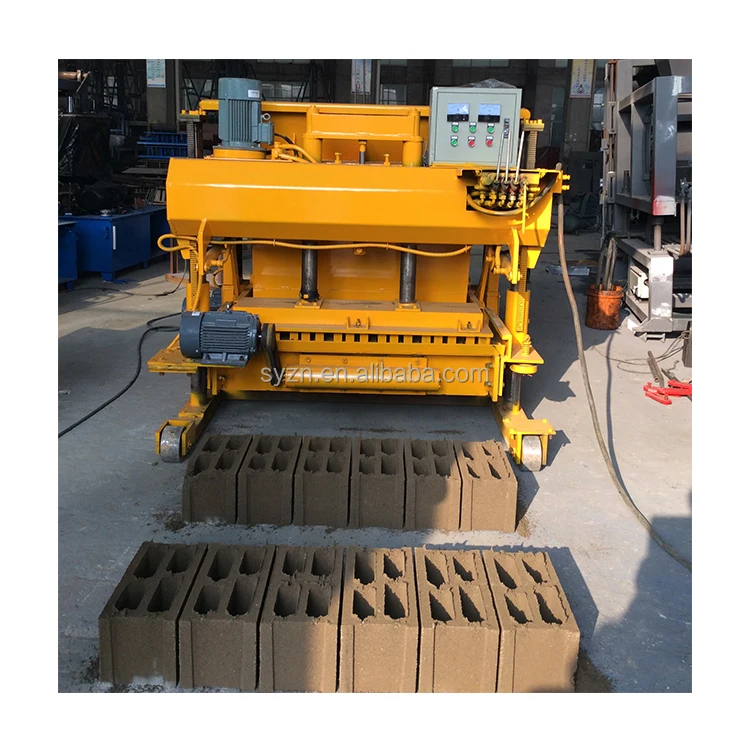
System-Matched Configuration — Every QMY6-25 mobile block machine is paired with a mixer, batching, and material handling setup calculated to match the press cycle, so upstream and downstream stations never become a bottleneck.
Technical Specifications
| Parameter | Value |
|---|---|
| Model | QMY6-25 |
| Product Type | Mobile Egg Laying Block Making Machine |
| Molding Capacity | 6 pcs/mold |
| Molding Cycle | 20s–25s (basis not stated in source — confirm block format and material) |
| Hydraulic Pressure | 16 MPa |
| Vibration Form | Mold Vibration |
| Turning Method | Hydraulic |
| Total Power | 9.6 kW |
| Total Mass | 2.5 Tons |
| Pallet Requirement | No pallet required (egg laying type) |
| Control System | Not stated in source |
| Automation Level | Manual operation, one person can operate |
| Voltage & Frequency | Customizable according to requirement (basis not stated in source — verify with manufacturer) |
| Basic Configuration | QMY6-25 host machine, JS500 Concrete Mixer, Dump truck |
| Optional Configuration | PLD800 Batching Machine, Cement Silo, Screw conveyor, Loading machine |
Application Suitability
| Application | Material or Output |
|---|---|
| On-site hollow block production for building projects | Crushed stone, sand, cement, water |
| Large solid block manufacturing at project locations | Gravel, fly ash, cement blends |
| Small-scale block plant startup in developing markets | Local aggregate, sand, cement |
| Contractor-led block production across multiple job sites | Variable aggregate sources, cement |
| Entrepreneur first block plant with low initial investment | Standard concrete mix designs |
What "One Machine Quote" Leaves Out of the Line
The QMY6-25 is a node, not a standalone solution — its real daily output depends entirely on whether the mixer, batching, and material feeding stations keep pace with its cycle.
Buyers often receive a quotation for a mobile block machine production line that lists only the host press. The mixer capacity, material feed rate, and curing logistics are left to the buyer to figure out after arrival. I have seen contractors in Africa receive a QMY6-25, only to find their existing mixer could not deliver enough fresh concrete per cycle, forcing the press to idle for seconds between every mold [NEED_CITE: common block line mismatch causes in emerging markets]. The result is a line that technically runs but never reaches its stated cycle time. A turnkey egg laying block machine proposal should specify every station and how they connect.
Matching Mixer Throughput to the Press Cycle
The QMY6-25 completes one mold every 20 to 25 seconds, producing 6 blocks per cycle. The basic configuration pairs it with a JS500 concrete mixer, which must deliver a fresh batch fast enough to keep the press running without waiting. If the mixer output is slower than the press consumption, the operator stands idle, and daily output drops below expectation. This is where a mobile block machine production line either works as designed or quietly underperforms from day one.
How Batching and Material Feed Connect to the Host
The optional PLD800 batching machine, cement silo, and screw conveyor form the upstream material supply chain. The batching machine measures aggregate and sand ratios before they enter the mixer, while the cement silo stores bulk cement and feeds it through the screw conveyor at a controlled rate. When these stations are omitted, the operator must measure and load materials manually — which introduces inconsistency in the mix and slows the feed to the mixer. A loading machine or wheel loader ensures the batching hopper stays full so the turnkey egg laying block machine line never starves for material.
Pressure, Vibration, and Block Density in Egg Laying Operation
The QMY6-25 uses 16 MPa hydraulic pressure combined with mold vibration to compact concrete into the mold cavity. In an egg laying machine, the press lays blocks directly onto the ground surface and then moves forward to the next position. This means ground conditions become part of the forming equation. A site with uneven or un-compacted soil causes the machine to tilt slightly during vibration, producing blocks with inconsistent geometry. Before any equipment ships, the foundation must be a level, hardened concrete surface — I have watched an entire project stall for nearly a month because the ground was never prepared, and the client had to pour a new slab before production could begin [NEED_CITE: ground preparation requirements for mobile block forming equipment].
The Hidden Cost of Underspecifying the Line
When the quotation covers only the host machine, the buyer absorbs the cost of every missing station later. A contractor who sources a mixer locally may end up with one that does not match the JS500 output rate, creating a bottleneck that costs production hours every shift. Missing pallet handling is not an issue here since the QMY6-25 is pallet-free, but material feeding, water supply, and block transport from the curing area still need planning. Without a line layout document, these gaps surface only after installation — when changes are expensive and delays compound [NEED_CITE: block plant commissioning delays from incomplete line specifications].
Why a System Approach to Line Planning Matters
Block machinery as a single focus means the QMY6-25 is specified together with its mixer, batching, and material handling equipment as one matched system rather than assembled from separate suppliers. The configuration is set against the buyer’s actual mix design, local aggregate, and target block format, not a catalogue default. Mould design covers the formats the buyer’s market actually sells, including custom drawings when standard molds do not match. The automation level is selectable, so a buyer can start with manual operation and add batching or loading equipment later. Installation and commissioning support includes operator training so the crew knows how every station in the mobile block machine production line connects.
Documentation & Verification
- Line layout and capacity calculation stating the block format assumed for the 20s–25s cycle
- Machine specification sheet covering host, mixer, batching, and optional stations as one system
- Voltage, frequency, and control language confirmation signed off before production
- Factory test record showing the complete line running together, not the press alone
- Mould drawing and format list matching the buyer’s local block market requirements
- Packing photographs and customs documentation support for smooth port clearance
Installation, Commissioning & Support
- Hardened concrete ground slab required under the full travel path of the 2.5-ton QMY6-25
- Power supply matching confirmed voltage and frequency for the 9.6 kW total load
- JS500 mixer positioned within reach of the press feed hopper to minimize cycle gaps
- Hydraulic turning system tested on-site to confirm 16 MPa pressure holds under local temperature
- PLD800 batching machine calibrated with local aggregate densities before first production run
- Operator training covers mold change procedure, mixer loading sequence, and daily maintenance checks
What We Need to Build Your Line Proposal
To size the complete turnkey egg laying block machine setup, share your target block format and dimensions, estimated daily output requirement, and the local aggregate materials you plan to use. Include your site voltage, frequency, and any existing equipment such as loaders or curing area layout. If the ground surface is not yet prepared, let us know the current site conditions so we can include foundation guidance in the proposal.
Frequently Asked Questions
Q: How is daily output calculated for the QMY6-25, and which block format does the cycle time assume?
A: The molding cycle is listed at 20 to 25 seconds per mold with 6 pieces per mold. However, the block format and material mix that define this cycle are not stated in the source documentation. Real daily output depends on the specific hollow block or solid block dimensions, the concrete mix design, and whether upstream stations like the JS500 mixer keep pace. We provide a capacity calculation document that states the assumed format and mix before finalizing the line layout.
Q: What mixer capacity is needed so the QMY6-25 press is never left waiting between cycles?
A: The basic configuration includes a JS500 concrete mixer, which is sized to match the material consumption rate of the QMY6-25 at its stated cycle time. If you choose an alternative mixer, its batch output per minute must equal or exceed what the press consumes. We confirm the mixer-throughput-to-press-consumption ratio in the line layout so there is no idle time between molding cycles.
Q: How do the optional batching machine, cement silo, and screw conveyor integrate with the host machine?
A: The PLD800 batching machine meters aggregate and sand into the JS500 mixer. The cement silo stores bulk cement and feeds it through the screw conveyor at a controlled rate, replacing manual bag-opening and loading. A loading machine keeps the batching hopper supplied. All these stations are specified together with the QMY6-25 so material flow rates are balanced across the entire mobile block machine production line.
Q: What electrical requirements need confirmation before the QMY6-25 ships?
A: Voltage and frequency are customizable, but the exact values must be confirmed against your site supply before production begins. The total power draw is 9.6 kW, and the control system language needs to match your operator team. We document the agreed voltage, frequency, and display language in the specification sheet and verify them during the factory test to avoid commissioning delays after arrival.
Q: What supporting equipment is needed for block handling when no pallets are used?
A: Since the QMY6-25 is an egg laying machine, blocks are placed directly on the ground and the press moves forward. No pallet feeding, return conveyor, or curing rack system is required. However, you still need a transport plan for moving cured blocks to the storage or dispatch area. A dump truck included in the basic configuration handles this, and a wheel loader can speed up raw material movement around the site.


