
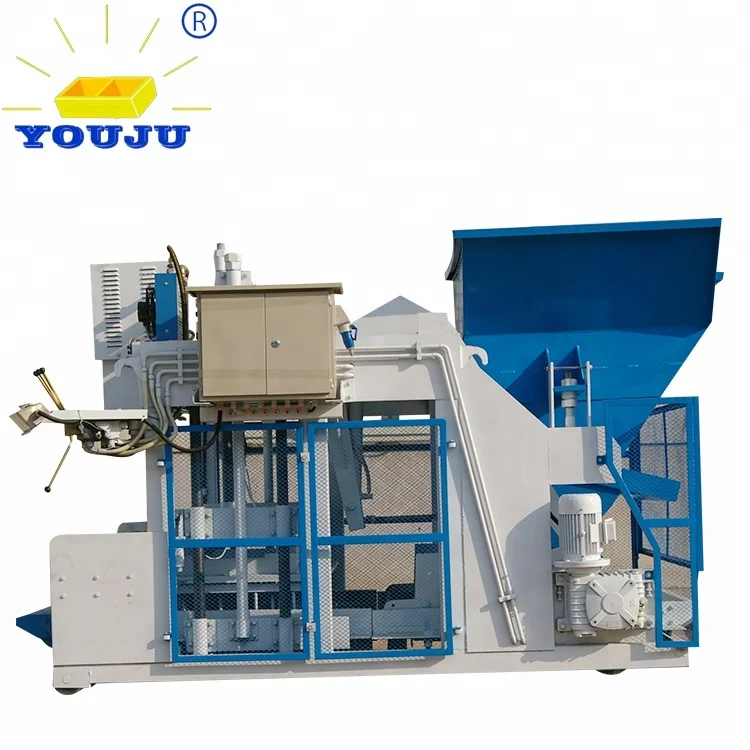
Line-Centric Specification — every raw material, mixing, curing and stacking station is sized to the QMY12-15 mobile press cycle so the line never starves or bottlenecks.
Technical Specifications
| Parameter | Value |
|---|---|
| Model | QMY12-15 |
| Product Type | Automatic Hydraulic Mobile Block Making Machine |
| Automation Level | Automatic |
| Pressure Type | Hydraulic Pressure |
| Machine Type | Mobile Egg-Laying |
| Mould Format | Multi-Size Production 4/6/8/9 Inch Cement Blocks |
| Block Type | Hollow Block |
| Voltage & Frequency | Configurable (basis to be confirmed) |
| Control System | Configurable (basis to be confirmed) |
| Hydraulic Pressure (MPa) | To be confirmed based on block format and material |
| Vibration Force (kN) | To be confirmed based on block format and material |
| Pallet Size | To be confirmed based on curing area and forklift |
| Cycle Time per Format | To be confirmed based on block format and material |
| Output Capacity | To be confirmed based on block format assumed |
Application Suitability
| Application | Material or Output |
|---|---|
| On-site cement block production without fixed plant infrastructure | Crushed stone, sand, cement and water mix |
| Multi-size hollow block manufacturing (4/6/8/9 inch formats) | Local aggregate matched to buyer’s mix design |
| Mobile construction site block production | Project-site raw materials with variable grading |
| Small to medium scale block plants with egg-laying operation | Standard cementitious binders with regional fillers |
Why the Mix Design Question Should Come Before the Machine Order
A mobile press configured for a catalogue-default mix will underperform the moment it meets local aggregate.
When I first set up a mobile egg-laying line overseas, the sample blocks we produced in Shandong used graded river sand. The buyer’s site had volcanic scoria with completely different absorption and particle shape. The vibration parameters and hydraulic pressure we had dialed in no longer matched, and the first production run came out weak. I spent ten days on-site adjusting the mix ratio and retuning the press until block strength stabilized [NEED_CITE: aggregate variability effects on block compressive strength]. A mobile block making machine production line only delivers consistent output when every upstream station — batching, mixing, moisture control — is set for the material that actually arrives at the hopper, not a laboratory ideal.
Coordinating Press Cycles with Upstream Material Delivery
The QMY12-15 operates as an egg-laying unit, moving forward along the curing floor and depositing blocks directly onto the ground. This eliminates the pallet return loop but places a strict demand on material delivery: the mixer must discharge a fresh batch at exactly the interval the press consumes one. If the mixer is undersized, the press sits idle between cycles. If it is oversized, wet concrete sits in the hopper losing workability. Specifying the mixer capacity and discharge rate against the actual cycle time of the target block format is what keeps a mobile block making machine production line running without interruption.
Curing Logistics That Match the Egg-Laying Pattern
Because the press lays blocks in continuous rows across the curing floor, the curing area must be planned as a one-way flow: fresh blocks at one end, cured stock at the other, with enough distance for the required curing period. Forklift access lanes, water sprinkling points, and stacking zones all need to be laid out before the first block is produced [NEED_CITE: concrete block curing duration and strength development standards]. The QMY12-15 mobile setup removes the pallet cost and pallet-return conveyor, but it shifts the logistical burden to floor space management and curing-time discipline.
Reading the Specs That Actually Matter on Site
Hydraulic pressure and vibration force together determine how densely the concrete is compacted inside the mould. Higher vibration frequency works well with fine sand but can cause segregation in a coarse aggregate mix, which is why both parameters must be adjusted as a pair rather than set independently. The mould format range — 4, 6, 8 and 9 inch hollow blocks — means the press must deliver enough compaction energy for the tallest format while not over-pressing the shortest one. Mould change time directly affects how many format switches are practical in a single shift; a change that takes half a shift will discourage the operator from switching at all, defeating the purpose of a multi-format machine.
What Happens When Supporting Stations Are Left Out of the Quote
I have seen buyers receive a mobile press quotation that covers only the machine itself. The mixer, water metering, curing covers, and forklift are assumed to be already on site. When they are not, the buyer scrambles to source mismatched equipment locally, and the line runs at a fraction of its designed capacity [NEED_CITE: production line bottleneck analysis in concrete block manufacturing]. The hidden cost is not the missing equipment — it is the weeks of lost output while the gaps are filled.
Why Buyers Come Back for the Second Line
Block machinery is the single focus here, so the press, mould, mixer, and curing logistics are specified as one matched system rather than assembled from separate vendors. The configuration is set against the buyer’s actual mix design and local aggregate, not a default catalogue sheet. Mould design covers the formats the buyer’s market actually sells, with custom drawings available when standard formats do not fit. Automation level is selectable, allowing a buyer to start with manual pallet handling and add automatic stacking later. Installation includes on-site commissioning and operator training so the line runs from day one, not after weeks of trial and error.
Documentation & Verification
- Line layout drawing showing material flow from batching through curing for QMY12-15
- Capacity calculation sheet stating the exact block format assumed per cycle
- Mould drawing and format list covering 4/6/8/9 inch hollow block options
- Hydraulic and electrical schematic matching the confirmed voltage and frequency
- Factory test record run on buyer-specified mix design before dispatch
- Operation and maintenance manual in confirmed control language
Installation, Commissioning & Support
- Curing floor must be level and sized for the QMY12-15 turning radius and row spacing
- Power supply circuit dedicated to the confirmed voltage and frequency rating
- Machine shipped in dismantled state with reassembly guide and bolt torque schedule
- First production run supervised on-site with mix ratio and vibration parameters tuned
- Operator training covers mould change procedure across all supplied block formats
- Wear parts list and mould maintenance schedule provided at handover
What We Need to Size Your Line Correctly
To configure the QMY12-15 and its supporting stations for your site, share the block formats you plan to produce, your target daily output per format, and a sample or description of your local aggregate. We also need your available curing floor dimensions, existing forklift capacity, and local voltage and frequency so the electrical system is built right before the machine leaves the factory.
Frequently Asked Questions
Q: How does the QMY12-15 press cycle time coordinate with material feeding and curing?
A: The mixer discharge rate is calculated against the press cycle time for your target block format. If the cycle is longer for a 9-inch block than a 4-inch block, the batching interval adjusts accordingly so the hopper never runs dry or overflows. Curing row length is planned around the daily output so fresh blocks are not disturbed before initial set.
Q: What supporting equipment is included beyond the mobile press itself?
A: The quotation covers raw material feeding, mixing station, water metering, and any pallet or curing logistics matched to the egg-laying operation. Stacking and curing rack handling are specified based on your floor layout. Items assumed to be already on site, like forklifts, are listed explicitly so there are no gaps.
Q: How is the line configured for local aggregate and mix design?
A: Before production, we review your aggregate grading, absorption rate, and cement type. Vibration force and hydraulic pressure on the QMY12-15 are then set to match that specific mix. If your aggregate differs significantly from standard sand, we adjust the parameters and validate with a test run before dispatch.
Q: What pallet or curing setup does an egg-laying mobile line require?
A: Egg-laying machines deposit blocks directly on the curing floor, so pallets are not needed for the press cycle. The curing area must be level, sized for daily output, and accessible to your forklift for moving cured stock. We provide a floor layout showing row spacing and traffic lanes matched to the QMY12-15 travel path.


