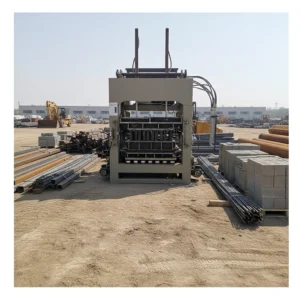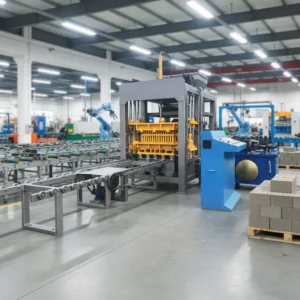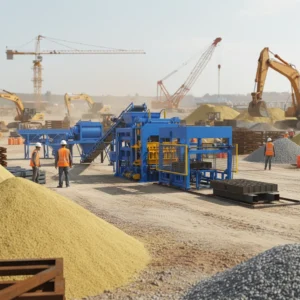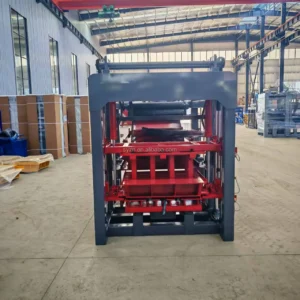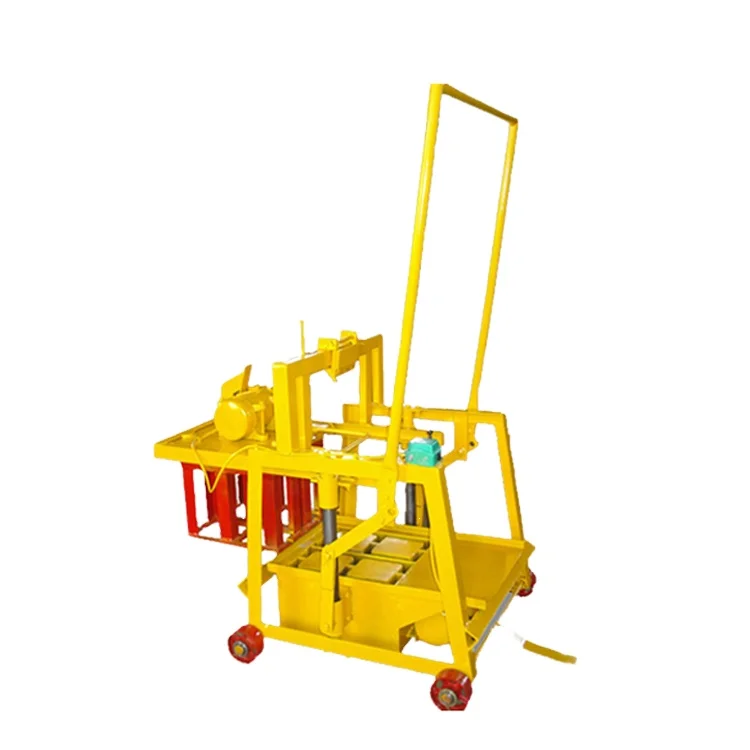
Matched System Approach — the QMJ2-45 mobile egg laying block machine, mould and on-site workflow are configured together against your target block format, not sourced as separate catalogue items.
Technical Specifications
| Parameter | Value |
|---|---|
| Model | QMJ2-45 |
| Product Type | Mobile Egg Laying Block Making Machine |
| Machine Power | 1.5 kW |
| Molding Cycle | 45 s (basis not stated in source — confirm block format / material / thickness) |
| Output Capacity | 1280 pcs/8 hours (based on 300×150×100 mm solid/hollow block, 2 pcs/mould) |
| Theoretical Productivity | 160 pcs/hour (based on 300×150×100 mm block, 2 pcs/mould) |
| Raw Material | Concrete, sand, cement |
| Machine Weight | 150 kg |
| Overall Dimensions (L×W×H) | 920×800×1258 mm |
| Exciting Power | 2 pcs/mould (vibration motors per mould) |
| Voltage | According to buyer’s local voltage (specific voltage/frequency not stated in source — confirm before order) |
| Automation Level | Semi-automatic, manual movable (egg-laying type) |
| Pallet Size | Not stated (egg-laying type — blocks laid directly on ground) |
| Key Features | Bed mould vertical vibration combined with upper mould compression vibration, manual movable operation, no fixed plant infrastructure required |
Application Suitability
| Application | Material or Output |
|---|---|
| On-site block production for construction contractors | Hollow and solid blocks from crushed stone, sand and cement without a fixed plant |
| Small-scale block manufacturing for local building projects | 300×150×100 mm hollow and solid blocks, 2 pcs per cycle |
| Entrepreneur first block plant | Low-investment setup with minimal supporting equipment |
| Housing project contractors producing blocks locally | Concrete blocks on-site reducing transport and external supply dependence |
What "1,280 Pieces per Day" Actually Means on Your Site
Output figures only hold when the block format, mix design and curing method are stated alongside them.
Catalogue sheets often quote cycles per hour without naming the block size behind that number, so daily output falls short once production starts. With the QMJ2-45, the 1,280 pcs/8 hours figure is tied to a 300×150×100 mm block at 2 pcs/mould — a different format or wall thickness shifts the cycle time and the daily total. I have watched contractors in Latin America plan their masonry schedule around a capacity number that assumed a format they never intended to sell [NEED_CITE: block format and cycle time relationship in egg laying production]. Stating the format up front keeps the construction timeline realistic.
Supporting Equipment That Keeps the Press Running
A Mobile Egg Laying Block Machine production line is only as steady as the stations feeding it. Raw material mixing, concrete consistency and the speed at which the operator moves the machine between laying positions all gate the cycle time. If the mixer batch is late or the mix is too dry, the press sits idle and the 45-second cycle stretches. Matching mixer output to the QMJ2-45 consumption rate prevents the most common bottleneck on small sites.
How Egg-Laying Changes the Line Layout
Egg-laying machines deposit blocks directly on the ground, eliminating pallets and pallet handling systems from the line. This simplifies the layout but shifts the requirement to a flat, level curing area large enough to hold a full day’s output. The QMJ2-45 footprint of 920×800×1258 mm and 150 kg weight means one operator can reposition it, but the curing zone must be planned so that freshly laid blocks are not walked on or driven over before initial set [NEED_CITE: concrete block curing area planning for egg laying machines].
Reading the Specs That Matter on Site
The 1.5 kW machine power and 2 vibration motors per mould define how densely the concrete is compacted during each 45-second cycle. Vibration force and duration together determine block density and, ultimately, compressive strength — under-vibrated blocks crumble at the edges, over-vibrated blocks segregate the mix. The semi-automatic, manual movable design means the operator controls positioning and cycle start, so consistency depends on operator discipline as much as machine settings. Voltage must match the site supply exactly; a 220V/60Hz site receiving a 380V/50Hz machine means weeks of downtime while a transformer is sourced.
The Hidden Cost of Skipping Electrical Confirmation
Voltage mismatch is the single most preventable cause of dead-on-arrival machinery in export markets. When a machine lands on a site with the wrong voltage and frequency, nothing runs until a transformer or motor swap is completed — meanwhile masons, mixers and labour stand idle. Confirming the exact panel voltage with a photograph before the QMJ2-45 leaves the factory removes this risk entirely [NEED_CITE: voltage and frequency standards by export market]. The cost of a confirmation step is negligible against three weeks of lost production.
Why Buyers Source This Line Through Us
Block machinery is our single focus, so the QMJ2-45 is specified alongside the mould, on-site workflow and supporting mixer as one matched system rather than assembled from separate suppliers. Configuration is set against the buyer’s actual mix design, local aggregate and target block format, not a catalogue default. Mould design covers the formats the buyer’s market actually sells, with custom drawings available. Automation level is selectable, so a buyer can start with the semi-automatic QMJ2-45 and add equipment later. Installation support includes operator training so the first week of production is not spent on trial and error.
Documentation & Verification
- Line layout and capacity calculation stating the 300×150×100 mm block format assumed for the QMJ2-45
- Machine specification sheet with confirmed voltage and frequency before production begins
- Mould drawing and format list showing supported block sizes and changeover procedure
- Operation and maintenance manual with wear parts list included at delivery
- Factory test record on your target block format before dispatch
Installation, Commissioning & Support
- Flat, level ground preparation across the curing area to support egg-laying without pallets
- Dedicated circuit matching confirmed QMJ2-45 voltage and frequency, with correct breaker rating for 1.5 kW motor
- Machine arrives assembled at 920×800×1258 mm, 150 kg — positioned by hand or small crane
- First-run cycle time and vibration duration set against your local aggregate and mix design
- Operator training on mould change, block ejection and daily maintenance routines
- Wear parts list with reorder identifiers for vibration motors and mould contact surfaces
What We Need to Quote Your Line
To size the QMJ2-45 and its supporting equipment accurately, share the target block format and daily volume you plan to produce, the local aggregate and cement types available, and your site voltage and frequency with a photo of the supply panel. If you have an existing mixer or curing area, include those dimensions so the line layout accounts for what is already on site.
Frequently Asked Questions
Q: How is the 1,280 pcs/day capacity verified, and which block format does it assume?
A: The 1,280 pcs/8 hours figure is based on a 300×150×100 mm solid or hollow block at 2 pcs per mould cycle. A different block size or wall thickness changes the mould cavity count and the cycle time, which shifts the daily total. We state the assumed format in the capacity calculation so you can plan against your actual product.
Q: What supporting equipment is needed around the QMJ2-45 for a complete line?
A: At minimum, a pan mixer sized to keep pace with the QMJ2-45 consumption rate, raw material batching tools, and a flat curing area large enough for a full day’s output. No pallets, pallet feeder or stacker are required because the machine lays blocks directly on the ground.
Q: How are voltage and frequency confirmed to match the buyer’s site before shipment?
A: We request a photograph of the site electrical panel showing voltage and frequency markings before production starts. The QMJ2-45 motor and wiring are then built to that exact specification, avoiding the transformer retrofit delays that idle machines on arrival.
Q: What is the curing area requirement for egg-laying production?
A: The area must be flat, level and large enough to hold roughly one day’s output without blocks being stacked or walked on before initial set. Planning the curing zone length against the machine’s laying path prevents freshly produced blocks from being damaged during the same shift.