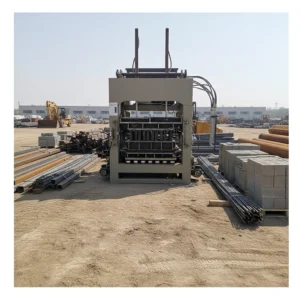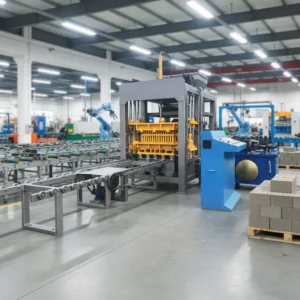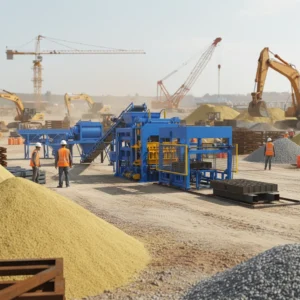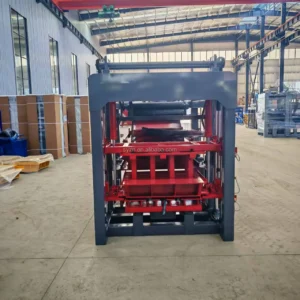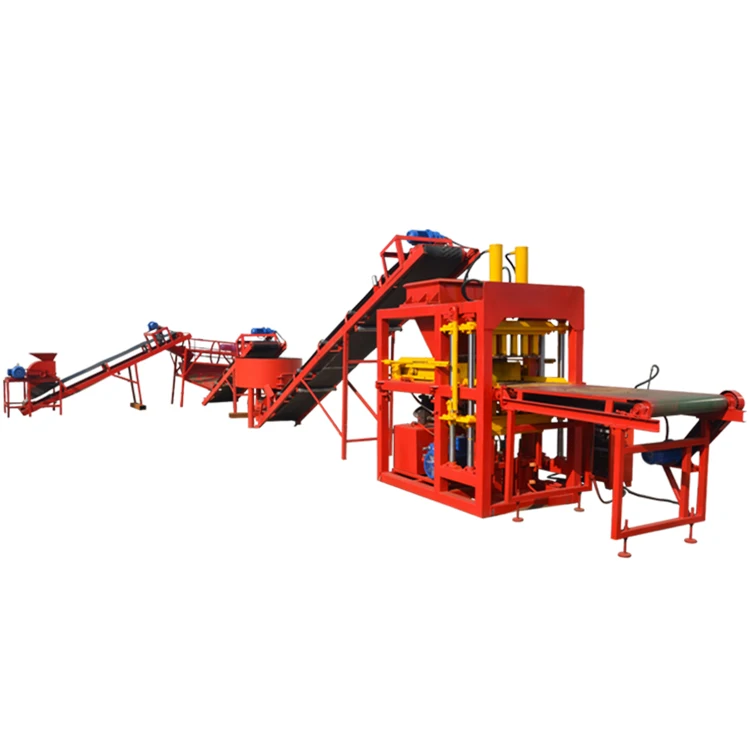
Semi-automatic block press — configured within a full production line where upstream feeding, mixing, and downstream pallet handling are matched to its 10-second cycle so no station becomes the bottleneck.
Technical Specifications
| Parameter | Value |
|---|---|
| Model | LY4-10 |
| Product Type | Automatic Clay Brick Making Machine |
| Rated Power | 11 kW |
| Molding Cycle | 10 s |
| Output Capacity | 11520 pcs/8 hours (based on 300×150×100mm block, 4 pcs/mould) |
| Pcs per Mould | 4 (for 300×150×100mm block) |
| Pcs per Hour | 1140 (based on 300×150×100mm block format) |
| Raw Materials | Concrete, sand, cement, fly ash, lime, gypsum |
| Machine Weight | 1200 kg |
| Overall Dimensions | 1600×1400×2100 mm |
| Vibration System | Bed mould vertical vibration and upper mould compression vibration |
| Voltage | According to local voltage (basis to be confirmed) |
| Automation Level | Semi-automatic |
Application Suitability
| Application | Material or Output |
|---|---|
| Clay brick production | Clay and shale blends for standard building units |
| Ecological brick manufacturing | Fly ash, lime, and gypsum mixes |
| Concrete block production | Sand, cement, and crushed stone aggregates |
| Small to medium-scale plant operations | Daily output matched to 300×150×100mm format runs |
Why the Mixer Starves the Press Before Noon
Every block production line equipment setup that ignores upstream batching rhythm ends up with a press idling for material.
I once stood on a North African plant floor watching a fully automatic press wait through twenty-two seconds of every cycle because the twin-shaft mixer discharged too slowly for the line tempo. The rated output on paper was never reached. With a 10-second molding cycle on the LY4-10, the turnkey block making line must deliver a complete batch of mixed material every ten seconds or the press sits empty. That gap between nameplate capacity and real daily output is where most projects lose money [NEED_CITE: typical output loss from upstream bottleneck in semi-automatic block plants].
The vibration motors, hydraulic compression, and pallet feed all assume continuous material arrival. When the mixer falls behind, every downstream station slows in sequence — and the operator is left stacking half-days of output by hand.
How Upstream Stations Must Keep the Ten-Second Rhythm
A block production line equipment configuration around the LY4-10 starts with raw material feeders sized to deliver sand, cement, and fly ash into the mixer at a rate that completes a full batch in under ten seconds. If the mixer is undersized or the belt feeder runs too slowly, the press waits. The feeding station must hold enough material for continuous shifts without manual refilling interruptions.
Where Semi-Automatic Defines the Manual Boundary
The semi-automatic designation means the LY4-10 handles pressing and vibration automatically, but pallet placement and wet-block transfer typically require operator involvement. This boundary determines how many workers the turnkey block making line demands and where future automation can be added. A buyer starting at semi-automatic level should plan the physical space for an eventual automatic pallet feeder and stacker [NEED_CITE: semi-automatic to full automation upgrade path in block plants].
Sizing the Line to the 300×150×100mm Format
At 4 pieces per mould and 1140 pieces per hour based on the 300×150×100mm format, the curing racks and pallet return conveyor must absorb that throughput continuously. If the pallet size does not match the buyer’s existing curing area dimensions or forklift fork width, every pallet requires manual repositioning. The pallet specification must be locked before the line is built, not after arrival.
Reading the Specs That Actually Shape the Line
The 11 kW rated power covers the press itself — the total line draw depends on mixer motor rating, feeder drives, and any conveyor motors added upstream and downstream. The vertical bed vibration combined with upper mould compression vibration determines block density, but only when the mix design arriving from the mixer matches what the vibration force was set for. Machine weight of 1200 kg and overall dimensions of 1600×1400×2100 mm define the foundation pad size and workshop clearance needed. Voltage must be confirmed against local supply frequency before the control panel is wired, as mismatched voltage on arrival delays commissioning by weeks [NEED_CITE: voltage and frequency confirmation requirements for export block machinery].
The Cost of Leaving Pallet Handling Off the Quotation
When a buyer receives a quotation for the press alone, pallet feeding, stacking, and curing rack handling are often assumed to be handled manually. In practice, pulling wet blocks off the press at 1140 pieces per hour by hand requires multiple workers per shift and introduces breakage before blocks reach the curing area. The line was never truly quoted — only its centerpiece was.
Why This Configuration Approach Works
Block machinery is the single focus here, meaning the LY4-10 is specified alongside its feeder, mixer, pallet system, and stacking stations as one matched line rather than assembled from separate suppliers. The configuration is set against the buyer’s actual mix design and local aggregate, not a catalogue default. Voltage, control language, and pallet dimensions are confirmed before production starts. Factory testing documents actual cycle time against the stated block format so the buyer sees real output before the machine ships. Installation support includes operator training on every station, not just the press.
Documentation & Verification
- Line layout drawing showing every station from raw material hopper through cubing with cycle times matched to the LY4-10
- Pallet specification sheet confirming size, material, and compatibility with buyer’s curing racks and forklift
- Voltage, frequency, and PLC display language written confirmation before production begins
- Factory test record documenting actual cycle time and output per 300×150×100mm block format
- Hydraulic and electrical schematic for the full line, not the press alone
Installation, Commissioning & Support
- Foundation pad sized to 1600×1400 mm footprint with allowance for upstream mixer and feeder stations
- Electrical supply matching confirmed kW draw of the press plus all connected line motors
- Assembly sequence planned so the press is leveled before upstream feeders are bolted into position
- First-run test across all stations with buyer’s actual raw material mix to verify cycle matching
- Operator training covering pallet loading rhythm and semi-automatic station boundaries
- Wear parts list covering vibration motors, mould liners, and hydraulic seals specific to the LY4-10
What to Prepare Before Requesting a Line Quote
Send the target block format and daily output requirement so the line can be calculated end-to-end. Include the local raw materials available — specifically which sand, cement, and fly ash grades — so the mixer and feeder can be matched. State the workshop voltage, frequency, and preferred control language so the electrical configuration is locked before production [NEED_CITE: pre-inquiry information requirements for block production line configuration].
Frequently Asked Questions
Q: How do upstream feeding and mixing stations match the 10-second molding cycle without starving the press?
A: The mixer batch volume and discharge speed are calculated so one complete mix cycle finishes within the press cycle time. Belt feeders hold enough raw material for continuous shifts. When any upstream station is slower than the press tempo, the line output drops to the slowest station’s rate, not the press’s rated capacity.
Q: Which line stations remain manual at semi-automatic level, and what is the upgrade path to full automation?
A: At semi-automatic level, pallet placement onto the press and wet-block removal typically require operator involvement. The physical line layout reserves space for automatic pallet feeders and stackers to be added later without relocating the press or modifying the foundation.
Q: How is pallet size selected to align with the buyer’s curing racks and existing forklift equipment?
A: Pallet dimensions are confirmed against the buyer’s curing rack spacing and forklift fork width before the line is built. A mismatch means every pallet must be manually repositioned in the curing area, slowing turnover and adding breakage risk.
Q: What happens at each station during a mould format change — does the entire line stop?
A: The press stops for the mould swap, but upstream mixing and material feeding can pause without material waste. Downstream pallet return continues clearing remaining wet blocks to the curing area. Line restart sequence is defined so stations come back in correct order.