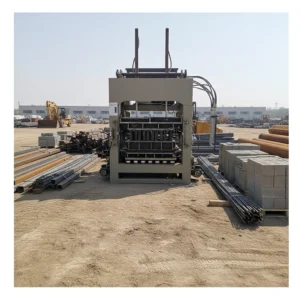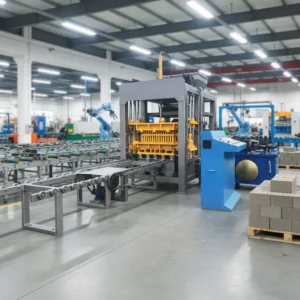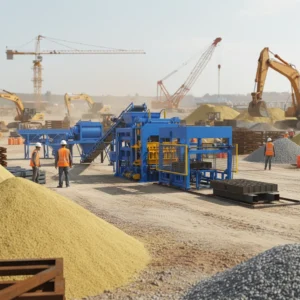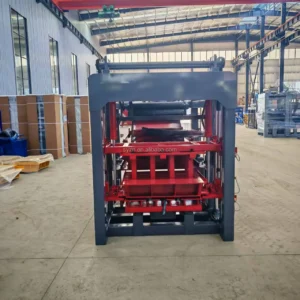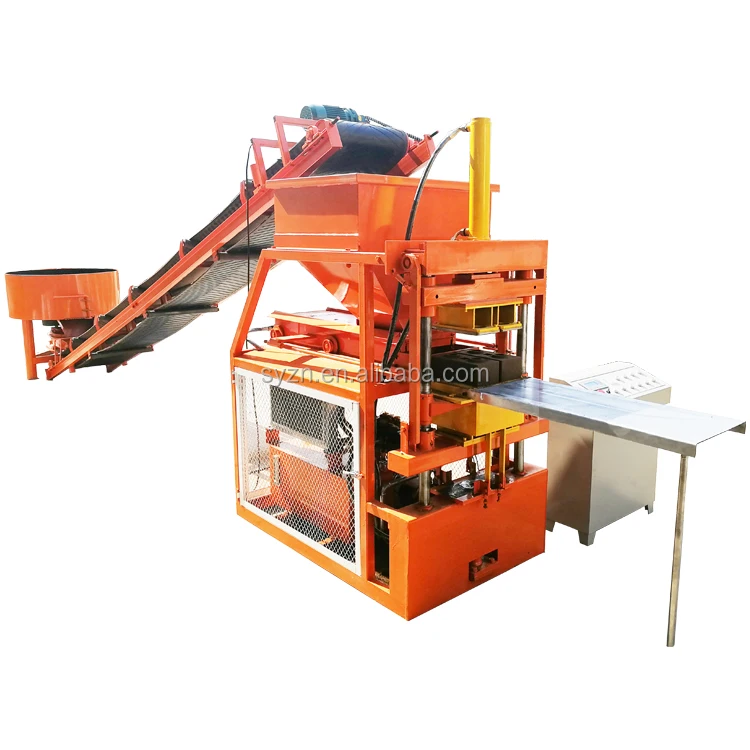
Matched Station Rhythm — every feeder, mixer, and stacker in the line is timed against the LY2-10 molding cycle so the press never sits idle waiting for upstream input or downstream handling.
Technical Specifications
| Parameter | Value |
|---|---|
| Model | LY2-10 |
| Product Type | Clay Interlocking Block Making Machine |
| Machine Power | 7.5 kW |
| Molding Cycle | 10 s |
| Output Capacity | 6000 pcs / 8 h (basis not stated in source — confirm block format, material, and thickness) |
| Bricks per Mould | 2 pcs (interlocking clay brick format) |
| Block Size Option 1 | 300 × 150 × 100 mm (1 pc/mould, 750 pcs/h, 6000 pcs/8 h) |
| Block Size Option 2 | 250 × 125 × 75 mm (1 pc/mould, 750 pcs/h, 6000 pcs/8 h) |
| Block Size Option 3 | 230 × 220 × 115 mm (1 pc/mould, 750 pcs/h, 6000 pcs/8 h) |
| Raw Materials | Clay, soil, earth, mud, concrete, cement, fly ash |
| Automation Level | Semi-automatic |
| Overall Dimensions (L × W × H) | 1300 × 1800 × 2400 mm |
Application Suitability
| Application | Material or Output |
|---|---|
| Interlocking clay brick masonry walls | Clay, soil, or earth-based mixes with optional cement stabilization |
| Small workshop block production | Locally sourced mud or fly ash blends for on-site building projects |
| Format diversification on existing lines | Switching between 300 × 150 × 100 mm, 250 × 125 × 75 mm, and 230 × 220 × 115 mm interlocking formats |
| Contractor-led housing projects | Cement-stabilized earth blocks produced near the construction site |
Why the Press Should Never Be the Fastest Station on the Line
A block production line only moves as fast as its slowest supporting station.
I have walked onto sites where the press was rated for a 10-second cycle but the mixer discharged every 25 seconds, leaving the operator standing idle while the block production line stalled. The same thing happens downstream when pallets are cleared by hand and curing racks fill up faster than a single worker can move them. These mismatches are invisible in a quotation that lists only the press. [NEED_CITE: typical station cycle mismatch in semi-automatic block plants]
Mapping Every Station Around the LY2-10 Press
The LY2-10 completes a molding cycle every 10 seconds, which sets the baseline rhythm for every other station. Raw material feeding must deliver a measured batch to the mixer within that same window, and the mixer must discharge a consistent volume before the next cycle begins. When a block production line is laid out correctly, material flows continuously from the feeder through the mixer, onto the pallet, into the press, and out to the stacking area without any station queuing.
Synchronizing Pallet Flow and Curing Rack Capacity
Each press cycle consumes one pallet and releases one loaded pallet. Over an eight-hour shift that means thousands of pallet movements. If pallet feeding is manual, the operator must keep pace with the 10-second cycle while also clearing finished blocks to the curing racks. The curing area must have enough rack space and forklift clearance to absorb a full shift of output. When pallet size and rack spacing are confirmed against the buyer’s existing infrastructure, the line runs without pallet bottlenecks or floor-level stacking. [NEED_CITE: pallet handling impact on semi-automatic block line throughput]
Reading the Numbers That Actually Matter
The 7.5 kW motor rating tells you the press has enough power for clay and soil mixes that require moderate compaction force, but it also signals that this machine is designed for smaller-format interlocking bricks rather than high-density concrete pavers. The three block size options share the same 10-second cycle, yet the volume of material per mould varies significantly between 300 × 150 × 100 mm and 250 × 125 × 75 mm formats. This means the mixer output rate and raw material feed rate must be adjusted whenever the format changes, otherwise the press either starves or overflows. The semi-automatic designation means pallet handling and stacking still rely on operator input, which directly affects how many workers you need per shift.
The Hidden Cost of Treating the Press as a Standalone Purchase
Buying the press alone and bolting it into a line built around different cycle times is a common source of disappointment. The mixer may be sized for a larger machine, wasting energy and over-producing material that dries out before pressing. Pallets ordered for a different press may not fit the LY2-10 mould opening, forcing a complete re-purchase. Downstream, a stacker designed for heavier concrete blocks may crush lighter clay interlocking bricks. Each mismatch adds cost and delay that never appeared in the original equipment budget. [NEED_CITE: cost of retrofitting mismatched supporting equipment]
Why Buyers Source the Full Line Here
Block machinery is the single focus of this supply operation, so the LY2-10 press, its moulds, pallets, and handling equipment are specified as one matched system rather than assembled from separate vendors. Configuration is set against your actual mix design and local aggregate, not a catalogue default. Mould design covers the interlocking formats your market sells, including custom drawings when a standard size does not fit. The automation level is selectable, allowing you to start with manual pallet handling and add automatic stacking later. Installation support includes operator training so your team understands station synchronization from day one. [NEED_CITE: matched system specification versus component sourcing in block machinery]
Documentation & Verification
- Line layout drawing showing each station timed to the LY2-10 ten-second molding cycle
- Capacity calculation stated per selected interlocking block format with material assumption noted
- Pallet specification sheet confirming size and material against your curing rack dimensions
- Voltage, frequency, and control language confirmation signed off before production begins
- Factory test record using your specified clay or soil mix before dispatch
Installation, Commissioning & Support
- Foundation pad sized to the 1300 × 1800 mm footprint with anchor bolt template provided
- Dedicated 7.5 kW circuit with voltage and frequency matched to your site supply confirmed in advance
- Press arrives partially assembled; mixer, feeder, and pallet rack ship as separate skids for positioning
- First-run commissioning includes cycle timing verification across every station in the line
- Operator training covers mould change procedure for all three interlocking block formats
- Wear parts list with recommended reorder intervals for hydraulic seals and mould liners
What We Need to Build Your Line Layout
To prepare a station-by-station layout around the LY2-10, send the target block format and daily volume you need, the type of clay or soil available locally, and your workshop dimensions including ceiling height. Confirm your site voltage and frequency along with the preferred control display language. If you already operate pallets or curing racks, share their dimensions so the line can be matched to your existing infrastructure.
Frequently Asked Questions
Q: How do I confirm the actual daily output for my specific block format?
A: The listed 6000-piece figure needs verification against the exact block size, mix design, and material you will run. We prepare a capacity calculation that states the assumed format and cycle time, so you can compare it directly with your target daily volume before placing an order.
Q: Which supporting stations are included and which are optional?
A: The quotation can cover raw material feeding, mixing, pallet feeding, the LY2-10 press, stacking, and curing rack handling as a complete block production line. Each station is itemized separately so you can omit equipment you already own or add automation later.
Q: How is pallet size chosen to match both the press and my curing area?
A: Pallet dimensions must clear the LY2-10 mould opening and also fit your existing curing racks and forklift tines. We confirm pallet size and material during the line layout stage to avoid double-handling or purchasing new racks after delivery.
Q: What electrical details must be confirmed before production starts?
A: Voltage, frequency, and control display language are finalized before the LY2-10 enters assembly. Confirming these details early prevents commissioning delays caused by incompatible power supply or an interface your operators cannot read.
Q: Can the semi-automatic line be upgraded as volume grows?
A: Additional automation stations such as automatic pallet feeding and stacking can be introduced to the block production line without replacing the LY2-10 press. The upgrade path is planned during the initial layout so mechanical and electrical interfaces are already in place.