
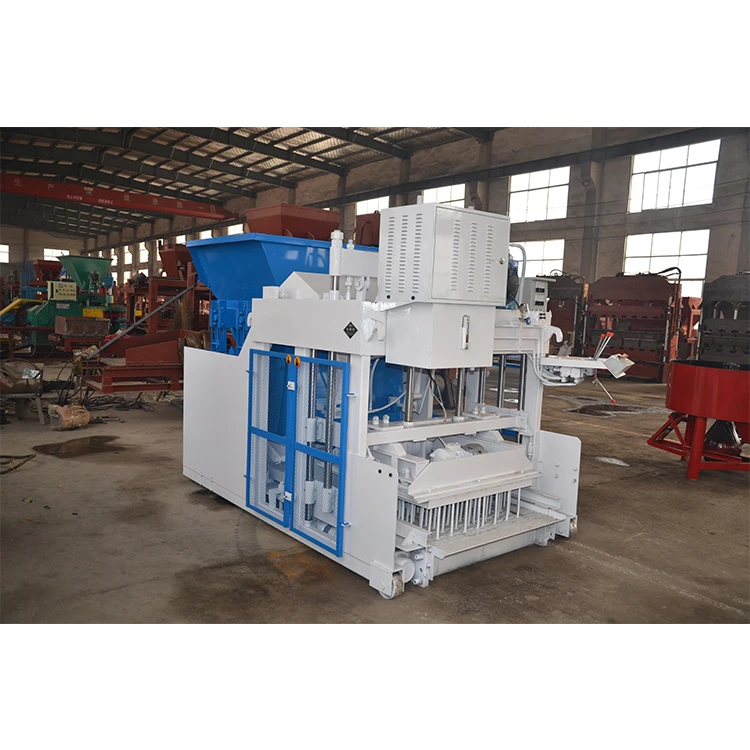
Matched System Design — Machine, mixer, and feeder are sized as one line so the QMY12-15 egg laying block making machine production line never waits on material.
Technical Specifications
| Parameter | Value |
|---|---|
| Model | QMY12-15 |
| Product Type | Egg Laying Concrete Block Making Machine |
| Overall Dimensions (L×W×H) | 3250×2100×2300 mm |
| Rated Power | 16 kW |
| Net Weight | 4500–4600 kg |
| Motor Brand | Siemens |
| Pressure Type | Hydraulic |
| Vibration System | Twice-vibration of molding core |
| Pallet Requirement | None (egg-laying / mobile type) |
| Workers Required | 2–3 |
| Cycle Time (400×200×200 mm block) | 10–15 s |
| Capacity per Mould (400×200×200 mm) | 12 pcs/mould |
| Daily Output (400×200×200 mm, 8 hours) | 23,040 pcs/day |
| Automation Level | Automatic (hydraulic pressure) |
| Stacking Method | Manual (blocks laid on ground) |
| Standards | ISO 9001:2008, SGS, CE |
Application Suitability
| Application | Material or Output |
|---|---|
| On-site hollow block production | Crushed stone, sand, cement, water |
| Project-site solid block manufacturing | Local aggregate with cement binder |
| Mobile paver and kerbstone runs | Fine aggregate mixes with hydraulic consolidation |
| First plant setup by entrepreneurs | Low-infrastructure sites without pallet fleets |
| Contractor self-supply for housing developments | Daily output matched to construction phase demand |
What "12,000 Pieces per Day" Actually Means for Your Site
Daily output figures only matter when the block format, mix design, and shift length behind them are stated in writing.
Buyers regularly receive quotations quoting a single daily number without naming the format it assumes. On a real site, producing 400×150×200 mm blocks yields a different throughput than 400×100×200 mm blocks, because mould count per cycle and cycle time both shift. When the mix design relies on a local aggregate with high moisture content, the vibration force may not transfer fully into the mould, and actual output drops well below the catalogue figure. I have watched a mobile egg laying block making machine production line stall at less than half its rated volume because the red soil on site absorbed vibration energy that the standard sand test never predicted [NEED_CITE: effect of aggregate moisture on vibration transfer in concrete block molding].
How the Line Feeds the Press Without Gaps
The egg laying block making machine production line only reaches its cycle target when the mixer and raw material feeder deliver a continuous supply of consistent mix. The QMY12-15 completes a mould cycle every 10–15 seconds, which means the upstream stations must batch and deliver within that window. If the mixer is undersized or the feeder is gravity-fed without flow control, the press sits idle between moves and daily volume falls. Specifying the mixer capacity, feeder type, and water dosing method as part of the line — not as afterthoughts — keeps the press continuously working.
Ground Conditions and the No-Pallet Layout
Because this mobile unit deposits blocks directly on the ground, the curing area becomes part of the production floor. The site surface must be level, compacted, and able to bear repeated machine passes without rutting. Curing space planning must account for the daily block footprint and the time each block needs before it can be moved. Unlike stationary lines where pallets shuttle blocks to a separate curing rack, here the production zone and curing zone are the same ground, and the supporting equipment layout must leave clear travel paths for the machine and for workers moving finished product [NEED_CITE: ground preparation standards for mobile egg-laying block production].
Reading the Spec Sheet Against Your Actual Product
The hydraulic pressure system and twice-vibration molding core work together to consolidate the mix without a pallet beneath the mould. Hydraulic force compresses the material from above while the modified twice-vibration shakes the core, producing higher density than single-vibration systems. For a 400×200×200 mm hollow block, the 12-piece mould and 10–15 second cycle deliver a verifiable daily count over an eight-hour shift. However, if your market sells mostly 150 mm wide blocks, the mould count per cycle changes, and the line must be quoted against that format specifically. The 16 kW rated power with a Siemens motor gives the vibration and hydraulic systems adequate headroom, but voltage and frequency must be confirmed for your destination market before the motor is wound.
The Cost of Skipping the Supporting Equipment Conversation
When a buyer focuses only on the press and treats the mixer, feeder, and water supply as commodity items, the line underperforms from the first day. An undersized mixer forces the press into a stop-start rhythm that cuts real output and accelerates wear on the hydraulic valves from repeated pressurization cycles. Incorrect water dosing changes mix consistency between batches, producing blocks of uneven strength across a single shift. These problems are invisible at the factory test, where standard sand and controlled conditions mask them entirely [NEED_CITE: impact of batch inconsistency on block compressive strength].
Why Source the Full Line Here
Block machinery is a single focus for the production team, so the press, moulds, and supporting stations are specified as one matched system rather than assembled from unrelated suppliers. The configuration is set against the buyer’s actual mix design and local aggregate, not a catalogue default. Mould design covers the formats the buyer’s market actually sells, with custom drawings available for non-standard sizes. The automation level is selectable — a buyer can begin with manual mix feeding and add batching automation later as volume justifies it. Installation support includes on-site commissioning and operator training so the crew understands cycle timing and mould change procedure from the first week.
Documentation & Verification
- Line layout drawing showing mixer, feeder, and QMY12-15 position with cycle-matched flow
- Capacity calculation sheet stating the exact block format and mould count behind each output figure
- Machine specification sheet with hydraulic and electrical schematics for the QMY12-15
- Voltage, frequency, and control language confirmation record signed before production begins
- Factory test record run on the buyer’s specified block format before dispatch
- Operation and maintenance manual with wear parts and mould replacement list
Installation, Commissioning & Support
- Ground leveling and compaction across the curing area to suit the QMY12-15 travel path and block deposition zone
- Dedicated electrical circuit rated for 16 kW with confirmed voltage and frequency for the destination market
- Machine arrives as a single mobile unit requiring ground-level placement, no overhead crane or fixed foundation
- On-site commissioning includes first-run cycle timing verification with the buyer’s actual mix and aggregate
- Operator training covers mould change procedure, hydraulic pressure adjustment, and twice-vibration system settings
- Wear parts list provided with recommended first-order quantities for hydraulic seals and vibration core components
What to Share Before Quoting
To build an accurate line proposal, provide the block formats your market sells along with the target daily volume for each. Share a sample or lab analysis of your local aggregate, including moisture content and gradation. Confirm the site voltage, frequency, and preferred control display language so the motor and controls are configured correctly before the QMY12-15 leaves the factory.
Frequently Asked Questions
Q: How is daily output calculated, and which block format does the figure assume?
A: The 23,040 pieces per day figure is based on 400×200×200 mm hollow blocks, 12 pieces per mould, 10–15 second cycle time, and an eight-hour shift. Output changes with different block formats because mould count and cycle time both shift. Always confirm which format your quoted number assumes.
Q: What supporting equipment is needed to keep the egg laying block making machine production line running without idle time?
A: A mixer sized to batch within the 10–15 second press cycle, a raw material feeder with consistent flow control, and a reliable water dosing system are essential. The line is designed so these stations feed continuously and the press is never left waiting between moves.
Q: How does the no-pallet system affect curing area planning and site preparation?
A: Blocks are deposited directly on the ground, so the production and curing zones share the same surface. The ground must be level and compacted to bear machine passes. Curing space must accommodate the full daily block footprint with clear travel paths for the press and workers.
Q: What voltage, frequency, and control language are configured for the destination market?
A: These are confirmed with the buyer before production begins. The Siemens motor and hydraulic controls must match local electrical standards and the operator’s language to avoid commissioning delays when the QMY12-15 arrives on site.
Q: How does the line scale if the buyer later adds a stationary press to the same site?
A: The mixing and feeding stations can be sized from the start to serve both a mobile egg layer and a future stationary press. The upgrade path is planned during initial line layout so that adding capacity later does not require replacing upstream equipment.


