
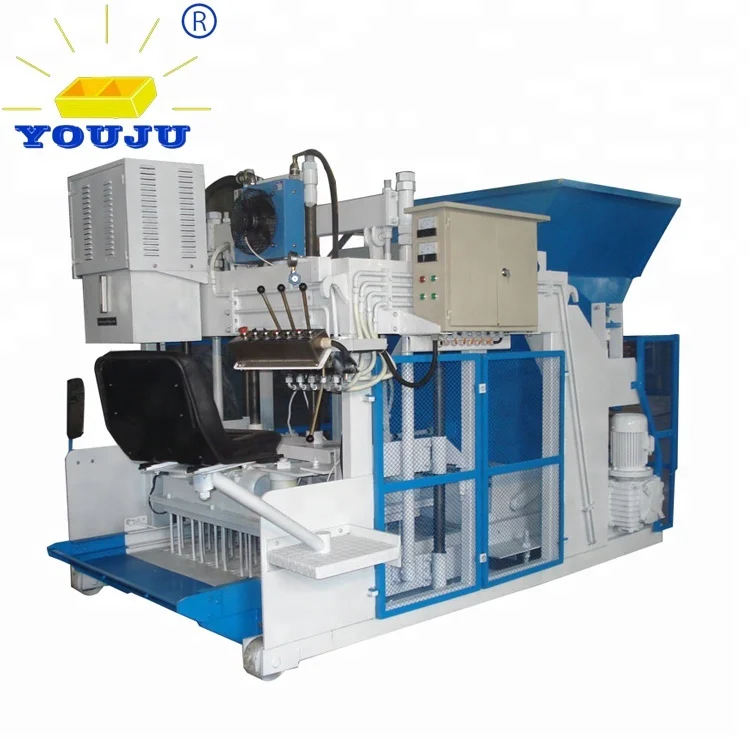
Integrated Line Matching — the QMY12-15 is specified alongside raw material feeding, pallet handling, and stacking stations so cycle times align and the press never waits for upstream or downstream equipment.
Technical Specifications
| Parameter | Value |
|---|---|
| Model | QMY12-15 |
| Product Type | Automatic Cement Hollow Block Making Machine |
| Block Size Range | 4–9 Inch |
| Drive Type | Engine & Gear |
| Automation Level | Automatic (basis not stated in source — confirm block format / material / thickness) |
| Output Capacity | High Efficiency (basis not stated in source — confirm block format / material / thickness) |
| Hydraulic Pressure | basis not stated in source — confirm block format / material / thickness |
| Vibration Force | basis not stated in source — confirm block format / material / thickness |
| Pallet Size | basis not stated in source — confirm block format / material / thickness |
| Mould Format | 4–9 Inch Block Sizes |
| Mould Change Time | basis not stated in source — confirm block format / material / thickness |
| Cycle Time per Format | basis not stated in source — confirm block format / material / thickness |
| Stacking Method | basis not stated in source — confirm block format / material / thickness |
| Rated Power | basis not stated in source — confirm block format / material / thickness |
| Voltage & Frequency | basis not stated in source — confirm block format / material / thickness |
| Control System | basis not stated in source — confirm block format / material / thickness |
| Overall Dimensions (L×W×H) | basis not stated in source — confirm block format / material / thickness |
| Net Weight | basis not stated in source — confirm block format / material / thickness |
Application Suitability
| Application | Material or Output |
|---|---|
| Building construction hollow blocks | Cement, crushed stone, sand, and aggregate blends |
| Road and bridge infrastructure blocks | Cement with coarse aggregate and gravel mixes |
| Energy infrastructure block production | Cement and industrial by-product composites |
| On-site contractor block making | Locally sourced sand, gravel, and cement |
What the Quotation Often Leaves Out About Line Output
A block press only runs as fast as its slowest supporting station.
Buyers regularly receive a quotation for a mobile block machine stating cycles per hour, yet the pallet feeder, mixer discharge, and stacking arrangement operate on a different rhythm. The press completes a cycle, then sits idle while workers manually clear finished blocks or wait for the next pallet. Actual daily output drops far below the quoted figure. When planning block production line equipment around the QMY12-15, every upstream and downstream station must be timed to the press cycle so that no single point creates a bottleneck [NEED_CITE: cycle time synchronization across block production stations].
Synchronizing the Mixer Discharge with Press Demand
The QMY12-15 requires a steady supply of mixed material at a rate that matches its pressing cycle. If the mixer batch size is too small, the press waits for the next charge; if it is too large, material begins to set before reaching the mould. Matching mixer discharge volume and timing to the press demand is a core part of configuring block production line equipment that actually delivers the planned output.
Pallet Handling as the True Pace-Setter
Finished blocks leave the press on pallets, and those pallets must move to the curing area before the next cycle begins. When pallet handling is left to manual labor, workers become the limiting station. Integrating a pallet feeder and a defined transfer path with the QMY12-15 removes this constraint. The pallet specification—size, material, and weight—must also match the curing racks and the forklift already on site [NEED_CITE: pallet specification coordination with curing infrastructure].
Reading the Specs That Shape Line Design
The QMY12-15 covers 4–9 inch block sizes, meaning the line must accommodate multiple mould formats and the pallet dimensions each format requires. The engine and gear drive system delivers mechanical force independent of external electrical supply, which influences how the line is laid out on sites without stable grid power. Vibration force and hydraulic pressure values determine the density and strength of the finished block, and those values must be matched to the buyer’s specific mix design and local aggregate rather than assumed from a catalogue default. Mould change time directly affects format flexibility—if a change takes most of a shift, the advantage of multiple formats is lost. Each of these parameters feeds into the overall line configuration and the supporting equipment selected around the press.
The Hidden Cost of Treating the Press as a Standalone Purchase
When supporting equipment is sourced separately or omitted entirely, mismatched cycle times force the QMY12-15 into frequent idle periods. Pallets stack up at the press exit, blocks are handled by hand, and curing becomes disorganized. The result is a line that technically functions but never reaches its intended daily volume. Voltage, frequency, and control language differences between the press and auxiliary stations compound the problem during commissioning, delaying production start by days or weeks [NEED_CITE: commissioning delays from unconfirmed electrical specifications].
Why Sourcing the Full Line from One Supplier Matters
The QMY12-15 is configured against the buyer’s actual mix design, local aggregate, and target block format rather than a generic catalogue setting. Mould design covers the specific formats the buyer’s market sells, with custom drawings available. Pallet and handling equipment is specified as a matched set so that every station in the block production line equipment package shares the same cycle rhythm. Automation level is selectable, allowing a buyer to begin with semi-automatic pallet handling and add automatic stacking later. Installation support includes operator training so the line runs correctly from the first day.
Documentation & Verification
- Line layout drawing with capacity calculation stated per block format for the QMY12-15
- Machine specification sheet covering engine and gear drive ratings and block size range
- Mould drawing and format list for each 4–9 inch block size included
- Pallet specification matched to curing rack dimensions and forklift capacity
- Voltage, frequency, and control language confirmation for all line stations
- Factory test record on buyer’s target block format before dispatch
Installation, Commissioning & Support
- Foundation and ground-bearing requirements assessed against QMY12-15 weight and vibration load
- Electrical supply verified for engine-driven operation and any auxiliary station power needs
- Machine assembled on site with mould and pallet feeder aligned to press cycle
- First-run parameter setting adjusted to buyer’s mix design and aggregate source
- Operator training covering mould change procedure for all included block formats
- Wear parts and mould inventory list provided for initial replacement planning
Planning Your Line Configuration
To specify block production line equipment around the QMY12-15, share the target block formats, planned daily output per format, and the local aggregate and cement sources available. Include your site dimensions, existing curing rack setup, and forklift capacity so pallet handling can be matched. Confirm the voltage and frequency at your site and the preferred control display language to avoid commissioning delays.
Frequently Asked Questions
Q: How do cycle times across mixing, pressing, and stacking stations need to match?
A: Each station must complete its task within the press cycle window. If the mixer takes longer to discharge than the press takes to form a block, the press idles. The QMY12-15 line is planned so that mixer batch size, pallet feed rate, and stacking speed all align with the press rhythm, preventing bottlenecks at any single point.
Q: What supporting equipment is required beyond the press itself?
A: A complete setup around the QMY12-15 typically includes a raw material feeder, mixer, pallet feeder, and a stacking or transfer arrangement. Each piece of block production line equipment must be selected to match the press cycle time and the buyer’s curing infrastructure so the line flows without manual intervention between stations.
Q: How is pallet feeding synchronized with the press cycle?
A: The pallet feeder delivers a fresh pallet to the QMY12-15 immediately after the pressed block and its pallet are cleared. Timing is set during line configuration so that pallet delivery and press cycling overlap without delay, keeping throughput steady across the production shift.
Q: Can automation level be upgraded across the entire line progressively?
A: Yes. A buyer can start with semi-automatic pallet handling and manual stacking, then add automatic stacking and cubing stations later. The QMY12-15 control architecture supports progressive upgrades, allowing each supporting station to be automated as budget and production volume grow.
Q: What raw material feeding configuration matches local aggregate properties?
A: The feeder and mixer must handle the specific aggregate size, moisture content, and cement ratio available locally. For the QMY12-15, raw material feed configuration is set after reviewing the buyer’s aggregate sample and target block strength, ensuring consistent mix quality from batch to batch.


