
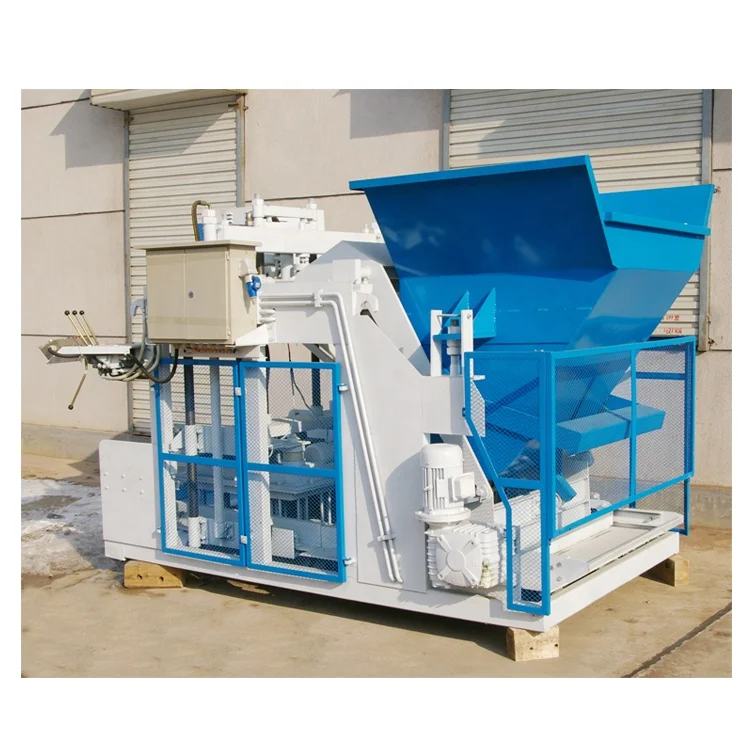
Mobile Line Synchronization — mixer output and press cycle timed so the QMY10-15 never idles waiting for material on your project site.
Technical Specifications
| Parameter | Value |
|---|---|
| Model | QMY10-15 |
| Product Type | Mobile Concrete Block Making Machine |
| Molding Capacity | 10 pcs/mold |
| Molding Cycle | 10s–15s |
| Total Power | 16 kW |
| Output Capacity | 11,000 pcs/day (8 hours) (basis not stated in source — confirm block format and material) |
| Vibration System | Dual vibration motors |
| Hydraulic System | Upper and lower demoulding with heat dissipator for oil cooling |
| Movement | Electric walking, hydraulic steering |
| Pallet Requirement | None (egg-laying type) |
| Basic Equipment Included | QMY10-15 host machine, JS7500 concrete mixer, dump truck |
| Optional Equipment | PL1200 batching machine, cement silo, screw conveyor, loader |
| Mould Change | Quick mould change for hollow, interlocking, solid, and paving formats |
| Automation Level | Semi-automatic with hydraulic and electric control |
| Operating Environment | On-site mobile production without fixed plant |
| Standards | CE |
Application Suitability
| Application | Material or Output |
|---|---|
| On-site hollow block production for building contractors | Crushed stone, sand, and cement blends placed directly on prepared ground |
| Interlocking brick manufacturing for local supply | Interlocking mould format with dry-mix or semi-dry aggregate |
| Paving block and kerbstone output with mould change | Paver and kerb moulds swapped on the same host machine |
| Small to medium-scale block production for entrepreneurs | Egg-laying placement eliminating pallet and curing rack investment |
| Remote project site block making without fixed plant | Mobile unit repositioned across the site via electric walking |
What the Daily Output Number Leaves Out of Your Planning
A mobile block machine production line only reaches its quoted capacity when the mixer, batching, and press cycle are matched from day one.
I have stood on a site in the Gulf region where a QMY10-15 sat idle for half of every cycle because the JS7500 mixer was not keeping pace with the press. The rated output assumed a format and a feeding rhythm that had never been confirmed with the buyer. The contractor lost weeks of production before the upstream stations were reconfigured [NEED_CITE: mobile block line cycle synchronization]. When the feeding station cannot deliver a fresh batch every 15 seconds, the press is just an expensive parking spot.
Upstream Feeding Rhythm and Press Cycle Alignment
The QMY10-15 completes a molding cycle every 10 to 15 seconds. For the mobile block machine production line to sustain that tempo, the JS7500 mixer must discharge a full batch within the same window. If you add the optional PL1200 batching machine, aggregate proportioning happens before mixing, shortening the overall feed loop. Without it, a loader-fed arrangement places the burden of accuracy on the operator, and any delay at the mixer propagates straight to the press. This is where most on-site installations lose output — not at the press, but two stations upstream.
Material Flow Without Fixed Conveyors
A stationary plant moves material on belt conveyors; a mobile setup cannot rely on that infrastructure. The dump truck included in the basic package shuttles mixed concrete from the JS7500 to the QMY10-15 hopper. On larger sites, a screw conveyor paired with a cement silo replaces manual bag opening and keeps cement dosing consistent across shifts [NEED_CITE: cement silo and screw conveyor integration for mobile plants]. The walking and steering system lets the press relocate along the production strip without a crane, but the material supply route must be replanned each time the machine moves.
How Hydraulic Pressure and Vibration Shape Block Density
The dual vibration motors and the hydraulic demoulding system work together to compact the mix inside the mould. Vibration settles the aggregate into voids while hydraulic pressure from above squeezes out remaining air. If the local aggregate is angular and poorly graded, vibration alone may not achieve target density, and higher hydraulic force becomes necessary. The heat dissipator on the hydraulic circuit keeps oil temperature stable during continuous runs, preventing pressure drift that would otherwise produce softer blocks toward the end of a shift. Block strength is a function of this pressure-vibration balance, matched to the specific mix the buyer can actually source on site.
The Cost of Skipping Line-Level Configuration
When the mobile block machine production line is ordered as a standalone press, the buyer inherits every upstream mismatch as their own problem. I have seen a contractor add the PL1200 batching machine after arrival because manual cement weighing was slowing the mixer by several minutes per batch. The extra procurement and shipping round cost more than including it in the original order. Voltage and control language left unconfirmed until the machine lands can delay commissioning by days while a local electrician rewires the panel [NEED_CITE: voltage and control language confirmation before export]. Pallet-free operation sounds simple, but if the curing ground is not level or accessible, the egg-laying placement creates handling problems downstream.
Why Buyers Spec the Full Mobile Line Here
The QMY10-15 is configured against the buyer’s actual mix design and target block format rather than shipped as a catalogue default. The press, mould, mixer, and handling stations are specified as one matched system, so cycle times align from the first day of production. Mould design covers the formats the buyer’s local market demands, including custom drawings when standard hollow or interlocking profiles do not match. The automation level starts at semi-automatic with hydraulic and electric control and can be upgraded as production volume grows. Installation support includes operator training on mould change procedure and daily maintenance, with wear parts and mould replacement lists supplied before the line goes live.
Documentation & Verification
- Line layout showing mixer, batching, and press cycle time synchronization
- Capacity calculation stating the block format behind the daily output figure
- Mould drawing and format list for hollow, interlocking, solid, and paving blocks
- Hydraulic and electrical schematic with voltage and control language confirmed
- Factory test record run on your specified mix before dispatch
- Operation and maintenance manual with wear parts and mould replacement schedule
Installation, Commissioning & Support
- Ground leveling across the egg-laying strip to support consistent block placement from the QMY10-15
- Dedicated 16 kW power circuit at site voltage and frequency confirmed before shipment
- Host machine, JS7500 mixer, and dump truck assembled and test-run on arrival
- Hydraulic pressure and vibration duration tuned to your local aggregate during commissioning
- Operator training on quick mould change between hollow, interlocking, and paving formats
- Heat dissipator inspection and hydraulic oil replacement schedule documented for site crew
Before You Send the Inquiry
Provide the block format you intend to produce, the local aggregate type available on your project site, and your target daily output so the mobile block machine production line can be sized with a confirmed capacity basis. State your site voltage, frequency, and preferred PLC display language to avoid on-site rewiring delays. Let us know whether you already have a loader or cement silo, or whether the PL1200 batching machine and screw conveyor should be included in the proposal.
Frequently Asked Questions
Q: How is the 11,000 pieces per day capacity calculated and for which block format?
A: The 11,000 pcs/day figure is based on an 8-hour shift, but the source does not state which block format or mix was assumed. We provide a capacity calculation for your specific format — hollow, solid, interlocking, or paving — so the daily output reflects your actual product rather than a catalogue default.
Q: What supporting equipment is included versus optional in the quotation?
A: The basic package covers the QMY10-15 host, JS7500 concrete mixer, and dump truck. The PL1200 batching machine, cement silo, screw conveyor, and loader are optional additions. We specify which stations are necessary to match your press cycle time so upstream feeding does not become the bottleneck.
Q: How do mixer output and batching accuracy match the press cycle time?
A: The JS7500 mixer must discharge within the 10-to-15-second molding window to keep the press fed continuously. Adding the PL1200 batching machine pre-proportions aggregate before mixing, reducing batch preparation time and improving consistency so each cycle receives material at the required rhythm.
Q: What is the mould change procedure and time required between formats?
A: The QMY10-15 uses a quick mould change system for switching between hollow, interlocking, solid, and paving formats. The change procedure and estimated time are documented in the operation manual and demonstrated during on-site commissioning so your crew can execute it within a shift.
Q: How does the mobile setup handle raw material feeding without fixed conveyors?
A: The included dump truck shuttles mixed concrete from the JS7500 to the press hopper. For higher-volume sites, a screw conveyor and cement silo can be added to automate cement dosing. The electric walking and hydraulic steering allow the press to relocate along the production strip as the curing area fills.


