
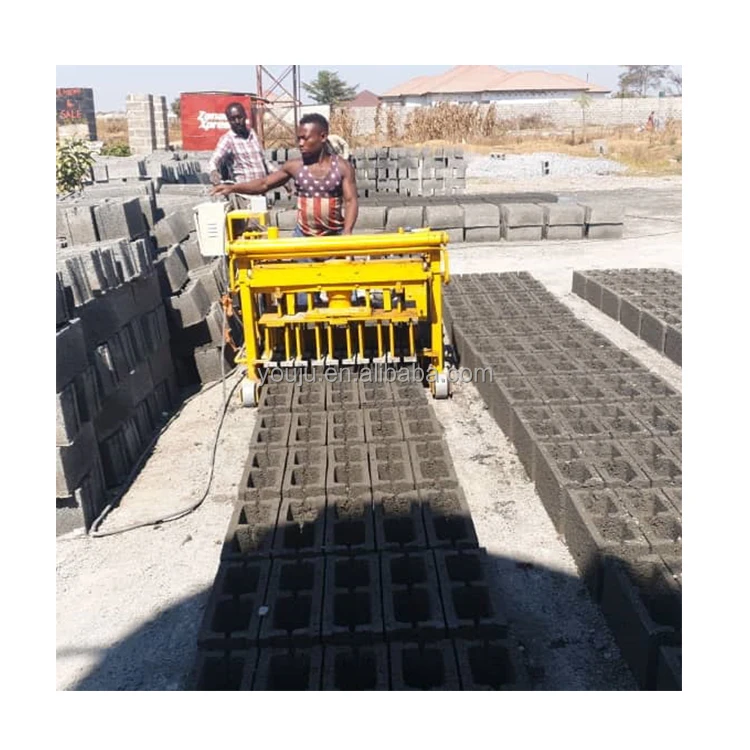
Matched Line System — the QMY4-30 egg-laying block machine is specified alongside upstream mixing, material feeding and curing layout so every station meets the 30-second moulding cycle without idle gaps.
Technical Specifications
| Parameter | Value |
|---|---|
| Product Type | Mobile Egg-laying Concrete Block Making Machine |
| Model | QMY4-30 |
| Rated Power | 5 kW |
| Overall Dimensions (L×W×H) | 1200 × 1200 × 1100 mm |
| Net Weight | 950 kg |
| Moulding Cycle Time | 30 seconds |
| Output Capacity | 480 pcs/h (basis: 400×200×200 mm hollow block, 4 pcs/mould) |
| Output Capacity | 600 pcs/h (basis: 400×150×200 mm hollow block, 5 pcs/mould) |
| Output Capacity | 840 pcs/h (basis: 400×100×200 mm hollow block, 7 pcs/mould) |
| Daily Output (8 h) | 3840 pcs (basis: 400×200×200 mm hollow block) |
| Daily Output (8 h) | 4800 pcs (basis: 400×150×200 mm hollow block) |
| Daily Output (8 h) | 6720 pcs (basis: 400×100×200 mm hollow block) |
| Mould Format | Hollow block and solid brick, standard sizes; mould changeable |
| Raw Materials | Cement, sand, crushed stones, slag |
| Automation Level | Manual / mobile egg-laying (no fixed plant required) |
| Pallet Size | Not stated in source (basis to be confirmed) |
| Hydraulic Pressure | Not stated in source (basis to be confirmed) |
| Vibration Force | Not stated in source (basis to be confirmed) |
| Voltage & Frequency | Not stated in source (basis to be confirmed) |
| Control System | Not stated in source (basis to be confirmed) |
Application Suitability
| Application | Material or Output |
|---|---|
| On-site block production without a fixed plant | Egg-laying operation on prepared ground, no pallet circulation required |
| Small-scale hollow block manufacturing | Cement, sand, crushed stone and slag mixes for local construction |
| Entrepreneur or contractor first plant setup | 400×200×200 mm hollow blocks to 400×100×200 mm hollow blocks |
| Project-site supply for housing contractors | Solid brick and hollow block in standard sizes produced locally |
What a 30-Second Cycle Means for the Rest of the Line
If the mixer cannot discharge a batch every 30 seconds, the mobile block machine production line stops being a production line and becomes a single machine waiting for material.
The QMY4-30 completes a moulding cycle in half a minute. That tempo sets a hard requirement on everything upstream: the raw material feeder, the mixer discharge rate and the concrete delivery method. When any one of those stations falls behind, the press sits idle while workers watch. I have seen egg-laying block machine supporting equipment configured as an afterthought, leaving the operator shovelling mix by hand to keep the hopper full — and losing hours of output every shift [NEED_CITE: cycle time matching across block line stations].
Upstream Mixing Must Match the Press Tempo
A mobile block machine production line built around the QMY4-30 starts with the mixer. At a 30-second cycle, the press consumes mix continuously during operating hours. A pan mixer or drum mixer with a discharge rate slower than one batch per cycle will leave the hopper empty between cycles, and each idle gap compounds across the shift. The mixer capacity, motor power and discharge gate must all be sized against the QMY4-30 throughput so material arrives before the press needs it.
Curing Area Layout Determines Real Daily Volume
Because the QMY4-30 lays blocks directly on the ground, the curing area is the production floor. The total ground space available, the surface preparation quality and the water access for curing all govern how many blocks can be produced before the machine runs out of clear ground to move to. Planning the curing zone as part of the egg-laying block machine supporting equipment setup — including water lines, shading and block movement paths — prevents the press from circling back over wet blocks or travelling excessive distances between rows.
Compact Footprint Shapes Material Flow
The QMY4-30 measures 1200 × 1200 × 1100 mm and weighs 950 kg. That footprint means raw material stockpiles, the mixer station and the curing zone must all fit within a working radius that keeps manual transport manageable. When the aggregate pile sits too far from the machine travel path, workers spend more time moving material than the press spends making blocks [NEED_CITE: on-site material flow planning for mobile block production].
Specifying What the Numbers Mean for Production
The rated power of 5 kW keeps generator requirements modest, which matters on remote project sites where grid power is unreliable or absent. A diesel generator sized to cover the 5 kW draw plus starting surge and mixer load is typically sufficient for the press itself. The mould changeability across hollow block formats (400×200×200 mm, 400×150×200 mm, 400×100×200 mm) and solid brick means the same machine serves different product lines — but each format switch requires the upstream mix consistency and curing plan to match that format’s weight and moisture behaviour. Output figures such as 3840 pieces per 8-hour day for the 400×200×200 mm hollow block are achievable only when every supporting station keeps pace with the 30-second cycle.
When Upstream Equipment Is Left to Chance
The most common shortfall on egg-laying machine sites is not the press itself but the gap between what the quotation included and what the line actually needs. A contractor receives the QMY4-30, sets it on cleared ground, and discovers the mixer is too small, the raw material has no feeding system, and curing racks were never discussed. Daily output drops because workers handle everything manually between cycles. The quotation covered the press; the production shortfall came from everything around it [NEED_CITE: hidden costs of incomplete block line configuration].
Why This Supplier Configures the Full Line
Shandong Shiyue Intelligent Machinery focuses exclusively on block machinery, so the QMY4-30 is never quoted in isolation. The mixer, feeder, pallet specification and curing layout are discussed during the inquiry stage, not left for the buyer to source separately after delivery. Configuration is set against the buyer’s actual mix design and local aggregate rather than a catalogue default, which matters because crushed stone in one region behaves differently from river sand in another. Mould options cover the block formats the buyer’s local market actually sells, and custom mould drawings are available when standard sizes do not match. The sales process includes confirming voltage and control language before production begins, preventing commissioning delays on site. Factory testing covers the full cycle with the buyer’s specified block format so capacity is verified before the machine ships [NEED_CITE: block machine factory testing procedures].
Documentation & Verification
- Line layout drawing showing QMY4-30 placement, mixer station and curing zone dimensions
- Capacity calculation sheet stating output per block format with cycle time assumptions
- Mould drawing and format list for hollow block and solid brick sizes
- Machine specification sheet with rated power, dimensions and weight for logistics planning
- Voltage and control language confirmation record signed before production
- Factory test record on the buyer’s specified block format before dispatch
Installation, Commissioning & Support
- Site ground preparation guidance matched to the 1200 × 1200 mm machine footprint and egg-laying operation
- Electrical connection requirements based on 5 kW rated power plus mixer and feeder load
- Machine assembly support from plywood-packed shipment to operational position on site
- First-run cycle tuning against the buyer’s local aggregate and mix design
- Operator training covering mould change procedure across hollow block formats
- Wear parts list and mould replacement schedule for sustained daily output
What to Share When Requesting a Proposal
A useful inquiry for the QMY4-30 should include the block format your local market sells, your target daily output and the raw materials available on site. Specify the voltage and frequency at your location so the motor and any controls are wound correctly before production. If you already own a mixer or raw material feeder, share the make and capacity so the supporting equipment can be matched rather than duplicated.
Frequently Asked Questions
Q: How is daily output calculated and which block format does the capacity figure assume?
A: The QMY4-30 output figures are tied to specific block formats. At 480 pieces per hour based on 400×200×200 mm hollow blocks, the 8-hour daily output is 3840 pieces. Switching to 400×100×200 mm hollow blocks raises the hourly rate to 840 pieces per hour, yielding 6720 pieces per 8-hour day. Always confirm which format your capacity quote references.
Q: What upstream mixing and feeding equipment is needed to keep the QMY4-30 running at cycle?
A: A mixer with a discharge rate that delivers one full batch within or below the 30-second moulding cycle prevents hopper starvation. Raw material feeding — whether a belt conveyor or manual barrow — must keep aggregate and cement flowing to the mixer without interruption. Undersized mixers are the most frequent bottleneck on egg-laying machine sites.
Q: How should the curing area be planned for an egg-laying machine producing on the ground?
A: Since the QMY4-30 lays blocks directly on prepared ground, the curing area must be level, accessible to water lines and large enough to hold a full day’s output without the machine travelling over wet blocks. Plan travel paths so the machine advances in one direction, and allow curing time before blocks are moved or stacked.
Q: What voltage and frequency options are available, and is a generator viable on remote sites?
A: The QMY4-30 draws 5 kW, which is within reach of a mid-range diesel generator for remote project sites. Voltage and frequency must be confirmed during the inquiry stage so the motor is wound for your local supply — arriving with a mismatched motor delays commissioning until a replacement is sourced.


