
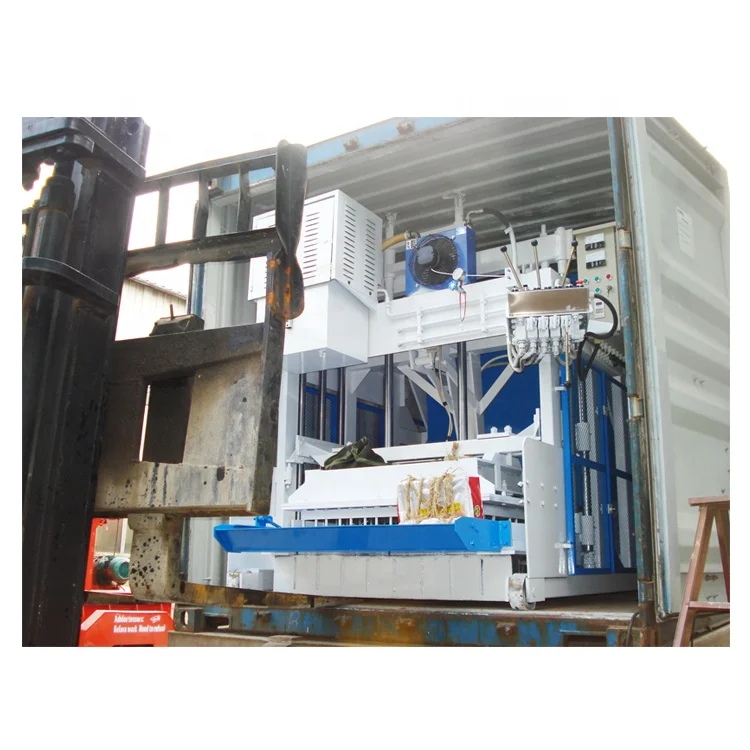
Matched Line Layout — the QMY10-15 mobile block machine is specified with mixer, batching, and feeding stations sized to its 10s–15s cycle so no station waits on another.
Technical Specifications
| Parameter | Value |
|---|---|
| Model | QMY10-15 |
| Product Type | Mobile Concrete Block Making Machine |
| Molding Capacity | 10 pcs/mold |
| Molding Cycle | 10s–15s |
| Total Power | 16 kW |
| Output Capacity | 11,000 pcs/day (basis not stated in source — confirm block format, material, and thickness) |
| Vibration System | Dual vibration motors |
| Hydraulic System | Controls upper and lower demoulding |
| Mobility | Electric walking, hydraulic steering |
| Pallet Requirement | No pallets needed (egg-laying type) |
| Heat Dissipation | Equipped with hydraulic oil heat dissipator |
| Basic Equipment Included | QMY10-15 host machine, JS7500 concrete mixer, dump truck |
| Optional Equipment | PL1200 batching machine, cement silo, screw conveyor, loader |
Application Suitability
| Application | Material or Output |
|---|---|
| On-site hollow block production | Crushed stone, sand, cement, and fly ash mixes laid directly on a prepared ground surface |
| Project-site solid block manufacturing | Local aggregate and cement blends for load-bearing or partition walls |
| Paving block runs for contractors | Dense concrete mixes for walkways, yards, and access roads at construction sites |
| Low-investment block plant startups | Standard concrete mixes with room to add batching automation later |
Why the Mixer Matters More Than the Press
A mobile block machine production line is only as fast as its slowest station upstream of the press.
I have watched crews on Southeast Asian housing sites stand around a mobile press because the JS7500 mixer could not discharge fast enough to match a 10s–15s cycle. The press idled, the crew waited, and the daily tally ended at barely half the quoted figure. The mobile block machine production line must be balanced from batching through mixing to the hopper, or the press capacity on paper never translates into blocks on the ground. [NEED_CITE: cycle time balancing across concrete block line stations]
Sizing the Mixer to the Molding Cycle
The JS7500 concrete mixer ships as part of the basic equipment package alongside the QMY10-15 host and a dump truck. Its drum capacity must deliver a fresh batch before the press completes its current mold and repositions. When the molding cycle runs at the shorter end of the 10s–15s range, the mixer discharge interval becomes the governing constraint. A mobile block machine production line that ignores this mismatch will always underproduce relative to the press specification.
Batching Accuracy and Consistent Block Density
The optional PL1200 batching machine introduces weighed aggregate proportioning instead of volume-based shovel loading. Consistent ratios of sand, crushed stone, cement, and water mean the dual vibration motors compact a uniform mix every cycle. Without batch weighing, density drifts from barrow to barrow, and block strength varies across the same production run. For contractors who must submit compressive test results, a mobile block machine production line with controlled batching removes guesswork from quality compliance. [NEED_CITE: concrete batching accuracy and compressive strength correlation]
Reading the Numbers That Matter
The dual vibration motors work together with the hydraulic-controlled demoulding to consolidate the mix and release the formed block without cracking. Vibration force and hydraulic pressure must both suit the buyer’s aggregate gradation and cement content; a stiff, low-slump mix demands more vibration energy than a wetter blend. The hydraulic oil heat dissipator keeps the system within its operating temperature window during continuous shifts, preventing the pressure drop that causes incomplete compaction in hot climates. Because the QMY10-15 is an egg-laying machine, no pallets are required — blocks are deposited directly onto the ground, which eliminates pallet feeding and return conveyors from the line layout entirely. The 16 kW total power rating governs generator sizing on sites without stable grid supply.
What Happens When Line Stations Are Mismatched
When the mixer is undersized for the press cycle, operators compensate by shortening mixing time, which leaves unmixed pockets in the concrete. Blocks from those pockets fail strength tests and must be culled. When the dump truck cannot cover the distance between mixer and press quickly enough, the hopper runs dry mid-cycle and the mold fills partially, producing rejects. These problems surface only after the machine arrives and the first production day ends well below expectation. [NEED_CITE: material handling bottlenecks in mobile block production]
Why Buyers Choose Shiyue for Line Integration
Block machinery is our single focus, so the QMY10-15 host, JS7500 mixer, and PL1200 batching machine are specified as one system rather than sourced separately. Configuration is set against the buyer’s actual mix design and local aggregate, not a catalogue default. Mould design covers the hollow, solid, and paving formats the buyer’s market actually sells, including custom drawings. Automation level is selectable — start with manual feeding and add batching later. Installation support includes operator training on the full line, not the press alone.
Documentation & Verification
- Line layout drawing showing station spacing, material flow direction, and mixer-to-press distance
- Capacity calculation sheet stating the block format and mix assumed for daily output
- Hydraulic and electrical schematics covering host machine, mixer, and batching stations
- Factory test record run on the buyer’s target block format before dispatch
- Voltage, frequency, and control language confirmation sheet signed before production
Installation, Commissioning & Support
- Ground preparation guide specifying the flat, cured concrete surface the egg-laying system requires
- Power supply checklist covering the 16 kW total draw, dedicated circuit, and generator sizing for off-grid sites
- Assembly sequence for the host machine, JS7500 mixer, and dump truck delivery route on site
- First-run commissioning with hydraulic pressure and vibration adjustment matched to the buyer’s mix
- Operator training covering molding cycle pacing, mould change procedure, and heat dissipator maintenance
- Wear parts list with recommended reorder intervals for hydraulic seals and vibration motor bearings
Before You Request a Quote
Tell us the block format and dimensions you need to produce, the daily volume your project requires, and the raw materials available locally including aggregate type and cement grade. Confirm the site voltage and frequency, the control panel language your operators read, and whether you already have a mixer or loader that should be integrated rather than duplicated.
Frequently Asked Questions
Q: How is the 11,000 pcs/day capacity calculated and which block format does it assume?
A: The source does not state the block format, wall thickness, or mix type behind that figure. Actual daily output depends on the mold size, the number of cavities per mold, and whether the cycle runs consistently at 10s or 15s. We provide a capacity calculation sheet that names the exact format and operating hours assumed, so you can compare it against your production target.
Q: What mixer capacity must match the QMY10-15 cycle time so the press is never left waiting?
A: The JS7500 mixer ships as basic equipment and is sized to discharge a full batch within the press molding cycle. If you shorten the cycle or increase mold cavity count, mixer throughput must be rechecked. We confirm the discharge interval against your selected cycle time before production.
Q: Which stations are included in the basic line and which are optional add-ons?
A: The basic package covers the QMY10-15 host machine, JS7500 concrete mixer, and dump truck for material transport. The PL1200 batching machine, cement silo, screw conveyor, and loader are optional additions. We quote each station separately so you can build the line to your budget and add stations later.
Q: How do voltage, frequency, and control language need to be confirmed for my site?
A: These must be locked before production starts. The motor windings, contactor ratings, and any control display are built to the confirmed voltage and frequency. Control panel labels and interface language are set to match your operators. We send a confirmation sheet for your signature to avoid commissioning delays on arrival.
Q: What hydraulic pressure and vibration force are needed for my local aggregate and target block strength?
A: The required settings depend on aggregate size distribution, cement content, and the compressive strength your market specifies. We ask for a sample mix design and target strength, then set the hydraulic pressure and vibration motor parameters accordingly before the factory test.


