
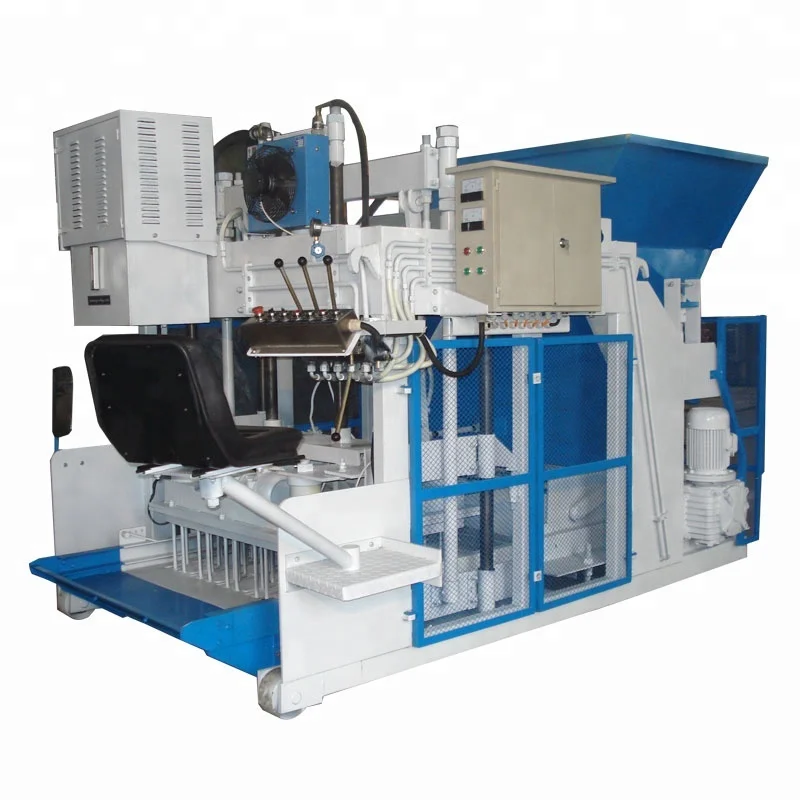
QMY12-15 Mobile Egg Laying Block Machine – Complete Line
Complete line integration — The QMY12-15 mobile block machine production line is engineered around the buyer’s actual raw materials and curing floor layout, so the press, mixer, and material feed stations operate as a synchronized unit rather than a collection of disconnected machines.
Technical Specifications
| Parameter | Value |
|---|---|
| Model | QMY12-15 |
| Product Type | Mobile Egg Laying Block Making Machine |
| Overall Dimensions | 3250×2100×2300 mm |
| Demold Method | Hydraulic |
| Turning Method | Hydraulic |
| Hydraulic System Pressure | 16-20 MPa |
| Excitation Frequency | 3200 Hz |
| Total Power | 16 kW |
| Total Mass | 4200 kg |
| Molding Cycle | 10-15 s |
| Molding Capacity | 12 pcs/mould (based on 400×200×200 mm hollow block) |
| Moving Method | Automatic movement with hydraulic steering |
| Vibration Mode | Three-dimensional mould vibration |
| Control System | Computer automatic control |
| Voltage & Frequency | Configurable (basis to be confirmed with buyer) |
| Mould Format Options | Hollow block, porous brick, road kerb, road brick, grassing brick |
| Automation Level | Semi-automatic |
| Warranty | 1 year (excluding spare parts) |
Application Suitability
| Application | Material or Output |
|---|---|
| On-site housing project production | Hollow and solid blocks from locally sourced river sand, gravel, and cement |
| Remote contractor block supply | Blocks produced at the job site, eliminating transport from a central plant |
| First-time block production | Fly ash, cinder, coal gangue, and industrial waste residue mixed with cement |
| Paving and kerb production for site work | Road brick, kerbstone, and grassing brick formats by changing moulds |
Why "15 Seconds per Cycle" Rarely Means What Buyers Expect
A cycle time only translates to daily output when the mixer and curing floor keep pace with the press.
When a mobile block machine production line is quoted at 10-15 seconds per cycle, that figure assumes a fully loaded mould is ready the instant the press finishes its previous cycle. In practice, the QMY12-15 must wait for the mixer to deliver the next batch and for the operator to position the machine. If the mixer is undersized, the press sits idle for seconds that add up to lost hours across a shift. This is where egg laying block machine supporting equipment becomes the real determinant of throughput [NEED_CITE: mobile block production line cycle matching principles].
Mixer-to-Press Feed Rhythm
The QMY12-15 draws a full mould charge every 10-15 seconds. A mixer that takes 90 seconds to produce a batch will starve the press unless a surge hopper bridges the gap. Specifying the mixer capacity, discharge rate, and feed conveyor length together with the press ensures that no single station becomes the bottleneck. This line-level thinking is what separates a functioning mobile block machine production line from one where the operator spends more time waiting than producing.
Curing Floor Logistics Without Pallets
Because the QMY12-15 lays blocks directly on the ground, pallet handling and pallet return conveyors are eliminated entirely. The trade-off is that curing floor area must be planned per shift output: each block format occupies a different footprint per piece, and the travel path of the machine determines how many square meters of level concrete surface are required. Egg laying block machine supporting equipment in this context means grading and preparing the curing area before the first block is ever laid [NEED_CITE: egg laying block curing area planning].
Format Switching and Line Rhythm
Changing from a 400×200×200 mm hollow block mould to a kerbstone mould alters not only the cycle time but also the downstream curing space needed per piece. A heavier kerb requires longer vibration and potentially more curing area per unit of output. Buyers who plan to produce multiple formats need a format-specific cycle time list and corresponding curing area calculation, not a single headline capacity number.
Hydraulic Pressure and Vibration Force Matching
The 16-20 MPa hydraulic system pressure and 3200 Hz excitation frequency must work together with the buyer’s specific mix design. I once saw a customer pull a mobile machine of this class to a site and run it directly with local river sand without adjusting the vibration and pressure balance. The hollow blocks came out with insufficient strength, and an entire batch was scrapped. Now, before any quotation goes out, I insist on knowing the aggregate source and particle size distribution. The three-dimensional mould vibration on the QMY12-15 compacts the mix from multiple axes, but if the hydraulic pressure is set too low for a coarse aggregate, the block density will vary piece to piece. Getting this right at commissioning prevents costly rework downstream.
The Hidden Cost of Overlooking Support Stations
Buyers who focus only on the press often discover after arrival that their mixer discharge height does not align with the feed point, or that the generator they rented cannot sustain the 16 kW continuous draw during peak vibration. These are not machine defects — they are line integration gaps. When voltage, frequency, and control display language are not confirmed before production, commissioning delays of days or weeks can follow. The cost of a misconfigured support station is measured in idle shifts, not in the machine price [NEED_CITE: mobile block machine on-site power and generator sizing].
What Makes This Line Configuration Different
The QMY12-15 is specified as the center of a matched line, not sold as a standalone press. Raw material feed configuration, mixer sizing, and curing area layout are calculated against the buyer’s actual block format and target daily output. Mould design covers the formats the buyer’s market actually sells, including custom drawings when standard options do not match. The automation level is selectable, so a buyer can begin with manual feed and add automatic stacking or remote diagnostics later. Installation support includes operator training on the specific mix and aggregate in use at the buyer’s site.
Documentation & Verification
- Line layout drawing showing QMY12-15 travel path, mixer position, and curing area dimensions
- Capacity calculation stated per block format with cycle time assumptions noted
- Mould drawing and format list covering hollow block, kerb, paver, and porous brick
- Voltage, frequency, and control language confirmation sheet signed before production
- Hydraulic and electrical schematic with pressure and frequency settings marked
- Factory test record demonstrating mould change and cycle rhythm on your mix design
Installation, Commissioning & Support
- Site leveling for QMY12-15 travel path across 3250 mm machine length confirmed before arrival
- 16 kW power supply with dedicated circuit and generator sizing guidance provided
- Hydraulic steering and demold system tested on buyer’s aggregate during commissioning
- Mould change procedure trained for all ordered formats with shift-rhythm timing verified
- Wear parts list with first replacement lead time confirmed before shipment
- One-year warranty covering full machine, with spare parts availability schedule documented
What We Need to Configure Your Line
To build an accurate line proposal, share the block formats your market demands, your target daily output per format, and the local aggregate type and source. Confirm your on-site power availability — grid voltage and frequency or generator specifications — and the control language your operators require. If you have existing mixers or material handling equipment, provide their specifications so we can match the feed rhythm to the QMY12-15 cycle.
Frequently Asked Questions
Q: How is daily output calculated for each block format on this mobile line?
A: Daily output depends on the cycle time per format, the mixer feed rate, and available curing floor. The QMY12-15 molds 12 pieces of 400×200×200 mm hollow block per cycle at 10-15 seconds, but kerb or paver formats have different cycle times and mould capacities. We provide a format-by-format capacity sheet so you can plan against your project schedule rather than a single best-case number.
Q: What mixer size prevents the press from waiting between cycles?
A: The mixer must deliver a batch fast enough to match the QMY12-15 molding cycle of 10-15 seconds. An undersized mixer creates idle gaps that reduce shift output. We calculate the required mixer capacity and feed rate based on your chosen block format and mix design, and include a surge hopper if batch timing requires it.
Q: How much curing floor area does a shift require?
A: The area depends on your daily output and block format. The QMY12-15 lays blocks directly on the ground without pallets, so every piece stays where it is laid until cured. We provide a curing area calculation based on your target shift volume and the footprint of each format, including the machine travel lanes needed.
Q: What power source is needed when grid electricity is unavailable?
A: The QMY12-15 draws 16 kW total power, and mobile sites often rely on generators. Voltage and frequency must be confirmed before production, as a mismatch can damage the control system or reduce vibration force. We specify the generator rating and dedicated circuit requirements so your power setup is ready on day one.
Q: How are spare moulds and wear parts supplied after delivery?
A: Moulds and hydraulic wear parts availability is confirmed before shipment, with lead times for first replacement set documented in writing. The QMY12-15 format list includes all ordered moulds, and replacement schedules are aligned with your production volume so format flexibility is not lost to parts delays.


