
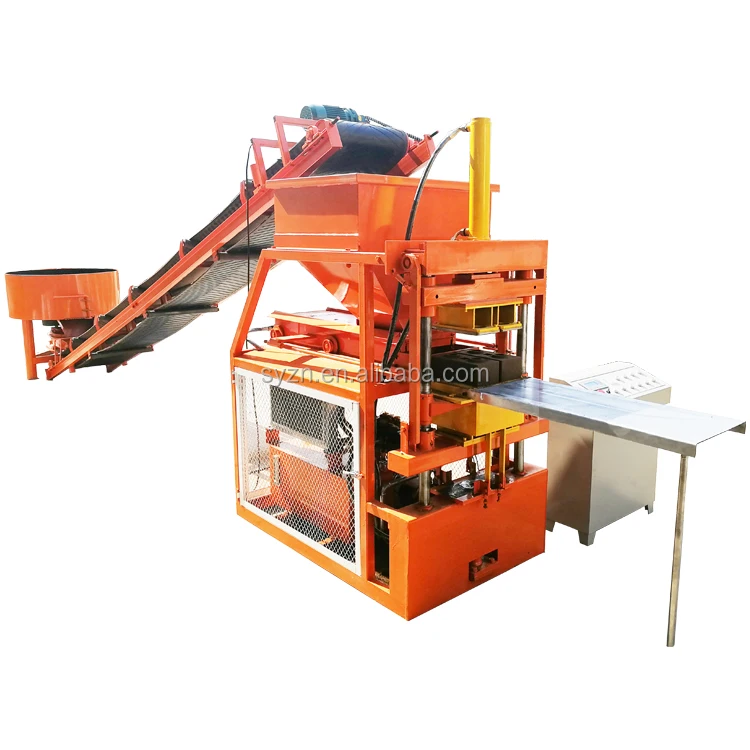
Station-Matched Line Design — The LY2-10 interlocking brick machine line is configured so upstream feeding, mixing, and pallet handling stations align with the 10-second moulding cycle, preventing idle press time.
Technical Specifications
| Parameter | Value |
|---|---|
| Model | LY2-10 |
| Product Type | Clay Interlocking Block Making Machine |
| Machine Power | 7.5 kW |
| Molding Cycle | 10 s |
| Output Capacity | 6,000 pcs / 8 h (basis not stated in source — confirm block format, material and thickness) |
| Pcs/Hour | 750 (basis to be confirmed per block format) |
| Pcs/Mould | 1 |
| Raw Materials | Clay, soil, earth, mud, concrete, cement, fly ash |
| Overall Dimensions (L×W×H) | 1,300 × 1,800 × 2,400 mm |
| Automation Level | Semi-automatic |
| Block Formats Listed | 300×150×100 mm / 250×125×75 mm / 230×220×115 mm |
| Standards | CE (company documentation capability) |
Application Suitability
| Application | Material or Output |
|---|---|
| Small-scale interlocking clay brick plant | Local clay and soil blended with cement |
| On-site housing project block production | Earth, mud and cement mixes prepared at the construction site |
| Workshop block line adding interlocking formats | Concrete, cement and fly ash blends for denser interlocking bricks |
| Rural infrastructure block supply | Locally sourced soil stabilised with cement or fly ash |
What "750 Pieces per Hour" Leaves Out in a Clay Block Machine Production Line
Cycle time on the press is meaningless if the mixer, feeder and pallet return cannot keep the same rhythm.
A quoted output figure assumes every station in the clay block machine production line delivers material and pallets exactly when the press finishes its 10-second cycle. In practice, a mixer that batches too slowly or a pallet feeder that jams leaves the press standing idle, cutting real daily output well below the nameplate number. I have watched a line lose an entire shift because the feeding hopper could not handle wet clay during the rainy season, while the press cycled perfectly on its own [NEED_CITE: impact of raw material moisture on feeding station throughput]. Line capacity must therefore be stated per block format and verified station by station, not taken from a single press figure.
Feeding and Mixing Stations Sized to the Press Rhythm
The LY2-10 completes a moulding cycle every 10 seconds, which sets the tempo the rest of the interlocking brick machine line must follow. The raw material feeder and pan mixer must deliver a fresh batch of clay-cement blend before the next cycle begins, taking into account the moisture variability that clay and soil naturally carry. When the feeding station is undersized, operators end up hand-feeding the hopper just to keep the press running.
Pallet Circulation and Curing Area Matching
Interlocking blocks in three different formats mean the pallet size and curing rack spacing must accommodate the largest 300×150×100 mm brick while still fitting the smaller 230×220×115 mm format. Pallets return from the curing area on a conveyor or by forklift, and the return speed must match the press cycle. If the curing yard is too far or the forklift is shared with another task, the press waits for pallets and the entire clay block machine production line slows down [NEED_CITE: pallet return logistics in semi-automatic block plants].
Reading the Specification Sheet with a Line Perspective
The 7.5 kW machine power drives both the hydraulic system and the vibration mechanism, which together determine the density and strength of the interlocking brick. Semi-automatic operation means an operator places and removes pallets manually, so labour planning must account for continuous pallet handling at the press. The compact 1,300×1,800×2,400 mm footprint allows the line to fit inside a small workshop, but aisle width for pallet movement and curing rack placement must still be calculated before the equipment arrives. Because the control system and voltage are not stated in the source data, these must be confirmed against the buyer’s local grid before production begins.
The Hidden Cost of Mismatched Stations
When a buyer focuses only on the press price and ignores the supporting equipment, the line frequently underperforms. A mixer that cannot handle sticky clay forces the operator to add extra water, weakening block strength. Pallets chosen without regard to the buyer’s existing forklift and curing racks end up stacked by hand, adding labour cost the quotation never mentioned. I once saw a project delayed for weeks because the voltage was not confirmed before shipment and the control panel language was unreadable to the local operators [NEED_CITE: consequences of unconfirmed voltage and control language in block machinery exports].
Why Procure the Full Line from One Source
Every station — mixer, feeder, pallet conveyor, curing rack — is specified against the 10-second press cycle so no component is over- or under-sized. The line layout drawing states capacity per block format rather than a single catalogue number. Pallet size and material are chosen around the buyer’s curing area and forklift, not pulled from a default list. Voltage, frequency and PLC display language are confirmed before the line enters production, avoiding commissioning delays. Mould design covers the exact interlocking formats the buyer’s market demands, and custom drawings are available for non-standard sizes.
Documentation & Verification
- Line layout drawing with capacity stated per interlocking block format
- Machine specification sheet including 7.5 kW power and overall dimensions
- Mould drawing covering all three listed interlocking brick sizes
- Voltage and control language confirmation record before production
- Factory test record covering full line sequence from feeding to stacking
Installation, Commissioning & Support
- Foundation plan sized to the 1,300×1,800 mm press footprint and pallet conveyor length
- Power supply confirmation matching the 7.5 kW motor rating and local voltage
- Assembly guidance for the compact frame inside a small workshop or on-site shelter
- First-run parameter setting for clay-cement mix ratio and 10-second moulding cycle
- Operator training on semi-automatic pallet placement and removal rhythm
- Wear parts list covering mould liners and hydraulic seals for the LY2-10
Preparing Your Inquiry for the Complete Line
To size the clay block machine production line accurately, share the interlocking block format your market sells most, the daily output you need in eight hours, and the type of clay or soil available locally. Include your workshop dimensions and curing yard layout so the pallet return and rack spacing can be planned. State your local voltage and frequency, and the language your operators will use on the control panel, so the line ships ready to run.
Frequently Asked Questions
Q: How do I verify real daily output when every station must keep pace with the press?
A: Request a line layout that lists capacity per interlocking block format, not a single press figure. Each station — feeder, mixer, pallet return — must show its cycle time matched to the 10-second press rhythm. A factory test record covering the full sequence from feeding to stacking confirms the line delivers its stated output before shipment.
Q: What supporting equipment is needed so the LY2-10 never waits?
A: The line needs a pan mixer sized to deliver a batch within the press cycle, a raw material feeder that handles variable clay moisture, a pallet feeder and return conveyor, and curing racks spaced for the 300×150×100 mm format. Each station is specified against the 7.5 kW press so the line runs without idle time.
Q: How should pallet size and material be chosen?
A: Pallet dimensions must suit the largest block format and match the buyer’s existing forklift and curing rack spacing. Material selection depends on the local climate and curing method. Confirming pallet specifications before production avoids costly replacements and manual stacking after the line arrives on site.
Q: What voltage, frequency and control language must be confirmed before the line ships?
A: Local grid voltage and frequency determine the motor and control panel configuration. The operator interface language must be readable by the local workforce. Confirming these details before production prevents commissioning delays and ensures the LY2-10 starts running the day it is connected to power.



