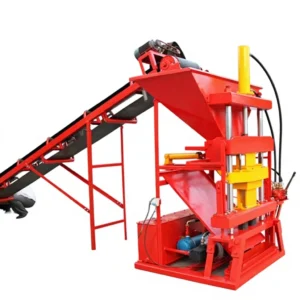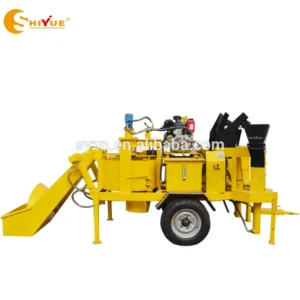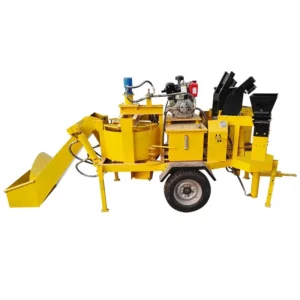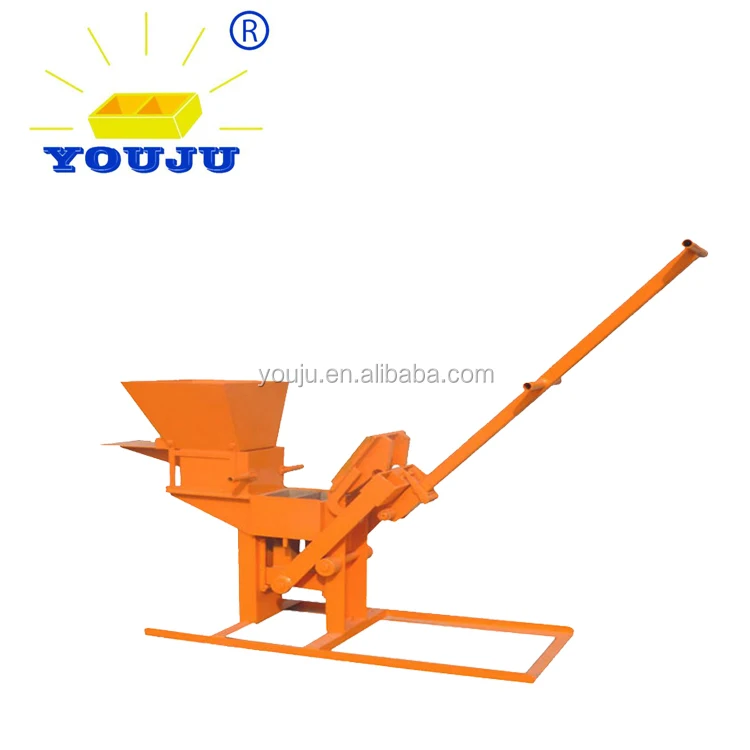
Complete Press Station Matching — the LY2-40 manual clay interlocking brick machine is specified alongside its mixer, material feed and curing workflow so the press cycle is never starved of mixed earth.
Technical Specifications
| Parameter | Value |
|---|---|
| Model | LY2-40 |
| Product Type | Manual Clay Interlocking Brick Machine |
| Operation Mode | Completely manual, no electrical power required |
| Lifting System | Manual lever and ram mechanism |
| Mobility | Steel wheels for on-site repositioning |
| Mould System | Changeable moulds for various interlocking block formats |
| Overall Dimensions (L×W×H) | 1600 × 700 × 1200 mm |
| Net Weight | 200–240 kg |
| Molding Cycle | 30–40 s per press (basis not stated in source — depends on block format, material and operator rhythm) |
| Output Capacity | 400–1000 pcs/day (basis not stated in source — varies with interlocking format, wall thickness and crew size) |
| Total Power | None (fully manual operation) |
| Recommended Mixer | JFA-1 pan mixer or JQ350 drum mixer |
| Warranty | 1 year |
| Mixing Method | Manual soil-cement blending or mechanised mixer feed |
Application Suitability
| Application | Material or Output |
|---|---|
| Off-grid housing projects | Local laterite or red soil blended with cement, no grid connection required |
| Small-scale interlocking brick plants | Soil-cement mix producing interlocking wall blocks for single-storey and low-rise construction |
| On-site development contractors | Earth brick production directly at the building plot using excavated soil |
| Community block yards | Manual interlocking paver and wall block formats for rural infrastructure |
What "400 to 1000 Pieces per Day" Actually Means on a Manual Press
Output on a manual clay interlocking brick machine production line depends entirely on which interlocking format the mould produces and how fast the mixer can feed the press.
I have watched plant owners in Southeast Asia take a quoted daily capacity at face value, only to discover that the figure assumed a thin interlocking paver while they were running a deep hollow interlocking wall block. The LY2-40 completes one press every 30 to 40 seconds, but that cycle only translates into real output when the block format, soil moisture and mixer discharge rate are all stated together [NEED_CITE: block format and cycle time relationship in manual presses]. Without that breakdown, a buyer planning a housing project can fall hundreds of bricks short on the first week of production.
Press Station Placement Within the Manual Block Line
On a manual clay interlocking brick machine production line, the LY2-40 sits downstream of the mixer and upstream of the curing rack. The operator shovels mixed soil-cement into the mould chamber, pulls the lever, releases the brick and wheels it to the drying zone. Every step between the mixer discharge and the press inlet must stay shorter than the 30 to 40 second molding cycle, otherwise the press sits idle and daily output drops.
Mixer-to-Press Rhythm and Where It Breaks Down
A JQ350 drum mixer discharges a batch roughly every three to four minutes. If the LY2-40 runs a small interlocking format that consumes mix faster than the drum can deliver, the operator waits. If the format is large and the mixer over-produces, mixed material dries out before it reaches the mould chamber [NEED_CITE: soil-cement open time and strength loss]. Matching mixer batch size to the exact interlocking mould installed on the LY2-40 is the single factor that keeps the manual line flowing without electrical automation.
Reading the Cycle Time Against the Block Format
The 30 to 40 second molding cycle quoted for the LY2-40 assumes a standard interlocking wall block at moderate soil moisture. Thicker formats with deeper interlocking teeth require a longer ram stroke and a firmer lever pull, pushing the cycle toward the upper end of that range. Thin paver formats cycle faster but demand more frequent material top-ups. Planning a line layout means listing every format the buyer intends to sell and calculating a separate daily output for each one, rather than relying on a single headline figure.
The Cost of Leaving the Curing Area Out of the Line Plan
Manual interlocking brick production does not stop when the brick leaves the mould. Fresh earth-cement bricks must reach a shaded, level curing area within minutes to prevent surface cracking and edge damage. When the curing zone is too far from the LY2-40, the operator spends more time wheeling bricks than pressing them, and uneven handling causes chipped interlocking teeth that weaken wall assembly [NEED_CITE: early-age handling damage in soil-cement bricks]. A line drawing that shows the press, the wheelbarrow route and the curing rack spacing together prevents this loss before the first brick is made.
Why This Supply Channel Works for a Manual Line
Block machinery is the single focus here, which means the LY2-40 is not shipped as a standalone press but configured as one matched station inside a manual block line. The recommended JFA-1 or JQ350 mixer is selected to match the batch volume the LY2-40 consumes per cycle, preventing idle time at either station. Mould drawings and format lists are provided before order confirmation, so the buyer sees exactly which interlocking profiles the machine will produce. Voltage and control language questions do not apply to this zero-power press, but any downstream electric mixer is confirmed against the buyer’s local supply before dispatch. The automation level can start fully manual and later accommodate a motorised mixer upgrade without replacing the press itself.
Documentation & Verification
- Line layout showing mixer, LY2-40 press station and curing area positions with capacity stated per interlocking format
- Mould drawing and interlocking format list confirming every block profile the machine produces
- Machine specification sheet with dimensions, net weight and cycle time noted per format
- Operation and maintenance manual covering manual lever technique and mould change procedure
- Factory test record documenting press cycle on the buyer’s selected interlocking mould before dispatch
Installation, Commissioning & Support
- Level compacted ground required under the 1600 × 700 mm footprint; no concrete foundation needed for the 200–240 kg frame
- Zero electrical connection at the press itself; dedicated circuit only needed if an electric JQ350 mixer is added
- Machine arrives fully assembled on steel wheels; no dismantling required beyond securing the lever arm for transport
- First-day commissioning covers soil-cement ratio trials on the buyer’s local earth using the supplied mould
- Operator training includes manual lever rhythm, mould release technique and daily cleaning of the mould chamber
- Wear parts list covers mould liner plates and ram seals with recommended inspection intervals
What We Need to Size Your Manual Line
Share the exact interlocking brick format you intend to sell, including length, width, height and tooth depth, along with the soil type available at your site. Let us know the daily output target and the number of work hours you plan to run. If you already have a mixer or a shaded curing area, send its batch capacity and dimensions so the LY2-40 press station can be positioned to match.
Frequently Asked Questions
Q: How is daily output verified for each interlocking brick format on the LY2-40?
A: Daily output is calculated by running a timed cycle test with the exact mould and soil-cement mix the buyer will use. The number of completed presses in one hour is recorded, then multiplied by the planned shift length minus rest and material loading intervals, giving a format-specific figure rather than a generic range.
Q: What mixer size should feed the LY2-40 to avoid press idle time?
A: A JQ350 drum mixer or JFA-1 pan mixer matches the batch volume the LY2-40 consumes within its 30 to 40 second cycle. Choosing a mixer with much larger capacity wastes mixed material, while a smaller unit leaves the operator waiting between presses.
Q: How does soil type and cement ratio affect block strength from a manual press?
A: Laterite and sandy loam respond differently to manual compaction. Higher clay content requires less cement but demands precise moisture control, while sandy soil needs more cement to reach the same compressive strength. Trial batches on the LY2-40 confirm the right ratio before full production starts.
Q: What site conditions and curing area does a manual interlocking brick line need?
A: The LY2-40 requires level, compacted ground and a shaded curing zone within a short wheeling distance. Fresh soil-cement bricks must be protected from direct sun and rain for several days to develop strength without surface cracking.
Q: How long does a mould change take on the LY2-40?
A: Switching interlocking formats involves unbolting the current mould box, lifting it off the press frame and securing the replacement mould. With basic hand tools and two operators, the changeover is completed within one shift segment, keeping format flexibility practical on a manual line.