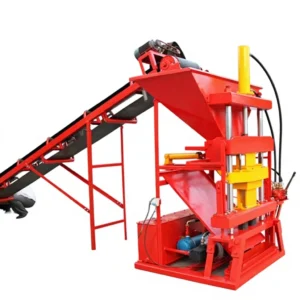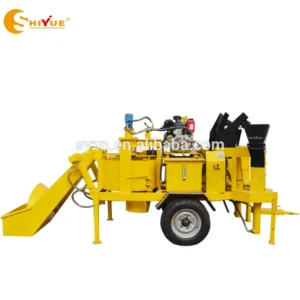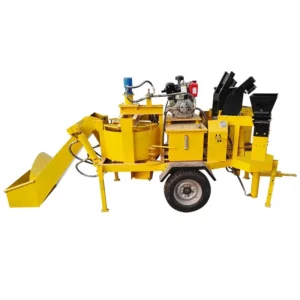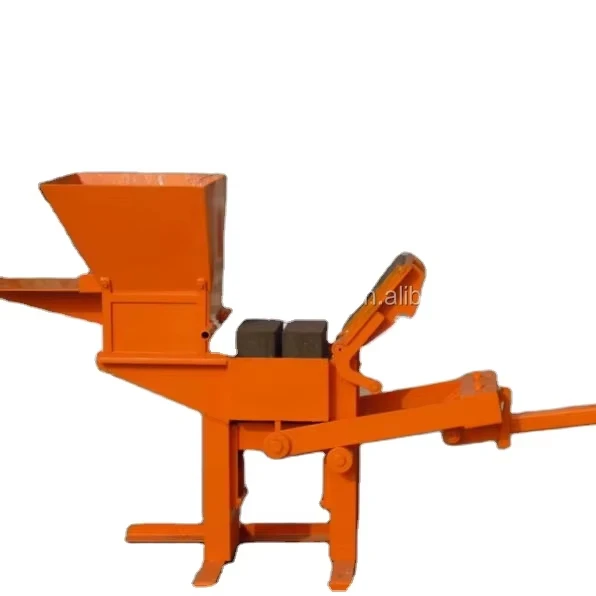
Matched System Design — every station from the JFA-1 mixer through the LY2-40 press to the manual curing rack is sized so the 30-40 s molding cycle is never left waiting for material or pallets.
Technical Specifications
| Parameter | Value |
|---|---|
| Product Type | Manual Earth Brick Making Machine |
| Model | LY2-40 |
| Rated Power | No Power, Completely Manual |
| Voltage & Frequency | N/A (manual operation) |
| Control System | Manual lever operation |
| Overall Dimensions (L×W×H) | 1600 × 700 × 1200 mm |
| Net Weight | 200–240 kg |
| Molding Cycle Time | 30–40 s per cycle (basis to be confirmed) |
| Output Capacity | 400–1000 pcs/day (basis to be confirmed) |
| Mould Format | Interlocking clay brick, changeable for various formats |
| Automation Level | Completely manual |
| Mobility | Steel wheels for on-site relocation |
| Stacking Method | Manual, no pallet handling system included |
| Basic Equipment | JFA-1 Mixer or JQ350 Mixer |
| Warranty | 1 Year |
Application Suitability
| Application | Material or Output |
|---|---|
| On-site interlocking brick production without grid power | Local clay soil mixed with sand and stabilizer |
| Rural housing and community building projects | Earth blocks formed and cured at the construction site |
| Remote contractor yards producing for a single project | Clay-sand mix fed from a JFA-1 or JQ350 pan mixer |
| Entry-level brick plant for first-time producers | Interlocking clay bricks stacked and cured on open ground |
What "400 to 1000 Pieces per Day" Actually Means on a Manual Line
Capacity figures on manual presses are meaningless unless the block format, soil density, and operator count are stated together.
I once visited a site in West Africa where the buyer had been quoted a daily output number for a manual earth press without anyone asking which interlocking profile the figure assumed. The crew was running a thicker wall format that nearly doubled the molding cycle, and the actual output sat well below the quoted range. The mixer upstream was oversized for the slower rhythm, sitting idle half the shift while the press crew caught up [NEED_CITE: common causes of output shortfall on manual earth brick lines]. On a clay interlocking brick machine production line, every station — mixing, feeding, pressing, stacking — must be balanced around one confirmed block format before any capacity number holds weight.
How the Press Station Fits the Rest of the Line
The LY2-40 is a single station within a wider clay interlocking brick machine production line. Upstream, the JFA-1 or JQ350 mixer must deliver batches at a rate that matches the 30–40 s press cycle; downstream, manual stackers need a curing area large enough to hold several days of output before bricks are moved. When any one station runs faster or slower than the press, the entire line stalls or piles up.
Why Line Balance Matters More Than Press Speed Alone
A faster press cycle means nothing if the mixer cannot supply material in time or if the curing racks fill up before bricks are dry enough to stack higher. On a manual clay interlocking brick machine production line, the bottleneck shifts depending on crew size, ambient temperature, and soil moisture [NEED_CITE: factors affecting manual brick line throughput]. Planning the line as a whole — rather than selecting the press in isolation — prevents costly rebalancing after equipment arrives on site.
Reading the Specs That Shape Line Design
The 1600 × 700 × 1200 mm footprint of the LY2-40 defines the minimum spacing between the mixer discharge point and the stacking area. At 200–240 kg net weight on steel wheels, the press can be repositioned on compacted ground without a forklift, which matters when the curing zone needs to expand as output accumulates. The completely manual lever operation eliminates electrical infrastructure from the line layout, but it also means cycle consistency depends entirely on operator rhythm — a factor that must be accounted for when calculating realistic daily throughput across different block formats.
The Cost of Skipping Line Integration Checks
Buyers who treat the press as a standalone purchase often discover that pallet size, curing space, and mixer batch volume were never discussed. The result is a line where bricks pile up on the ground because no rack system was planned, or where the mixer runs dry because its capacity was matched to a faster press model [NEED_CITE: hidden costs of incomplete brick line quotations]. These gaps do not show up in a single-machine quotation; they surface only once production starts and stations fail to synchronize.
Why Buyers Plan the Full Line Here
Our proposals treat the LY2-40 as one node in a clay interlocking brick machine production line, not a standalone item. The mixer model is selected against the confirmed cycle time, not a catalogue default. Line layouts show material flow from raw soil feeding through mixing, pressing, and manual stacking, with curing area dimensions stated for the buyer’s target format. Mould options are confirmed against the interlocking profiles the buyer’s market actually sells. Voltage and power requirements — or the deliberate absence of them — are documented so there are no surprises at commissioning. Operator training covers the full line rhythm, not just the press lever.
Documentation & Verification
- Line layout drawing showing mixer-to-press-to-curing material flow for the confirmed block format
- Capacity calculation sheet stating the interlocking brick profile and wall thickness assumed
- Mould drawing and format list covering available interlocking profiles and changeover steps
- Factory test record on the buyer’s soil sample before dispatch
- Operation manual covering full line rhythm from mixing through stacking
Installation, Commissioning & Support
- Compacted ground pad sized to the 1600 × 700 mm press footprint plus mixer clearance
- No electrical connection required; manual lever operation verified on site
- Steel wheels allow repositioning without dismantling adjacent line stations
- First-run cycle timing confirmed against mixer batch delivery rate
- Operator training covers molding rhythm, mould change, and stacking sequence
- Wear part list covering lever pivot points and mould liner surfaces
What We Need to Scope Your Line
To build an accurate clay interlocking brick machine production line proposal, share the interlocking brick profile and wall thickness you intend to produce, the soil type available on site including sand and clay percentages, and the daily output target you need to meet your project schedule. If you already have a curing area or existing mixer, include those dimensions so the line layout accounts for what is already in place.
Frequently Asked Questions
Q: How is the 400–1000 pcs/day capacity calculated, and which block format does it assume?
A: That range depends on the specific interlocking brick profile, wall thickness, soil density, and number of operators running the cycle. We confirm the exact format first, then calculate a realistic daily figure based on the 30–40 s molding cycle and your crew size, so the capacity number in the proposal reflects your actual product.
Q: Which mixer — JFA-1 or JQ350 — matches the LY2-40 press cycle?
A: The choice depends on your confirmed block format and the batch volume each molding cycle consumes. A JFA-1 suits lower-output lines where the press cycle allows longer intervals between batches, while the JQ350 serves higher-output setups where the press must not wait for material. We size the mixer after the format and cycle are locked in.
Q: Are pallets, stacking, and curing station planning included in the line proposal?
A: The LY2-40 does not use pallets — bricks are formed directly on the ground or a prepared surface. However, the line proposal includes a curing area layout showing how much space is needed for your target daily output, so stacking and drying zones are planned before equipment ships rather than improvised on arrival.
Q: What interlocking brick mould profiles are available, and how long does a changeover take?
A: Available profiles depend on the interlocking patterns your local market requires. Mould changeover involves removing the current mould box and bolting in the replacement, a task completed with basic hand tools. We confirm the profile list and changeover procedure in the mould drawing package before production begins.
Q: Can additional LY2-40 units be added in parallel to raise output?
A: Yes, multiple presses can run side by side within the same line, sharing a single mixer if its batch capacity supports the combined cycle demand. The line layout is recalculated to show material flow and curing space for the expanded configuration, ensuring no station becomes a bottleneck as output grows.