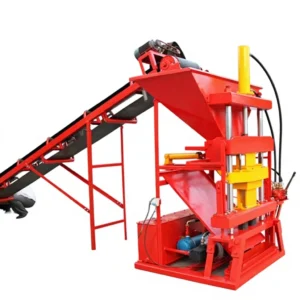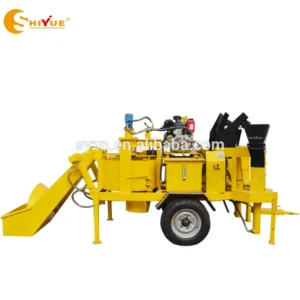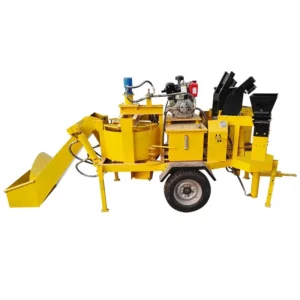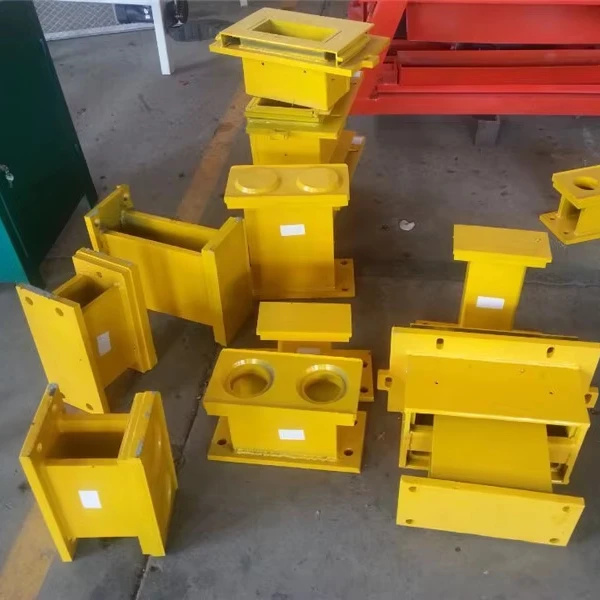
Matched System Configuration — we specify the press, mixer, pallet supply, and curing racks as one timed sequence rather than sourcing each from a separate supplier, so no station sits idle waiting for the next cycle.
Technical Specifications
| Parameter | Value |
|---|---|
| Model | ECO 2700 Plus |
| Product Type | Hydraulic Clay Interlocking Brick Making Machine |
| Overall Dimensions (L×W×H) | 1600 x 1300 x 2330 mm |
| Net Weight | 1100 kgs |
| Power Source | 7.5 kW / 12 hp diesel engine |
| Hydraulic Pressure | 16 MPa |
| Molding Cycle | 10–15 seconds |
| Daily Capacity | 2800 pcs/day (basis not stated in source — confirm block format, material, and pallet handling method) |
| Raw Material Compatibility | Clay, cement, sand, soil, shale, fly ash, white lime |
| Block Compressive Strength | Above 12 MPa |
| Control System | Hydraulic system with temperature-controlled oil cooling |
| Mould Format | Interlocking brick (moulds changeable) |
| Mould Change Method | Manual bolt adjustment, 0.5 mm gap setting |
Application Suitability
| Application | Material or Output |
|---|---|
| On-site construction projects without fixed plant | Local soil, clay, and cement blends |
| Small-scale clay brick manufacturing | Soil, shale, and fly ash mixtures |
| Housing development block production | Interlocking bricks with thermal and frost resistance |
| Low-investment brick plant startups | Sand and cement stabilized clay |
What "2800 Pieces per Day" Leaves Out for a Clay Interlocking Brick Machine Production Line
A capacity figure means nothing unless every supporting station around the press can feed it and clear its output at the same rhythm.
I spent years on the assembly floor before moving into line configuration, and the most common call I get from frustrated buyers is about output that never reaches the brochure number. A clay interlocking brick machine production line rated at a certain daily volume assumes the mixer can deliver material every 10–15 seconds, the pallet feed keeps up, and the curing racks can absorb the output without a bottleneck. When one of those stations lags, the press spends half its shift idling [NEED_CITE: typical block plant throughput losses from unmatched station cycle times]. The number on the nameplate becomes a ceiling you never touch.
Matching Every Station to the 10–15 Second Molding Cycle
The ECO 2700 Plus completes a press cycle every 10–15 seconds. That pace dictates the rhythm for the entire clay interlocking brick machine production line. The mixer must discharge a batch in time for the next stroke, and the raw material feeder must keep the hopper charged without overfilling. If the diesel-powered press sits in an off-grid site, every electrical station around it — conveyors, batchers, or stackers — requires a generator sized for simultaneous motor starting current, not just running wattage.
Diesel Power and What It Means for Line Layout
Running a 7.5 kW diesel engine removes the dependency on a stable grid connection, which matters for remote housing projects and rural construction sites. However, this choice shapes the rest of the line. Automatic pallet feeders and hydraulic stackers typically need three-phase electrical supply. On a diesel-only setup, pallet supply and brick stacking become manual operations, which changes the labor count and the physical space needed beside the press for workers to move wet bricks to the curing area.
Interpreting the Core Specifications for Real Output
The 16 MPa hydraulic pressure works in tandem with the mould cavity geometry to compress the clay or soil mix into an interlocking profile that reaches above 12 MPa bearing strength. That pressure must be matched to the buyer’s specific soil composition; a sandy clay requires different compression behavior than a heavy shale blend [NEED_CITE: soil stabilization and compressive strength relationships in compressed earth blocks]. The temperature-controlled hydraulic cooling system keeps the oil within operating range during continuous shifts, preventing the pressure drop that causes weak bricks in the afternoon run. The manual bolt-adjusted mould change, set to a 0.5 mm gap between upper and lower mould halves, offers format flexibility but demands a planned changeover window in the daily schedule.
The Cost of Ignoring Supporting Equipment in the Quote
When the quotation covers only the press and nothing around it, the buyer discovers the gaps on arrival. Pallets must be sourced locally in the right size and material to survive the curing cycle. The mixing station may not deliver a consistent blend, causing strength variation across the day’s output. Curing racks that cannot handle the daily volume force wet bricks to stack on the ground, damaging the interlocking geometry before the cement has set [NEED_CITE: curing and handling damage rates in small-scale block plants]. These oversights do not show up in the machine price; they appear as lost shifts, broken bricks, and missed project deadlines.
Why Source the Full Line Through One Configuration Point
We treat block machinery as a single focus, so the press, mould, pallet, and handling equipment are specified together as a matched system. Every configuration starts from the buyer’s actual mix design and local aggregate, not a catalogue default. We confirm the clay or soil proportion before finalizing the mixer type and feed rate. The mould is designed for the interlocking profile the buyer’s market actually sells, and the curing rack layout is calculated from the daily volume and available floor space. This approach eliminates the finger-pointing that happens when five different suppliers each deliver their piece and none of them fit together.
Documentation & Verification
- Line layout drawing with cycle time matched to each station around the ECO 2700 Plus
- Capacity calculation sheet stating the exact block format and mix assumed
- Mould drawing showing interlocking profile dimensions and gap tolerances
- Hydraulic schematic with oil cooling circuit and pressure settings
- Factory test record on the buyer’s raw material sample before dispatch
- Pallet specification matched to curing area dimensions and handling method
Installation, Commissioning & Support
- Foundation plan sized for the 1100 kg press footprint and vibration isolation
- Diesel engine service schedule and hydraulic oil change intervals confirmed
- Mould gap setting procedure using the 0.5 mm bolt adjustment method
- Operator training on hydraulic temperature monitoring during continuous shifts
- Wear parts list covering mould liners, hydraulic seals, and cooling system components
- Commissioning checklist verifying each station’s cycle alignment with the press
Before You Request a Quote
To size the supporting equipment correctly, share the interlocking brick profile your market requires, the daily volume you need to hit, and the local clay or soil type you plan to use. Confirm whether the site has grid power for auxiliary stations or if the entire line must run alongside the diesel press. Let us know the available floor space for mixing, curing racks, and finished brick storage.
Frequently Asked Questions
Q: How is the 2800 pcs/day capacity verified for this line?
A: That figure depends on the block format, mould cavity count, and whether pallet handling is manual or assisted. We provide a capacity calculation sheet that names the exact brick size, mix ratio, and station configuration assumed, so you can compare it against your actual production target before signing.
Q: The press is diesel-powered — how do I add electrical stations?
A: Adding a mixer, conveyor, or stacker requires a generator sized for the combined starting current of all motors running simultaneously. We specify the generator rating based on the exact auxiliary equipment added to your line layout, not a generic estimate.
Q: How do I match my local soil to the mixing station?
A: Send us a raw material sample of your local clay or soil. We test the mix proportion and adjust the feeder and mixer configuration so the press achieves consistent block strength above 12 MPa without wasting cement.
Q: What supporting equipment is included versus manual at this tier?
A: At this investment level, the diesel press handles molding. Pallet feeding, stacking, and curing rack handling are typically manual unless a generator and electrical stations are added. We specify exactly which tasks remain manual in your quotation.
Q: How does the line prevent station bottlenecks?
A: We calculate the cycle time of every station — feeder, mixer, press, and curing — and design the layout so no station waits on another. The ECO 2700 Plus molding cycle of 10–15 seconds sets the pace that every upstream and downstream station must match.