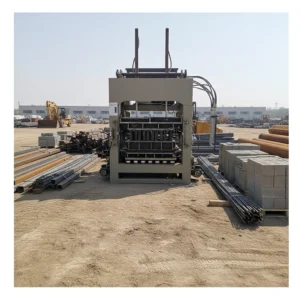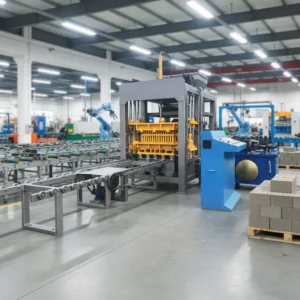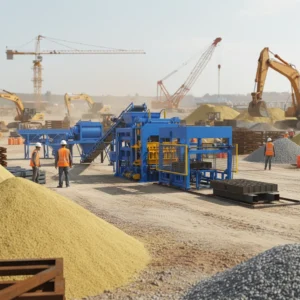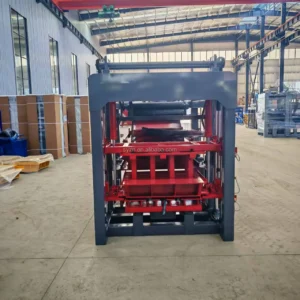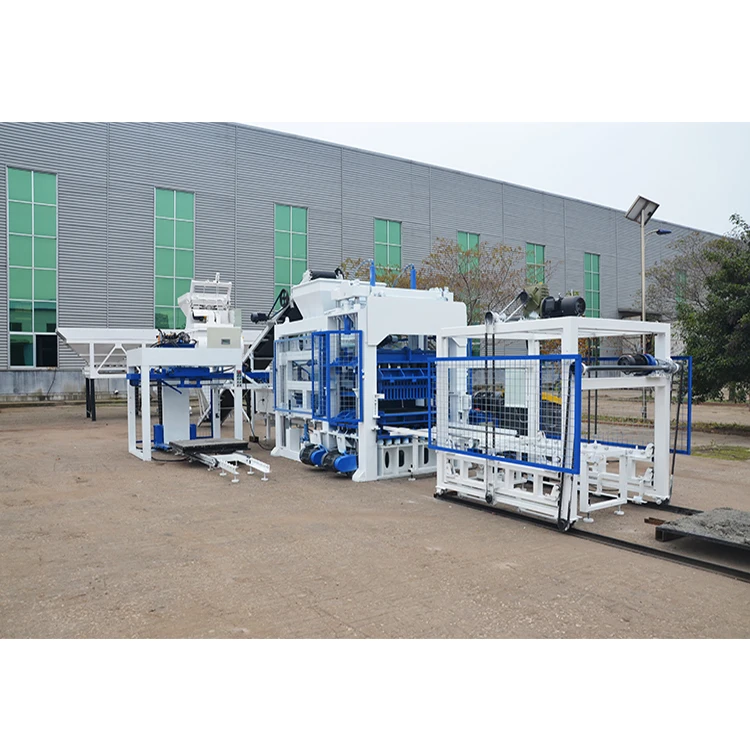
Matched Line Design — every station from pallet feed to hydraulic unit is balanced to the QT10-15 press cycle so no equipment stands idle.
Technical Specifications
| Parameter | Value |
|---|---|
| Model | QT10-15 |
| Product Type | Automatic Concrete Block Making Machine |
| Control System | PLC control cabinet |
| Hydraulic System | Independent integrated hydraulic station |
| Vibration Mode | Vertical station mode resonance, automatic FM-AM |
| Mould Change | Simple replacement, multi-function with one machine |
| Line Components | Pallet feed machine, block making machine, storage hopper, conveyor, hydraulic unit, PLC control cabinet |
| Cycle Time (hollow block) | 15–20 s |
| Cycle Time (paver) | 20–25 s |
| Output – 400×200×200 mm hollow block | 1800–2400 pcs/h (10 pcs/mould, 15–20 s cycle) |
| Output – 400×150×200 mm hollow block | 2160–2880 pcs/h (12 pcs/mould, 15–20 s cycle) |
| Output – 240×115×53 mm solid brick | 8928–11 160 pcs/h (62 pcs/mould, 15–20 s cycle) |
| Output – 200×100×60 mm paver | 5184–6480 pcs/h (27 pcs/mould, 20–25 s cycle) |
| Output – 225×112.5×60 mm paver | 4032–5040 pcs/h (24 pcs/mould, 20–25 s cycle) |
| Assembly State | Complete line with supporting equipment |
| Warranty | 1 year for whole machine (excluding spare parts) |
| CE Declaration | Available where applicable |
Application Suitability
| Application | Material or Output |
|---|---|
| Hollow block production | Crushed stone, sand, cement, fly ash blends |
| Multi-cellular brick production | Lightweight aggregate and cement mixes |
| Paving brick production | High-density aggregate and cement blends |
| Standard solid brick production | River sand, stone dust, cement |
| On-site block production for contractors | Locally sourced aggregate with site-batched cement |
| Format expansion for existing plants | Additional moulds fitted to the same press and pallet system |
What "Cycles per Hour" Leaves Out in a Block Line
Cycle speed means nothing when the mixer or pallet feeder cannot keep up.
Many automatic block making machine production line quotations quote a single cycles-per-hour figure without naming the block format behind it. A plant running 400×200×200 mm hollow blocks and another running 200×100×60 mm pavers will see very different daily totals from the same press. I once watched a high-output press sit idle for forty seconds every cycle because the upstream mixer was undersized; the line lost thousands of blocks before lunch. The numbers above are published per format so you can match them against your actual product mix and local aggregate. [NEED_CITE: block format and cycle time relationship in concrete masonry production]
Stations That Move at the Same Tempo
The QT10-15 is not a standalone press bolted to random peripherals. The pallet feed machine, storage hopper, conveyor and hydraulic unit are selected together so each station completes its task inside the press cycle window. When the mould opens, a fresh pallet is already in position; when the block is ejected, the downstream handling station is ready to receive it. This is where an automatic block making machine production line either earns its rated output or loses it to dead time.
Why Line Balance Matters More Than Press Tonnage
A press with high hydraulic pressure and strong vibration can still under-produce if the storage hopper empties faster than the conveyor refills it. On this line, the independent integrated hydraulic station sits away from host vibration and dust, keeping oil temperature stable across long shifts. The vertical station mode resonance with automatic FM-AM adjusts vibration frequency to the mould in use, so a switch from hollow block to paver does not require manual tuning. [NEED_CITE: hydraulic station isolation from vibration in block making equipment]
Reading the Capacity Table Honestly
Look at the output rows above and pick the format your market actually buys. The 400×200×200 mm hollow block line shows 14 400–19 200 pieces per eight-hour shift based on ten blocks per mould and a 15–20 second cycle. If your primary product is the 200×100×60 mm paver, the relevant figure is 41 472–51 840 pieces per shift based on twenty-seven pavers per mould and a 20–25 second cycle. Quoting one number across all formats hides the real planning data you need to size your curing area and truck fleet.
The Cost of Mismatched Stations
When upstream feeding or downstream pallet handling is sized separately, the press becomes the bottleneck or the bottleneck shifts every time you change format. Plants that quote generic cycle times without linking them to pallet feed speed often find operators hand-stacking blocks because the automatic stacker was never included. The result is extra labour, bruised blocks, and a curing yard that cannot keep pace with the press. [NEED_CITE: pallet handling mismatch in concrete block plants]
Why This Line Is Specified as One System
Every component on the QT10-15 line — from the storage hopper gate to the PLC cabinet — is chosen against the buyer’s target block format, local aggregate and available curing space. The PLC controls the entire sequence from pallet feed through block discharge, so station timing is set in software rather than left to operator judgement. Voltage, frequency and display language are confirmed before production starts, avoiding weeks of delay at commissioning. Mould drawings are reviewed against the formats your market actually sells, and custom mould designs are built to your drawings when standard sizes do not cover your product range.
Documentation & Verification
- Line layout with capacity calculation per block format assumed
- Hydraulic and electrical schematic showing station-by-station wiring
- Voltage, frequency and PLC language confirmation sheet before production
- Pallet specification matched to your curing racks and forklift capacity
- Factory test record run on your target mould before dispatch
- Operation and maintenance manual with wear parts and mould list
Installation, Commissioning & Support
- Foundation plan provided for the complete QT10-15 line footprint including conveyor run
- Power circuit sized to the independent hydraulic station and vibration motor combined draw
- Machine shipped partially assembled; pallet feed and conveyor bolted on site to match layout
- PLC parameters set to your confirmed voltage and language during first-day commissioning
- Operator training covers mould change sequence and automatic FM-AM vibration adjustment
- Wear parts list with hydraulic seals and mould liner dimensions supplied at delivery
What to Share With Your Quotation Request
Tell us the block formats your market buys, the daily volume you need per format, and the aggregate materials available locally. Confirm your site voltage, frequency and preferred PLC display language. Let us know the curing area dimensions and the forklift capacity you already have so the pallet size and stacking station can be matched from day one.
Frequently Asked Questions
Q: How is capacity calculated per block format and what cycle time is assumed?
A: Each output figure in the specification table names the block dimensions, pieces per mould and the cycle time range used. For hollow blocks the cycle is 15–20 seconds; for pavers it is 20–25 seconds. Multiply the pieces per mould by the number of cycles your shift length allows to verify the daily total.
Q: How do upstream feeding and downstream pallet handling stations match the press cycle?
A: The storage hopper, conveyor and pallet feed machine are selected so each delivers material or a fresh pallet within the QT10-15 cycle window. The PLC coordinates station timing, preventing the press from idling while waiting for upstream supply or downstream clearance.
Q: What pallet size and material does the line require, and can it work with my existing curing racks?
A: Pallet dimensions and material are specified against your chosen mould format and the curing rack spacing you already operate. Share your rack dimensions and forklift capacity so the pallet feeder and stacking station are configured to match before shipment.
Q: What voltage, frequency and PLC language options are confirmed before shipment?
A: Voltage and frequency are set to your site supply standard, and the PLC display language is confirmed during the order stage. These parameters are locked into the control cabinet before the factory test runs, so commissioning starts with the correct settings already loaded.
Q: What does the one-year warranty cover and which wear parts should I stock from day one?
A: The warranty covers the complete machine excluding consumable spare parts. A wear parts list is supplied with the line, highlighting hydraulic seals, mould liners and vibration components. Stocking the items on that list avoids unplanned downtime when the first replacement cycle arrives.