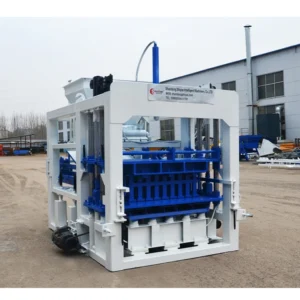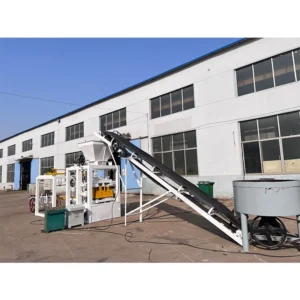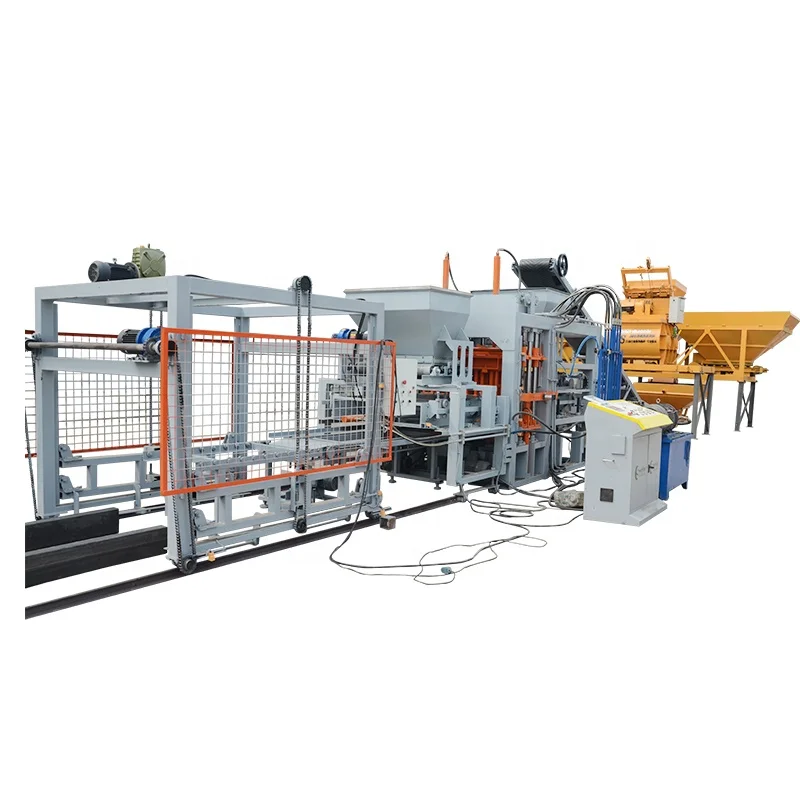
Matched Line Configuration — the QT7-15 is specified with batching, mixing, pallet handling and stacking as one coordinated system, so the press cycle never waits on upstream or downstream stations.
Technical Specifications
| Parameter | Value |
|---|---|
| Product Type | Automatic Hydraulic Hollow Block Making Machine |
| Model | QT7-15 |
| Host Machine Dimensions | 3200 × 2300 × 2750 mm |
| Host Machine Weight | 6 Tons |
| Molding Area | 1150 × 700 mm |
| Workshop Area Required | 200 ㎡ |
| Host Machine Power | 45 kW |
| Vibration Force | 100 kN |
| Vibration Method | Hydraulic + Platform Vibration |
| Vibration Frequency | 2800–4500 Times/Minute |
| Pallet Size | 1150 × 700 × 25 mm |
| Molding Period | 15 Seconds (basis not stated in source — confirm block format, material and thickness) |
| Control System | Siemens PLC with independently developed control program |
| Motor | Germany SIEMENS brand or CE standard brand |
| Travel Switch | France Schneider / Japan Omron |
| Mould Heat Treatment | Carburizing, 54–58 HRC hardness |
| Welding Standard | Carbon dioxide protection welding, CE standard materials |
| Voltage | 220 / 380 / 415 / 440V (Customized) |
| Batching Machine (PLD1200) | 1200L weigh-batching hopper, 4 × 2.5 m³ storage, ±2% ingredient precision, 3 batching species |
| Concrete Mixer (JS500) | 800L charging / 500L discharging, 25 m³/h production capacity, 18.5 kW mixing motor |
| Block Machine Stacker (SY-4) | 3 kW, mobile pallet stack, suitable for hollow block and pavers |
| Color Paver Option | Color feeding system available as add-on |
| Standards | CE |
Application Suitability
| Application | Material or Output |
|---|---|
| Hollow block production for building walls | Crushed stone, sand, cement, water |
| Solid block manufacturing for load-bearing structures | Dense aggregate mix with cement binder |
| Paving block and interlocking paver production | Fine aggregate, cement, optional pigment for color pavers |
| Kerbstone and kerb production | Coarse aggregate blend with high cement content |
| On-site block production for housing projects | Locally sourced aggregate matched to available sand and stone |
What the 15-Second Molding Cycle Actually Means for Your Daily Output
A quoted cycle time only reflects the press station — real throughput depends on whether batching, mixing and pallet handling can sustain that rhythm without interruption.
I once watched a well-rated stationary block machine sit idle for minutes at a stretch because the upstream mixer discharged slower than the press consumed. The 15-second molding period on the QT7-15 is a press-only figure. Without stating which block format, wall thickness and aggregate mix that number assumes, it cannot be translated into a reliable daily output estimate [NEED_CITE: block format and cycle time relationship in hydraulic block pressing]. This is why our quotation includes a capacity calculation that names the exact block format behind every cycle time claim.
Coordinating Every Station Around the Press Cycle
A turnkey block production line only performs as well as its slowest station. The PLD1200 batching machine feeds the JS500 mixer at a rate designed to match the QT7-15 press consumption, so raw material arrives before the current batch runs out. The pallet feeder delivers boards to the molding area on the same cadence, and the brick receiver clears finished blocks before the next cycle begins. When these stations are specified independently, mismatched cycle times create bottlenecks that no press upgrade can fix.
Pallet Handling and Stacking Built Into the Line From Day One
Many quotations for an automatic block making machine production line stop at the press output, leaving the buyer to move wet blocks by hand. This configuration includes the pallet feeder, brick receiver, hydraulic trolley and SY-4 stacker as standard grouped equipment. The stacker handles mobile pallet stacks for both hollow blocks and pavers, so blocks move from press to curing area without manual lifting [NEED_CITE: manual handling injury rates in block production plants]. The pallet size of 1150 × 700 × 25 mm is specified to align with standard curing rack dimensions and forklift capacity.
Reading the Specs That Determine Block Quality
The 100 kN vibration force works together with hydraulic pressure to compact the concrete mix inside the mould cavity. Higher vibration frequency — here adjustable between 2800 and 4500 times per minute — is suited to finer aggregate and thinner-walled hollow blocks, while lower frequency with sustained amplitude works better for coarse aggregate and solid pavers. The carburizing heat treatment on moulds brings surface hardness to 54–58 HRC, which resists abrasive wear from repeated cycles and extends the interval between mould replacements. The Siemens PLC coordinates batching precision at ±2% with press timing, so each block receives a consistent material charge and identical compaction profile.
When Supporting Equipment Is Missing From the Quote
A buyer who receives a quotation for the press alone often discovers that pallet handling, stacking and curing transport were never included. The result is a line where wet blocks are carried by hand from the press to the curing yard, slowing output and increasing breakage [NEED_CITE: block breakage rates during manual pallet transport]. Pallet size may not match the curing racks already on site, forcing a separate pallet purchase. Voltage and PLC display language left unconfirmed can delay commissioning by weeks after the machine arrives.
Why Source the Complete Line Here
Block machinery is our single focus, which means the press, mould, pallet and handling equipment are specified as one matched system rather than assembled from separate suppliers. Configuration is set against your actual mix design, local aggregate and target block format — not a catalogue default. Mould design covers the formats your market sells, including custom drawings when standard options do not fit. Automation level is selectable, so you can start with the grouped equipment shown here and add color feeding or expanded stacking later. Installation includes operator training on the full line, not just the press controls.
Documentation & Verification
- Line layout drawing with capacity calculation stating the block format assumed for each cycle time
- Machine specification sheet covering press, PLD1200 batcher, JS500 mixer and SY-4 stacker as one document set
- Mould drawing and format list showing all available block types and dimensions
- Voltage, frequency and PLC display language confirmation form signed before production
- Factory test record demonstrating coordinated line operation across all stations
- Hydraulic and electrical schematic for on-site maintenance reference
Installation, Commissioning & Support
- 200 ㎡ workshop area required with level concrete foundation to support 6-ton host machine and vibration loads
- 45 kW host machine power plus mixer and batching motors require dedicated three-phase circuit at confirmed voltage
- Line arrives as grouped equipment stations; on-site assembly connects conveyor, pallet feeder and stacker to press
- Commissioning includes PLC parameter setup for your specific block format, molding period and vibration frequency
- Operator training covers batching precision adjustment, mould change procedure and stacker operation
- Wear parts list and mould lifespan reference provided for first replacement planning
What We Need to Configure Your Line
To specify this automatic block making machine production line for your plant, share your target block formats with dimensions, required daily output per format, and the local aggregate and sand available in your area. Confirm your workshop dimensions and ceiling height, existing curing rack layout, and the forklift capacity that will handle loaded pallets. Let us know your site voltage, frequency and preferred PLC display language so these are locked in before production begins.
Frequently Asked Questions
Q: How is the 15-second molding period calculated and for which block format?
A: The 15-second figure is a press-only cycle time and the source does not state which block format, wall thickness or mix design it assumes. We provide a capacity calculation with your quotation that names the specific block format behind every cycle time claim, so daily output estimates reflect your actual product.
Q: How do the batching, mixer and press cycle times coordinate to avoid bottlenecks?
A: The PLD1200 batching machine and JS500 mixer are selected so their combined discharge rate matches the QT7-15 press consumption. The pallet feeder and brick receiver operate on the same cadence, preventing the press from waiting on material or pallet clearance between cycles.
Q: What pallet size and material are specified and how do they match the curing area?
A: The line uses 1150 × 700 × 25 mm pallets. We confirm pallet material and dimensions against your existing curing rack spacing and forklift capacity before production, so pallets move from press to curing area without modification.
Q: What voltage, frequency and PLC language options are confirmed before shipment?
A: Voltage is configurable across 220, 380, 415 and 440V options. Frequency and PLC display language are confirmed in writing before production begins, so the control panel reads in your preferred language and matches your site electrical supply on arrival.
Q: How is the line layout adapted to the buyer’s workshop area and existing equipment?
A: The 200 ㎡ workshop requirement is a baseline. We adjust the line layout drawing to your actual floor plan, positioning the PLD1200 batcher, JS500 mixer, conveyor and stacker around your existing curing racks and material storage to minimize pallet travel distance.