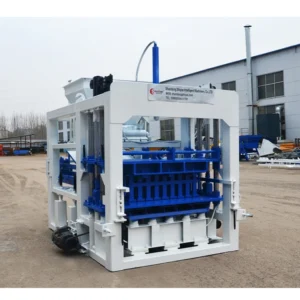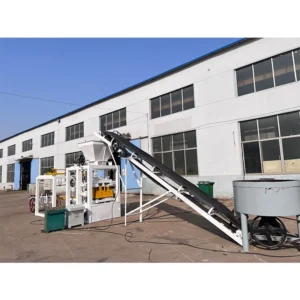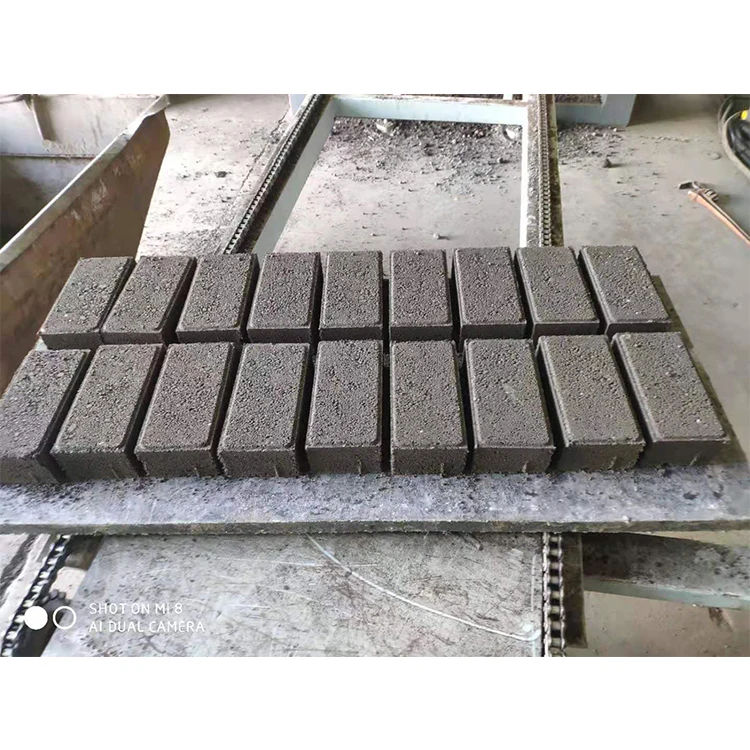
Matched Line Rhythm — every upstream and downstream station is timed to the QT5-15 press cycle so the main unit never idles between molding sequences.
Technical Specifications
| Parameter | Value |
|---|---|
| Model | QT5-15 |
| Product Type | Fully Automatic Hydraulic Block Making Machine |
| Overall Dimensions (L×W×H) | 7400×1950×2800mm |
| Rated Hydraulic Pressure | 21 MPa |
| Main Vibration Form | Platform Vibration |
| Vibration Frequency | 2800–4500 r/min |
| Pallet Size | 1100×550mm |
| Molding Cycle | 15–25s (basis to be confirmed) |
| Overall Power | 26.5 kW |
| Demolding Method | Hydraulic |
| Automation Level | Fully Automatic |
| Output Capacity (Hollow brick 400×200×200mm) | 1800 pcs/h based on 5 pcs/mold and 16–20s cycle |
| Output Capacity (Hollow block 400×150×200mm) | 1300 pcs/h based on 6 pcs/mold and 15–20s cycle |
| Output Capacity (S paver 225×112.5×60mm) | 3700 pcs/h based on 16 pcs/mold and 15–17s cycle |
| Raw Materials | Crushed stone, sand, cement, fly ash, gravel, slag |
| Applied Products | Concrete blocks, hollow/solid blocks, pavers, interlocking blocks, curbstone |
Application Suitability
| Application | Material or Output |
|---|---|
| Large-scale hollow block production | Crushed stone, sand, and cement blends for structural hollow blocks at 1800 pcs/h (400×200×200mm format) |
| Standard masonry block manufacturing | Cement and fly ash mixes for 400×150×200mm hollow blocks at 1300 pcs/h |
| Interlocking paver runs for commercial paving | Aggregate and cement for 225×112.5×60mm S pavers at 3700 pcs/h |
| On-site housing project supply | Local sand, gravel, and cement for mixed-format production with quick mold change |
| Expanded product range at existing plants | Kerbstone and colored pavers with matched pallet and curing rack handling |
Why "Fully Automatic" Means Nothing If the Feeding Station Lags Behind
A block press rated at 1800 pieces per hour only delivers that figure when every station upstream and downstream keeps exact pace with the molding cycle.
I have watched QT5-15 installations where the main press completed a cycle in 18 seconds, then sat idle for another 12 seconds waiting for the mixer to discharge or the pallet feeder to slide the next board into position. Over a ten-hour shift, those small pauses accumulate into a significant shortfall against the expected daily output. When planning an automatic block making machine production line, the bottleneck is rarely the press itself — it is the station that cannot match its rhythm [NEED_CITE: line synchronization principles in concrete block manufacturing].
Synchronizing Raw Material Delivery With Press Demand
The QT5-15 completes its molding cycle in 15 to 25 seconds depending on the block format. That means the batching and mixing station must deliver a fresh, consistent charge of material to the hopper before the press calls for it. On this automatic block making machine production line, the mixer discharge timing, the conveyor belt speed, and the hopper gate sequence are all tied to the PLC cycle counter. If any one of those links runs even a few seconds late, the vibration table fires on an incomplete charge, and block density drops.
Pallet Circulation as the True Line Bottleneck
The pallet size on the QT5-15 is 1100×550mm, and each molded block exits on its own board. At peak cycle speed, a new pallet must arrive at the press every 15 to 17 seconds for paver runs. The return loop — wet blocks moving to the curing rack, empty boards coming back — must complete within that same window. If the curing rack handler or the return conveyor cannot keep up, the press stops. This is where most quotations fall short: the pallet feeding and return system is left to the buyer to source separately, and the mismatch shows up on day one of production [NEED_CITE: pallet circulation impact on block line throughput].
Reading the Specs Through a Line-Builder’s Eyes
The 21 MPa rated hydraulic pressure and the platform vibration frequency range of 2800 to 4500 r/min together determine how densely the concrete is compacted inside the mold. Higher vibration frequency works well with fine sand and fly ash mixes, while coarser aggregate with crushed stone benefits from the lower end of the range combined with sustained hydraulic dwell. The 26.5 kW overall power must be available on a dedicated circuit; voltage drop from shared plant wiring causes inconsistent vibration amplitude from cycle to cycle. The 7400mm machine length tells you the minimum pit or foundation footprint before you add the mixer, conveyor, and pallet return — planning the full line layout against that number prevents costly rework after the concrete is poured.
What Happens When Line Stations Are Specified Separately
When a buyer purchases the press from one supplier and the supporting equipment from another, no single party owns the cycle time alignment. The mixer may discharge too fast, flooding the hopper and causing segregation in the mix. The pallet feeder may use a different board thickness than what the press clamps are set for, leading to misaligned molds and cracked blocks. These mismatches do not show up in the factory test — they appear after weeks of production when the buyer notices that daily output never reaches the quoted figure and scrap rates climb steadily [NEED_CITE: integration failures in multi-supplier block lines].
Why Source the Entire Line From One Configuration Point
The QT5-15 press, pallet feeder, stacking station, and curing rack handler are specified together so that every motor, sensor, and PLC output is matched to the same cycle logic. Line capacity calculations are stated per block format, not as a single headline number, so you know exactly what to expect when switching from hollow blocks to pavers. Pallet specifications are confirmed against your existing curing area dimensions and forklift capacity before production begins. Voltage, frequency, and PLC display language are locked in during the order stage, eliminating commissioning delays after arrival. Factory testing runs through each target format with your mix design, and the test record ships with the machine.
Documentation & Verification
- Line layout drawing with cycle time balance chart for each block format
- Machine specification sheet with matched pallet and automation configuration
- Factory test record showing actual cycle times per your target block format
- Hydraulic and electrical schematics for the full line, not just the press
- Pallet specification sheet with material grade and load rating
- Operation and maintenance manual covering all line stations
Installation, Commissioning & Support
- Foundation pit layout based on the 7400×1950mm press footprint plus pallet return run
- Dedicated 26.5 kW power circuit with voltage and frequency confirmed before wiring
- Dismantled shipment with numbered components for sequential line reassembly on site
- PLC language and cycle parameters set to your block format before first production run
- Operator training covering mold change sequence and pallet return troubleshooting
- Wear parts list for hydraulic seals, vibration springs, and mold liners
What We Need to Size Your Line Correctly
Tell us which block formats your market actually sells and the daily volume you need for each. Share your local aggregate type and the mix proportions you plan to use, because the vibration and pressure settings depend on the raw material. Confirm the voltage and frequency available at your site, and whether you need the PLC interface in a specific language. If you already have a curing area and forklift, send the dimensions and load capacity so the pallet specification aligns with what you have on the ground.
Frequently Asked Questions
Q: How is daily output calculated per block format across the full line?
A: Output is calculated from the molding cycle time for each specific format — 15 to 25 seconds on the QT5-15 — multiplied by the number of blocks per mold and the effective running hours. The line capacity calculation states the assumed block format and cycle for every figure, so you can verify daily volume against your actual shift schedule and product mix.
Q: What supporting equipment is included in the quotation?
A: The quotation covers the QT5-15 press plus matched raw material feeding, mixing, pallet feeding, stacking, and curing rack handling stations. Each component is specified so that its cycle time aligns with the press. Items outside the line, such as raw material storage silos or forklift trucks, are listed separately so there are no hidden gaps.
Q: How are cycle times balanced between the press and upstream and downstream stations?
A: Every station is timed against the PLC cycle counter of the QT5-15. The mixer discharge, conveyor feed, pallet advance, and block pusher all fire on specific PLC outputs that correspond to the molding sequence. The line layout document shows this timing balance chart so you can see exactly where each station sits relative to the press cycle.
Q: Can the automation level be upgraded from semi-automatic to full line automation later?
A: The QT5-15 platform supports a staged upgrade path. You can start with semi-automatic pallet handling and manual stacking, then add automatic pallet feeding, stacking, and cubing modules later. The PLC and wiring harness are prepared for these additions during initial assembly, so the upgrade does not require rewiring the main press.
Q: What pallet size and material are recommended for my curing area and handling equipment?
A: The QT5-15 uses a 1100×550mm pallet, but the material — bamboo, PVC, or steel — is selected based on your curing method and forklift type. Bamboo suits natural air curing, while steel withstands steam curing temperatures. We confirm the pallet specification against your curing rack spacing and forklift fork width before production begins.