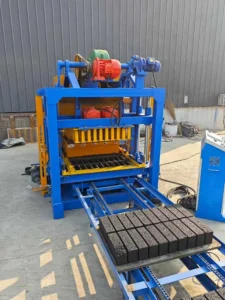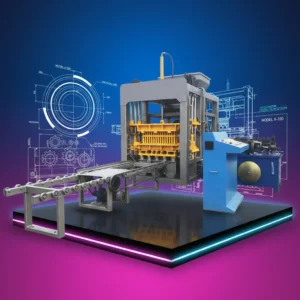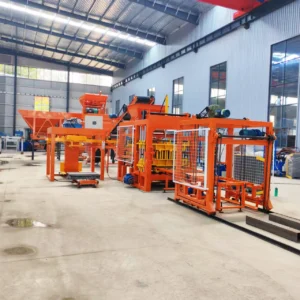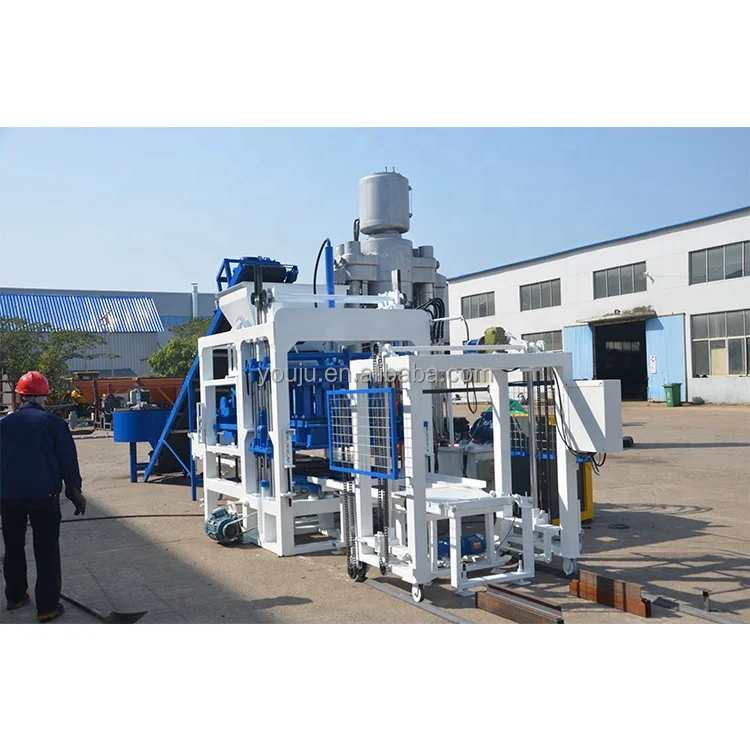
Single-Line Focus — Every mixer, conveyor, pallet feeder and stacker is specified to match the QT4-18 cycle time so no station in the automatic block making machine production line waits on another.
Technical Specifications
| Parameter | Value |
|---|---|
| Model | QT4-18 |
| Product Type | Automatic Concrete Block Making Machine |
| Overall Dimensions (L×W×H) | 2500×1750×2200mm |
| Rated Pressure | 16MPa |
| Vibration Form | Platform Vibration |
| Pallet Size | 950×550mm |
| Molding Cycle | 18-25s |
| Overall Power | 27.5kW |
| Control System | PLC with frequency converter |
| Electrical Components | Schneider |
| Mould Lifting Mechanism | Double-sided synchronous gears |
| Pallet Feeder Drive | Hydro-cylinder |
| Automation Level | Automatic (pallet feeding, demould, product transfer) |
| Block Receiver | Frame, convey system, idler wheels, motor and reducer with triangle belt |
| Material Feeder System | Hopper, feeding box, feeding platform, conveyor system |
| Output Capacity | (basis to be confirmed — depends on block format, material and thickness) |
| Voltage & Frequency | Configurable to site requirement |
| PLC Language | Configurable to buyer preference |
Application Suitability
| Application | Material or Output |
|---|---|
| Hollow block production | Crushed stone, cement, sand, water |
| Solid block production | Dense aggregate and cement mix |
| Paving block production | Fine aggregate, pigment, cement |
| On-site project block making | Locally sourced aggregate and cement |
| Concrete product plant expansion | Multiple formats via interchangeable moulds |
What a Press-Only Quotation Leaves Off the Table
A press without matched feeding and handling is just a stationary bottleneck.
I spent years at European and American expos watching buyers compare cycle times on spec sheets, yet the question most plant owners forget to ask is what happens before the material enters the hopper and after the block leaves the platform. A German buyer I worked with took delivery of a QT4-18 class machine as a standalone press to save on the initial outlay. Within a week, his existing mixer could not feed fast enough, the pallet feeder jammed on every other cycle, and the finished blocks piled up at the press exit with no conveyor to carry them away [NEED_CITE: common causes of block line downtime in first year of operation]. The automatic block making machine production line only delivers its rated output when every station — from batching through stacking — is timed to the same cycle.
Synchronizing Every Station Around the Press
The QT4-18 moulding cycle runs between 18 and 25 seconds depending on block format, which sets the pace for the entire automatic block making machine production line. The JQ500 pan mixer, belt conveyor, pallet feeder and block receiver must each complete their task within that window, or the press sits idle waiting for material or pallets. A PLC with frequency converter coordinates station timing so the hydro-cylinder pallet feeder pushes a fresh pallet onto the platform exactly as the finished block is discharged onto the receiver conveyor.
From Raw Material to Curing Yard Without Manual Transfer
Block strength inconsistency often traces back to the gap between the mixer discharge and the press hopper, where segregation occurs if the conveyor angle and speed are wrong [NEED_CITE: aggregate segregation effects on compressive strength in concrete masonry]. The material feeder system on this line — hopper, feeding box, feeding platform and belt conveyor — is specified together with the press so that aggregate and cement arrive at the mould cavity in the same ratio they left the mixer. Once the block is formed, the block receiver frame and triangle-belt driven conveyor carries it to the stacking area, removing the need for operators to lift wet blocks off the pallet by hand.
Reading the Specs That Actually Matter on Site
Rated pressure of 16 MPa and platform vibration work together to compact the concrete mix inside the mould cavity. Higher vibration alone will not achieve target density if hydraulic pressure is too low to hold the material during the cycle, and vice versa. The 950×550 mm pallet size determines how many blocks are produced per cycle, but it also dictates forklift spacing and curing rack dimensions in the yard — choosing a pallet size without checking the buyer’s existing curing area creates a mismatch that shows up on day one. The 27.5 kW overall power requirement means the buyer must confirm supply capacity and dedicated circuit rating before the machine ships [NEED_CITE: industrial voltage and frequency standards by export market].
The Hidden Cost of Treating Supporting Equipment as Optional
Leaving pallet handling, stacking and curing rack transfer out of the initial quotation looks like savings on paper but shows up as manual labour, broken pallets and damaged blocks on the factory floor. When the stacker is not included, wet blocks are carried by hand from the receiver conveyor to the curing rack, introducing cracks and inconsistent curing times. Mould wear parts and replacement pallets are often unavailable locally, so the first breakdown stops the entire line until a shipment arrives from the supplier [NEED_CITE: typical spare parts lead time for imported block machinery].
Why Buyers Source the Full Line Through This Range
- Line-level configuration — machine, mixer, conveyor, stacker and curing handling are specified as one system against the buyer’s actual mix design and target format.
- Cycle time matching — every station is checked against the QT4-18 cycle so no component in the automatic block making machine production line becomes the bottleneck.
- Pallet and yard alignment — pallet size, material and stacking method are chosen to match the buyer’s existing curing area and forklift capacity, not pulled from a catalogue default.
- Automation level selectable — the line can start with manual pallet return and be upgraded to full stacking and cubing as volume grows.
- Pre-shipment testing across the line — factory test records cover mixer through stacker, not the press in isolation.
Documentation & Verification
- Line layout drawing with capacity stated per assumed block format
- Machine specification sheet with confirmed voltage and frequency
- Mould drawing and format list for every block type in the quotation
- Hydraulic and electrical schematic matching as-built configuration
- Factory test record covering full line cycle from mixer to stacker
- Operation and maintenance manual with PLC display language confirmed
Installation, Commissioning & Support
- Foundation plan sized to the 2500×1750×2200mm machine footprint and dynamic load
- Dedicated electrical circuit rated for the 27.5kW total power draw
- Machine dismantling guidance for container loading and reassembly at destination
- On-site commissioning with PLC parameter tuning to local voltage and frequency
- Operator training covering mould change, pallet feeder adjustment and daily maintenance
- Wear parts and mould list supplied with first replacement schedule
What We Need Before Sending a Proposal
Before we can size the complete automatic block making machine production line, we need to know the block formats you plan to produce and the daily output target for each format. Share your local aggregate type and the curing yard dimensions so pallet size and stacking equipment can be matched to your existing forklift and rack layout. Confirm your site voltage, frequency and preferred PLC display language to avoid delays during commissioning.
Frequently Asked Questions
Q: How is the line capacity calculated and which block format is assumed?
A: Capacity is calculated per block format, not as a single line figure. Each output number states the exact block size, wall thickness and moulding cycle assumed, so you can compare figures across different formats instead of relying on a general claim that does not match your product mix.
Q: How do the mixer and pallet feeder cycle times match the QT4-18 press?
A: The JQ500 pan mixer batch size and discharge rate, belt conveyor speed and hydro-cylinder pallet feeder stroke are all timed against the 18-25 second moulding cycle. The PLC with frequency converter coordinates station start signals so no component waits idle for the previous station to finish.
Q: What supporting equipment is included in the quotation and what is optional?
A: The base line includes the QT4-18 press, JQ500 mixer, belt conveyor, pallet feeder and block receiver. Stacker, block clamper, batching plant and cement silo are listed as options so you can add only the stations your layout requires.
Q: How are pallet size and stacking method matched to my curing area?
A: The 950×550 mm pallet size is checked against your existing curing rack spacing and forklift tine width before production. Stacking equipment is selected based on your yard height clearance and the block formats you run most frequently.
Q: What voltage, frequency and PLC language options are available?
A: Voltage and frequency are configured to your site supply, and the PLC display language is confirmed during the proposal stage. Both are locked into the production drawing before the machine enters the assembly stage to prevent commissioning delays.