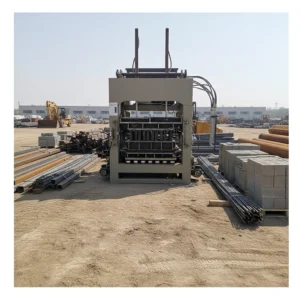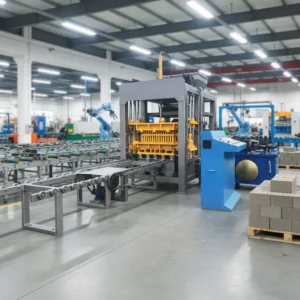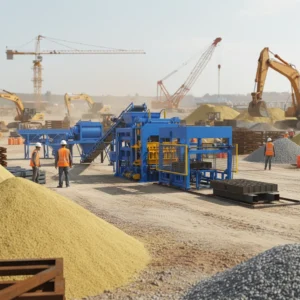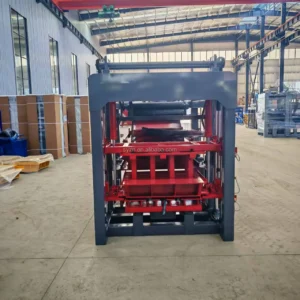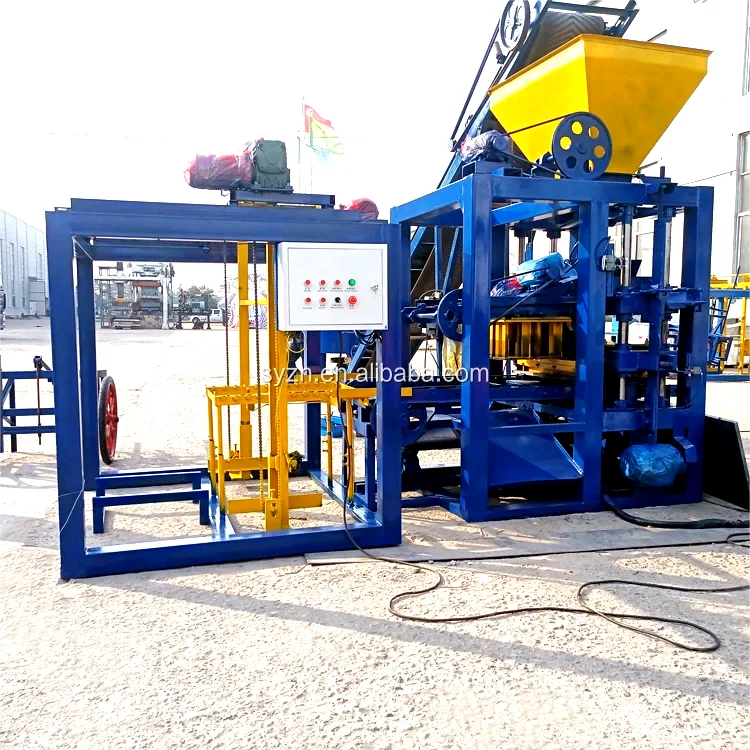
Single-Focus Line Matching — Every station from mixer to pallet stacker is specified against the QTJ4-26 press cycle, not quoted as isolated catalogue items.
Technical Specifications
| Parameter | Value |
|---|---|
| Product Type | Semi Automatic Concrete Block Making Machine |
| Model | QTJ4-26 |
| Rated Power | 11.95 kW |
| Overall Dimensions | 2060×1730×2580 mm |
| Net Weight | 1800 kg |
| Molding Cycle | 26 s |
| Vibration Frequency | 4200 r/min |
| Exciting Force | 35.5 kN |
| Pallet Size | 850×450×20 mm |
| Mixer Model | JQ350 |
| Output Capacity | 480 pcs/h based on 390×190×190 mm hollow block, 4 pcs/mould |
| Output Capacity | 600 pcs/h based on 400×150×200 mm hollow block, 5 pcs/mould |
| Output Capacity | 2100 pcs/h based on 240×115×53 mm solid brick, 18 pcs/mould |
| Daily Output | 3800 pcs/8 hr based on 390×190×190 mm hollow block |
| Daily Output | 4800 pcs/8 hr based on 400×150×200 mm hollow block |
| Daily Output | 17000 pcs/8 hr based on 240×115×53 mm solid brick |
| Applied Products | Hollow block (8 inch, 6 inch), solid brick |
| Raw Materials | Crushed stones, sand, cement, dust, fly ash |
| Control System | Semi-automatic (PLC type to be confirmed) |
| Voltage & Frequency | To be confirmed before order |
| Automation Level | Semi-automatic |
Application Suitability
| Application | Material or Output |
|---|---|
| Small-scale hollow block plant | 8 inch and 6 inch hollow blocks from crushed stone, sand, and cement |
| On-site contractor production | Hollow and solid blocks using locally available aggregate and fly ash |
| First block plant for entrepreneurs | Mixed hollow block and solid brick formats on a single line footprint |
| Building material distributor adding formats | Solid brick runs alongside hollow block with mould changeovers |
Why the Mixer Matters More Than the Press Rating
A block machine production line is only as fast as its slowest station.
I learned this the hard way in the Pearl River Delta. A customer installed a semi-automatic press with correct cycle parameters, but the mixer discharge could not keep pace with the pallet feed rhythm. The press sat idle waiting for material through most of each shift, and actual daily output dropped sharply below the quoted figure. [NEED_CITE: cycle time synchronization across block line stations] After that project, I began laying out every supporting block production equipment station by matching upstream discharge rates to the press molding cycle before finalizing any configuration.
Matching the JQ350 Mixer to the 26-Second Molding Cycle
The JQ350 mixer ships as a defined station in this block machine production line, not as an afterthought. Its batch volume and discharge rate must align with the 26-second press cycle so the hopper never starves. When the mixer falls behind, the press completes its vibration and pressing sequence but waits empty for the next batch, cutting real throughput without any fault appearing on the control panel.
Pallet Flow and Curing Area Alignment
The 850×450×20 mm pallet size dictates how many blocks cure per rack tier and which forklift can handle loaded racks. If the buyer’s existing curing area uses different pallet dimensions, the entire handling workflow breaks down after the first day of production. Confirming pallet compatibility before shipment prevents costly re-racking and idle curing space that a mismatched supporting block production equipment setup would create. [NEED_CITE: pallet size standards in concrete block manufacturing]
How Vibration Force and Hydraulic Pressure Shape Block Density
The 35.5 kN exciting force at 4200 r/min works together with upper mould pressure to compact the mix into a dense, consistent block. However, the same force applied to a high-fines aggregate produces different compaction than when applied to coarse crushed stone. The mix design and local raw material determine whether the vibration parameters deliver target compressive strength or leave blocks crumbly at the edges. Adjusting amplitude or cycle duration based on the buyer’s actual aggregate ensures that the press section of the block machine production line produces structurally sound output from the first shift.
What Happens When Stations Are Quoted Separately
When the mixer, pallet feeder, and press arrive from different suppliers with no single party responsible for line balance, cycle mismatches surface only during commissioning. The buyer then faces retrofitting conveyors, swapping pallets, or living with a press that idles between every cycle. [NEED_CITE: common causes of block plant commissioning delays] These hidden costs emerge well after the purchase order is signed and the container has been loaded.
Why Sourcing the Full Line From One Supplier Matters Here
Block machinery is our single focus, which means the QTJ4-26 press, JQ350 mixer, pallets, and handling equipment are specified as one matched system. Configuration starts from the buyer’s actual mix design and local aggregate, not a catalogue default. Mould options cover the hollow block and solid brick formats the buyer’s market actually sells, with custom drawings available. The semi-automatic layout leaves room to add automatic pallet feeding and stacking stations later without replacing the press. Installation support includes operator training so the line runs at intended cycle times from the first production day.
Documentation & Verification
- Line layout showing capacity per block format with assumed shift length
- Machine specification sheet covering power, dimensions, and vibration ratings
- Mould drawing and format list for hollow block and solid brick options
- Pallet specification matched to curing rack dimensions and forklift capacity
- Voltage and control language confirmation document before production
- Factory test record on the buyer’s target block format before dispatch
Installation, Commissioning & Support
- Foundation pad sized to the 2060×1730 mm footprint with level tolerance specified
- Dedicated 11.95 kW circuit at confirmed voltage and frequency before machine arrival
- Complete unit arrives in nude packing; no partial assembly required on site
- Mould changeover procedure trained on-site using buyer’s target block formats
- JQ350 mixer discharge rate verified against 26-second cycle during commissioning
- Wear parts list provided for vibration table bearings and mould liner replacement
What to Include With Your Inquiry
Tell us the block formats your market sells and the daily volume you need to hit. Share your local aggregate type and any existing curing racks or forklifts so we can match pallet dimensions. Confirm your site voltage, frequency, and preferred control language so electrical panels are built correctly before the block machine production line ships.
Frequently Asked Questions
Q: How do I verify the daily output figure for my specific block format?
A: Each output figure in the specification table states the exact block format, mould cavity count, and shift length it assumes. We provide a capacity calculation document that breaks down cycle time, pallet moves per hour, and realistic daily totals for the format you plan to produce.
Q: Which supporting stations are included and which are optional?
A: The standard quotation covers the QTJ4-26 press, JQ350 mixer, and pallets. Pallet feeding conveyors, automatic stacking, and curing rack handling are optional add-ons. We list every station clearly so you know exactly which supporting block production equipment ships in the container.
Q: How does the pallet size relate to my existing curing setup?
A: The 850×450×20 mm pallet must fit your curing rack tiers and match your forklift fork spacing. We confirm these dimensions against your site layout before production so pallets integrate with your curing area without modification.
Q: Can I start semi-automatic and add automation later?
A: Yes. The semi-automatic configuration leaves mechanical and electrical interface points for future pallet feeding and stacking stations. You can begin with manual pallet handling and upgrade individual stations as production volume grows.
Q: What electrical details must I confirm before shipment?
A: We need your site voltage, frequency, and preferred PLC display language. These parameters are confirmed in writing before the control panel is wired, preventing commissioning delays when the block machine production line arrives at your facility.