
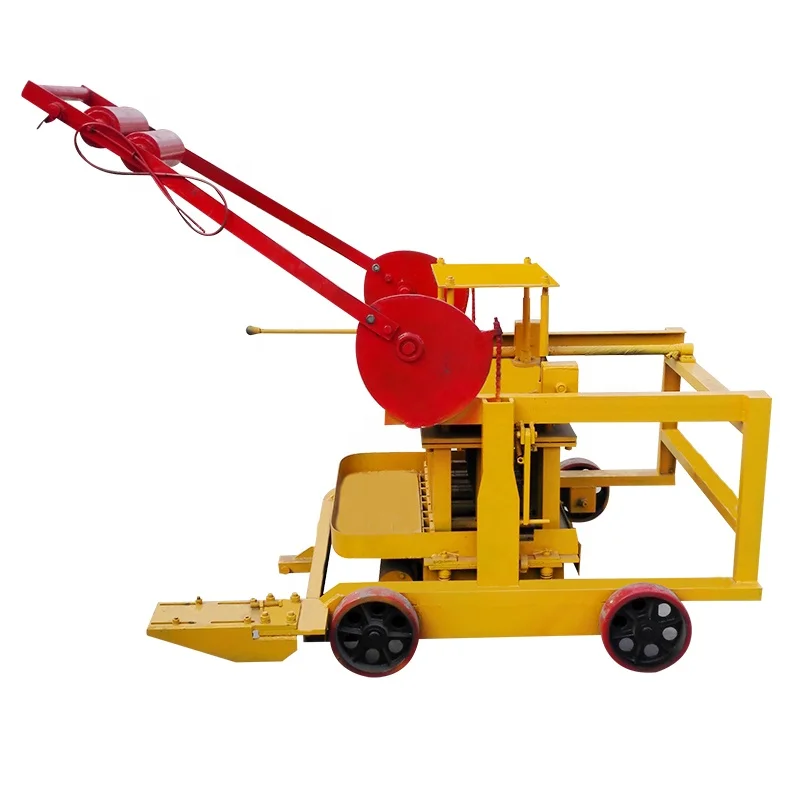
Line-Matched Output — QMR 4-45 mobile block machine production line cycle times are calculated from mixer discharge to curing-area stacking so the press never idles waiting for upstream feed.
Technical Specifications
| Parameter | Value |
|---|---|
| Model | QMR 4-45 |
| Product Type | Mobile Clay Interlocking Paving Brick Machine |
| Power Source | Diesel engine or Electric Motor (dual option) |
| Moulding Cycle | 30-45s (basis not stated in source — confirm block format / material / thickness) |
| Output Capacity (Hollow) | 320 pcs/h based on 400×200×200mm hollow brick, 4 pcs/mould |
| Output Capacity (Hollow) | 400 pcs/h based on 400×150×200mm hollow brick, 5 pcs/mould |
| Output Capacity (Hollow) | 560 pcs/h based on 400×100×200mm hollow brick, 7 pcs/mould |
| Output per 8hr Shift | 2,600 pcs based on 400×200×200mm hollow brick |
| Output per 8hr Shift | 3,200 pcs based on 400×150×200mm hollow brick |
| Output per 8hr Shift | 4,480 pcs based on 400×100×200mm hollow brick |
| Pallet Requirement | No pallet required (egg-laying type) |
| Floor Requirement | No concrete floor required |
| Mould Change | Interchangeable moulds for different block specifications |
| Hydraulic Pressure Source | Diesel engine driven (when diesel option selected) |
| Automation Level | Manual / semi-automatic mobile operation |
Application Suitability
| Application | Material or Output |
|---|---|
| On-site block production for contractors without fixed plant | Concrete mix with local aggregate, cement and sand |
| Small-scale hollow brick manufacturing | 400×200×200mm, 400×150×200mm, 400×100×200mm hollow bricks |
| Interlocking brick and paving block runs | Clay and concrete mixes with interchangeable moulds |
| Locations with unreliable electricity | Diesel engine powered operation bypasses grid dependency |
| First block plant with minimal investment | Egg-laying design eliminates pallet and curing rack systems |
What "320 Pieces Per Hour" Leaves Out in Mobile Block Machine Production Line Quotes
Capacity without a stated block format is a number that cannot be verified on your floor.
I watched a North African contractor lose half his shift output because the mixer feeding his mobile press could not match the 30-45s moulding cycle. The machine was rated honestly, but the surrounding stations were undersized, and the mobile block machine production line bottleneck sat upstream where nobody looked [NEED_CITE: line balancing principles for small-scale block plants]. The QMR 4-45 lists every output figure against a specific hollow brick dimension and mould cavity count so you know exactly what to expect before the machine arrives. When a quote simply says "up to 560 pieces per hour" without naming the 400×100×200mm format and seven-cavity mould behind that number, the daily tally will disappoint.
Matching Upstream Feed to the Moulding Cycle
The press completes one cycle every 30-45 seconds depending on block thickness and material. A mobile block machine production line only delivers its rated output when the mixer discharge, raw material feeding and manual or semi-automatic handling all land within that window. If your mixer takes 90 seconds to produce enough batch for one mould charge, the press spends most of its day waiting. We calculate feed-to-press timing at the proposal stage so every station upstream and downstream matches the QMR 4-45 cadence rather than forcing it to idle.
Ground Conditions and Curing Layout for Pallet-Free Production
Egg-laying design removes pallets from the equation entirely, but the trade-off shifts responsibility to the ground surface. The machine deposits wet blocks directly onto compacted earth or a graded sand bed. Curing area size must accommodate the full shift output spread in rows with walking gaps for watering, which for a 2,600-piece shift of 400×200×200mm hollow bricks means a meaningful footprint [NEED_CITE: curing area calculation methods for egg-laying block machines]. Planning this layout before commissioning avoids the common problem of fresh blocks stacked too close, leading to edge damage during the first 24 hours.
Reading the Specs That Actually Affect Your Block Strength
Hydraulic pressure and vibration force together determine how densely the concrete mix compacts inside the mould cavity. On the QMR 4-45, the hydraulic pressure source ties directly to the chosen power option — a diesel engine drives the hydraulics when grid power is unavailable, while the electric motor variant runs from standard three-phase supply. Vibration frequency must suit the aggregate grading in your mix; oversized gravel in a low-vibration setting leaves voids, while fine sand under high vibration segregates. Mould cavity count — four, five, or seven depending on the block format — sets the throughput ceiling and also influences the pressure distribution across each cavity face.
The Cost of Skipping Line Integration Checks
A mobile press that arrives without confirmed mixer capacity, feed hopper volume or curing-area dimensions creates problems that only surface on day one of production. Contractors who skip these checks find the press running at half speed because the batching station cannot keep pace, or blocks curing on uneven ground because the site was never graded [NEED_CITE: common commissioning failures in mobile block production]. The expense of re-grading a yard mid-project far exceeds the time spent measuring and planning beforehand.
Why Source the Full Line From One Configuration Point
Block machinery as a single focus means the QMR 4-45, its moulds, the mixer and the feed system arrive specified as one matched set rather than assembled from separate suppliers who never coordinated their cycle times. Configuration starts from your actual mix design and local aggregate, not a catalogue default that assumes materials you cannot source. Mould design covers the formats your market sells, with custom drawings available when standard cavities do not match. Automation level remains selectable so you can begin with manual pallet-free operation and add semi-automatic handling later. Installation support includes operator training at your site, not just a manual left in the crate.
Documentation & Verification
- Line layout with capacity calculation stating the exact hollow brick format and mould cavity count assumed
- Machine specification sheet confirming diesel or electric power option and hydraulic pressure rating
- Mould drawing and format list showing interchangeability details across all available block sizes
- Voltage and frequency confirmation document for the electric motor option before production begins
- Factory test record run on your target block format before the machine leaves the workshop
Installation, Commissioning & Support
- Site ground grading checked for flatness tolerance before the QMR 4-45 arrives to ensure level block deposition
- Power supply verified for the selected electric motor voltage or diesel engine fuel staging area prepared
- Mixer discharge height matched to the QMR 4-45 feed hopper entry to avoid manual shovelling between stations
- First-day production supervised with cycle time measured against each block format to confirm line balance
- Mould change procedure demonstrated on site so operators can switch between hollow brick sizes without extended downtime
- Wear parts list provided with lead times for hydraulic seals and mould face plates specific to the QMR 4-45
What We Need to Configure Your Line
Tell us which hollow brick or interlocking format your market demands and the daily output target for an eight-hour shift. Share your local aggregate type, cement grade and whether grid power is reliable enough for the electric motor option or if the diesel engine suits your site better. We also need your curing area dimensions and ground condition so the egg-laying layout can be planned before the QMR 4-45 mobile block machine production line ships.
Frequently Asked Questions
Q: How is the output capacity verified, and which block format is each figure based on?
A: Every capacity figure we publish is tied to a specific hollow brick dimension and mould cavity count. The QMR 4-45 produces 320 pieces per hour with a four-cavity mould on 400×200×200mm blocks, 400 pieces per hour with a five-cavity mould on 400×150×200mm, and 560 pieces per hour with a seven-cavity mould on 400×100×200mm. We provide a signed capacity calculation document with your proposal.
Q: How do the supporting stations connect to this mobile press, and where must cycle times match?
A: The mixer must discharge a full batch within the 30-45 second moulding window, and raw material feeding must replenish the mixer before the next discharge is needed. We calculate each station timing at proposal stage so the QMR 4-45 never idles waiting for upstream feed or downstream clearing.
Q: What site conditions are needed for egg-laying block production?
A: The ground must be compacted and level within tolerance so freshly deposited blocks do not tilt or crack. Curing area must hold a full shift output with walking gaps for watering. No concrete floor or pallet system is required, but drainage and shade planning prevent early-stage curing defects.
Q: Diesel vs electric motor — how should I choose?
A: Choose the diesel engine when grid power is unreliable or absent, which is common on remote construction sites. Choose the electric motor where three-phase supply is stable, as running cost per shift is typically lower and noise is reduced. Both options drive the same hydraulic pressure source on the QMR 4-45.
Q: What moulds are included, and how long does a mould change take?
A: The QMR 4-45 ships with interchangeable moulds covering your specified hollow brick formats. Mould change involves releasing the clamping bolts, lifting the old mould and seating the new one. With trained operators the changeover completes within a portion of one shift, preserving the format flexibility the machine was designed to deliver.


