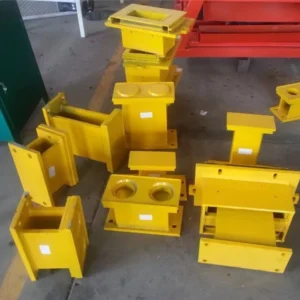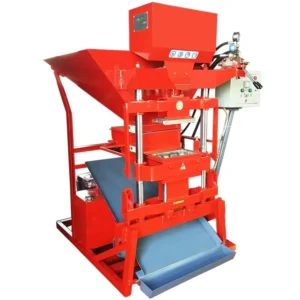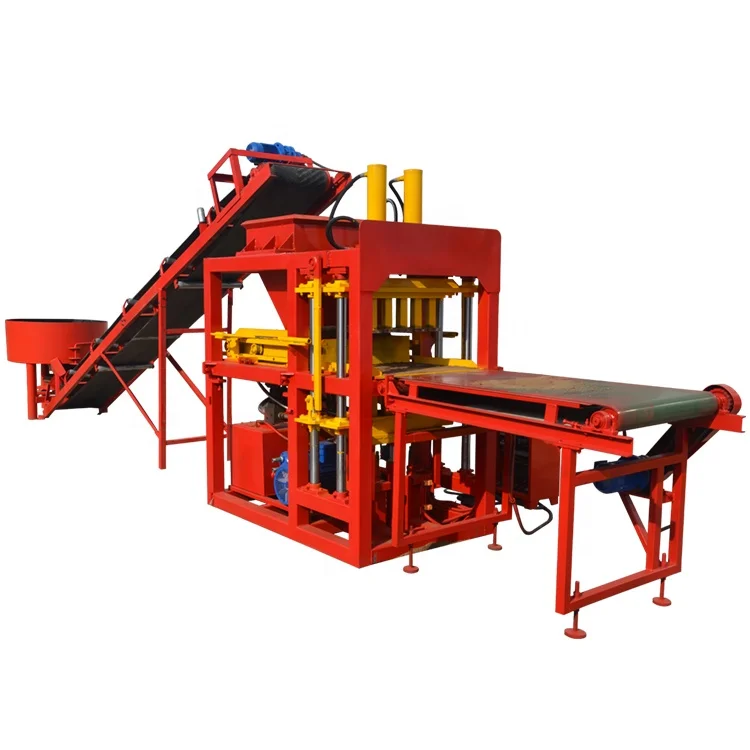
Complete line integration — every station upstream and downstream of the LY4-10 is sized against its 10–15 s cycle so the press never waits for material or pallets.
Technical Specifications
| Parameter | Value |
|---|---|
| Model | LY4-10 |
| Product Type | Interlocking Clay Brick Making Machine |
| Machine Power | 11 kW |
| Hydraulic Pressure | 16 MPa |
| Molding Cycle | 10–15 s |
| Output Capacity | 1440 pcs/h (based on 300×150×100 mm interlocking brick, 4 pcs/mould) |
| Daily Output Reference | 14 400 pcs/day (basis not stated in source — confirm block format and shift length) |
| Raw Material | Laterite, yellow or red soil, sand, cement, water |
| Pcs per Mould | 4 |
| Block Size (example) | 300 × 150 × 100 mm |
| Automation Level | Automatic material feeding, mould pressing, mould lifting |
| Overall Dimensions | 2260 × 1500 × 2380 mm |
| Machine Weight | 1600 kg |
| Worker Requirement | 1–2 workers |
| Mould Versatility | Multiple block, brick and paver formats on one machine |
| Standards | CE, ISO 9001 |
Application Suitability
| Application | Material or Output |
|---|---|
| Interlocking brick production | Clay-cement mixes from laterite, red or yellow soil blended with sand |
| Ecological brick manufacturing | Soil-based formulations with cement binder for low-carbon building |
| Road paving and landscaping | Pavers and kerb units from the same press using format-change moulds |
| On-site contractor production | Compact line for building construction, squares and city infrastructure |
Why the Supporting Line Matters More Than the Press Alone
A press quoted at 1440 pieces per hour cannot reach that figure if the mixer and pallet return cannot keep pace.
The LY4-10 interlocking clay brick making machine production line is only as productive as its slowest station. When material feeding drops below one batch every 15 seconds, or when spent pallets are not returned in time, the hydraulic ram stands idle and the daily count falls well short of the quoted cycle rate. [NEED_CITE: typical output losses from unbalanced station timing in block plants]
Upstream Feeding and Mixing Station Alignment
An interlocking clay brick making machine production line starts long before the press. The raw material feeder must deliver laterite or red soil, sand and cement to the mixer in proportions that match each moulding cycle. If the mixer discharges slower than the LY4-10 consumes, the hopper starves and the hydraulic pressure has nothing to compress. Matching the batch size and discharge interval to the 10–15 s cycle eliminates dead time and keeps brick density consistent from the first piece to the last.
Downstream Pallet Circulation and Stacking
Once the mould lifts, the finished bricks sit on a pallet that must travel to the curing area and then return empty. If pallets are moved by hand or the curing rack is undersized, the return loop slows and the press waits. A pallet feeder and stacker rated for the 2260 × 1500 mm press footprint close the loop, letting the LY4-10 run continuously without an operator shuttling boards back and forth. [NEED_CITE: pallet handling bottlenecks in small to mid-size block plants]
Reading the Specs That Shape the Line
Hydraulic pressure at 16 MPa determines how tightly the clay-cement mix is compacted. When paired with the vibration force generated during the moulding cycle, this pressure governs the interlock strength and surface finish of each brick. The 11 kW motor rating covers both the hydraulic pump and the vibration system, so the electrical supply must provide a stable feed at the voltage and frequency of the target market; fluctuating power directly affects pressure consistency. With four cavities producing 300 × 150 × 100 mm bricks per stroke, the line throughput is calculated on that exact format—switching to a thinner paver mould changes the piece count and must be recalculated rather than assumed.
The Hidden Cost of Ignoring Line Balance
Buyers who quote the press alone often discover that pallet handling, stacking and curing were never included, leaving freshly pressed bricks stacked by hand while the press idles. The result is a daily output that looks nothing like the brochure figure, plus extra labour that was never budgeted. Voltage, frequency and PLC display language left unconfirmed before shipment can add weeks of on-site rewiring before the first brick is pressed. [NEED_CITE: commissioning delays from unconfirmed electrical specifications]
Why Source the Complete Line Here
Block machinery is our single focus, so the LY4-10, its moulds, pallets and handling equipment are specified as one matched system rather than assembled from separate suppliers. We configure the line against the buyer’s actual clay type, local aggregate and target brick format, not a catalogue default. Mould design covers the formats the buyer’s market actually sells, including custom drawings for project-specific interlock profiles. Automation level is selectable, allowing a plant to start with automatic press functions and add pallet feeders or stackers later. Installation support, operator training and a wear parts list ship with every line so the first replacement is never a surprise.
Documentation & Verification
- Line layout and capacity calculation stating the 300 × 150 × 100 mm brick format assumed for hourly output
- Machine specification sheet with hydraulic pressure, motor rating and moulding cycle verified at factory test
- Mould drawing and format list showing every cavity profile available for the LY4-10
- Pallet specification confirming size, material and return method matched to your curing area and forklift
- Voltage, frequency and PLC display language confirmation signed off before production begins
- Operation and maintenance manual covering daily checks, hydraulic fluid intervals and mould change procedure
Installation, Commissioning & Support
- Foundation plan sized to the 2260 × 1500 × 2380 mm footprint with anchor bolt locations for stable pressing
- Electrical supply spec confirming 11 kW feed, local voltage and dedicated breaker before the press arrives
- Assembly sequence for the 1600 kg frame, hydraulic manifold and mould lifting mechanism on site
- First-run parameter setting: hydraulic pressure at 16 MPa verified against your specific clay-cement mix
- Operator training on the 10–15 s cycle routine, mould change and daily lubrication points
- Wear parts and mould list shipped with the line so spares are on hand before the first replacement is due
What We Need to Size Your Line
To configure an interlocking clay brick making machine production line around the LY4-10, share the target brick format, expected daily output, and the type of clay or soil available locally. Include the curing area dimensions and any forklift or pallet rack already on site, along with the local voltage, frequency and preferred PLC display language so the control cabinet is built to match before dispatch.
Frequently Asked Questions
Q: How is the 14 400 pcs/day capacity verified, and which block format does it assume?
A: The hourly rate of 1440 pieces is based on 300 × 150 × 100 mm interlocking bricks at four per mould. Daily totals depend on shift length, pallet return speed and mixer discharge rate across a full working day. We provide a written capacity calculation showing the exact format, cycle time and line balance assumed.
Q: Which supporting stations are needed to keep the LY4-10 running at its moulding cycle?
A: A raw material feeder and mixer sized to discharge one batch within the 10–15 s window, a pallet feeder to place boards before each stroke, and a return conveyor or manual loop to bring empty pallets back. Stacking and curing rack capacity must also match daily output.
Q: What voltage, frequency and control language options are available for my market?
A: The 11 kW motor and hydraulic pump can be wound to match common industrial voltages and frequencies. PLC display language is confirmed during the order stage so the operator interface reads in your preferred language from the first day of commissioning.
Q: How do I match the raw material feed rate to the moulding cycle with my local soil?
A: We review your soil type—laterite, red soil, yellow soil or sand—along with cement ratio and moisture content, then size the feeder and mixer so each batch lands in the hopper before the next cycle starts, avoiding press starvation.