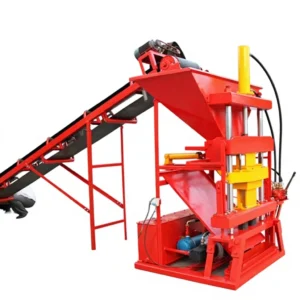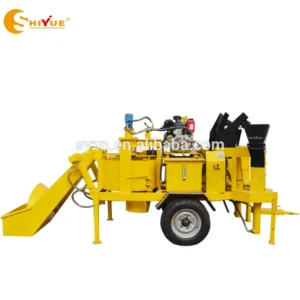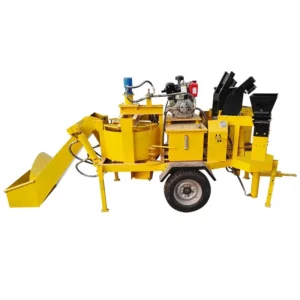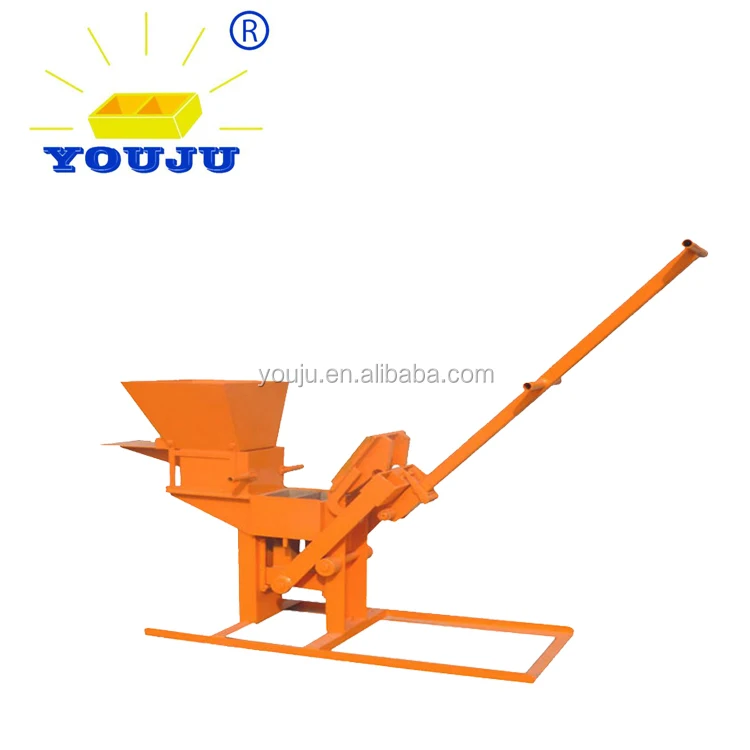
Matched System Configuration — The LY2-40 manual clay interlocking brick machine ships as a complete line with mixer and material feeding stations timed to the press cycle, preventing idle gaps that cut daily throughput.
Technical Specifications
| Parameter | Value |
|---|---|
| Model | LY2-40 |
| Product Type | Manual Clay Interlocking Brick Making Machine |
| Total Power | No Power, Completely Manual |
| Overall Dimensions (L×W×H) | 1600 x 700 x 1200 mm |
| Net Weight | 200–240 kg |
| Molding Cycle | 30–40 seconds |
| Output Capacity | 400–1,000 pcs/day (basis not stated in source — confirm block format / material / thickness) |
| Automation Level | Completely Manual |
| Lifting System | Manual |
| Mobility | Steel wheels |
| Mould Change | Moulds changeable for various blocks |
| Recommended Mixer | JFA-1 Mixer or JQ350 Mixer |
| Warranty | 1 Year |
Application Suitability
| Application | Material or Output |
|---|---|
| Interlocking brick production in areas without electrical power supply | Local soil blended with cement |
| Small-scale compressed earth block production | Soil-cement mix designs using on-site aggregate |
| Manual on-site brick making for construction projects | Earth-based materials for wall systems |
| Eco-friendly brick production | Stabilized soil with minimal cement content |
What the Quoted Cycle Time Doesn’t Tell You About Daily Throughput
A 30–40 second molding cycle only translates to real output when the mixer, feeding station, and curing area keep pace without forcing the press to wait.
When we set up a manual clay interlocking brick machine production line for a housing project in West Africa, the daily count fell short of expectations because the supporting equipment was sized independently. The mixer discharged batches slower than the operator could press, and material had to be shoveled from a pile rather than fed continuously [NEED_CITE: material flow bottlenecks in manual block lines]. The press sat idle for seconds between every cycle, compounding into hours of lost production by the end of a shift. Matching the upstream feeding rhythm to the downstream stacking capacity is where real throughput gets decided.
Line Timing Between the Mixer and the Press
A manual clay interlocking brick machine production line depends on rhythm as much as individual station capacity. The JFA-1 or JQ350 mixer must discharge a batch at the exact rate the operator consumes soil-cement mix. If the mixer runs too slowly, the operator stands idle between presses. If it runs too fast, wet mix sits in the trough and begins to stiffen before it reaches the mould. The steel-wheel mobility of the LY2-40 allows repositioning the press closer to or further from the mixer as the site layout evolves, keeping the manual feed path short.
Material Flow from Mixing to Curing Area
Every station in a manual block line adds seconds that multiply across hundreds of cycles. The operator must scoop mix into the mould, close the lid, actuate the press, open the mould, and move the finished brick to a pallet or directly to the curing zone. If the curing area is too far from the press, the walking time between each brick adds up quickly [NEED_CITE: manual handling distances and their effect on cycle completion rates]. Positioning the curing racks within a few steps of the press, and ensuring pallets or flat ground are pre-prepared, removes dead time from the cycle that no amount of pressing speed can recover.
Reading the Specifications Against Your Actual Block Format
The LY2-40 completes a molding cycle in 30–40 seconds, but the daily output of 400–1,000 pieces assumes a specific block format, wall thickness, and soil-cement ratio that must be confirmed against your project requirements. A thicker interlocking block takes longer to compress manually and may require more force per stroke, slowing the effective cycle. The mould changeability across various interlocking profiles means you can switch formats, but each format carries its own cycle reality. The net weight of 200–240 kg and overall dimensions of 1600 x 700 x 1200 mm define the physical footprint you need to allocate on-site, including clearance around the press for the operator to work both sides of the machine without obstruction. The completely manual power configuration means no electrical infrastructure is required, which defines where this line can realistically operate.
The Cost of Leaving Line Integration to Chance
Sourcing the press, mixer, and handling equipment from separate suppliers often means discovering timing mismatches only after everything arrives on-site. A mixer that technically meets capacity specs may still discharge in a pattern that doesn’t match the press operator’s rhythm, forcing the entire line to operate below its combined potential [NEED_CITE: equipment integration failures in block production]. Without a line-level capacity calculation that names the exact block format and states the assumed material flow, buyers end up with a quotation that promises a daily figure the physical layout cannot deliver.
Why Procurement Here Differs
Block machinery is our single focus, so the LY2-40 press, mould, pallet, and handling stations are specified as one matched system rather than assembled from separate suppliers. Configuration is set against the buyer’s actual soil-cement mix design and local aggregate characteristics, not a catalogue default. Mould design covers the interlocking profiles that the buyer’s market actually sells, with custom drawings available for non-standard formats. The automation level is selectable, allowing a buyer to start with the fully manual LY2-40 and move to powered equipment as the operation scales. Installation support includes line layout planning and operator training so that the rhythm between mixer and press is established before production begins.
Documentation & Verification
- Line layout and capacity calculation stating the block format assumed for the daily output figure
- Mould drawing and format list confirming available interlocking profiles
- Mixer specification sheet matched to the recommended JFA-1 or JQ350 model
- Factory test record on the buyer’s soil-cement mix before dispatch
- Packing photographs and customs documentation support for shipment
Installation, Commissioning & Support
- Flat compacted ground surface required; steel wheels allow repositioning the 1600 x 700 mm footprint without a fixed foundation
- No electrical connection needed for the LY2-40 press; mixer requires local power supply verification
- Machine arrives assembled; mould swap procedure trained on-site for format changes
- Mould cavity and pressing mechanism inspection at first cycle to confirm brick dimensions
- Manual operating technique training covering feed volume, press stroke rhythm, and mould release
- Wear parts list and mould maintenance schedule provided at commissioning
What We Need to Configure Your Line
To size the supporting equipment correctly around the LY2-40, share the interlocking block profile you intend to produce, the soil type and cement availability at your site, and the daily output target you need to meet your project timeline. Let us know whether the curing area is already established or needs to be planned alongside the press placement, and confirm the local power conditions if you are considering adding a powered mixer to the line.
Frequently Asked Questions
Q: How is the 400–1,000 pcs/day capacity calculated, and which block format does it assume?
A: That range is quoted without a stated basis for block format, wall thickness, or soil-cement ratio. Before confirming capacity for your project, we calculate output against the specific interlocking profile you need, the operator cycle rhythm achievable with your mix design, and the material flow rate from the mixer through to the curing area.
Q: What mixer capacity is needed to keep the LY2-40 press fed without idle time?
A: The recommended JFA-1 or JQ350 mixer must discharge batch volumes that match the operator’s consumption rate at 30–40 second intervals. We match the mixer selection to your soil-cement mix design and confirm the discharge timing against the press cycle during line layout planning.
Q: Which interlocking block profiles are available as standard moulds?
A: Standard moulds cover common interlocking profiles used in compressed earth block construction. Custom mould designs are available to buyer drawings for formats specific to local building standards or market preferences, with drawings confirmed before production.
Q: How do manual material feeding and handling affect real daily output?
A: Manual feeding adds seconds per cycle that multiply across hundreds of presses. The distance from mixer to mould, the method of moving finished bricks to the curing area, and the operator’s working rhythm all determine whether the quoted cycle time translates into the expected daily count on your site.