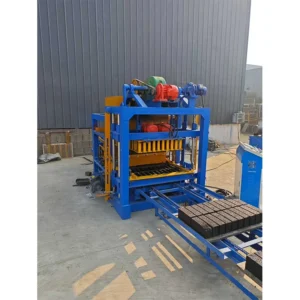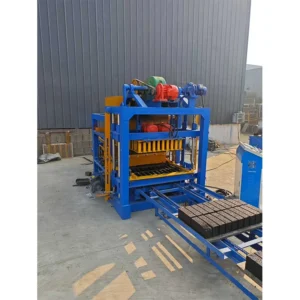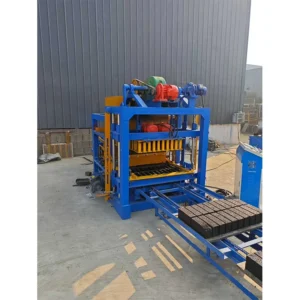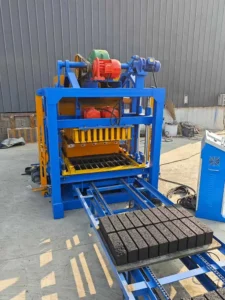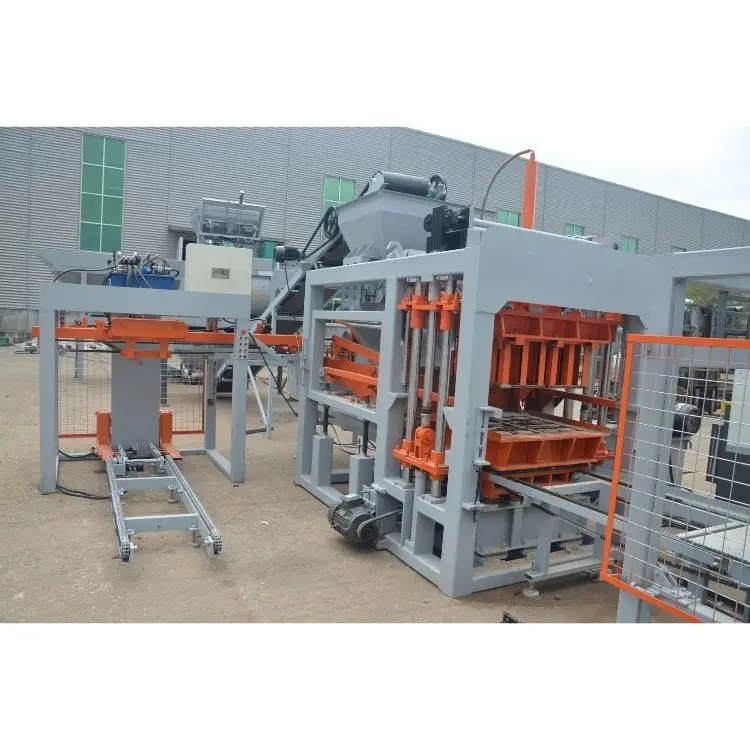
Line-Centric Engineering — The QT6-15 is configured so raw material feeding, mixing, pallet handling and stacking run at matched intervals, eliminating idle time at the press station.
Technical Specifications
| Parameter | Value |
|---|---|
| Model | QT6-15 |
| Product Type | Automatic Concrete Block Making Machine |
| Molding Method | Vibration and hydraulic pressing |
| Rated Hydraulic Pressure | 21 MPa |
| Molding Cycle | 15 s – 20 s |
| Pallet Size | 900 × 700 mm |
| Main Machine Weight | 6000 kg |
| Output — Hollow Block 400 × 200 × 200 mm | 6 pcs/pallet, 1440 pcs/h, 11520 pcs/8h (based on this format) |
| Output — Paving Brick 200 × 100 × 60 mm | 21 pcs/pallet, 5040 pcs/h, 40320 pcs/8h (based on this format) |
| Output — Solid Brick 240 × 115 × 53 mm | 32 pcs/pallet, 7680 pcs/h, 61440 pcs/8h (based on this format) |
| Control System | PLC (brand and display language to be confirmed) |
| Voltage and Frequency | Customizable to local standard (exact values to be confirmed) |
| Simple Line Configuration | JS500 mixer, 8 m belt conveyor, automatic stacker |
| Full Line Configuration | Cement silo, screw conveyor, cement scale, batching machine, pallet loader, block and pallet separator |
| Compatible Raw Materials | Cement, sand, fly ash, stone powder, slag |
| Block Formats via Mould Change | Hollow blocks, paving bricks, solid bricks, curbstones |
| Assembly State for Shipping | Top cylinder removed for container loading, reassembled on site |
| Warranty | 1 year, excluding wearing parts |
| Certification | CE (verify applicability per shipment) |
Application Suitability
| Application | Material or Output |
|---|---|
| Block and paver production plants | Hollow blocks, solid bricks, paving bricks and curbstones from cement, sand and crushed stone |
| Fly ash concrete product manufacturers | High-percentage fly ash mixes blended with stone powder and cement |
| On-site production for housing projects | Standard aggregate blocks made on the building site with a JS500 mixer |
| Regional building material distributors | Multiple block formats on one press using local sand, slag or stone powder |
Why Capacity Figures Need a Format Attached
A block machine rated at 11520 pieces per shift means very different things depending on whether the figure assumes a 400 mm hollow block or a 240 mm solid brick.
When I walked through a North American block plant last year, the owner showed me a press running fly ash bricks that were cracking straight off the pallet. The machine was set to standard vibration and pressure defaults, but the local mix contained a much higher fly ash ratio than the factory calibration assumed. We spent four days adjusting hydraulic pressure and vibration frequency before the output stabilized. That is the gap between a catalogue number and a working plant. [NEED_CITE: effects of fly ash percentage on vibration requirements in block molding]
The QT6-15 automatic block machine production line addresses this by tying every capacity claim to a named block format, so the buyer sees the figure that matches their actual product, not a best-case abstraction.
Line Timing Across Every Station
An automatic block machine production line is only as fast as its slowest upstream or downstream station. The JS500 mixer must deliver a consistent batch to the press before the next cycle begins, and the pallet loader must present a clean pallet at exactly the moment the press opens. When any station drifts out of sync, the press idles and the stated cycle time becomes meaningless. The QT6-15 line is specified with conveyor lengths and feeder speeds that match the 15–20 second molding cycle, so the press receives material and pallets without waiting.
Phasing Automation Without Replacing the Press
Many buyers start with the simple line — JS500 mixer, 8 m belt conveyor and automatic stacker — then add the cement silo, batching machine and pallet separator later. Because the press, pallet size and control architecture remain constant, the upgrade path does not require a new machine or a rewired control panel. This matters for plants that want to grow output gradually as their market demand increases. [NEED_CITE: block plant expansion stages in developing construction markets]
Pressure, Vibration and Pallet Size — What the Specs Mean on the Floor
The 21 MPa rated hydraulic pressure and vibration pressing method work together to compact the mix into the mould cavity. Pressure alone pushes material into corners; vibration settles fine particles and removes air voids. When the two are balanced for the buyer’s actual mix — cement, sand, fly ash or slag — block density stays consistent pallet after pallet. The 900 × 700 mm pallet is sized so that six 400 × 200 × 200 mm hollow blocks fit in a single press, and the same pallet rides through the automatic stacker and into the curing rack without a changeover. Choosing a pallet size without considering the curing rack dimensions and the forklift already on site leads to double handling and wasted curing space.
The Cost of Skipping Line Integration
When pallet handling and stacking are left out of the initial quotation, the plant ends up paying workers to pull hot blocks off the press by hand — a bottleneck that cancels out the cycle speed the buyer paid for. Voltage and PLC language confirmed only after the machine arrives can delay commissioning by weeks while transformers are sourced or control panels are reprogrammed. [NEED_CITE: commissioning delays caused by unconfirmed voltage and control language] These are not engineering problems; they are specification gaps that surface only once the line is bolted to the floor.
Why Source the Line Here
Block machinery is the single focus of the workshop, so the press, mould, pallet and handling equipment are specified as one matched system rather than assembled from unrelated suppliers. Each configuration is set against the buyer’s actual mix design, local aggregate and target block format — not a catalogue default. Mould design covers the formats the buyer’s market sells, including custom drawings. The automation level is selectable, so a plant can start with the simple line and add batching and automatic pallet handling later without replacing the press. Installation support includes operator training, and wear part and mould lists are provided with the machine.
Documentation & Verification
- Line layout and capacity calculation stating the block format assumed for every output figure
- Machine specification sheet with hydraulic pressure, pallet size and cycle time confirmed
- Mould drawing and format list covering hollow block, paving brick, solid brick and kerbstone
- Voltage, frequency and PLC display language confirmation signed before production starts
- Factory test record with photographs taken on the buyer’s target block format before dispatch
- Packing photographs and customs documentation support for container loading
Installation, Commissioning & Support
- Foundation must be level and cured, sized to the 6000 kg main machine weight and vibration load
- Electrical supply must match the confirmed voltage and frequency, with a dedicated circuit for the hydraulic pump
- Top cylinder is removed for container loading and reassembled on site before first power-on
- Commissioning includes setting hydraulic pressure and vibration frequency to the buyer’s confirmed mix design
- Operator training covers mould change procedure, PLC navigation and daily maintenance checkpoints
- Wear parts list and mould maintenance schedule provided at handover for ongoing production support
What to Include in Your Inquiry
Send your target block format and the daily output you need so the capacity calculation can be stated against that specific product. Confirm the raw materials available locally — cement grade, sand type, fly ash source — so the mix can be matched to the 21 MPa pressing parameters. State your site voltage, frequency and preferred PLC display language to avoid commissioning delays, and describe the curing area dimensions and forklift you already have so the 900 × 700 mm pallet specification can be verified against your layout.
Frequently Asked Questions
Q: How is output capacity calculated and which block format does each figure assume?
A: Every capacity figure in the QT6-15 specification is tied to a named block format — hollow block at 400 × 200 × 200 mm, paving brick at 200 × 100 × 60 mm, or solid brick at 240 × 115 × 53 mm. Pieces per pallet, per hour and per eight-hour shift are all stated for that format, so you can compare the number directly against your product mix.
Q: What is included in the simple line versus the full automatic line configuration?
A: The simple line includes the JS500 mixer, an 8 m belt conveyor and an automatic stacker. The full line adds a cement silo, screw conveyor, cement scale, batching machine, pallet loader and block-and-pallet separator. Both configurations use the same QT6-15 press and pallet size, so you can start simple and add stations later.
Q: How do pallet size and material affect curing area layout and forklift compatibility?
A: The 900 × 700 mm pallet must fit the curing rack spacing and the fork dimensions of the lift truck already on site. Confirming pallet material and quantity during the ordering stage prevents double handling when blocks move from press to curing area to dispatch.
Q: How are upstream stations timed to match the press cycle?
A: The mixer batch size, conveyor belt speed and pallet loader interval are all set to deliver material and pallets within the 15–20 second molding cycle. If any station runs slower, the press idles and actual output drops below the stated capacity.
Q: What voltage and control language options are confirmed before production starts?
A: Voltage and frequency are customized to the buyer’s local standard, and the PLC display language is confirmed before the control panel is wired. Both details are signed off in the specification sheet so the machine can be commissioned without electrical modifications on arrival.