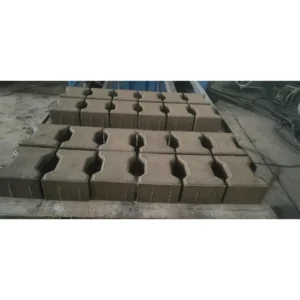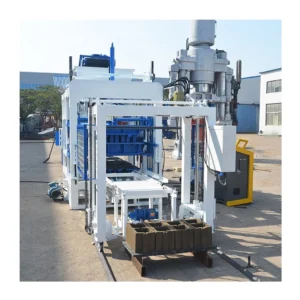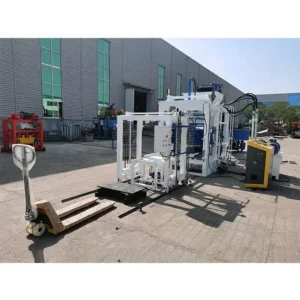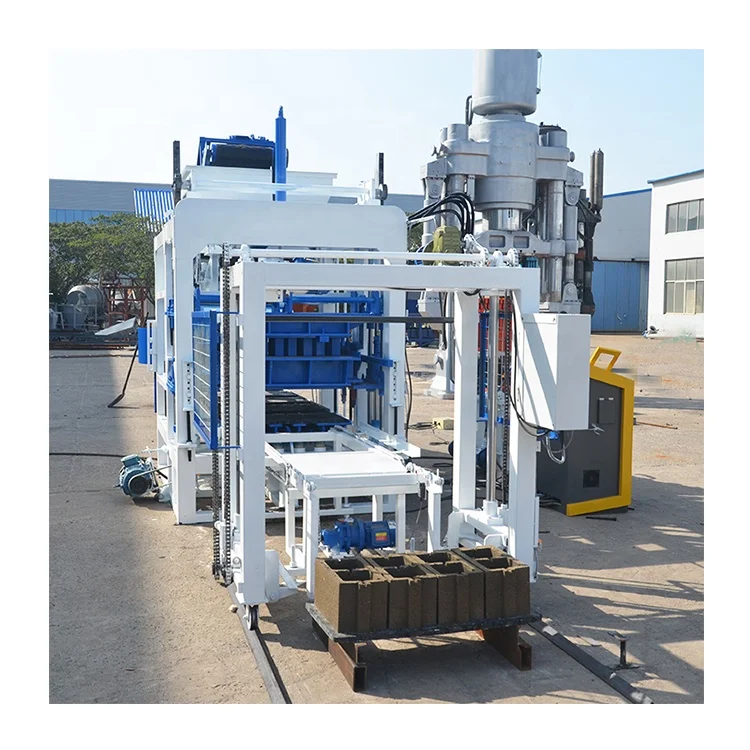
Single-Focus Line Integration — the QT4-18 block making machine is configured as one balanced system rather than assembled from unrelated components.
Technical Specifications
| Parameter | Value |
|---|---|
| Model | QT4-18 |
| Product Type | Automatic Concrete Block Making Machine |
| Overall Dimensions (L×W×H) | 2500×1750×2200mm |
| Rated Pressure | 16Mpa |
| Vibration Form | Platform Vibration |
| Pallet Size | 950×550mm |
| Molding Cycle | 18-25s (basis to be confirmed) |
| Overall Power | 27.5kw |
| Control System | PLC with frequency converter (brand/language to be confirmed) |
| Electrical Components | Schneider (BOM to be confirmed) |
| Material Feeder System | Hopper, feeding box, feeding platform and conveyor system |
| Mould Lifting Mechanism | Double-sided synchronous gears |
| Block Receiver | Frame, convey system and idler wheels with motor, reducer and triangle belt |
| Pallet Feeder Drive | Hydro-cylinder |
| Automation Level | Automatic (PLC controlled with man-machine interface) |
Application Suitability
| Application | Material or Output |
|---|---|
| Hollow Block Production | Crushed stone, cement, sand, and fly ash aggregates |
| Solid Block Production | High-density concrete mixes for load-bearing walls |
| Paving Block Production | Interlocking and kerbstone formats (mould dependent) |
Why the Mixer and Conveyor Must Match the QT4-18 Cycle
The press should never wait for the feeder or the discharge belt.
When I first planned a line for a QT4-18 unit, we sized the mixer based on a generic daily output figure rather than the actual 18–25s molding cycle. The result was a host machine that spent a third of its shift idling while the hopper starved. An automatic block machine production line only works when the upstream material feeding and downstream pallet handling are calculated against the specific block format being run [NEED_CITE: block production cycle synchronization]. If the supporting stations are not specified as one matched system, the "automatic" label becomes a misnomer because manual intervention is required to keep the press fed.
Balancing the Automatic Block Machine Production Line
The cycle time of the QT4-18 is rated between 18 and 25 seconds. This range depends entirely on the block height and the vibration time required for the specific aggregate mix. For the line to remain continuous, the belt conveyor speed and the mixer discharge rate must be tuned to this exact window. The PLC with a frequency converter allows for speed adjustment across the line, ensuring that the material feeder system—comprising the hopper, feeding box, and conveyor—delivers a fresh batch exactly when the mould is ready.
Synchronizing Pallet Feed and Block Discharge
A major bottleneck in many plants is the pallet handling system. The QT4-18 uses a hydro-cylinder drive for its pallet feeder, which is synchronized with the demoulding process. This means pallets advance and products discharge in a single motion, rather than requiring two separate mechanical actions [NEED_CITE: hydraulic synchronization in block presses]. The block receiver then uses a motor, reducer, and triangle belt to move the product to the front idler wheels. If the curing rack handling or the forklift capacity at the end of the line is not matched to this discharge rate, finished blocks will begin to pile up at the receiver frame, forcing the press to stop.
Interpreting Pressure and Vibration for Local Aggregates
The 16Mpa rated pressure and platform vibration are designed to work together to achieve block density. However, if the local aggregate is highly porous or the cement content is low, the vibration force may need to be adjusted via the frequency converter to prevent cracking. The pallet size of 950×550mm is another critical specification; it must match the buyer’s existing curing racks and forklift dimensions. If a plant uses a different pallet size, the entire downstream handling system must be re-engineered, which is a common oversight in initial line planning. The double-sided synchronous gears for mould lifting help maintain alignment during format changes, but the physical time required to swap a heavy steel mould still represents a period where the line is not producing.
The Hidden Cost of Mismatched Line Components
When the pallet feeder is not synchronized with the demoulding cycle, the operator must manually pull the heavy wet pallet out of the press. This not only slows down the automatic block machine production line but also leads to inconsistent block heights and potential damage to the fresh product. Furthermore, if the voltage and frequency are not confirmed before dispatch, the PLC and the 27.5kw motor system may fail to start or run at the wrong speed, leading to significant delays in commissioning and potential damage to the electrical components [NEED_CITE: industrial voltage compatibility issues].
Why Source the QT4-18 as a System
We treat block machinery as a single focus, meaning the machine, mould, pallet, and handling equipment are specified together. The configuration is set against the buyer’s actual mix design and local aggregate rather than a catalogue default. We provide mould design for the formats that sell in the buyer’s specific market, including custom drawings. The automation level is selectable, allowing a buyer to start with a semi-automatic setup and upgrade later. Finally, we provide installation and commissioning support with operator training to ensure the line runs as designed.
Documentation & Verification
- Line layout and capacity calculation stating the specific block format assumed for the 18–25s cycle.
- Voltage and control language confirmation document signed before production begins.
- Factory test record showing the QT4-18 running with the buyer’s chosen mould and pallet size.
- Installation foundation drawing with levelness tolerances for the mixer, host machine, and conveyor.
- Wear parts and mould list with recommended replacement intervals for the specific aggregate type.
Installation, Commissioning & Support
- Foundation must be level to within 2mm across the 2500mm length of the host machine and conveyor.
- Dedicated circuit required for the 27.5kw overall power, confirmed for local voltage and frequency.
- On-site assembly of the material feeder system and block receiver to ensure belt tension and alignment.
- PLC parameter setting and man-machine interface language selection during the first 48 hours of operation.
- Operator training on the double-sided synchronous gears to ensure safe and fast mould changes.
- First-month check-up on the hydro-cylinder drive and hydraulic station seals to prevent early leakage.
Line Planning Inquiry Requirements
To provide an accurate proposal for an automatic block machine production line, we need to know the specific block formats you intend to produce and the dimensions of your curing yard. Please provide details on your local raw materials (aggregate type and moisture content) and your available voltage and frequency. This allows us to calculate the actual daily output and ensure the supporting equipment is perfectly matched to the QT4-18.
Frequently Asked Questions
Q: How is the 18–25s molding cycle verified, and which block format does it assume?
A: The 18–25s cycle is a range that depends on the block height and the vibration time required for your specific material mix. A standard 400×200×200mm hollow block typically sits at the upper end of this range. We verify the exact cycle during the factory test using the actual mould you intend to use, ensuring the capacity calculation is based on your product, not a generic industry average.
Q: Which supporting stations are included in the quotation and which remain manual?
A: Our quotation typically includes the mixer, pallet conveyor, the QT4-18 host, the block receiver, and the hydraulic station. Stacking and curing yard handling are often manual unless an automatic stacker is specifically added. We clarify exactly where the automatic block machine production line ends and manual labor begins so you can plan your workforce accordingly.
Q: How do mixer output and belt conveyor speed match the press cycle so the hopper never starves?
A: We calculate the mixer’s batch size and discharge time against the 18–25s cycle of the press. The frequency converter on the conveyor allows us to fine-tune the feed rate during commissioning. If the mixer is too small, we will recommend a larger unit or a secondary storage hopper to ensure the QT4-18 never sits idle waiting for material.
Q: What foundation and levelness tolerances are required for the full line installation?
A: The entire line, from the mixer to the block receiver, requires a reinforced concrete foundation. The host machine and pallet feeder must be level to within a few millimeters to ensure the hydro-cylinder and double-sided gears function correctly. We provide a detailed foundation drawing that specifies the depth and rebar requirements based on the 27.5kw vibration and pressure loads.
Q: How is pallet size (950×550mm) coordinated with the buyer’s existing curing racks and forklift?
A: We ask for the dimensions of your existing curing racks and the fork width of your forklift before finalizing the order. If your current infrastructure does not match the 950×550mm pallet, we can often adjust the pallet feeder and block receiver to accommodate a different size, or provide guidance on how to adapt your curing area to the QT4-18 standard.