
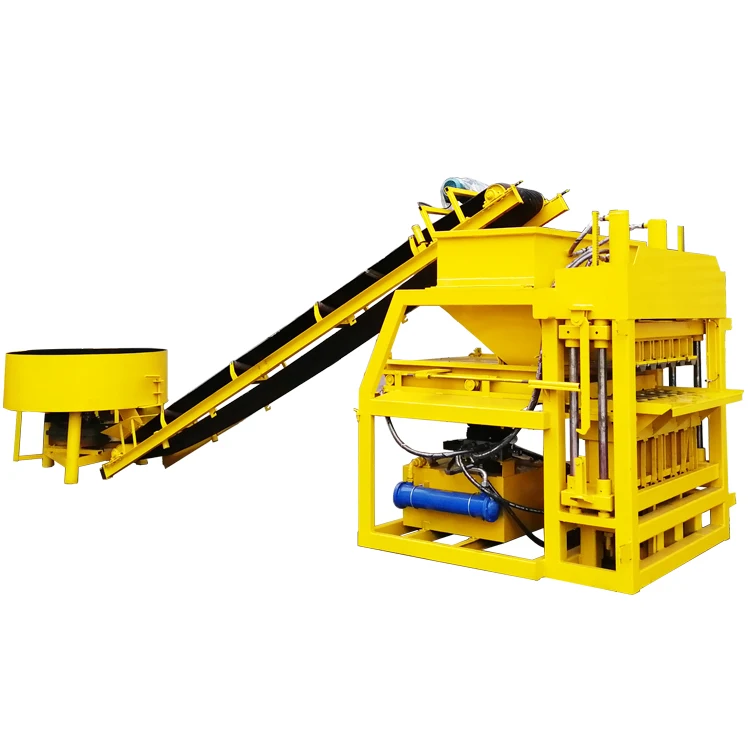
Line-Matched Cycle Timing — every upstream mixer, pallet feed and downstream stacker is set to the LY7-10 press rhythm so no station waits on another.
Technical Specifications
| Parameter | Value |
|---|---|
| Model | LY7-10 |
| Product Type | Automatic Compressed Earth Interlocking Block Making Machine |
| Automation Level | Automatic |
| Block Format | Compressed earth interlocking block |
| Raw Material | Clay soil |
| Hydraulic Pressure (MPa) | basis to be confirmed |
| Vibration Force (kN) | basis to be confirmed |
| Pallet Size | basis to be confirmed |
| Mould Format | Interlocking block (dimensions to be confirmed) |
| Mould Change Time | basis to be confirmed |
| Cycle Time per Format | basis to be confirmed |
| Output Capacity | basis to be confirmed (block format / material / thickness to be confirmed) |
| Rated Power (kW) | basis to be confirmed |
| Voltage & Frequency | basis to be confirmed |
| Control System | basis to be confirmed (PLC brand / language to be confirmed) |
| Overall Dimensions (L×W×H) | basis to be confirmed |
| Net Weight | basis to be confirmed |
| Shipping | Nude loading or seaworthy wood carton package; LCL or FCL sea shipping |
Application Suitability
| Application | Material or Output |
|---|---|
| Stationary compressed earth block plant | Clay soil blended to target moisture for interlocking format |
| On-site interlocking brick manufacturing | Locally sourced clay prepared through upstream mixing station |
| Housing project block supply | Soil-based interlocking blocks produced and cured at project location |
What "Automatic" Means When Pallet Handling Is Missing
A press that cycles automatically but feeds and stacks by hand is only half a line.
Too often a buyer pays for an automatic compressed earth block press, then discovers the quotation stopped at the machine outlet. Pallets are loaded manually, wet blocks are carried to the curing area one by one, and the press sits idle while operators catch up. The stationery block making machine production line only earns its name when raw material feeding, pallet circulation, stacking and curing rack handling are specified as one connected system with cycle times that actually match. [NEED_CITE: common scope gaps in block line quotations]
Upstream Mixing Station for Clay Soil
Clay soil arrives at varying moisture levels depending on weather and stockpile conditions. The LY7-10 requires a consistent blend at a specific moisture window so the interlocking block holds its shape after ejection and before curing begins. An upstream mixing station sized to the press cycle time prepares each batch, ensuring the stationary block making machine production line never starves for material and the operator is not forced to adjust water content by hand mid-shift.
Downstream Pallet Circulation and Curing Coordination
Once the interlocking block is pressed, it must travel to the curing area without vibration damage or manual handling delays. Pallet size, pallet material and the curing rack layout must align with the forklift capacity and floor space the buyer already has on site. If the pallets are too large for the curing racks, blocks stack on the floor and cure unevenly. If the pallet return loop is slower than the press cycle, the LY7-10 waits and daily output drops below what the capacity sheet promised. [NEED_CITE: pallet circulation bottleneck in stationary block plants]
Reading the Specifications That Actually Matter
Hydraulic pressure and vibration force together determine whether the clay soil compresses into a block strong enough to handle before curing is complete. Without a stated pressure value matched to the buyer’s clay type, the interlocking edges may chip during pallet transfer. Pallet size directly governs how many blocks fit on one curing rack tier and whether the existing forklift can lift a loaded rack. The control system language must be confirmed before the PLC is programmed, otherwise commissioning stalls while the manual is translated. Mould change time decides whether switching between interlocking formats takes twenty minutes or half a shift.
The Cost of Skipping Line Integration
A buyer who selects the LY7-10 press alone and sources the mixer, pallets and stacker separately often finds that one station runs faster than the rest. The mixer finishes a batch in three minutes, but the pallet feeder takes four, so the press idles every fourth cycle. Pallets ordered from a catalogue default may not fit the curing racks already built on site, forcing a second pallet purchase before the first production run. Voltage confirmed only after the machine is built means rewiring the control panel at the port, adding weeks to the schedule. [NEED_CITE: integration failures in multi-supplier block lines]
Why Scope the Full Line Here
Block machinery is a single focus, so the LY7-10 press, mould, pallet and handling equipment are specified as one matched system rather than assembled from separate suppliers. Configuration is set against the buyer’s actual clay soil characteristics and target interlocking block dimensions, not a catalogue default. Mould design covers the formats the buyer’s market actually sells, with custom drawings available. Automation level is selectable, allowing a buyer to begin with semi-automatic pallet handling and add a stacker later. Installation support includes operator training so the line runs correctly from the first shift.
Documentation & Verification
- Line layout drawing showing every station from clay hopper to curing rack with cycle times
- Capacity calculation stating the exact interlocking block dimensions used for output figures
- Voltage, frequency and PLC display language confirmation before production starts
- Mould drawing and format list matching the buyer’s local market requirements
- Factory test record on the buyer’s clay soil blend before dispatch
- Packing photographs and customs documentation for LCL or FCL shipment
Installation, Commissioning & Support
- Foundation plan showing pallet return trench and curing rack footprint for the LY7-10 line
- Dedicated power circuit sized to the confirmed rated power and voltage of the full line
- Press, mixer and stacker shipped together in one FCL to avoid split-arrival delays
- On-site commissioning with cycle time verification at each station before handover
- Operator training covering mould change procedure and PLC fault diagnosis in confirmed language
- Wear parts and mould list supplied with first-shipment spare quantities
What We Need to Size Your Line
To calculate a realistic layout for the stationary block making machine production line around the LY7-10, please share the exact interlocking block dimensions you plan to sell, the daily output target in that format, and a sample of your clay soil with current moisture range. We also need your site voltage and frequency, the PLC language preference, and the floor area available for the curing racks and pallet return loop.
Frequently Asked Questions
Q: How is daily output calculated for my interlocking block format?
A: Output is calculated per mould cavity and cycle time for the exact interlocking block dimensions you provide, not a generic hollow block figure. We state the format, material moisture and pallet loading pattern used for the calculation so you can verify it against your shift length and curing capacity.
Q: What mixing configuration does clay soil need?
A: Clay soil requires a mixer that achieves uniform moisture distribution before the material reaches the LY7-10 hopper. We size the mixer batch volume and cycle to match the press rhythm, and specify screening equipment if your clay contains oversize stones that would damage the interlocking mould.
Q: Are pallet feeding and stacking included in the quotation?
A: Yes, the quotation covers raw material feeding, pallet circulation, stacking and curing rack handling as line items so no station is left out. Each item is listed separately so you can see what is included and adjust the automation level before the contract is signed.
Q: How do pallet size and material affect my curing area?
A: Pallet dimensions must match the curing rack tiers and the forklift capacity you already have on site. We confirm pallet size, material and weight against your existing infrastructure so blocks move from press to rack without a second handling step or an unplanned equipment purchase.
Q: What is the lead time for the complete line?
A: Lead time covers the LY7-10 press, mixer, pallet system, stacker and curing racks produced and tested together before loading. We quote the dispatch date upfront and ship all stations in the same FCL so nothing arrives weeks late and delays commissioning.


