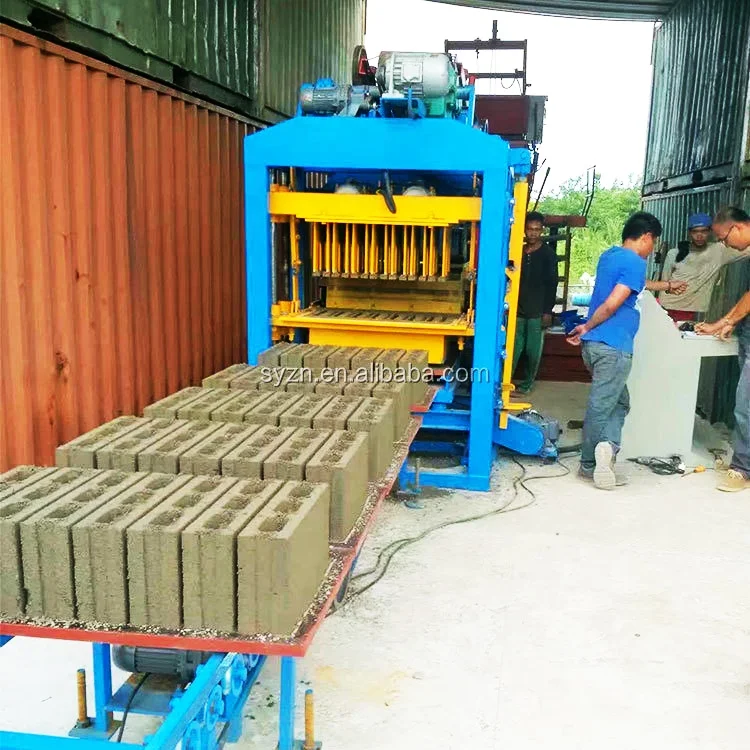
Technical Specifications
| Parameter | Value |
|---|---|
| Model | QTJ4-25 |
| Product Type | Semi-Automatic Concrete Block Making Machine |
| Overall Dimensions (L×W×H) | 6400×1500×2700mm |
| Molding Cycle | 25s |
| Vibration Frequency | 2800-5100 r/min |
| Vibration Force (Exciting Power) | 60KN |
| Rated Power | 17.9KW |
| Mixer Model | JQ350 |
| Pallet Size | 850×550×20mm |
| Net Weight | 2500KG |
| Applied Products | Concrete hollow blocks (8 inch, 6 inch), solid bricks |
| Raw Materials | Crushed stones, sand, cement, dust, fly ash |
| Output Capacity (Hollow Block 390×190×190mm) | 480 Pcs/Hr | 3800 Pcs/8hr |
| Output Capacity (Hollow Block 400×150×200mm) | 600 Pcs/Hr | 4800 Pcs/8hr |
| Output Capacity (Solid Brick 240×115×53mm) | 2100 Pcs/Hr | 17000 Pcs/8hr |
| Automation Level | Semi-automatic |
| Control System | (source value — verify) |
| Voltage & Frequency | (source value — verify) |
| Mould Change Time | (source value — verify) |
| Hydraulic Pressure | (source value — verify) |
Application Suitability
| Application | Material or Output |
|---|---|
| Small to medium-scale block production plants | Hollow blocks (390×190×190mm, 400×150×200mm) from crushed stone, sand, cement |
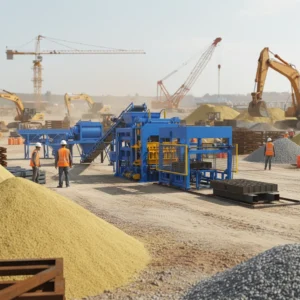
| On-site construction block manufacturing | 6-inch and 8-inch hollow blocks for housing projects using local aggregates |
| Existing brick manufacturers expanding product range | Solid bricks (240×115×53mm) from fly ash, cement, and sand blends |
What "3800 Blocks per Shift" Actually Means for Your Line
Output figures are only honest when the block format and shift length are stated alongside them.
A quotation that promises 3800 hollow blocks per shift without specifying the 390×190×190mm format and 8-hour continuous run is asking you to guess. The Semi-Automatic Block Making Machine production line delivers those numbers under defined conditions, but swap the mould to a different size and the daily tally shifts accordingly. Buyers who compare quotations on a single headline number end up disappointed on the first production day [NEED_CITE: block format assumptions in capacity quotations].
I once saw a plant owner in West Africa expect 6000 hollow blocks daily from a line rated at that figure for solid bricks — the format difference alone made the target unreachable. The mismatch was not a machine fault but a quoting omission that nobody caught before the container shipped.
Line Synchronization Around the 25-Second Cycle
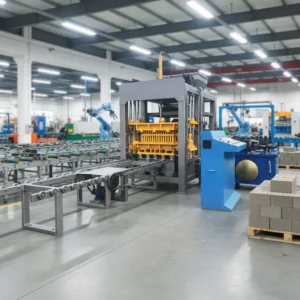
Every station in this Semi-Automatic Block Making Machine production line is timed to the 25-second moulding cycle of the host press. The JQ350 mixer must discharge a fresh batch before the hopper runs dry, and the belt conveyor must move that batch within the same window. If either station lags, the press sits idle and the quoted hourly rate becomes theoretical rather than achievable.
Pallet Circulation and Curing Area Footprint
The 850×550×20mm pallets are the physical link between the press output and your curing yard. A Semi-Automatic Block Making Machine production line configured with too few pallets forces operators to wait for cured blocks to be stripped before the next cycle can run. We typically recommend 300 to 500 pallets depending on your climate and curing duration, and we confirm the pallet material against the forklift and racking you already have on site [NEED_CITE: pallet quantity calculation for block curing operations].
How Vibration Force and Mixer Output Shape Block Density
The 60KN exciting power combined with vertical bed mould vibration determines how tightly the aggregate packs into each cavity. The JQ350 mixer must deliver a consistent moisture-content blend so that every 25-second cycle receives the same material quality. When vibration force, cycle time, and mix consistency are all matched, block density stays uniform across the shift — a mismatch in any one of these three parameters shows up as weak blocks at the pallet stripping stage.
Pallet Handling Gaps That Stall a Production Day
Most quotations for a block line stop at the press itself, leaving the buyer to figure out how freshly moulded blocks reach the curing area and how cured blocks return to the stacking zone. When pallet handling is improvised on arrival, operators spend half the shift moving wood by hand, and the Semi-Automatic Block Making Machine production line never reaches its stated rhythm. Trolley transport, pallet return conveyors, and stacking jigs are the stations where hidden delays accumulate [NEED_CITE: manual pallet handling bottlenecks in block plants].
The Hidden Cost of an Unconfirmed Electrical Standard
Shipping a block line with a control cabinet set to one voltage and arriving at a site running another is a mistake I have watched play out more than once. A 380V cabinet plugged into a 415V supply will burn the PLC board on first power-up, and the replacement board may take weeks to arrive by air freight. The entire Semi-Automatic Block Making Machine production line sits idle — mixer, conveyor, and press — because one electrical detail was not confirmed before the wiring was done. Always send a photo of your main distribution board before we finalize the schematic [NEED_CITE: voltage and frequency standards by export market].
Why Source the Full Line from One Configuration Point
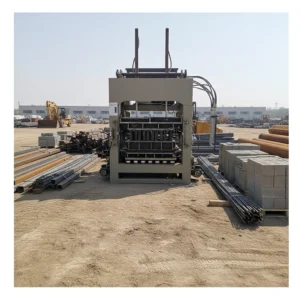
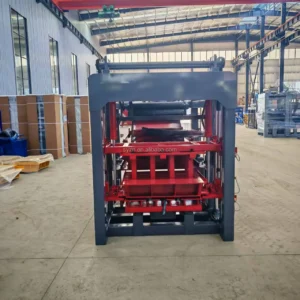
Block machinery is our single focus, so the QTJ4-25 press, JQ350 mixer, belt conveyor, and pallet circulation are specified together rather than assembled from separate suppliers who do not communicate on timing. Configuration is set against your actual mix design and local aggregate, not a catalogue default that may not match the sand or fly ash available near your site. Mould design covers the hollow and solid formats your market demands, with custom drawings accepted. The automation level is selectable, so you can begin with semi-automatic pallet handling and add stacking or cubing stations later. Installation includes operator training on the complete line, not just the press in isolation.
Documentation & Verification
- Line layout drawing showing station spacing and pallet flow path for the QTJ4-25
- Capacity calculation sheet stating block format and cycle time per station
- Electrical schematic with confirmed voltage and frequency for your site
- Pallet specification listing dimensions, material option, and recommended quantity
- Wear parts list covering press moulds, JQ350 mixer blades, and conveyor belts
- Factory test record run on your target block format before dispatch
Installation, Commissioning & Support
- Foundation plan based on 6400×1500mm footprint and 2500KG static load
- Dedicated circuit sized for 17.9KW total rated power across all line stations
- Machine dismantled for container loading with marked reassembly sequence
- First-run commissioning verifying 25-second cycle on your specified block format
- Operator training covering mould change, pallet feeding, and daily inspection
- Wear parts inventory covering mould plates, vibration springs, and mixer liners
What We Need to Configure Your Line
Send us the hollow block and solid brick dimensions your market sells, along with the daily volume you intend to sustain. Include a photo of your existing electrical panel so we can match voltage and frequency before the control cabinet is wired. Let us know the curing yard dimensions you have available so we can calculate the pallet count and recommend the trolley transport route that keeps the press running without interruption.
Frequently Asked Questions
Q: How does the JQ350 mixer output match the 25-second cycle of the QTJ4-25?
A: The JQ350 pan mixer is sized so that one full discharge refills the press hopper within the moulding cycle window. The belt conveyor transfers the mix at a rate that prevents the hopper from running empty between cycles, keeping the press in continuous operation during a standard shift.
Q: What pallet quantity is recommended and how does it affect my curing yard?
A: We typically recommend 300 to 500 pallets of 850×550×20mm for this line. The exact number depends on your local climate and curing duration. We confirm the pallet count against your available curing area and the forklift you use, so pallets circulate without stacking up faster than blocks can cure.
Q: Which supporting equipment comes with the standard line proposal?
A: The standard proposal includes the QTJ4-25 press, JQ350 mixer, belt conveyor, and pallet feeding system. Trolley transport and stacking tools can be included or sourced locally depending on your preference. We clarify each item in the quotation so there are no missing stations when the line arrives.
Q: Can automatic stacking be added later without replacing the press?
A: Yes. The Semi-Automatic Block Making Machine production line is designed with an upgrade path. Automatic pallet stacking and cubing stations can be integrated into the existing pallet return loop without changing the host press or the mould set, allowing you to reduce manual labour as your production volume grows.