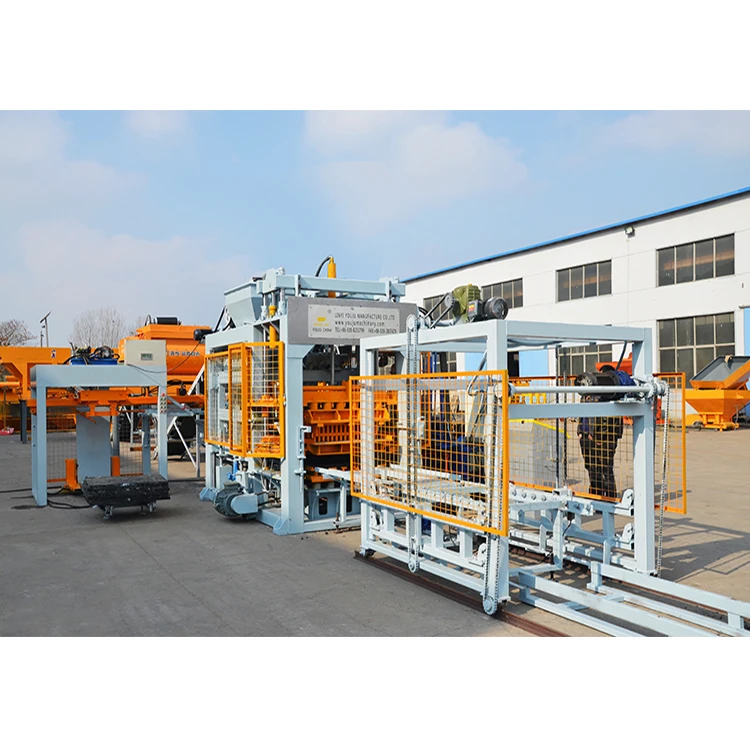
QT8-15 Fully Automatic Block Production Line – Turnkey Solution
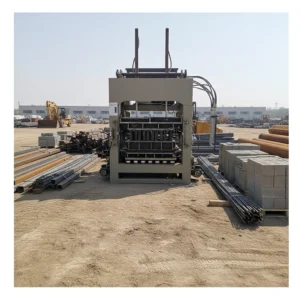
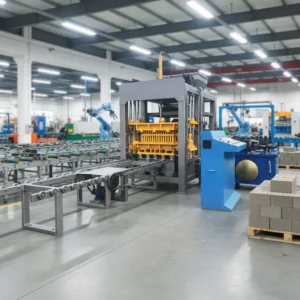
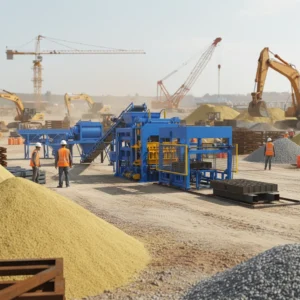
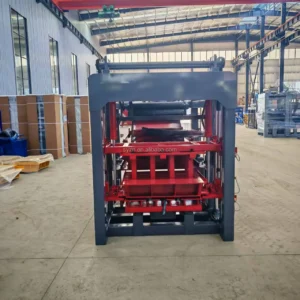
Integrated Line Design — The QT8-15 is quoted as a complete block production line, not a standalone press, so every station from the JS750 mixer through the pallet feeder, material feeder, brick conveyor, and block sweeper is matched to the press cycle to prevent bottlenecking.
Technical Specifications
| Parameter | Value |
|---|---|
| Product Type | Fully Automatic Hydraulic Concrete Block Making Machine |
| Model | QT8-15 |
| Overall Dimensions (L×W×H) | 8300 × 1860 × 3000 mm |
| Molding Cycle | 15–20 s (basis to be confirmed per block format) |
| Vibration Force (Exciting Power) | 55 kN |
| Rated Power | 37.2 kW |
| Mixer Model | JS750 |
| Pallet Size | 1020 × 900 mm |
| Total Weight | 8 T |
| Control System | PLC |
| Hydraulic Station | Included |
| Applied Products | Paver, solid block, hollow block, curbstone |
| Raw Materials | Crushed stones, sand, cement, dust, fly ash |
| Automation Level | Fully Automatic |
| Line Equipment Included | Block making machine, hydraulic station, PLC control system, pallet feeder, brick conveyor, block sweeper, material feeder |
| Output Capacity | 1920 pcs/hour (basis to be confirmed per block format) |
| Voltage & Frequency | Configurable to target market (to be confirmed) |
| PLC Language Options | Configurable to buyer requirement (to be confirmed) |
| Standards | CE (unit certification to confirm) |
Application Suitability
| Application | Material or Output |
|---|---|
| Hollow block production for wall construction | Crushed stone, sand, cement, fly ash |
| Solid block manufacturing for load-bearing structures | Crushed stone, sand, cement, dust |
| Interlocking paver production for roads and walkways | Crushed stone, sand, cement, pigment |
| Curbstone forming for urban infrastructure | Crushed stone, sand, cement |
| Building material plant adding format variety | Multiple aggregate and binder combinations |
What Buyers Miss When They Focus Only on Press Capacity
The real output of a QT8-15 block machine production line depends on how well every upstream and downstream station keeps pace with the press cycle.
Quoted cycle times often assume ideal conditions — a single block format, pre-mixed material arriving on time, pallets already staged, and finished blocks whisked away before the next cycle starts. In practice, a mixer that cannot keep up with the press leaves the hydraulic station idling, while a pallet feeder that jams every few cycles forces the operator into manual recovery. I have watched plants shut down for hours because the conveyor could not clear blocks fast enough, turning a supposedly automatic line into a semi-manual bottleneck. The turnkey concrete block making line only delivers its promised throughput when every station — material feeder, JS750 mixer, pallet feeder, press, block sweeper, and brick conveyor — is specified together and tested as one system [NEED_CITE: common causes of block line throughput shortfall in plant commissioning reports].
How the Line Stations Connect Around the Press
A QT8-15 block machine production line starts with the JS750 mixer delivering a consistent batch to the material feeder, which meters raw material into the mould cavity. The PLC coordinates the hydraulic station and the 55 kN vibration force so that each mould fill, press, and demould sequence runs within the 15–20 second cycle window. If the mixer output drops or the material feeder starves, the press completes a cycle with a partially filled mould, producing undersized or weak blocks that fail quality checks downstream.
Where Pallet Handling Determines Actual Throughput
After demoulding, the pallet carrying wet blocks must move to the brick conveyor and then to the curing area before the next pallet enters the press. The 1020 × 900 mm pallet size was chosen to align with standard curing rack dimensions and forklift tine spacing. If the buyer’s existing forklift cannot handle that pallet width, or the curing racks are sized for a different pallet, blocks pile up on the floor and the press waits. This is why the turnkey concrete block making line quotation must confirm pallet specification against the buyer’s actual site layout before production begins [NEED_CITE: pallet size mismatch causing curing area congestion in block plants].
Reading the Key Specs for Production Reality
The 55 kN vibration force, combined with the hydraulic station pressure, determines how densely the concrete mix is compacted inside the mould. Higher vibration and matched hydraulic pressure produce blocks with greater compressive strength, but only if the mix design — cement ratio, aggregate gradation, moisture content — suits that force level. A mix optimized for a lower vibration machine will crumble under 55 kN, while a lean mix designed for high pressure will not consolidate properly if the hydraulic station is undersized. The 37.2 kW rated power covers the press motor, hydraulic pump, and vibration motor running simultaneously, so the buyer’s electrical supply must sustain that peak draw without tripping the breaker. The 8 T total weight provides the mass needed to absorb vibration without the frame walking off its foundation during continuous operation.
The Cost of a Line That Was Never Balanced
When a buyer purchases the press separately and sources the mixer, pallet feeder, and conveyor from different suppliers, the stations rarely communicate. The PLC on the press cannot signal the mixer to batch faster, and the conveyor runs at a fixed speed regardless of press output. I have visited plants where the pallet feeder was rated for a smaller pallet, causing jams every thirty minutes, and the operator spent more time clearing blockages than running the machine. The result is a line that nominally has the right press but delivers far less daily output than the buyer budgeted for, with no single supplier responsible for the gap [NEED_CITE: integration failures in multi-supplier block production lines].
Why Specifying the Full Line Together Matters
Every station in this QT8-15 block machine production line is configured against the buyer’s target block format, local aggregate, and curing area layout — not pulled from a catalogue default. The JS750 mixer output rate is matched to the press cycle so material arrives on time. The pallet feeder is set to handle 1020 × 900 mm pallets at the pace the press demands. The brick conveyor speed is calibrated so wet blocks reach the curing rack without backlog. Moulds for paver, solid block, hollow block, and curbstone are designed for the same pallet platform, keeping format changeover within a single shift. The hydraulic and electrical schematics, along with the factory test record, travel with the shipment so the buyer’s electrician can verify wiring before the first production run [NEED_CITE: importance of matched line configuration in block machinery procurement].
Documentation & Verification
- Line layout drawing with capacity calculation stated per specific block format
- Machine specification sheet covering press, mixer, pallet feeder, and conveyor
- Hydraulic and electrical schematic matching the shipped configuration
- Factory test record on the buyer’s target block format before dispatch
- Voltage, frequency, and PLC language confirmation document
- Wear parts and mould list with recommended replacement intervals
Installation, Commissioning & Support
- Foundation plan sized for the 8300 × 1860 mm footprint and 8 T operating weight
- Dedicated power circuit rated for the 37.2 kW peak draw confirmed before energizing
- Hydraulic station filled and bled on site with pressure verified against the test record
- PLC language and display parameters set to operator preference during commissioning
- Pallet feeder and brick conveyor speed tuned to actual mould cycle on the buyer’s mix
- Operator training covering mould change, daily maintenance, and fault diagnosis on the full line
What We Need to Move Forward
To size the QT8-15 block machine production line correctly, share the block formats you plan to produce, the daily output target per format, and the aggregate available at your site. Confirm the voltage and frequency at the installation point, the PLC display language your operators read, and the pallet dimensions your curing racks and forklifts accept. If you already have a mixer or batching plant, tell us its output rate so we can verify it matches the press demand.
Frequently Asked Questions
Q: How is the 1920 pcs/hour capacity calculated, and which block format does it assume?
A: The 1920 pcs/hour figure is derived from a specific block format, mould cavity count, and cycle time that must be confirmed against your target product. Capacity for a hollow block differs from a paver or curbstone because mould fill volume, vibration duration, and demould speed all change. We provide a capacity calculation sheet that states the exact format, dimensions, and cycle time assumed so you can compare against your daily output requirement before ordering.
Q: Which stations are included in the line, and where might bottlenecks appear?
A: The quotation covers the block making machine, hydraulic station, PLC control system, JS750 mixer, pallet feeder, material feeder, brick conveyor, and block sweeper. Bottlenecks typically appear between the pallet feeder and the press if pallets are not staged fast enough, or between the press and the brick conveyor if wet blocks are not cleared before the next cycle. Line layout review before production identifies and eliminates these gaps.
Q: How are voltage, frequency, and PLC language confirmed before production?
A: We request your site voltage, frequency, and preferred PLC display language during the quotation stage and document them in a confirmation sheet. The electrical schematic and PLC program are then built to those values, and a factory test verifies correct operation before shipment. This prevents commissioning delays caused by mismatched electrical supply or unreadable control menus.
Q: What pallet size is specified, and how does it fit my existing curing setup?
A: The standard pallet size for this line is 1020 × 900 mm. We verify this against your curing rack spacing and forklift tine width before production. If your existing equipment uses a different pallet dimension, the pallet feeder and conveyor guides are adjusted, or an alternative pallet size is specified so that cured blocks integrate smoothly into your current handling workflow.
Q: What does on-site installation and training cover for the full line?
A: Installation covers foundation verification for the 8 T machine, electrical connection to the 37.2 kW supply, hydraulic station commissioning, and conveyor alignment. Operator training includes PLC operation, mould changeover procedure, daily maintenance checkpoints on the press and JS750 mixer, and troubleshooting common faults across all stations. Wear parts and mould replacement schedules are reviewed so your team knows when to order spares.