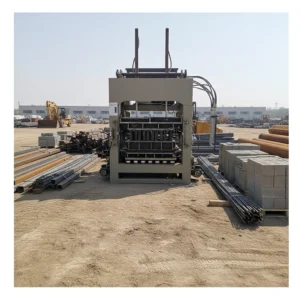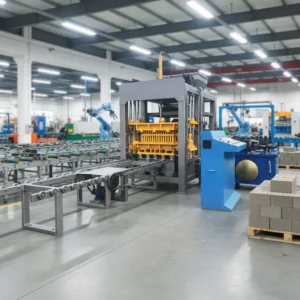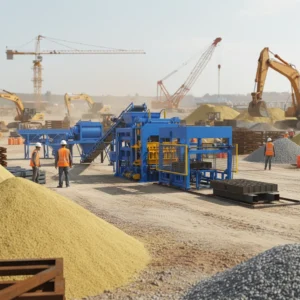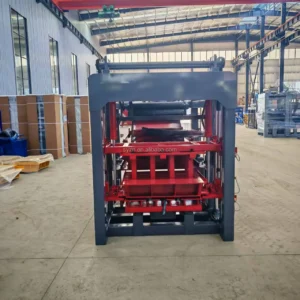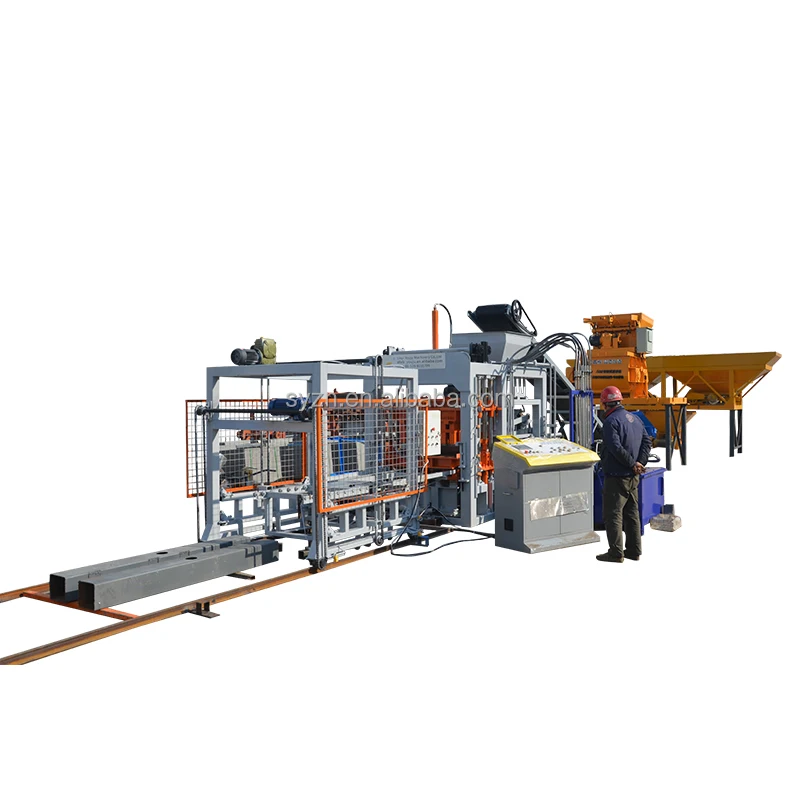
Synchronized Line Rhythm — Every station from raw material intake to stacking is timed to the QT7-15 press cycle so the machine never idles waiting for upstream feed or downstream clearance.
Technical Specifications
| Parameter | Value |
|---|---|
| Model | QT7-15 |
| Product Type | Fully Automatic Hollow Block Making Machine |
| Pallet Size | 1150 × 700 mm |
| Molding Cycle | 15–20 s (basis not stated in source — confirm block format and mix) |
| Vibration Force | 100 kN |
| Vibration Frequency | 0–60 Hz (adjustable) |
| Vibration Form | Platform Vibration |
| Demolding Method | Hydraulic |
| Overall Power | 45 kW |
| Total Mass | 8 T |
| Control System | PLC with touch-screen interface |
| Automation Level | Fully Automatic |
| Line Assembly | Complete line: pallet feed machine, block making machine, storage hopper, conveyor, hydraulic unit, PLC control cabinet |
| Output — Hollow Block 400×200×200 mm | 1260–1680 pcs/h, 10080–13440 pcs per 8 hr shift |
| Output — Hollow Block 400×150×200 mm | 1440–1920 pcs/h, 11520–15360 pcs per 8 hr shift |
| Output — Rectangular Paver 200×100×60 mm | 3888–4860 pcs/h, 31104–38880 pcs per 8 hr shift |
| Warranty | 1 year (excluding spare parts) |
| CE Declaration | Available where applicable |
Application Suitability
| Application | Material or Output |
|---|---|
| Hollow block production for building walls | Crushed stone, sand, cement, fly ash blends |
| Multicellular brick manufacturing | Lightweight aggregate and cement mixes |
| Rectangular paver production for walkways and yards | Fine aggregate with cement and pigment |
| Standard solid concrete block output | Local quarry sand, gravel, and cement |
| On-site block supply for housing developments | Site-sourced aggregate matched to mix design |
What a Quoted Cycle Time Actually Means on the Shop Floor
The press cycle is only one fraction of real line throughput.
A block machine rated at a fast molding cycle can still deliver disappointing daily totals when pallet feeding, material conveyance, or stacking cannot keep pace. I once stood on a site in Ghana where the host machine was cycling faster than the belt conveyor could deliver fresh mix — operators spent entire shifts watching the hopper run empty. That QT7-15 automatic hollow block machine production line will only reach its stated output when every upstream and downstream station is configured to the same cycle assumption, and that assumption must match the buyer’s actual block format and mix [NEED_CITE: line synchronization principles for concrete block plants].
Matching Every Station to the Press Rhythm
The QT7-15 automatic hollow block machine production line places the hydraulic press at the center of a chain that includes raw material feeding, pallet circulation, product conveying, and stacking. Each station is specified so its cycle does not exceed the press interval, meaning the press completes one mold and immediately receives the next charged pallet without dwell. This coordination is what separates a catalogue number from a realistic daily shift total.
Where Bottlenecks Hide Before the Line Ships
Bottlenecks rarely appear on the quotation — they surface after commissioning when a slow pallet return loop or an undersized mixer starves the press. Before the QT7-15 automatic hollow block machine production line leaves the factory, the pallet feed rate, conveyor speed, and mixer discharge interval are checked against the press cycle for the buyer’s chosen block format. This step prevents the scenario where the fastest machine in the line is the one doing nothing [NEED_CITE: common causes of idle time in block production].
Reading the Specs That Matter Beyond the Press
The 100 kN vibration force works together with hydraulic pressure to compact the mix into a dense block; neither parameter alone determines strength. The adjustable 0–60 Hz vibration frequency lets the operator tune the platform to the local aggregate particle size, which changes from one quarry to the next. An 1150 × 700 mm pallet size is not arbitrary — it must fit the buyer’s existing curing racks and forklift tine spacing, otherwise cured blocks pile up on the floor. The PLC touch-screen control coordinates every station’s timer so that pallet advance, mold fill, press, and demold happen in a fixed sequence, reducing operator decisions during a shift.
The Cost of Ignoring Line-Wide Timing
When upstream and downstream equipment is sourced separately and simply bolted beside the press, the result is a line that technically runs but chronically waits. Pallets stack up at the return end, the mixer discharges faster than the hopper accepts, and daily output falls to a fraction of the press-alone figure. Buyers then blame the press, when the real issue is that no one was responsible for the line as a single timed system [NEED_CITE: block line integration failures].
Why Sourcing the Whole Line From One Specification Point Matters
Block machinery is the single focus here, so the QT7-15 press, its moulds, pallets, and handling equipment are specified as one matched system rather than assembled from separate vendors. The line configuration is set against the buyer’s actual mix design and local aggregate, not a catalogue default. Mould design covers the formats the buyer’s market sells, including custom drawings when standard formats do not match. Automation level is selectable, so a plant can start with semi-automatic pallet handling and add full stacking later. Installation support includes operator training on the PLC interface and station synchronization.
Documentation & Verification
- Line layout showing capacity calculation per block format for the QT7-15
- Machine specification sheet with pallet size and vibration parameters confirmed
- Mould drawing and format list matching the buyer’s product range
- Hydraulic and electrical schematic showing station connections
- Voltage, frequency, and PLC display language confirmed before production
- Factory test record run on the buyer’s target block format before dispatch
Installation, Commissioning & Support
- Foundation plan aligned to the 8 T total mass and 45 kW power draw
- Dedicated electrical circuit sized for the 45 kW overall load and local voltage
- Complete line dismantled for container loading and reassembled on arrival
- PLC touch-screen parameters set to buyer’s block format during commissioning
- Operator training covering mould change and pallet feed synchronization
- Wear parts list with hydraulic seals and platform vibration components itemized
What to Prepare Before Requesting a Line Quote
Send the target block formats and daily output you need to meet, along with the local aggregate type and cement source. Confirm the voltage and frequency at the plant site, the language you want on the PLC display, and whether your curing area already has forklifts and racks the pallet size must fit.
Frequently Asked Questions
Q: How is line capacity calculated when pallet feeding, pressing, and stacking cycle times differ?
A: The slowest station sets the actual line output. Capacity figures for the QT7-15 are stated per block format — for example 1260–1680 hollow blocks 400×200×200 mm per hour — and assume every upstream and downstream station matches or beats that interval. If any station is slower, the real shift total drops accordingly.
Q: What upstream equipment must match the QT7-15 press cycle?
A: The mixer discharge rate, belt conveyor speed, and storage hopper gate timing all need to deliver fresh mix within the press molding window. The pallet feed machine must also place a new pallet before the press completes its current cycle, otherwise the press idles.
Q: Can the automation level be upgraded later from semi-automatic to full stacking?
A: Yes. The line can start with manual or semi-automatic pallet handling and add automatic stacking and cubing stations afterward, provided the original layout reserved space and the PLC program supports the additional I/O points.
Q: How are voltage, frequency, and PLC language confirmed before shipment?
A: These are locked during the order stage and written into the electrical schematic. The PLC touch-screen display language is set before the factory test so the buyer can verify all prompts and fault messages match operator requirements.
Q: What is the lead time for a complete line including pallets, moulds, and handling equipment?
A: Typical multi-week lead times apply once configuration, voltage, and mould formats are confirmed. The schedule covers press assembly, pallet and mould fabrication, factory test on the buyer’s block format, dismantling for container loading, and customs documentation preparation.