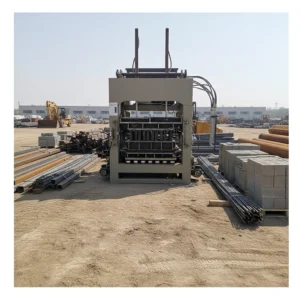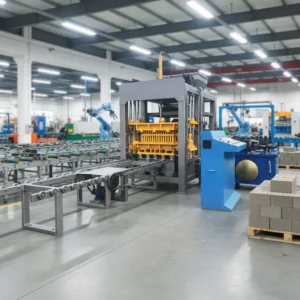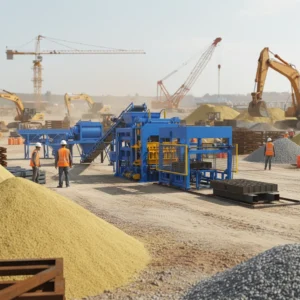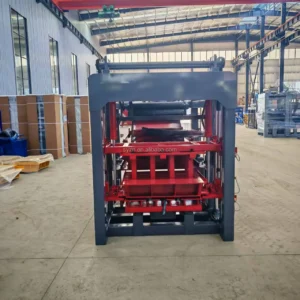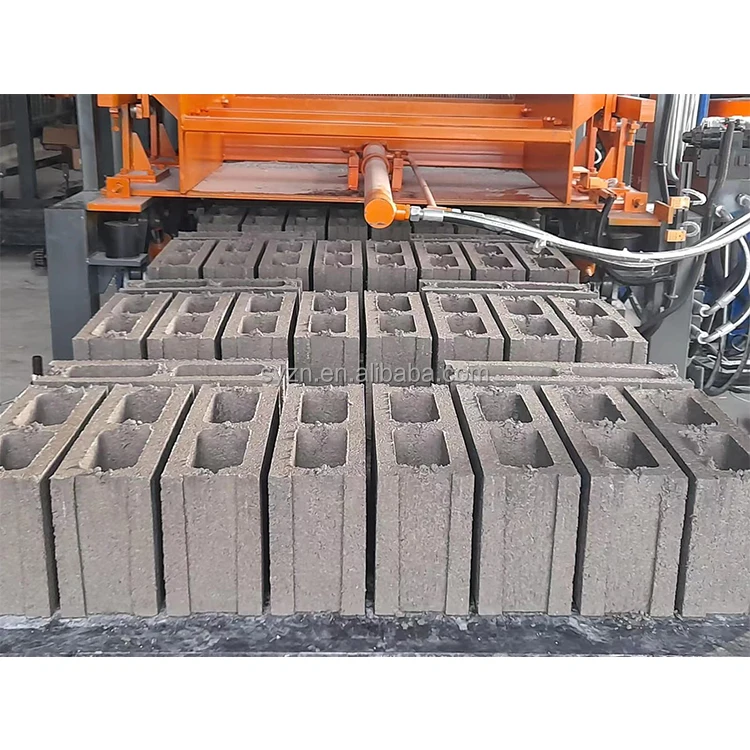
System-Matched Line — The QT7-15 block making machine is quoted here as a complete production line where every station from raw material feed to block stacking is configured to keep pace with the 15–20s moulding cycle.
Technical Specifications
| Parameter | Value |
|---|---|
| Model | QT7-15 |
| Product Type | Hydraulic Block Making Machine |
| Pallet Size | 1150×700mm |
| Moulding Cycle | 15–20s (basis not stated in source — confirm block format / material / thickness) |
| Vibration Force | 100kN |
| Vibration Frequency | 0–60Hz |
| Vibration Form | Platform Vibration |
| Demolding Method | Hydraulic |
| Overall Power | 45kW (rated or peak not specified) |
| Total Mass | 8T (source value — verify against manufacturer catalog) |
| Control System | PLC with touch screen interface |
| Output – Hollow Block 400×200×200mm | 1,260–1,680 pcs/h | 10,080–13,440 pcs/8hr |
| Output – Hollow Block 400×150×200mm | 1,440–1,920 pcs/h | 11,520–15,360 pcs/8hr |
| Output – Rectangular Brick 200×100×60mm | 3,888–4,860 pcs/h | 31,104–38,880 pcs/8hr |
| Line Components | Pallet feed machine, block making machine, storage hopper, conveyor, hydraulic unit, PLC control cabinet |
| Fault Diagnosis | Remote control and fault diagnosis capability |
| Certification | CE (implied — verify against current certificate) |
Application Suitability
| Application | Material or Output |
|---|---|
| Hollow block production for building walls | Crushed stone, sand, cement, fly ash aggregates in 400×200×200mm and 400×150×200mm formats |
| Paving brick manufacturing for roads and walkways | Concrete mix with fine aggregate in 200×100×60mm rectangular format |
| On-site block production for housing projects | Local aggregate and cement blended to project specification |
| Format expansion for existing concrete product plants | Additional moulds exchanged on the same pallet size and press platform |
What a "Complete Line" Actually Means for the QT7-15 Block Production Line
Every station is specified so the press never waits on upstream feed or downstream handling.
Many buyers receive a quotation that covers only the block press, then discover on commissioning day that pallets must be fed by hand, wet blocks are stacked manually off the conveyor, and the mixer cannot deliver a fresh batch before the next cycle is due. The QT7-15 block production line addresses this by defining the pallet feed machine, storage hopper, conveyor, hydraulic unit, and PLC control cabinet as a single system from the start. When station cycle times are not balanced against the host press, daily output falls far short of the number on the quotation [NEED_CITE: common causes of throughput shortfall in block plant installations].
How Stations Connect Around the Press
The QT7-15 block production line places the storage hopper and conveyor upstream of the press so that a measured charge of mixed material is waiting before each moulding cycle begins. If the mixer discharge or conveyor speed lags behind the 15–20s cycle window, the press sits idle and the quoted capacity figure is never reached. The line specification locks the feed rate to the press cycle rather than treating each station as an independent purchase.
Pallet Handling as Part of the System
The 1150×700mm pallet size is not chosen in isolation. It must match the curing rack spacing the buyer has on site and the fork pocket dimensions of the forklift already in the yard. When the pallet specification is confirmed against those existing assets before production begins, blocks move from press to curing to dispatch without a secondary handling step [NEED_CITE: pallet and curing rack compatibility standards in concrete block plants].
Platform Vibration and Hydraulic Pressure Working Together
The 100kN vibration force delivered through platform vibration at 0–60Hz is paired with hydraulic demolding to compact the mix evenly across the full pallet area. Vibration frequency and hydraulic pressure must be set against the buyer’s actual mix design and local aggregate gradation, not a factory default. A mix with a high proportion of fine sand responds differently from one built around coarse crushed stone, and the PLC touch screen allows the operator to adjust frequency within the 0–60Hz range for each mould format.
When One Station Runs Faster Than the Rest
If the pallet feed machine delivers pallets faster than the press can cycle, pallets queue on the infeed conveyor and risk surface damage. If the stacking station downstream cannot clear cured blocks in time, the press must pause. These mismatches are the hidden reason some plants never reach nameplate capacity. Line-wide PLC control with remote fault diagnosis means a single logic governs every station, and a timing conflict shows up as a diagnostic alert rather than a silent bottleneck [NEED_CITE: PLC-controlled line synchronization in block manufacturing].
Why Buying the Press Alone Costs More Later
Purchasing the QT7-15 block production line as a press-only quote leaves pallet handling, material feed, and stacking to be solved on site. Buyers often end up assigning additional labour to tasks the line was supposed to automate, and the extra wages accumulate quietly over months. Specifying the full component list — pallet feed machine, storage hopper, conveyor, hydraulic unit, and PLC cabinet — at the quotation stage prevents this gap from appearing after the container arrives.
Why Source This Line Here
Block machinery is the single focus of this supply chain, so the press, moulds, pallets, and handling equipment are specified as one matched system rather than assembled from separate vendors. Configuration is set against the buyer’s actual mix design and target block format, not a catalogue default. Mould design covers the formats the buyer’s local market sells, with custom drawings available. Automation level is selectable — a buyer can start with the standard PLC-controlled setup and add automatic stacking or cubing later. Installation support includes operator training so the crew understands the relationship between station timing and daily output from the first shift.
Documentation & Verification
- Line layout drawing showing station positions and pallet flow path for the QT7-15 configuration
- Capacity calculation sheet stating which block format each output figure assumes
- Hydraulic and electrical schematic covering every station, not the press alone
- Pallet specification document for cross-check against existing curing racks and forklifts
- Voltage, frequency, and PLC display language confirmation signed before production
- Factory test record on the buyer’s selected mould format before dispatch
Installation, Commissioning & Support
- Foundation plan sized to the 8T machine mass and 1150×700mm pallet footprint
- Dedicated power circuit for the 45kW total load with voltage and frequency confirmed pre-shipment
- PLC touch screen configured in the buyer’s preferred language before the control cabinet leaves the factory
- Station timing calibrated on site so feed, press, and conveyor cycles align from the first production run
- Operator training covering mould change procedure and platform vibration adjustment for different mix designs
- Wear parts list with hydraulic seal and vibration motor replacement intervals documented
What to Include in Your Inquiry
Send the target block format and daily output requirement so the line layout and capacity calculation can be built around your actual product. Confirm the voltage, frequency, and PLC display language needed at your site so the control cabinet is configured before dispatch. If you already have curing racks, a forklift, or an existing mixer in the plant, share the pallet dimensions and equipment specifications so the 1150×700mm pallet and conveyor height are verified against them.
Frequently Asked Questions
Q: How is daily output verified, and which block format does each capacity figure assume?
A: Each output figure is tied to a specific block format. For example, 10,080–13,440 pieces per 8-hour shift applies to 400×200×200mm hollow blocks, while 31,104–38,880 pieces per shift applies to 200×100×60mm rectangular bricks. The capacity calculation sheet states the format, cycle time, and moulding assumptions behind every number.
Q: What supporting equipment is included, and what must I supply separately?
A: The quotation covers the pallet feed machine, storage hopper, conveyor, hydraulic unit, PLC control cabinet, and the QT7-15 press. Raw material batching equipment, curing racks, and the forklift for pallet movement are typically buyer-supplied. A component list in the proposal clarifies the boundary.
Q: How do I confirm the pallet size matches my curing area and forklift?
A: The 1150×700mm pallet specification document is provided before production. You cross-check the pallet dimensions, fork pocket spacing, and weight rating against your existing curing rack spacing and forklift capacity. Any mismatch is resolved before the machine is built.
Q: How is the line cycle time balanced so no station waits on another?
A: Every station — feed conveyor, mixer discharge, press cycle, pallet feed, and stacking — is timed against the 15–20s moulding window of the QT7-15. The PLC control logic governs all stations, and a diagnostic alert triggers if any station falls out of sequence during production.