
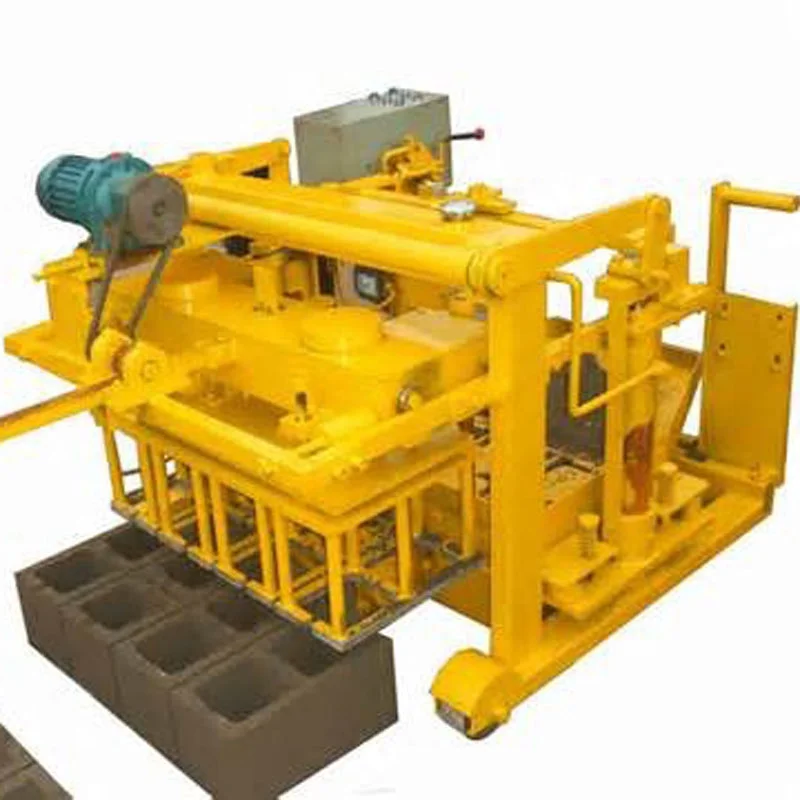
Matched System Design — Every QMY4-30 mobile block making line we quote includes raw material feeding, mixing, and pallet handling mapped to the press cycle, so the machine is never left waiting for the next batch.
Technical Specifications
| Parameter | Value |
|---|---|
| Model | QMY4-30 |
| Product Type | Mobile Hydraulic Block Making Machine |
| Overall Dimensions (L×W×H) | 1300 x 1500 x 1000 mm |
| Net Weight | 950 kg – 1000 kg |
| Total Installed Power | 5.95 kW |
| Vibration Force | 28.6 kN |
| Excitation Frequency | 4500 r/min |
| Hydraulic Method | Mold Vibration |
| Molding Cycle | 30 s |
| Output Capacity | 3000 pcs / 8 h (basis not stated in source — confirm block format, material and wall thickness before quoting) |
| Raw Material Compatibility | Concrete, sand, cement, fly ash, lime, gypsum, stone dust, construction waste, slag, mine tailings, river sand, coal gangue, porcelain granule |
| Operation Mode | Manual transmission or hydraulic transmission (selectable) |
| Suitable Environment | Mountainous, hilly, mine industrial, clay control, suburban, desert, and coastal areas |
Application Suitability
| Application | Material or Output |
|---|---|
| On-site hollow block production for housing projects | River sand and cement mixes, local crushed stone aggregate |
| Temporary paver runs at remote construction camps | Stone dust and cement blends, construction waste recycling |
| Small-scale solid block supply for village contractors | Fly ash, lime and gypsum combinations, coal gangue |
| Coastal development site block making | Salt-resistant cement with marine sand, slag aggregate |
What the Quoted Daily Output Actually Means on a Mobile Block Machine Production Line
Capacity figures only become real once the block format, mix design, and pallet handling speed are locked in together.
I used to approve purchase orders based on a single "pieces per day" number, only to find out on commissioning day that the quoted capacity assumed a hollow block format the buyer never intended to produce. When the machine switched to the paver mould the site actually needed, the cycle stretched and the daily output dropped noticeably. The problem was not the press — it was that the surrounding mobile block machine production line had been sized around a default block, not the format the buyer’s market was paying for [NEED_CITE: block format impact on cycle time and daily output]. That mismatch is what causes site managers to blame the machine when the real issue sits in the specification sheet.
Feeding and Mixing Stations That Keep Pace With the Press
The QMY4-30 completes a moulding cycle in roughly thirty seconds, which means the mixer must deliver a fresh batch at the same rhythm or the press stands idle. On a compact mobile block machine production line, the material feeder and mixer sit within a few metres of the press, so the footprint stays tight while the material flow stays continuous. We confirm the mixer drum capacity and discharge speed against the press cycle before the line leaves the factory.
Pallet Handling Without a Fixed Conveyor Network
Because this machine moves between sites, pallets are typically returned by hand or by a short roller track rather than a permanent conveyor loop. The pallet size and material must match both the mould footprint and the curing area the buyer has already set up. We specify pallet dimensions alongside the mould drawing so the curing racks, forklifts, and pallets all share one compatible size across the mobile block machine production line.
Reading the Vibration and Hydraulic Numbers Together
The 28.6 kN vibration force and mold vibration hydraulic method work as a paired system: the hydraulic cylinder holds the mould steady while the vibration compacts the mix. If the local aggregate is coarse, higher vibration force produces denser blocks; if the mix is rich in fine fly ash, the same force may over-compact and crack edges. We adjust the excitation frequency and pressure settings to the buyer’s specific mix before dispatch [NEED_CITE: vibration force matching to aggregate gradation]. The 5.95 kW total power budget leaves enough headroom for both the vibration motor and the hydraulic pump without requiring a separate high-capacity generator on most sites.
The Hidden Cost of Leaving Supporting Equipment to Chance
When pallet handling, stacking, and curing are treated as afterthoughts, the press keeps producing but the output piles up on the ground faster than workers can move it. Wet blocks stacked without curing racks lose dimensional accuracy, and the site ends up sorting breakage instead of building. We have seen projects where the line itself ran fine, but the missing pallet return track forced two extra workers into a loop that should have been one person with a hand trolley [NEED_CITE: pallet handling impact on block breakage rates]. That is why our quotation scope lists every station from material feeding through to pallet return.
Why Buyers Source This Line Through Shiyue Machinery
- Line-level specification — We quote the QMY4-30 together with the mixer, feeder, and pallet return track as one matched system, not as separate items from different suppliers.
- Mix design alignment — Configuration is set against the buyer’s actual aggregate and cement source, so the vibration and pressure settings arrive pre-tuned rather than defaulted.
- Mould and format matching — Mould drawings cover the formats the buyer’s local market sells, with custom designs available to buyer-supplied drawings.
- Upgrade path preserved — The manual transmission option can be replaced with hydraulic transmission later, allowing automation to grow as the site’s output demand grows.
- Commissioning support included — On-site installation covers operator training, voltage confirmation, and PLC language setting so the first production run happens on schedule.
Documentation & Verification
- Line layout showing the QMY4-30 with feeder, mixer, and pallet return positions dimensioned to the buyer’s site area
- Capacity calculation sheet stating the exact block format, wall thickness, and mix assumed for the quoted output
- Mould drawing and format list for every mould included in the quotation scope
- Hydraulic and electrical schematic with voltage, frequency, and control language confirmed before production
- Factory test record showing cycle time and block dimensions on the buyer’s specified mould before dispatch
- Packing photographs and customs documentation support for container loading and shipment
Installation, Commissioning & Support
- Foundation requirements are minimal: a level concrete pad sized to the 1300 x 1500 mm footprint, no anchor bolts required for mobile operation
- Power supply must match the confirmed voltage and frequency; a dedicated circuit rated above the 5.95 kW total draw is recommended
- Machine ships as a single skid with mould and pallets in the same container, reducing on-site assembly to utility connection and mould fitting
- First-day commissioning covers vibration force calibration and molding cycle timing on the buyer’s actual raw material mix
- Operator training includes mould change procedure, hydraulic transmission operation, and daily inspection of vibration motor mounts
- Wear parts list covers vibration springs, hydraulic seals, and mould liner plates with recommended replacement intervals
What We Need to Build Your Line Quote
To size the supporting equipment around the QMY4-30, share the block format and wall thickness you plan to produce, the local aggregate and cement type available on site, and the daily output target tied to that specific format. Include your site voltage and frequency, the curing area dimensions you have or plan to build, and any existing mixer or pallet stock you want to keep in the line. If the site is in a coastal or high-altitude area, note that as well so we can adjust the hydraulic and electrical specifications accordingly.
Frequently Asked Questions
Q: How is the 3000 pieces per day figure calculated for the QMY4-30?
A: That figure comes from the molding cycle of thirty seconds over an eight-hour shift, but the actual block format and wall thickness determine how many pieces fit in each mould. Until the specific block format is confirmed, the daily output remains a reference point rather than a guarantee. We provide a revised capacity calculation once the mould and mix are locked in.
Q: Which supporting equipment is included when ordering a mobile block machine production line?
A: The quotation scope can include the raw material feeder, mixer, pallet return track, and curing rack handling. Each station is sized to match the QMY4-30 cycle so material arrives and pallets return without the press waiting. The exact list depends on the buyer’s site layout and automation preference.
Q: Can the QMY4-30 integrate with automatic stacking or curing rack systems?
A: Automatic stacking is available as an add-on, though on most mobile sites pallets are returned manually or via a short roller track. If the buyer plans to scale output later, the line layout leaves space for a future stacker without relocating the press.
Q: What voltage and control language options are available for export markets?
A: Voltage and frequency are confirmed before production to match the buyer’s local grid, and the PLC display language is set to the operator’s preference. This confirmation step is included in the sales process to avoid commissioning delays after the machine arrives on site.
Q: How long does a mould change take and what formats can the QMY4-30 produce?
A: Mould change time depends on the format size and the operator’s familiarity with the clamping system. Supported formats include hollow block, solid block, paving block, and kerbstone, with custom moulds available to buyer-supplied drawings once the press pallet size is confirmed.


