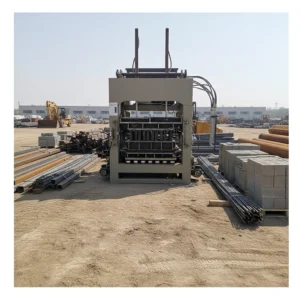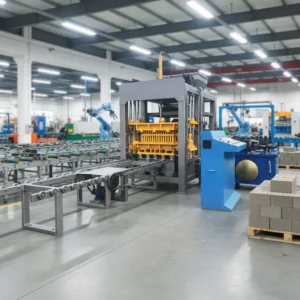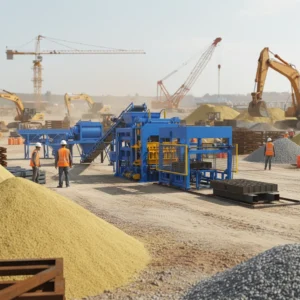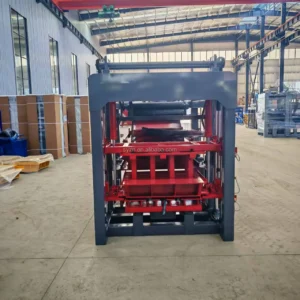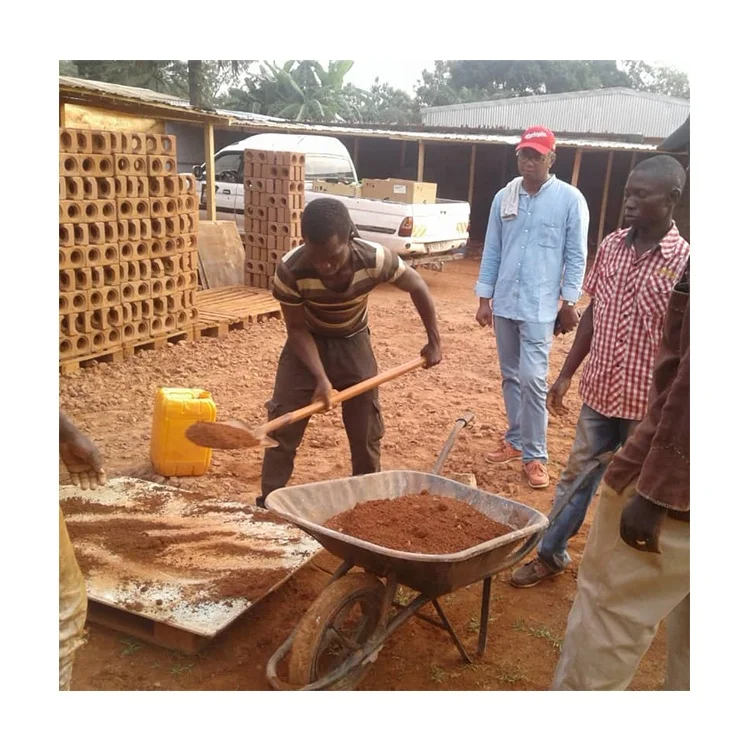
Matched System Engineering — every station from raw material feeding through curing is timed to the LY2-10 press cycle so the line never starves or bottlenecks at the stacker.
Technical Specifications
| Parameter | Value |
|---|---|
| Product Type | Clay Interlocking Brick Making Machine |
| Machine Configuration | Semi-automatic clay and cement interlocking brick press with supporting line stations |
| Rated Power | 7.5 kW |
| Molding Cycle | 10 seconds |
| Output Capacity | 6,000 pcs per 8-hour shift (basis not stated in source — confirm block format, material and thickness) |
| Mould Formats | 300×150×100 mm (1 pc/mould), 250×125×75 mm (1 pc/mould), 230×220×115 mm (1 pc/mould) |
| Raw Materials | Clay, soil, earth, mud, concrete, cement, fly ash |
| Overall Dimensions | 1300 × 1800 × 2400 mm |
| Automation Level | Semi-automatic, upgradeable to automatic pallet feeding and stacking |
| Mould Change | Supported for multiple brick and block formats on single press |
| Voltage & Frequency | To be confirmed before order |
| Control System | To be confirmed (PLC / relay / manual) |
Application Suitability
| Application | Material or Output |
|---|---|
| Interlocking brick production for housing projects | Clay, soil and cement-based mixes on site or in workshop |
| Solid masonry brick manufacturing | Compressed earth and fly ash blends for load-bearing walls |
| Paving and floor block production | Cement-stabilised aggregates for pedestrian and light-traffic areas |
| Small-to-medium block plant operations | Multi-format output from a single press line with matched curing |
What the Moulding Cycle Figure Hides About Line Output
A 10-second press cycle means nothing if the pallet feeder delivers every 18 seconds.
On construction sites across Southeast Asia, I have watched clay interlocking brick making machine production lines sit idle because upstream stations could not keep pace with the press. The mixer batch size was wrong for the cycle, the pallet rack ran out, or the curing team could not clear wet bricks fast enough. The press nameplate says one thing; the shift tally says another. Every station in the clay interlocking brick making machine production line must be specified against the same block format and cycle assumption, or the buyer pays for capacity that never materialises [NEED_CITE: block line station cycle matching methodology].
Line Timing Across Every Station
The clay interlocking brick making machine production line begins at the raw material feeder, where batch sizing must match what the mixer can homogenise within the press cycle window. A 10-second moulding cycle demands that a fresh mix charge is ready before the previous mould completes. Feeder belt speed, mixer drum volume and discharge gate timing are all set against this interval so the press never waits for material.
Pallet Flow and Curing Area Coordination
Downstream, pallet circulation defines real throughput just as much as the press itself. Pallet dimensions must align with the curing rack spacing and the forklift pocket width already in the buyer’s yard. If pallets are too large for existing racks, bricks are stacked on the floor by hand and output drops to whatever labour can manage. The semi-automatic configuration leaves pallet handling to operators initially, with an upgrade path to automatic feeding and stacking as the plant scales [NEED_CITE: pallet specification standards for concrete product plants].
Reading the Specifications in Context
The 7.5 kW rated power sets the electrical load baseline for sizing upstream and downstream utilities on the same circuit — mixer motor, conveyor drives and curing rack fans must all fit within the site’s available transformer capacity. Mould formats spanning 300×150×100 mm down to 230×220×115 mm let a single press cover interlocking bricks, solid masonry units and floor blocks, but each format changes the cycle calculation. The 6,000-piece shift figure assumes a specific format and mix that must be confirmed before line capacity is finalised. Multi-format mould change capability means the line serves several products without a second press, yet changeover time must be factored into daily scheduling.
The Cost of Skipping Line Integration
Quotations that list only the press leave the buyer assembling the rest from separate suppliers who do not coordinate cycle times. The mixer overproduces and material sets in the hopper. Pallets arrive at the wrong rate and operators idle. Curing racks do not match pallet dimensions, so bricks are moved twice before they cure. These mismatches do not show up on the spec sheet but they consume the shift hour by hour [NEED_CITE: common block plant integration failures].
Why Sourcing the Whole Line Here Matters
Block machinery is the single focus, so the LY2-10 press, moulds, pallets and handling equipment are specified as one matched system rather than assembled from unrelated vendors. Line configuration starts from the buyer’s actual clay or cement mix and local aggregate, not a catalogue default. Mould design covers the interlocking brick, solid brick and floor block formats the buyer’s market demands, including custom drawings. Automation level is selectable — a buyer can begin with semi-automatic pallet handling and add automatic stacking later as volume grows. Installation includes operator training so the crew understands why every station must respect the same cycle clock.
Documentation & Verification
- Line layout and capacity calculation stating the exact block format assumed for output figures
- Mould drawing and format list covering all three listed interlocking brick dimensions
- Hydraulic and electrical schematic matching the confirmed voltage and control specification
- Pallet specification sheet cross-referenced to the buyer’s curing rack and forklift dimensions
- Factory test record run on the buyer’s confirmed mix design before dispatch
Installation, Commissioning & Support
- Site floor plan reviewed against the 1300 × 1800 × 2400 mm press footprint and upstream station spacing
- Dedicated circuit sized for the 7.5 kW press load plus mixer, feeder and curing utilities
- Machine arrives in dismantled shipping configuration with reassembly supervised on site
- First-run parameter setting adjusted to the buyer’s local clay or cement mix characteristics
- Operator training covers mould change procedure across all supplied brick formats
- Wear parts and mould maintenance list provided with recommended replacement intervals
What to Share with Your Inquiry
Provide the interlocking brick format your market sells most, your target daily output and the clay or cement mix you plan to use. Include your site’s available voltage and frequency, the curing area dimensions and the forklift specifications you already operate. This lets the clay interlocking brick making machine production line be configured around your actual conditions rather than a generic template.
Frequently Asked Questions
Q: How is daily output verified against the press cycle for each block format?
A: Output is calculated per specific mould format — the 300×150×100 mm, 250×125×75 mm and 230×220×115 mm options each yield a different piece count per cycle. The capacity sheet provided with the quotation states which format is assumed, so the buyer can compare the line figure against actual shift records once production begins.
Q: How do upstream stations match the 10-second moulding cycle?
A: The raw material feeder belt speed and mixer batch volume are sized so a fresh charge reaches the press hopper before the current cycle completes. If any station runs slower than the press, the entire clay interlocking brick making machine production line slows to that station’s pace.
Q: How are pallet size and curing racks chosen for the buyer’s site?
A: Pallet dimensions are set against the curing rack spacing and forklift pocket width the buyer already has on site. Sending a survey of existing curing infrastructure before quotation prevents mismatches that would otherwise force manual restacking during the shift.
Q: What automation level is supplied, and can it be expanded later?
A: The semi-automatic configuration handles moulding while operators manage pallet feeding and stacking. The upgrade path adds automatic pallet feeding, stacking and cubing modules that bolt onto the existing press frame without replacing the core machine.
Q: How are voltage and control language confirmed before shipment?
A: Voltage, frequency and PLC display language are written into the production order after the buyer confirms site electrical specifications. This prevents commissioning delays that occur when a machine arrives with the wrong motor rating or an unreadable control screen.