
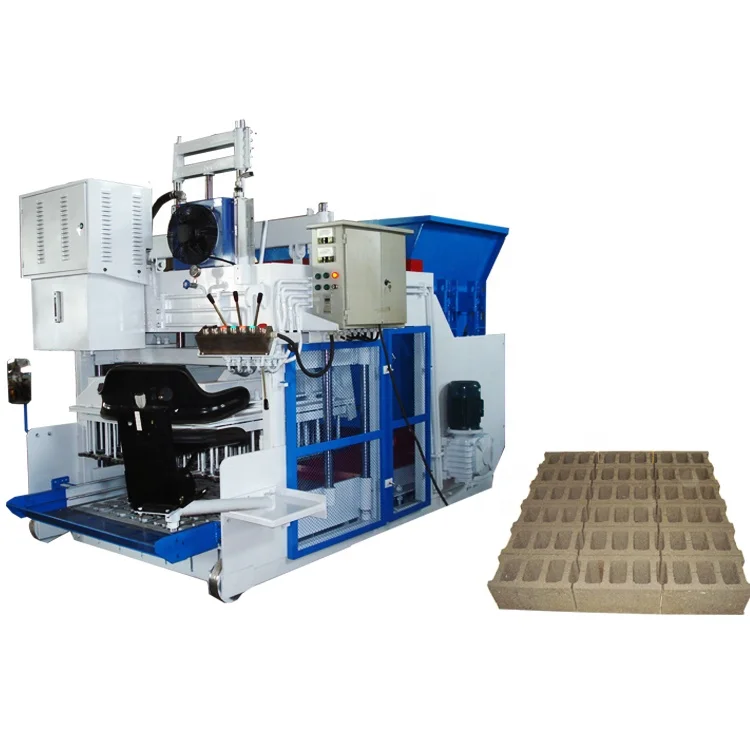
Line-Wide Rhythm Matching — QMY18-15 mobile block making machine production line / turnkey configurations are built around the press cycle so the mixer, feeder, and ground-laid output never bottleneck each other.
Technical Specifications
| Parameter | Value |
|---|---|
| Model | QMY18-15 |
| Product Type | Mobile Cement Block Making Machine |
| Working Method | Hydraulic pressure with vibration |
| Rated Power | 24 KW |
| Output Capacity | about 34,000 pcs per shift (based on 400x200x200mm hollow block — smaller size yields higher capacity) |
| Control System | PLC |
| Pallet Requirement | No pallets required — blocks produced directly on ground |
| Block Types | Customizable to different formats per buyer requirement |
| Voltage | Customized according to local industrial voltage (exact value to be confirmed with buyer) |
| Key Features | Mobile / egg-laying type, hydraulic pressure station for block density, PLC operation, pallet-free production |
Application Suitability
| Application | Material or Output |
|---|---|
| On-site block production without a fixed plant | Hollow and solid blocks produced directly on prepared ground surfaces |
| Construction contractors producing blocks at job sites | Standard hollow blocks from local crushed stone, sand, and cement |
| Housing and development project contractors | High-volume hollow block supply laid directly on the curing yard |
| Entrepreneurs launching a first block plant | Solid and hollow formats with minimal supporting infrastructure |
What the 34,000 Pieces per Shift Figure Leaves Out of a mobile block making machine production line / turnkey Quote
Capacity is only meaningful when the supporting equipment can feed the press at the same rate it consumes.
I once watched a QMY18-15 mobile block making machine production line / turnkey setup stall on a Middle East housing project because the batch mixer discharged faster than the press could close and press. Fresh concrete piled up at the hopper, the operator had to pause the mixer manually every third cycle, and the stacking crew at the far end of the yard ran out of fresh blocks to tend. Four days of adjusting feed gates, mixer timers, and walking speed later, the line finally settled into a rhythm. The machine itself was never the bottleneck — the mismatch between stations was [NEED_CITE: line balancing principles in concrete block production].
How Ground-Laid Production Reshapes the Line Layout
When blocks cure on the ground instead of pallets, three entire stations disappear from the layout: pallet feeding, pallet return, and curing rack handling. That simplification is the main reason contractors choose egg-laying machines for remote sites. The trade-off is that the curing yard must be large, flat, and prepared before the mobile block making machine production line / turnkey equipment arrives, because the press walks across it continuously during every shift.
Where Cycle Time Must Match the Mixer and the Yard Crew
The press completes a cycle, moves forward, and the yard crew must finish trowelling and marking the previous block row before the machine loops back. If the mixer delivers a batch faster than the press consumes it, the hopper overflows. If the yard crew falls behind, the press waits. Matching these three tempos — mixer discharge, press cycle, and crew walking speed — is the real engineering task behind any mobile block making machine production line / turnkey installation [NEED_CITE: production cycle synchronization in mobile block plants].
Reading the Numbers That Actually Matter on Site
The 24 KW rated power covers both the hydraulic pump and the vibration motor, so a buyer should confirm that the site generator or transformer can sustain that draw continuously, not just at peak. The hydraulic pressure station controls block density directly; higher pressure yields denser blocks but slows the cycle, so the pressure setting must match the local aggregate grading and the target block strength. Voltage customization is listed but not specified — confirming exact voltage, frequency, and phase before production avoids a costly rewiring job after the machine lands. The PLC controls the pressing sequence, but the display language should also be locked in at order stage so operators can read fault codes on day one.
When Supporting Equipment Is Left Out of the Scope
A mobile press that arrives without a matched mixer, water metering system, or raw material feeder forces the buyer to source these locally. Local mixers often have different discharge heights, wrong rotation speeds, or incompatible power ratings, and the resulting mismatch causes the exact hopper overflow and idle-press problems described above. Buyers should confirm which supporting stations are included in the quotation and which are buyer-supplied before signing, so the line layout reflects reality [NEED_CITE: scope gaps in mobile block machine quotations].
Why Sourcing the Line as One Package Matters Here
Block machinery is our single focus, so the QMY18-15 press, its moulds, the mixer, and the feeder are specified as one matched system rather than assembled from separate suppliers. Configuration starts from the buyer’s actual mix design and local aggregate, not a catalogue default. Mould design covers the formats the buyer’s market actually sells, with custom drawings when standard formats do not fit. The automation level is selectable, meaning a buyer can start with manual batching and add a feeder later. Installation support includes operator training on the specific PLC interface and hydraulic settings that match the confirmed block format.
Documentation & Verification
- Line layout showing mixer, press walking path, and curing yard dimensions for the confirmed block format
- Capacity calculation stating 34,000 pcs/shift is based on 400x200x200mm hollow block
- Voltage, frequency, and PLC display language confirmation sheet signed before production
- Mould drawing and format list matching buyer’s local market requirements
- Factory test record on the buyer’s confirmed mix design and target block strength
- Hydraulic and electrical schematic for on-site troubleshooting
Installation, Commissioning & Support
- Prepared flat ground required; the QMY18-15 walks the curing yard during production so surface evenness affects block alignment
- 24 KW continuous power supply confirmed; dedicated circuit recommended to avoid voltage drop during hydraulic pump start-up
- Machine shipped as a single mobile unit; on-site assembly limited to mould mounting and hydraulic hose connection
- First-run commissioning includes hydraulic pressure tuning to match local aggregate and target block density
- Operator training covers PLC fault codes, mould change procedure, and daily hydraulic oil level checks
- Wear parts list covers hydraulic seals, vibration springs, and mould liner plates with recommended replacement intervals
What to Share Before Requesting a Line Proposal
Send the target block format and dimensions, the local aggregate type and grading, and the daily output you need to hit. Include the site voltage, frequency, and the PLC display language your operators read. If you already have a mixer or water supply on site, share its specifications so the line can be balanced around existing equipment rather than duplicated.
Frequently Asked Questions
Q: How is the 34,000 pcs per shift capacity calculated, and what block format does it assume?
A: That figure is based on producing 400x200x200mm hollow blocks continuously over a standard shift. Smaller solid blocks or pavers will yield a higher piece count because the mould cavity holds more units per cycle, while larger formats will yield fewer. Always confirm the capacity calculation against the specific block format your market requires before finalizing the line.
Q: What supporting equipment is needed around the QMY18-15 for a complete mobile block making machine production line / turnkey setup?
A: At minimum you need a batch mixer matched to the press cycle time, a water metering system, and a raw material feeder or loader. Ground preparation for the curing yard is buyer-side work. Confirm which stations are included in the quotation so there are no gaps when the press arrives on site.
Q: How does ground-laid production affect curing area planning and block handling after the press?
A: The press lays blocks directly on prepared ground as it moves, so the curing yard must be flat, level, and large enough for a full shift’s output plus walking space. After curing, blocks are manually or mechanically collected from the ground. There is no pallet return system to maintain, which simplifies daily operation considerably.
Q: What voltage and PLC language options are confirmed before shipment?
A: Voltage is customized to the buyer’s local industrial supply — exact voltage, frequency, and phase must be confirmed at order stage. The PLC display language is also confirmed before production so operators can read menus and fault codes in their working language from the first day of commissioning.
Q: How does cycle time change when switching between hollow, solid, and paving block moulds?
A: Cycle time depends on mould cavity count and the hydraulic pressure setting required for each format. Denser solid blocks typically need longer press times than hollow blocks. Confirm the cycle time for each format you plan to produce so the line layout and shift planning reflect actual output rather than the fastest single format.


