
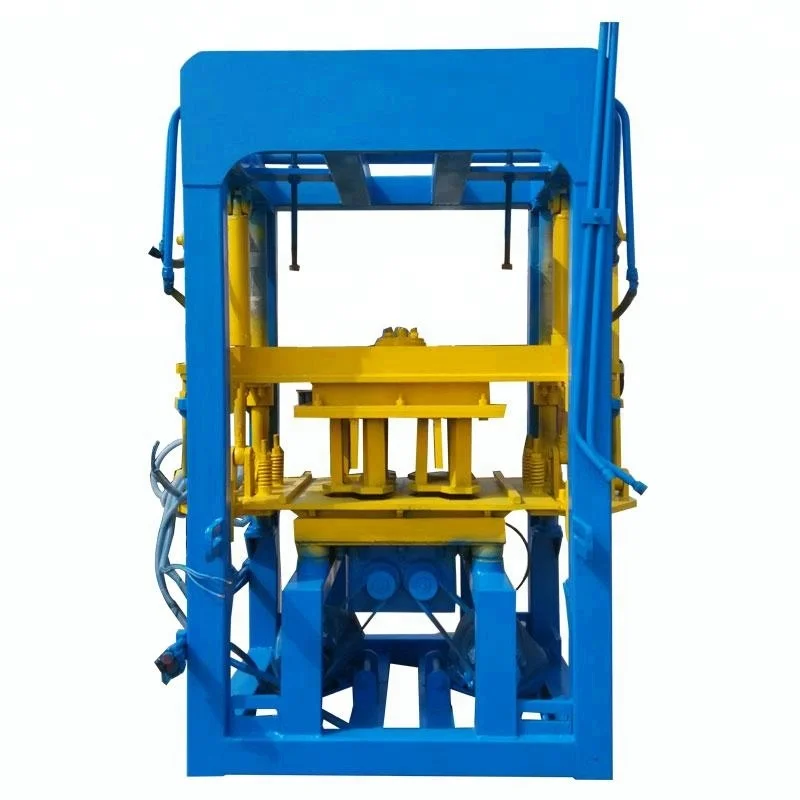
Matched Line Architecture — Every station from mixer to pallet feeder is timed against the QTF3-20 press cycle so no single point chokes the flow.
Technical Specifications
| Parameter | Value |
|---|---|
| Model | QTF3-20 |
| Product Type | Stationary Hydraulic Block Making Machine |
| Overall Dimensions (L×W×H) | 4000×3500×2300 mm |
| Total Mass | 2870 kg |
| Total Power | 17.5 kW |
| Vibration Form | Platform Vibration |
| Control Style | Semi-Automatic |
| Output Capacity | 4320 pcs/day (basis to be confirmed) |
| Hydraulic System | Applied, imported components from Germany or Chinese famous brand |
| Proximity Switch | No Contact type for monitoring |
| Layer Capability | Double layer (raw material and color surface material) |
| Host Machine Structure | Overall frame structure, #12 U-bar welding |
| Line Composition | Host machine, material feeding machine, color material machine, pallet feeder, block conveyor, hydraulic station, electricity box |
| Companion Equipment | JQ350 mixer, 8 meters conveyor belt |
| Raw Material Compatibility | Cement, Sand, Fly Ash, Coarse aggregate, Slag |
| Key Features | Vibration motor, vibration table, vibration box, vibration rubber block, spring assembly |
Application Suitability
| Application | Material or Output |
|---|---|
| Hollow block production | Cement, sand, coarse aggregate blends for structural walling units |
| Interlock brick forming | Crushed stone and cement mix with color surface layer |
| Color paver manufacturing | Fine aggregate base with pigmented face mix via double-layer feeder |
| Park grass brick production | Coarse aggregate and cement for permeable landscaping units |
| Porous brick forming | Fly ash, slag and cement for lightweight infill blocks |
| Slope protection brick | Dense aggregate blend for erosion control retaining units |
Why a Turnkey Block Plant Must Define Every Station Upfront
A press that sits idle between cycles because the pallet feeder or mixer cannot keep pace wastes the entire line investment.
When quotations list only the press, buyers discover after arrival that pallets must be loaded by hand and fresh blocks carried to the curing yard one stack at a time. The stationary block making machine production line then delivers a fraction of its quoted daily volume. I have watched crews in West Africa spend more time moving pallets than the press spends forming blocks, because the supporting stations were never specified together [NEED_CITE: manual pallet handling impact on daily block output].
Station Synchronization from Mixer to Conveyor
The QTF3-20 runs a semi-automatic cycle where the host machine, material feeding machine and color material machine must discharge into the mould within a fixed window. If the JQ350 mixer batch time exceeds that window, the press waits empty. The 8-meter conveyor belt must therefore deliver mixed material at a rate that matches or slightly leads the press demand, ensuring the stationary block making machine production line never starves mid-cycle.
Pallet Flow and the Hidden Bottleneck
Pallet feeding, block conveying and manual or semi-automatic stacking determine how fast the press can release a finished cycle. A pallet stuck on the conveyor or a curing rack that cannot accept the next layer forces the press into an extended pause. The no-contact proximity switch on the QTF3-20 monitors station positions and prevents a press stroke when a pallet is misaligned, which protects the mould but also means the entire turnkey block plant slows to the pace of its weakest link [NEED_CITE: proximity switch role in block line synchronization].
Reading the Specs That Actually Matter on Site
The 17.5 kW total power rating defines the electrical supply and circuit breaker sizing at the plant; undersizing the incoming line causes voltage sag that trips the hydraulic station mid-stroke. The #12 U-bar welded frame provides the rigidity needed to contain vibration forces without progressive loosening of bolted joints over months of operation. Platform vibration, driven by the specified vibration motor and spring assembly, transfers energy directly into the mould cavity — the density of the finished block depends on this transfer path being uncompromised by worn rubber blocks or fatigued springs. The double-layer feeding capability means the color material machine deposits a facing mix before the main raw material fill, producing pavers with a pigmented wear surface and a structural base in one cycle.
What Happens When Supporting Stations Are Undersized
A mixer that cannot match press cycle time turns a semi-automatic line into a batch-and-wait operation. Conveyor belts shorter than the distance between mixer and press hopper force material transfer by wheelbarrow, contaminating the mix with site debris. Pallets specified without reference to the curing yard layout or the forklift already on site create double-handling that erodes daily volume far more than any press speed adjustment can recover [NEED_CITE: pallet specification mismatch consequences in block plants].
Why Specifying the Whole Line Here Changes Outcomes
Machine, mould, pallet and handling are proposed as one matched system, not assembled from separate purchase orders. The line layout and capacity calculation state which block format the output figure assumes, removing guesswork. Configuration is set against the buyer’s local aggregate and mix design rather than a catalogue default, which matters when river sand carries high silt content. Pallet size and material are confirmed against the curing area dimensions and lifting equipment already in use. Voltage, frequency and PLC display language are locked before production begins, preventing commissioning delays on arrival. Mould and wear part availability is confirmed at the order stage so the first replacement cycle does not halt the line.
Documentation & Verification
- Line layout drawing showing each station position and cycle time relationship to the QTF3-20 press
- Capacity calculation sheet naming the exact block format, mix ratio and cycle seconds assumed
- Hydraulic and electrical schematic with component list for the 17.5 kW power distribution
- Voltage and control language confirmation document signed before factory test
- Pallet specification matched to buyer’s stated curing rack and forklift dimensions
- Packing photographs and customs documentation support for container loading
Installation, Commissioning & Support
- Foundation plan specifying load points for the 2870 kg host machine and adjacent stations
- Dedicated circuit requirement for the 17.5 kW total draw to prevent voltage sag during vibration peaks
- Station-by-station alignment check using the no-contact proximity switches before first press stroke
- Operator training covering double-layer feeding sequence and mould change procedure
- Wear parts list identifying vibration rubber blocks and springs with replacement intervals
- Hydraulic station bleed and pressure calibration during commissioning with buyer’s actual mix
Before You Send an Inquiry
Provide the block formats your market sells, your daily volume target and the local raw materials available including aggregate type and silt content. Confirm your existing curing yard dimensions, forklift capacity and site voltage and frequency. State whether you need the mixer, conveyor and pallet feeder included or will supply them locally, so the stationary block making machine production line can be quoted as a matched system.
Frequently Asked Questions
Q: How is the 4320 pcs/day capacity calculated and which block format does it assume?
A: The source document does not state which block format, wall thickness or cycle time underpins the 4320 pcs/day figure. We provide a capacity calculation sheet with every proposal that names the exact format, mix ratio and seconds-per-cycle assumed, so you can verify daily output against your product mix before ordering.
Q: Which stations in the line are automated and which require manual operation at this tier?
A: At the semi-automatic tier the host press, material feeder and color feeder operate under PLC control with proximity switch monitoring. Pallet loading onto the feeder and transfer of finished blocks to curing racks remain manual operations. The line can be upgraded to include automatic pallet feeding and stacking as production volume grows.
Q: What pallet size does the QTF3-20 require and how does it interface with standard curing racks?
A: Pallet dimensions are set during configuration to match both the mould footprint of the QTF3-20 and the curing rack spacing at your plant. We confirm pallet material and thickness against the block weight and the forklift tine width already on site before production begins.
Q: How do the JQ350 mixer and 8-meter conveyor belt match the press cycle time?
A: The JQ350 batch volume and mixing duration are selected so that a full batch discharges onto the conveyor before the press completes its current cycle. The 8-meter belt length covers the typical distance between mixer discharge and press hopper, maintaining continuous material flow without manual transfer.
Q: What is the upgrade path from this semi-automatic line to fully automatic stacking and cubing?
A: The QTF3-20 control architecture allows an automatic pallet feeder, stacker and cubing station to be added to the existing PLC network. Proximity switch positions and hydraulic valve blocks are pre-wired during initial build so the upgrade requires mechanical installation and software parameter changes rather than a full rewiring of the line.


