
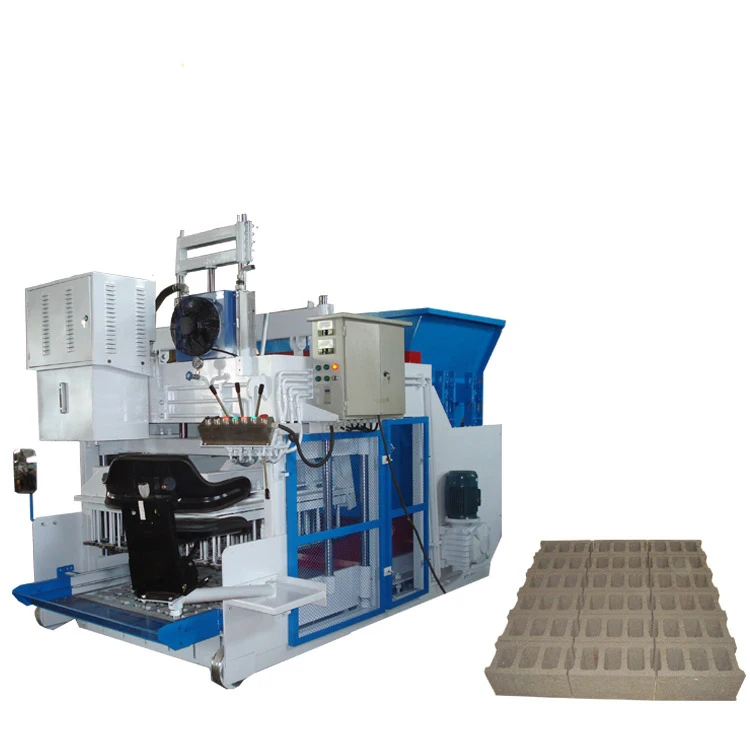
Hydraulic Pressure Matched to Your Mix — The QMY18-15 is specified against your local aggregate and target block format so hydraulic pressure and vibration force deliver consistent density without material substitution.
Technical Specifications
| Parameter | Value |
|---|---|
| Model | QMY18-15 |
| Product Type | Mobile Hydraulic Egglaying Block Making Machine |
| Machine Configuration | Self-propelled egglaying unit (pallet-free) |
| Base Platform | Upgraded from QMY12-15 |
| Vibration Force | basis not stated in source |
| Hydraulic Pressure | basis not stated in source |
| Output Capacity | Large output tier (basis to be confirmed per block format) |
| Pallet Requirement | None (egglaying design) |
| Mould Options | basis not stated in source |
| Automation Level | Manual / semi-automatic operation |
| Control System | basis not stated in source |
| Overall Dimensions | source value — verify against manufacturer catalog |
| Net Weight | source value — verify against manufacturer catalog |
| Rated Power | source value — verify against manufacturer catalog |
| Energy Profile | Low energy consumption (qualitative) |
| Certification | basis not stated in source |
Application Suitability
| Application | Material or Output |
|---|---|
| Housing project on-site production | Hollow and solid blocks from local crushed stone, river sand and cement |
| First block plant with limited space | Interlocking bricks and paving blocks using available regional aggregate |
| Remote or temporary job sites | Standard concrete masonry units without fixed plant infrastructure |
| Supplementary production for existing plants | Additional formats produced directly at delivery or construction locations |
What "Large Output" Actually Means on a Pallet-Free Line
The press cycle is only one station; mixer batch size, feed rate and curing logistics decide your real daily throughput.
Capacity figures for mobile egglaying machines are often quoted in cycles per hour without stating which block format that figure assumes. A QMY18-15 mobile block machine production line running a 400mm hollow block completes fewer cycles per hour than the same press running a smaller interlocking paver. When the mixer cannot deliver a fresh batch before the press finishes its current cycle, the operator stands idle and daily output drops. Curing area distance and surface preparation further constrain how many blocks can be laid before the machine must stop and wait for floor space [NEED_CITE: mobile egglaying block machine capacity calculation methods].
Mixer Synchronization and Feed Station Layout
A turnkey mobile egglaying block machine setup requires the mixer to discharge a complete batch within the press cycle time. If the mixer is undersized, the QMY18-15 waits between cycles and throughput falls regardless of the press rating. Raw material feed distance from stockpile to mixer to press must also be short enough that one or two workers can sustain the feed rate without bottlenecks.
Curing Area Logistics Without Pallet Circulation
The pallet-free egglaying design eliminates pallet feeding, return and cleaning stations from the line layout. Blocks are laid directly onto the ground surface, which must be level, clean and large enough to hold a full day’s production before blocks are moved to the stacking area. Forklift or manual cart routing around the curing zone affects how quickly floor space is reclaimed for the next pass of the mobile block machine production line [NEED_CITE: egglaying block machine curing area planning].
Hydraulic Pressure and Vibration Force Alignment
Block strength depends on hydraulic pressure and vibration force being matched to the buyer’s specific mix design and local aggregate gradation. A mix with high clay content in river sand absorbs vibration differently than clean crushed stone, requiring pressure adjustments to achieve target density. The QMY18-15 hydraulic system must be configured against the actual material the buyer will source locally, not a catalogue default formula.
The Cost of Uncoordinated Supporting Equipment
When supporting equipment is not specified as part of the line, buyers discover after delivery that the mixer batch cycle is too slow, the feeder cannot keep up, or the curing surface is inadequate. Output is then stacked by hand, real daily throughput falls far short of expectation, and the investment in a higher-output press tier is wasted because the rest of the mobile block machine production line was never aligned to it [NEED_CITE: block machine line integration common failures].
Why Specify the Entire Line Here
Block machinery is our single focus, so the QMY18-15 press, mould, mixer and material feed are specified as one matched system rather than assembled from separate suppliers. Configuration is set against the buyer’s actual mix design and local aggregate, not a catalogue default. Mould design covers the formats the buyer’s market sells, with custom drawings available. The automation level is selectable so a buyer can start with manual pallet handling and add semi-automatic feed later. Installation support includes operator training on the complete line, not just the press in isolation.
Documentation & Verification
- Line layout drawing showing mixer, feeder and QMY18-15 press positions with curing area dimensions
- Capacity calculation sheet stating the specific block format and cycle time assumed
- Mould drawing and format list covering all block types included in the quotation
- Hydraulic and electrical schematic with voltage and control language confirmed before dispatch
- Factory test record on the buyer’s specified block format before shipment
- Wear parts and mould replacement list with part numbers for reordering
Installation, Commissioning & Support
- Level concrete floor required for egglaying operation; no fixed foundation or pallet return track needed
- Power supply confirmed to local voltage and frequency before QMY18-15 dispatch to avoid commissioning delay
- Machine arrives as a self-propelled mobile unit; on-site assembly limited to mould mounting and electrical connection
- First-run parameter setting includes hydraulic pressure and vibration adjustment to buyer’s local mix
- Operator training covers press cycle, mould change procedure and daily maintenance checkpoints
- Wear parts list supplied so replacements for hydraulic seals and mould liners are available when first needed
Before You Request a Quotation
To configure the QMY18-15 and its supporting equipment correctly, we need your target block format and dimensions, the daily output you plan to sustain, and a sample or description of your local aggregate and sand source. Please also confirm your site voltage, frequency and preferred control display language, along with the available curing area dimensions so the line layout can be planned around your actual conditions.
Frequently Asked Questions
Q: How is daily output calculated for the QMY18-15 and which block format is assumed?
A: Output is calculated per block format because cycle time varies with block size and wall thickness. We state capacity based on the specific hollow, solid or paving block the buyer will produce, not a single headline figure. Mixer batch cycle and curing area size are then matched to that format so the press is never left waiting.
Q: What mixer capacity is needed so the press is not left waiting between cycles?
A: The mixer must discharge one complete batch within the QMY18-15 cycle time for the chosen block format. We calculate the required batch volume and mixing duration against the press cycle and specify a mixer model that sustains continuous operation without idle gaps between press cycles.
Q: How does the pallet-free egglaying design affect curing area layout?
A: Blocks are laid directly on the ground, so the curing surface must be level and large enough for a full day’s production. There are no pallet feeding or return stations, which simplifies the line but means forklift routing and floor reclamation timing must be planned into the daily workflow from the start.
Q: Can the machine be configured for local aggregate rather than a standard formula?
A: Yes. Hydraulic pressure and vibration force are adjusted to match the buyer’s actual sand, aggregate and cement mix. We request a raw material sample or detailed description before finalizing the configuration so that block strength meets target values with locally available materials rather than imported alternatives.
Q: What supporting equipment is included and what is left to the buyer?
A: The quotation can include the mixer, raw material feeder and handling tools specified as one line with the QMY18-15 press. Curing area preparation, site power supply and block transport equipment after curing are typically buyer-provided, and we state this clearly so there are no gaps at commissioning.


