
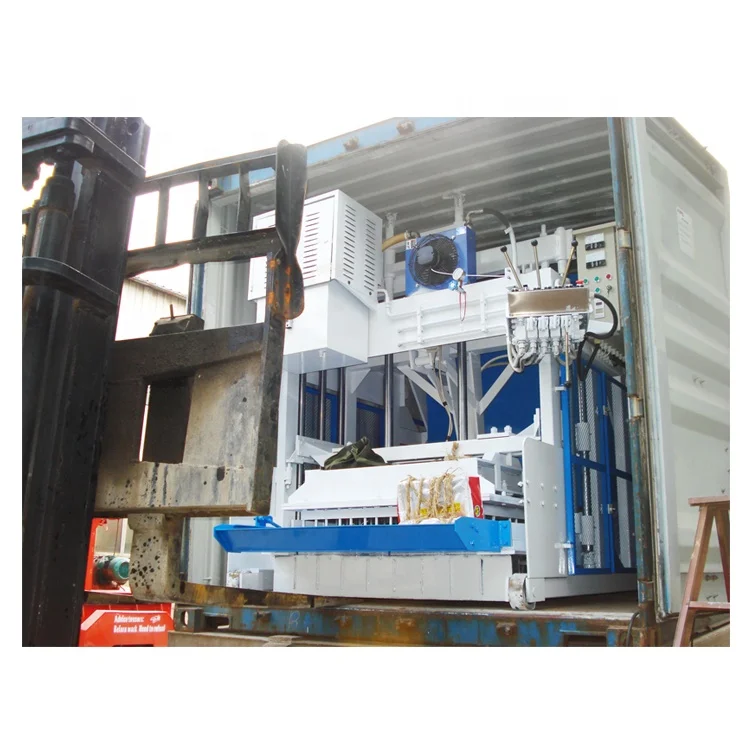
Matched system integration — the QMY10-15 press, JS7500 mixer and optional batching station are specified together so material flow keeps pace with each moulding cycle instead of leaving the press idle between batches.
Technical Specifications
| Parameter | Value |
|---|---|
| Model | QMY10-15 |
| Product Type | Mobile Concrete Block Making Machine |
| Molding Capacity | 10 pcs/mold |
| Molding Cycle | 10s–15s (basis not stated in source — confirm block format / material / thickness) |
| Output Capacity | 11,000 pcs/day over 8 hours (basis not stated in source — confirm block format) |
| Total Power | 16 kW |
| Vibration System | Dual vibration motors |
| Hydraulic System | Upper and lower demoulding control; heat dissipator for oil cooling |
| Movement | Electric walking, hydraulic steering |
| Pallet Requirement | None (egg-laying type) |
| Automation Level | Semi-automatic (operator drives between positions) |
| Basic Equipment Included | QMY10-15 host machine, JS7500 concrete mixer, dump truck |
| Optional Equipment | PL1200 batching machine, cement silo, screw conveyor, loader |
| Mould Change | Interchangeable moulds for multiple brick formats (specific formats to be confirmed) |
| Voltage & Frequency | To be confirmed against target market requirements |
Application Suitability
| Application | Material or Output |
|---|---|
| On-site hollow block production | Crushed stone, sand, cement blends laid directly on hardened ground |
| Housing project block supply | Solid and hollow formats produced at the construction site |
| Remote or temporary block plant | Mobile production without fixed-plant civil works |
| Paving and kerb formats | Interchangeable moulds for solid block and paver formats (subject to mould availability) |
Why "11,000 Blocks per Day" Means Nothing Without the Format
Daily output figures are only meaningful when tied to a specific block size, mix design, and operator cycle.
Many mobile block machine quotations quote a headline capacity without stating which block format that number assumes. A 400×200×200 mm hollow block takes a different cycle and yields a different daily count than a smaller solid paver. When the format is left undefined, buyers arrive on site and find actual production falling well short of the brochure number [NEED_CITE: capacity calculation standards for concrete block equipment]. The QMY10-15 moulds 10 pieces per cycle, but translating that into a realistic daily figure requires confirming the exact block dimensions, the local aggregate gradation, and the curing logistics that follow each lay.
How the Mixer and Press Stay in Sync
A mobile block machine production line only performs as well as its slowest station. The JS7500 concrete mixer batches material at a rate that must match the QMY10-15 moulding cycle; if the mixer finishes late, the press sits idle and the daily count drops. The optional PL1200 batching machine further stabilises supply by pre-weighing aggregates and cement before they enter the mixer, reducing batch-to-batch variation and keeping the mobile block machine production line moving without pauses between mixes.
Ground Preparation Before the Machine Arrives
I once watched a mobile egg-laying machine sink and drift on a site where the ground had not been compacted or levelled. The vibration that densifies the block also shakes the machine, and on soft soil each cycle pushes the chassis slightly off line — producing hollow blocks that lean or crack during curing. Electric walking and hydraulic steering on the QMY10-15 remove the need for external towing, but they cannot compensate for an unprepared surface [NEED_CITE: ground bearing requirements for mobile concrete equipment]. A compacted, level concrete apron is the minimum starting point, and its dimensions should account for the machine footprint plus turning radius between lay positions.
What the Dual Vibration and Hydraulic Demoulding Mean On Site
Dual vibration motors distribute compaction force across the full mould area rather than concentrating it at one end, which matters when producing hollow blocks where uneven density shows up as weak corners after curing. The hydraulic system controls both upper and lower demoulding movements, releasing the block from the mould without the mechanical shock that a purely mechanical lift would cause. A heat dissipator on the hydraulic circuit keeps oil temperature within operating range during extended runs in hot climates, preventing the seal wear and pressure loss that typically appear after the second or third hour of continuous production.
When the Supporting Equipment Gets Left Out of the Quote
A mobile block machine quotation that covers only the press and ignores the mixer, material feed and curing logistics hands the buyer an incomplete line. The operator then spends half the shift shovelling mixed material by hand and moving finished blocks to the curing area, cutting actual output in half and introducing inconsistency that no amount of press tuning can fix [NEED_CITE: hidden costs in incomplete block plant quotations]. Specifying the mixer, batching station and dump truck together with the QMY10-15 ensures each station’s cycle time is aligned from the first batch onward.
Why Buyers Choose This Line Configuration
Block machinery is the sole focus here, which means the QMY10-15, its moulds and the supporting mixer are specified as one system rather than sourced from separate vendors and bolted together on site. Configuration starts from the buyer’s actual mix design and local aggregate, not a catalogue default, so the vibration force and hydraulic pressure are set to match the material that will actually be fed. Mould design covers the formats the buyer’s market sells, with custom drawings available for non-standard sizes. The automation level is selectable — a buyer can begin with the semi-automatic QMY10-15 and add batching or feeding equipment later as volume grows. Installation support includes on-site commissioning and operator training so the crew understands mould change procedures and daily maintenance before the first production run.
Documentation & Verification
- Line layout showing mixer, dump truck and press movement coordination for the QMY10-15
- Capacity calculation stating the block format behind the 10 pcs/mold and daily figures
- Mould drawing and format list confirming included and optional block types
- Voltage and control language confirmation document before production begins
- Factory test record on the buyer’s specified block format prior to dispatch
- Hydraulic and electrical schematic for on-site maintenance reference
Installation, Commissioning & Support
- Hardened and levelled concrete apron sized for QMY10-15 turning radius and lay pattern
- Dedicated 16 kW power circuit with voltage and frequency matched to local supply
- Machine arrives assembled; on-site setup covers mixer placement and material feed routing
- First-run commissioning includes moulding cycle adjustment to the buyer’s local aggregate
- Operator training on hydraulic demoulding, mould change and daily vibration motor checks
- Wear parts list covering hydraulic seals, vibration motor bearings and mould liners
What to Share Before Requesting a Quote
To size a mobile block machine production line correctly, the supplier needs the target block format and dimensions, the daily volume required, and the local raw materials available including aggregate type and cement grade. Share the site ground conditions and whether a hardened apron already exists, along with the local voltage and frequency so the electrical system can be confirmed before production. If an existing mixer or loader will be reused, note the model and capacity so the line layout accounts for it.
Frequently Asked Questions
Q: How is daily output calculated and which block format does the 11,000 pcs/day figure assume?
A: The 11,000 pcs/day figure is based on an 8-hour shift, but the block format behind that number must be confirmed before it can be treated as a reliable target. Different hollow and solid block sizes change the moulding cycle and the number of pieces per mould, so the daily count shifts accordingly. A capacity calculation tied to the buyer’s specific format is provided with each quotation.
Q: What supporting equipment is included in the basic line, and what must be added?
A: The basic QMY10-15 line includes the host machine, a JS7500 concrete mixer and a dump truck for material transport between batching and press positions. For continuous operation with consistent mix quality, buyers typically add the PL1200 batching machine, a cement silo and a screw conveyor. The exact configuration depends on the daily volume target and the site layout.
Q: How do mixer batch size and cycle time align with the QMY10-15 moulding cycle?
A: The JS7500 mixer is selected so that one batch is ready before the press completes its current cycle, preventing idle time between moulds. When the optional PL1200 batching machine is added, pre-weighed material enters the mixer faster, further reducing the gap between batches and keeping the line moving at the press’s natural rhythm.
Q: What voltage and control options are confirmed before dispatch?
A: Voltage, frequency and any control display language are confirmed with the buyer before production starts, not after the machine arrives. This avoids the commissioning delays that occur when a machine is wired for a supply standard that does not match the destination market. The confirmation document forms part of the pre-shipment documentation package.
Q: Which block formats can the QMY10-15 produce, and what is the mould change process?
A: The QMY10-15 accepts interchangeable moulds for hollow blocks, solid blocks and paving formats, though the specific mould list must be confirmed per order. Mould change is manual on this semi-automatic model, and the time required depends on the operator’s familiarity with the clamping and alignment procedure covered during on-site training.


