
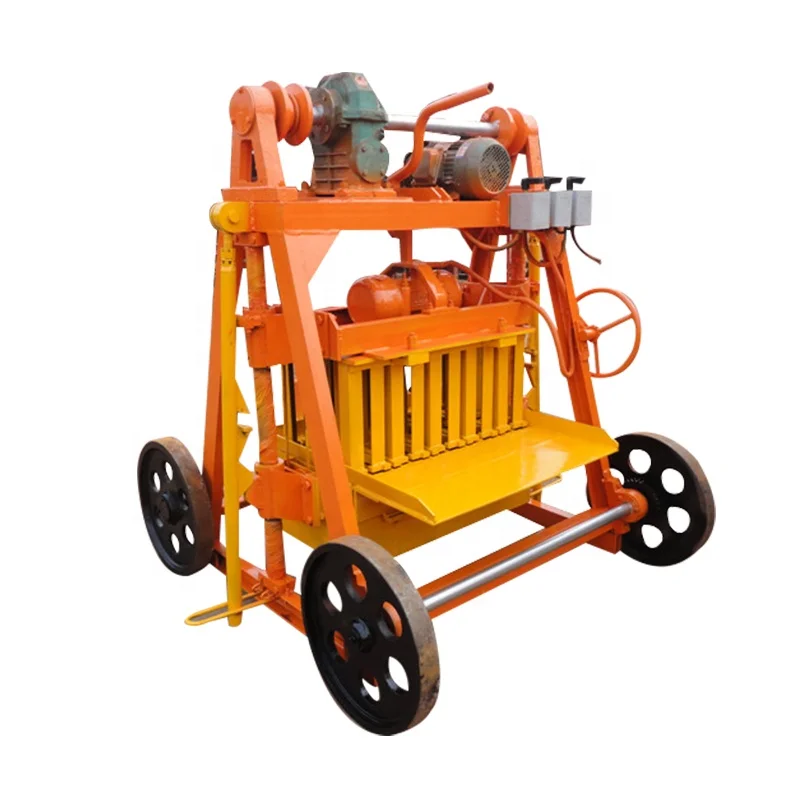
Matched System Configuration — raw material feeding, mixing, and pallet logistics are planned around the press cycle so the QMJ4-45 never sits idle waiting for the next batch.
Technical Specifications
| Parameter | Value |
|---|---|
| Model | QMJ4-45 |
| Product Type | Mobile Egg Laying Block Making Machine |
| Molding Capacity | 4 pcs/mold (based on 400×200×200mm hollow block) |
| Vibration Frequency | 2400 r/m |
| Output Capacity | 2600–4000 pcs/day (basis not stated in source — confirm block format) |
| Productivity (400×200×200mm) | Approx. 3000 pcs/day (8 hours) |
| Productivity (400×150×200mm) | Approx. 3500 pcs/day (8 hours) |
| Productivity (400×120×200mm) | Approx. 4500 pcs/day (8 hours) |
| Hydraulic Method | Mold vibration |
| Molding Cycle | 40–45 seconds |
| Power Source | Diesel / Petrol engine |
| Total Power | 6 kW |
| Demold & Turning | Manual |
| Pallet Consumption | Reduced (egg-laying operation, no pallets required) |
Application Suitability
| Application | Material or Output |
|---|---|
| On-site hollow block production | Crushed stone, sand, cement, water |
| Project-based construction supply | 400×200×200mm, 400×150×200mm, 400×120×200mm hollow blocks |
| Existing cement yard operations | Adding block formats to current product range |
| Rural and off-grid development sites | Diesel-powered block output without grid connection |
What "3000 Blocks a Day" Actually Means for Your Site
Daily figures only hold true when feeding, mixing, and curing keep pace with the press cycle.
When I first set up a QMJ4-45 mobile egg laying block making machine production line for a contractor in West Africa, the press ran fine on its own. But the mixer discharged too slowly and the crew carried wet blocks by hand to a distant curing zone. The real output dropped to less than half the quoted figure. That mobile egg laying block making machine production line only hit its rhythm after we synchronized the material feed, shortened the curing travel distance, and added a second mixer on standby [NEED_CITE: field observations on line synchronization in small-scale block plants].
Feeding and Mixing Must Match the 45-Second Cycle
A mobile egg laying block making machine production line runs a 40–45 second molding cycle. If your mixer takes two minutes to discharge a single batch, the press waits through more than half its available shift. We specify mixer volume and discharge rate to match the QMJ4-45 hopper capacity, so a fresh batch drops in as soon as the previous mold finishes vibrating.
Curing Layout Without Pallets Changes the Whole Yard
Egg-laying operation means blocks are placed directly on the ground and stay there until initial set. This removes pallet cost and pallet-handling labor, but it demands a flat, compacted curing area large enough to hold one full day of output. The forklift or hand cart route from the machine travel path to the curing zone must be planned before the first block is laid.
Reading the Specs That Matter on the Ground
The QMJ4-45 vibrates the mold core at 2400 r/m during a 40–45 second cycle. That double-pass vibration compacts the concrete mix into the mold cavity and directly affects block wall density. Total power sits at 6 kW, which is low enough for a small diesel generator but still requires a dedicated circuit separate from site lighting and welding equipment [NEED_CITE: electrical load separation for mobile plant equipment]. Because demolding and turning are manual, the operator count on the line depends on how quickly the crew can reposition the machine along its laying path. Skid-mounted assembly means the entire unit arrives as one piece and can be dragged to a new position once the current curing row is full.
When the Supporting Line Is Left Out of the Quote
A common complaint is that the quotation covers the press alone, leaving raw material feeding, mixing, and curing logistics to the buyer’s guesswork. On a mobile egg laying block making machine production line, that gap shows up as idle press time, inconsistent mix quality, and blocks cracked during manual transport to a poorly prepared curing zone. Every minute the press stands still is a cycle lost, and across an eight-hour shift those minutes add up to hundreds of missing blocks [NEED_CITE: typical downtime causes in small mobile block operations].
Why Sourcing the Whole Line From One Supplier Changes the Outcome
The machine, mixer, and material feed are specified as one matched system, so cycle times align from raw aggregate to laid block. Capacity calculations state the exact block format assumed, preventing surprises when your market demands a different hollow block size. The configuration is set against your local aggregate and mix design, not a catalog default that assumes materials you cannot source. Voltage, engine type, and control language are confirmed before production, avoiding delays when the machine arrives on site. Mould drawings cover the formats your market actually sells, with custom design available to your specifications.
Documentation & Verification
- Line layout showing press travel path, mixer position, and curing area dimensions
- Capacity calculation sheet listing output per hollow block format
- Factory test record on your specified mix and target block size
- Mould drawing and format list matching your market requirements
- Engine type and power source confirmation before dispatch
- Operation and maintenance manual in your site language
Installation, Commissioning & Support
- Flat compacted ground required across the full egg-laying travel path
- Dedicated 6 kW power circuit for diesel or petrol engine operation
- Skid-mounted unit arrives as one assembly, dragged into position on site
- First-run commissioning covers vibration timing and mix-to-mold fill rate
- Operator training on manual demolding rhythm and machine repositioning
- Wear parts list and mould spares supplied with initial shipment
- Daily grease points and vibration motor inspection schedule provided
What We Need From You to Size the Line
Tell us which hollow block formats your market sells and the daily volume you need to hit. Share the local aggregate type, cement grade, and available water source so we can match the mix to the machine. Let us know whether your site has grid power or requires the diesel engine configuration, and describe the existing curing area so we can plan the egg-laying travel path accordingly.
Frequently Asked Questions
Q: What daily output is realistic per hollow block format, and how is it calculated?
A: The QMJ4-45 produces approximately 3000 pieces per eight-hour day based on a 400×200×200mm hollow block at a 40–45 second cycle. For 400×150×200mm blocks the figure rises to around 3500, and for 400×120×200mm it reaches about 4500. Each calculation assumes continuous material feed and no press waiting time between cycles.
Q: How does egg-laying operation affect curing area layout and forklift requirements?
A: Blocks are laid directly on the ground and remain in place until initial set, so the curing area must be flat, compacted, and large enough for one full day of output. Forklift travel routes must be planned so loaded machines can advance along the laying path without disturbing freshly placed blocks.
Q: What supporting equipment is needed to keep the press running continuously?
A: A mixer with discharge rate matched to the 45-second molding cycle, a raw material feed system sized to the hopper, and prepared curing ground along the full travel path. Without these, the press stands idle and actual daily output falls well below the rated capacity.
Q: Can the machine be configured for local aggregate and mix design?
A: Yes. The vibration duration and mold fill settings are adjusted to suit your local sand, crushed stone, and cement proportions. We confirm your mix design before production so the machine arrives configured for the materials you can actually source on site.
Q: What installation support and operator training are included?
A: The skid-mounted QMJ4-45 arrives as a single assembly. On-site commissioning covers engine start-up, vibration calibration, and manual demolding rhythm. Operators are trained on machine repositioning, daily maintenance points, and mold change procedure for different block formats.


