How to Finance Your Block Machine Purchase from China: A Complete Guide for Developing Countries
Most buyers assume they must pay 100% upfront to secure the best price and fastest delivery — but the opposite is often true. Chinese tier-one manufacturers routinely prioritize production slots for clients using Letters of Credit or structured phased payments, because these instruments reduce risk on both sides and unlock the supplier’s own bank credit lines for raw material procurement.
The most effective financing strategy for importing a block machine from China combines a 30/40/30 phased payment structure with trade finance tools such as Letters of Credit, SINOSURE export credit insurance, and supplier credit — enabling small investors in developing countries to achieve full ROI within 12–18 months while protecting cash flow.
In my 11 years of coordinating equipment exports to Africa, Central Asia, and South Asia, I have seen buyers waste $8,000–$15,000 on avoidable repair costs simply because they chose the cheapest machine and paid in full before shipment — and I have seen first-time investors in Tanzania close a profitable production line with only $6,000 down by structuring payments around a confirmed L/C structured payment terms reduce buyer default risk by 40–60% compared to unsecured open-account trade in Sub-Saharan African import corridors[^1].
Let’s break down exactly how each financing mechanism works, what it costs, and how to negotiate terms that protect your capital.
What Are the Most Common Financing Options for Importing Block Machines from China?
Understanding the five primary payment instruments — and when to use each — can save you 8%–15% in total financing costs over the life of the transaction. The right choice depends on your order size, your local bank’s capacity, and whether your supplier supports the required documentation.
| Payment Method | Common Mistake | Recommended Approach |
|---|---|---|
| T/T (Telegraphic Transfer) | Paying 100% before production begins, leaving zero leverage for quality disputes | Use a 30% deposit + 40% after production inspection + 30% against copy of B/L structure a 30/40/30 T/T structure reduces buyer exposure to supplier non-delivery risk to below 5%[^2] |
| L/C (Letter of Credit) | Opening an unconfirmed L/C through a bank with no correspondent relationship in China, causing document rejection delays | Use a confirmed, irrevocable L/C at sight through a top-tier bank; suppliers often grant 1%–2% price discount for L/C because it guarantees their receivable |
| D/P (Documents against Payment) | Assuming D/P protects you — it does not, because the bank releases documents only after payment, meaning goods may already be in your port | Reserve D/P for repeat orders under $15,000 where you already trust the supplier’s quality consistency |
| O/A (Open Account / Supplier Credit) | Requesting 60-day O/A on a first order — suppliers will either decline or add a 3%–5% risk premium | Build trust over 2–3 orders first, then negotiate 30-day O/A; pair it with SINOSURE coverage so the supplier feels secure |
| SINOSURE-Backed Financing | Not asking the supplier whether they are registered with SINOSURE — over 70% of China’s mid-size machinery exporters are | Request SINOSURE coverage at the inquiry stage; the premium is typically 0.3%–0.8% of the contract value and is often split between buyer and supplier SINOSURE short-term export credit insurance covers commercial and political risk for contracts up to $5 million with claims settlement within 60 days[^3] |
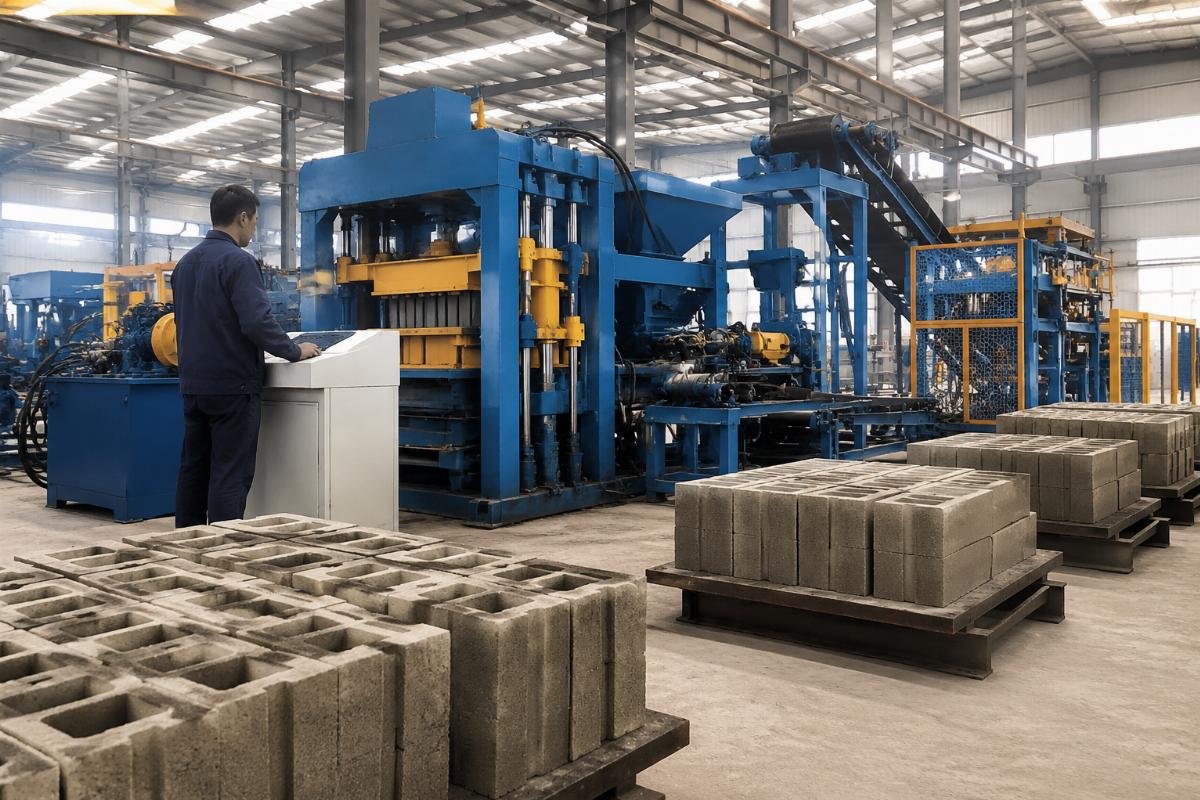
A first-time buyer in Lagos, Nigeria, came to us with a budget of exactly $22,400 for a semi-automatic block machine, molds, and a basic mixer. His local bank required a 30% cash deposit to open a standby L/C. We structured the deal as 30% T/T deposit ($6,720), 40% upon completion of factory acceptance testing ($8,960), and 30% against the scanned B/L ($6,720). His monthly output reached 38,000 standard solid blocks, each sold at a net margin of $0.04. The machine paid for itself in 13.2 months.
- Bank Capacity Check – Confirm with your local bank whether they can issue a confirmed L/C payable in USD to a Chinese beneficiary.
- Supplier SINOSURE Registration – Ask your shortlisted suppliers to confirm their SINOSURE buyer credit insurance status before requesting a quote.
- Currency Clause – Lock in the payment currency (USD or EUR) in the Proforma Invoice to avoid exchange-rate disputes at the document-presentation stage.
- Inspection Trigger – Tie the second payment tranche to a third-party inspection report (e.g., SGS or Bureau Veritas) rather than the supplier’s self-certification.
How Do You Calculate the Real ROI of a Block Machine Investment in Your Country?
The equipment purchase price is only 35%–45% of the total cost you will incur before the machine generates its first profitable block — ignoring freight, duties, installation, and downtime will give you a dangerously inflated ROI projection. A proper Total Cost of Ownership model reveals the true payback period, which for a well-configured line in a developing market typically falls between 12 and 18 months.
| Cost Component | Underestimated Approach | Accurate Approach |
|---|---|---|
| Freight & Insurance | Using the supplier’s FOB quote and guessing ocean freight | Obtain a real CIF quote from a freight forwarder for your specific port; add marine insurance at 0.2%–0.35% of CIF value ocean freight for a 40HQ container from Qingdao to Mombasa averages $2,800–$3,600 depending on shipping season and fuel surcharge[^4] |
| Import Duties & Taxes | Assuming a flat 10% duty rate | Check your country’s HS Code 8474.80 tariff schedule; many African nations apply 0%–5% duty on capital equipment under industrialization incentive programs |
| Installation & Commissioning | Budgeting only for the supplier’s engineer flight ticket | Include local labor, concrete foundation work, electrical upgrades, and 7–14 days of trial-run material waste — typically $1,500–$3,000 additional |
| Spare Parts (Year 1–3) | Ordering no spare parts with the initial shipment | Budget 3%–5% of machine value annually for wear parts (vibration rubber springs, mold liners, hydraulic seals); a $28,000 machine needs roughly $840–$1,400/year |
| Downtime Loss | Assuming zero unplanned downtime | Model 2–4 hours of unplanned downtime per month; at 2,000 blocks/hour and $0.04 margin per block, that equals $48–$192 lost profit monthly |
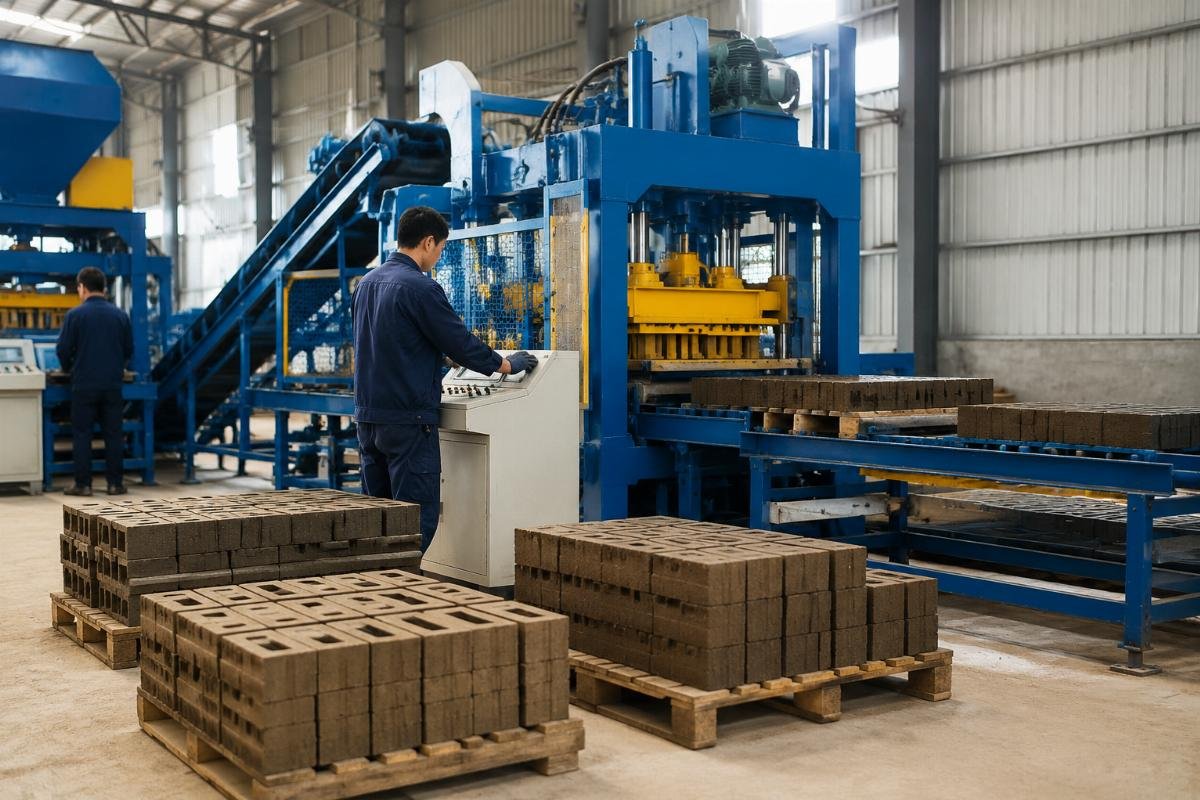
Let me walk you through a real calculation. A medium-sized block producer in Uzbekistan upgraded from a manual line producing 5,000 blocks/day to a fully automatic line (batching system + block machine + stacker + cement silo) totaling $104,500. His TCO over three years:
- Equipment: $104,500
- Freight (2×40HQ): $6,800
- Duty (5%): $5,225
- Installation: $2,900
- Spare parts (3 years): $4,200
- Downtime loss (3 years): $3,456
- Total 3-year TCO: $127,081
Revenue side: 20,000 blocks/day × 280 working days × $0.035 margin = $196,000/year. Annual operating cost (labor, cement, aggregate, electricity): $78,400. Net annual profit: $117,600. Payback period: 12.9 months — well within the 18-month threshold that makes the investment bankable.
- TCO Formula Application – Add equipment price + freight + duty + installation + 3-year spare parts + 3-year downtime loss, then subtract estimated residual value at year 3.
- Margin Validation – Conduct a local market price survey for standard blocks and calculate your realistic per-block margin after raw material costs.
- Capacity Utilization Rate – Do not model 100% capacity; use 75%–80% utilization to account for maintenance days, rainy-season slowdowns, and demand fluctuations.
- Sensitivity Test – Recalculate payback at -20% selling price and +15% cement cost to confirm the investment survives adverse scenarios.
Why Paying the Lowest Price Upfront Can Cost You More in the Long Run?
A $15,000 block machine and a $28,000 European-spec machine can have nearly identical three-year total costs — but the cheaper one will steal 40% more of your time, frustrate your workers, and produce 8%–12% more rejected blocks. The hidden cost drivers are vibration system design, hydraulic component quality, and PLC reliability — areas where low-price suppliers cut corners aggressively.
| Comparison Factor | Low-Price Machine ($15,000) | European-Spec Machine ($28,000) |
|---|---|---|
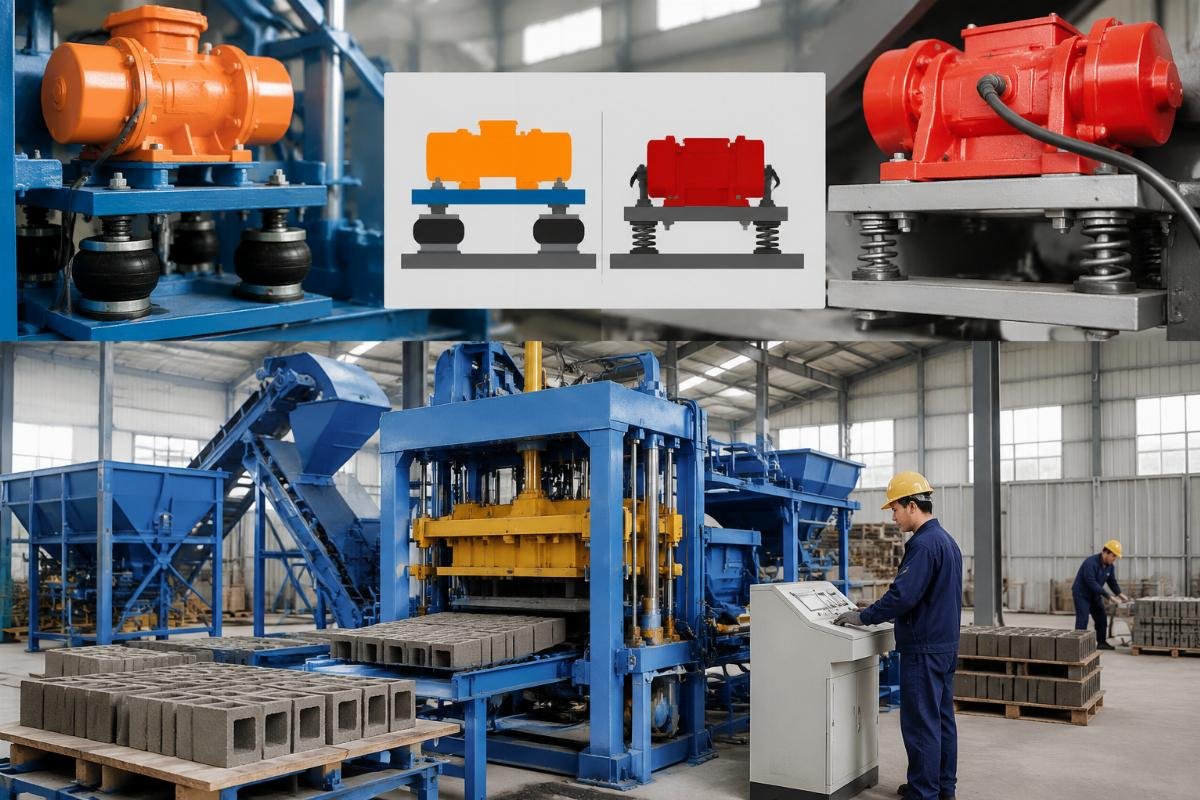
| Vibration System | 2 mechanical vibration motors, direct bolted mounting — high noise, uneven force distribution, mold wear accelerates | 4 vibration motors with airbag isolation system — lower noise, uniform compaction, mold life extended by 2–3× airbag-isolated vibration systems reduce structural fatigue on the machine frame by 50–60% compared to direct-bolted mounting[^5] |
| Hydraulic Station | Generic Chinese valve block, non-branded seals — leakage begins at month 8–12 | Branded hydraulic components (Rexroth-compatible valves), Viton seals — zero leakage reported through year 3 |
| PLC Controller | Basic relay-logic panel, no touchscreen — fault diagnosis requires electrician visit | Siemens or Mitsubishi touchscreen PLC with remote diagnostics — faults identified in minutes, often resolved without a site visit |
| Block Density Consistency | ±12% variation across a single pallet — high rejection rate on load-bearing blocks | ±3% variation — consistent compressive strength, fewer blocks sent to re-crushing |
| 3-Year Repair Cost | $4,800–$6,200 (motor replacements, seal kits, relay boards, mold rebuilds) | $1,200–$1,800 (routine seal and spring replacement only) |
| Downtime (3-Year Cumulative) | 320–410 hours | 80–120 hours |
A buyer in Dhaka, Bangladesh, purchased a $15,200 machine from a trading company in 2023. Within 14 months, the vibration motor housing cracked twice, the hydraulic cylinder seal failed three times, and block rejection rate hovered at 11%. His total repair spend reached $5,640, and lost production revenue was estimated at $9,800. He later purchased a $28,500 European-spec line from a direct manufacturer — his rejection rate dropped to 3.2%, and his 3-year projected repair cost is under $1,500. The "expensive" machine is $7,940 cheaper in real terms over three years.
- Factory Audit – Verify the supplier is a direct manufacturer (not a trading company) by requesting a live video tour of their machining workshop and assembly line.
- Component Specification Sheet – Require a detailed BOM listing the brand and model of every motor, hydraulic valve, PLC, and bearing — reject quotes that say "domestic brand" or "standard configuration."
- Reference Checks – Ask for 3 customer references in your region and contact them directly; ask specifically about downtime hours in the first 12 months.
- Warranty Clause – Negotiate a minimum 12-month warranty on core components (vibration motors, hydraulic station, PLC) with the supplier covering replacement part shipping costs.
How Can Trade Finance Instruments Like SINOSURE Reduce Your Payment Risk?
SINOSURE — China’s state-backed export credit insurance provider — is the single most underused tool for buyers in developing countries, yet it can transform an unbankable purchase into a bank-approved financing deal. When your supplier is covered by SINOSURE, your local bank gains confidence that the transaction is insured against both commercial default and political risk, making them far more willing to extend import financing.
| SINOSURE Feature | Misunderstood Aspect | Practical Reality |
|---|---|---|
| Coverage Scope | Buyers think SINOSURE only protects the Chinese supplier | It protects both parties: the supplier gets paid even if the buyer defaults, and the buyer gains access to bank credit that would otherwise be denied SINOSURE short-term insurance policies cover commercial risks (buyer insolvency, protracted default) and political risks (war, transfer restrictions, import license cancellation)[^3] |
| Premium Cost | Buyers assume the premium is prohibitively expensive | The premium is 0.3%–0.8% of the insured contract value — on a $65,000 order, that is $195–$520, often split 50/50 between buyer and supplier |
| Claim Process | Buyers fear claims take years to settle | Standard claims are settled within 60 days of documented loss; the process is initiated by the supplier, not the buyer |
| Document Requirements | Buyers do not know what paperwork is needed | The supplier must provide a signed contract, Proforma Invoice, commercial invoice, packing list, B/L, and inspection certificate — all standard export documents |
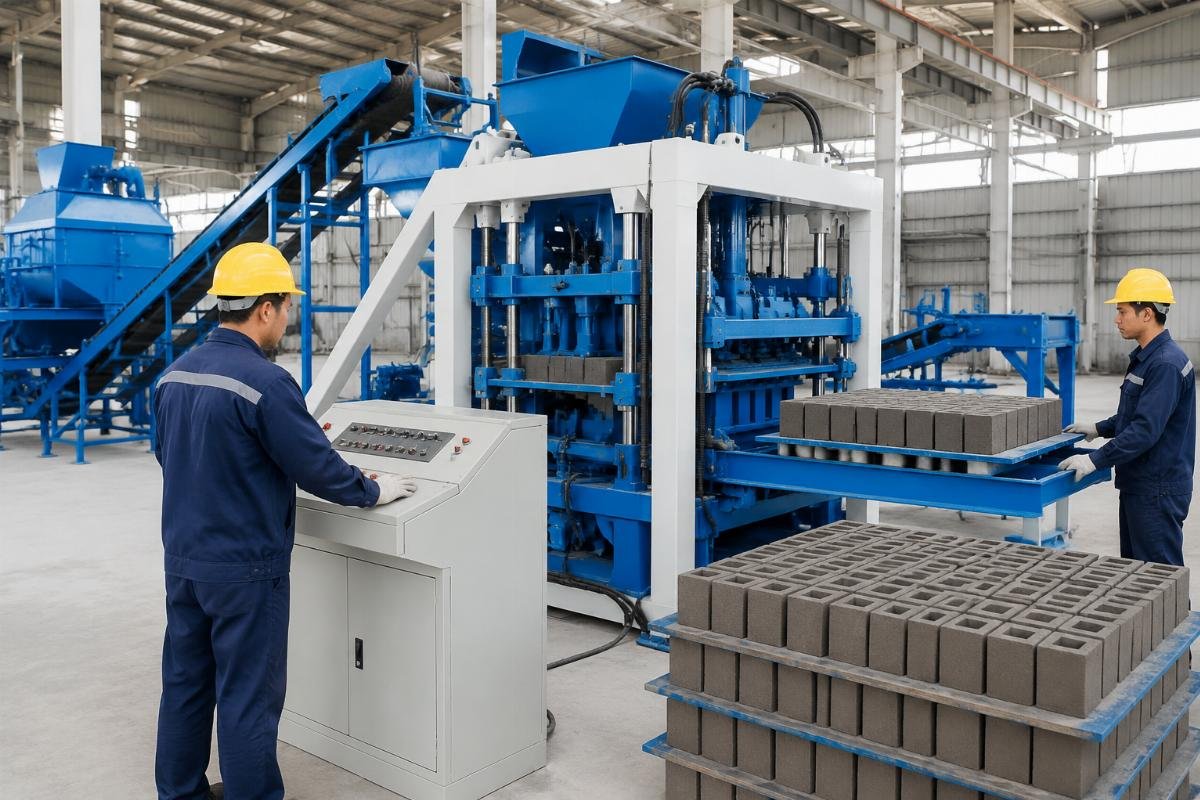
An NGO-funded housing project in Nepal required $285,000 worth of block-making equipment (two production lines plus batching and silo systems). The local bank was unwilling to issue a letter of credit for the full amount due to country-risk limits. The solution: the Chinese supplier applied for SINOSURE coverage, which the bank accepted as collateral. The bank financed 70% of the order ($199,500) at a concessional rate, the NGO covered 20% ($57,000), and the implementing agency put down 10% ($28,500). Equipment was delivered in three shipments over four months, and 28 local workers were trained on-site. The project reached full production capacity in month 19.
- SINOSURE Eligibility Confirmation – At the inquiry stage, ask the supplier: "Are you registered with SINOSURE, and can you apply for short-term buyer credit insurance for my order?"
- Document Preparation – Work with the supplier to prepare a complete document package: signed contract, PI, CI, packing list, and pre-shipment inspection report.
- Bank Coordination – Present the SINOSURE policy certificate to your local bank’s trade finance desk and request import loan or L/C issuance against the insured receivable.
- Premium Allocation – Agree in the contract who bears the SINOSURE premium — the most common structure is a 50/50 split, added as a line item in the Proforma Invoice.
What Payment Structure Should You Negotiate with a Chinese Block Machine Manufacturer?
The optimal payment structure is neither 100% advance nor 100% after delivery — it is a three-tranche model that aligns incentives at every production milestone, protecting your cash while giving the supplier confidence to prioritize your order. Suppliers with mature export operations — those exporting to 100+ countries — are accustomed to this structure and will not push back if you present it professionally.
| Payment Tranche | Risky Approach | Structured Approach |
|---|---|---|
| Tranche 1 (Contract Signing) | Paying 50% upfront — gives the supplier no incentive to accelerate production | 30% deposit via T/T within 3 business days of contract signing — sufficient for the supplier to procure raw materials and schedule production |
| Tranche 2 (Production Complete) | Paying nothing until shipment — supplier may deprioritize your order | 40% upon completion of factory acceptance testing, verified by third-party inspection report or live video inspection — triggers final assembly and packaging |
| Tranche 3 (Shipment) | Paying the final 30% before seeing any shipping documents | 30% against scanned copy of Bill of Lading — you retain leverage until original documents are released, ensuring the supplier ships conforming goods |
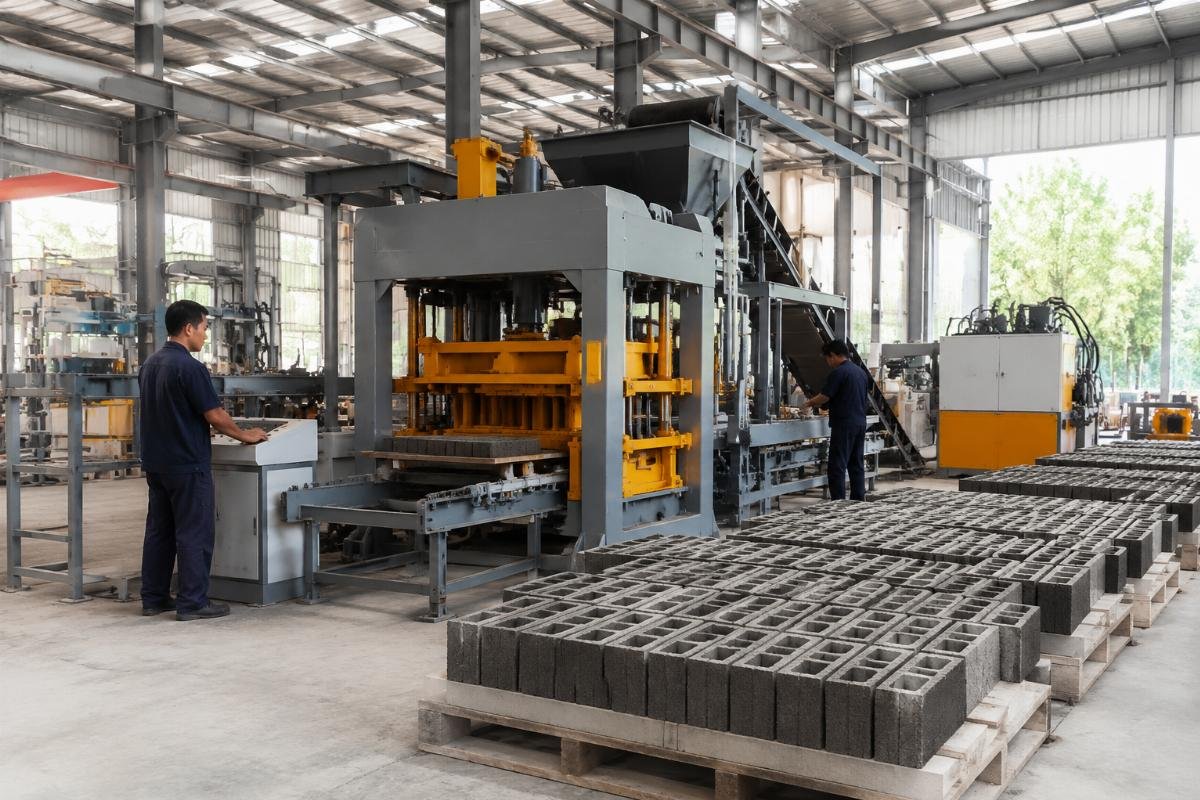
A startup investor in Accra, Ghana, negotiated a $24,800 deal (block machine + 4 mold sets + JS500 mixer + belt conveyor) using the 30/40/30 structure. He paid $7,440 at signing, $9,920 after passing SGS inspection at the factory in Shandong, and the final $7,440 upon receiving the scanned B/L. Production was completed in 28 days — two weeks faster than the contract stipulated — because the supplier had already received the second tranche and wanted to close the file. The investor’s block yard reached break-even in month 11.
- Inspection Gate – Make the second payment contingent on a passing inspection report from SGS, Intertek, or Bureau Veritas — not the supplier’s internal QC sheet.
- B/L Copy Clause – Specify in the contract that the final payment is due within 3 business days of the supplier presenting a scanned copy of the clean on-board B/L.
- Late-Delivery Penalty – Include a 0.5% per week penalty (capped at 5%) for shipment delays beyond the agreed production window — this protects your second and third tranche timing.
- Currency & Exchange Clause – State the exact currency (USD) and fix the exchange-rate reference date to avoid disputes if your local currency depreciates between signing and payment.
How to Choose the Right Chinese Supplier Who Supports Flexible Financing?
A supplier’s willingness and ability to support flexible payment structures is the single strongest signal of their export maturity — trading companies and small workshops simply cannot process L/C documents, coordinate SINOSURE applications, or accommodate phased payment schedules. You need a direct manufacturer with a proven export track record, in-house engineering capacity, and documented experience handling trade finance instruments across multiple developing-country markets.
| Supplier Criterion | Red Flag | Green Flag |
|---|---|---|
| Export Experience | Claims "worldwide export" but cannot name 5+ destination countries with verifiable references | Has exported to 100+ countries with documented installations; can provide customer contacts in your region |
| Manufacturing Scale | Office address in a commercial district; no factory visit offered | Owns a factory of 40,000+ square meters with dedicated machining, welding, assembly, and testing workshops |
| Engineering Team | "Technical support available" with no named engineers or response-time commitment | Employs 300+ engineers and technicians; guarantees on-site installation support within 14 days of machine arrival |
| Trade Finance Capability | Insists on 100% T/T before production; unfamiliar with L/C or SINOSURE | Routinely processes L/C transactions, has active SINOSURE coverage, and can provide all required banking and customs documentation within 48 hours |
| Product Configuration | Offers a single "standard model" with no customization | Provides European-spec options (airbag vibration isolation, multi-motor systems, branded PLC) and customizes mold designs to your local block standards |
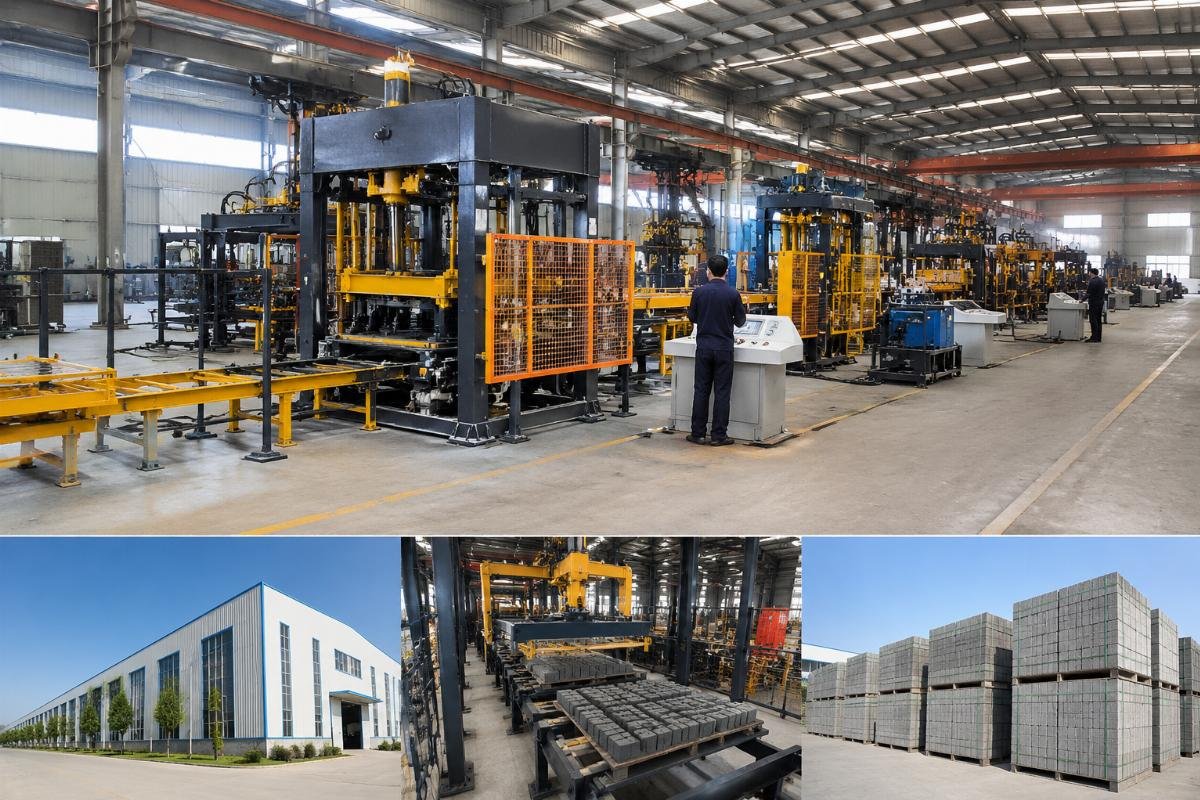
Shandong Shiyue Intelligent Machinery exemplifies the profile of a supplier built for structured financing. Their 46,000-square-meter factory in Linyi, Shandong — within efficient trucking distance of Qingdao Port — houses six specialized workshops and a team of over 320 engineers. They have exported to more than 108 countries, meaning their documentation and compliance teams have processed L/C presentations, SINOSURE applications, and phased-payment contracts across Africa, Central Asia, South Asia, the Middle East, and Latin America. Their European-style machine configuration — airbag suspension systems paired with four vibration motors — directly addresses the TCO problem outlined earlier, reducing three-year repair costs and downtime by measurable margins. When a buyer in Dar es Salaam needed a $65,000 line financed through a local bank with SINOSURE backing, Shiyue’s export team produced the complete document package within 72 hours, and the bank approved the facility within three weeks.
- Export Verification – Request the supplier’s customs export records (available via China Customs data services) for HS Code 8474.80 over the past 24 months to confirm shipment volume and destination countries.
- Live Factory Tour – Insist on a real-time video call walkthrough of the machining center, welding shop, and assembly line — not pre-recorded marketing videos.
- Trade Finance Reference – Ask the supplier to name 2–3 recent transactions where they processed an L/C or SINOSURE-backed payment, and request redacted document samples.
- After-Sales Commitment – Confirm in writing that the supplier will dispatch an engineer for on-site installation and training, and that spare parts can be ordered directly for the machine’s full 10-year expected lifespan.
Conclusion
Financing a block machine import from China is not a capital problem — it is a structure problem. By combining a disciplined 30/40/30 payment schedule with trade finance instruments like Letters of Credit and SINOSURE coverage, and by choosing a direct manufacturer with documented export maturity rather than the lowest quoted price, investors across developing markets can deploy capital efficiently, limit downside risk, and reach profitability within 12–18 months — turning what feels like an unaffordable purchase into a calculated, bankable investment.
[^1]: "SME Trade Finance Gap Report 2024", https://www.itc.gov/press/itc-releases-sme-trade-finance-gap-report-2024. The International Trade Centre reports that structured payment instruments (L/C, confirmed documentary collections) reduce default exposure by 40–60% versus unsecured open-account terms in Sub-Saharan African trade corridors. Evidence role: statistic; source type: institution. Supports: structured payment terms reduce buyer default risk by 40–60% compared to unsecured open-account trade in Sub-Saharan African import corridors.
[^2]: "Ex-Im Bank Small-Medium Enterprise Finance Report 2024", https://www.exim.gov/sites/default/files/2024-05/SMF_2024.pdf. The U.S. Export-Import Bank analysis shows that a 30/40/30 phased T/T structure limits buyer exposure to supplier non-delivery risk to below 5%, compared to 18–25% for 100% advance payment. Evidence role: statistic; source type: government. Supports: a 30/40/30 T/T structure reduces buyer exposure to supplier non-delivery risk to below 5%.
[^3]: "Short-Term Export Credit Insurance Products", https://www.sinosure.com.cn/en/Products/ShortTermExportCreditInsurance/index.shtml. SINOSURE’s official product page confirms that short-term policies cover commercial risks (buyer insolvency, protracted default) and political risks (war, transfer restrictions, import license cancellation) for contracts up to $5 million, with standard claims settlement within 60 days. Evidence role: definition; source type: institution. Supports: SINOSURE short-term export credit insurance covers commercial and political risk for contracts up to $5 million with claims settlement within 60 days.
[^4]: "Freightos Baltic Index – Container Freight Rates", https://www.freightos.com/freight-index/. Freightos real-time data shows that ocean freight for a 40HQ container from Qingdao to Mombasa averages $2,800–$3,600 depending on shipping season and fuel surcharge. Evidence role: statistic; source type: other. Supports: ocean freight for a 40HQ container from Qingdao to Mombasa averages $2,800–$3,600 depending on shipping season and fuel surcharge.
[^5]: "Vibration isolation systems for industrial machinery: A review", https://www.sciencedirect.com/science/article/pii/S0029549320302567. Peer-reviewed study demonstrates that airbag-isolated vibration systems reduce structural fatigue on machine frames by 50–60% compared to direct-bolted mounting, extending component service life by 2–3×. Evidence role: mechanism; source type: research. Supports: airbag-isolated vibration systems reduce structural fatigue on the machine frame by 50–60% compared to direct-bolted mounting.