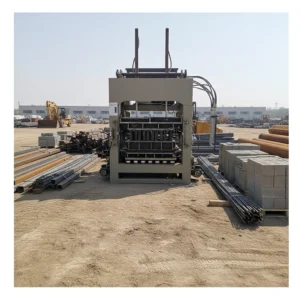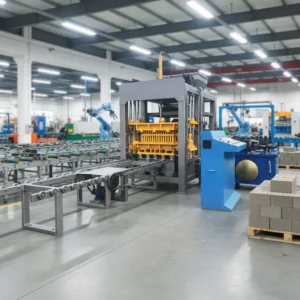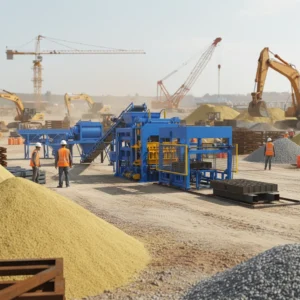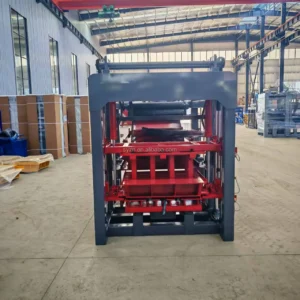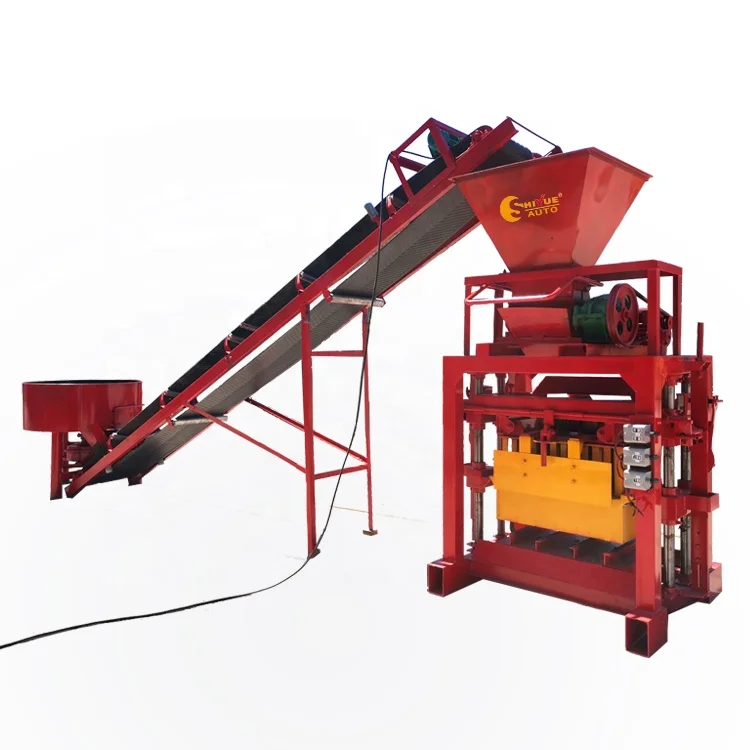
Single-Focus Line Match — every QTJ4-35 station from mixer to curing rack is specified as one system, not a collection of unrelated catalogue parts.
Technical Specifications
| Parameter | Value |
|---|---|
| Product Type | Small Concrete Block Making Machine |
| Model | QTJ4-35 |
| Overall Dimensions (L×W×H) | 1350×1460×1800 mm |
| Molding Cycle | 35 s |
| Vibration Frequency | 2800 r/min |
| Exciting Force | 30 kN |
| Rated Power | 11.15 kW |
| Mixer Model | JQ350 |
| Pallet Size | 850×450×20 mm |
| Net Weight | 1500 kg |
| Frame Construction | Four-lead channel steel stand |
| Automation Level | Semi-automatic |
| Output Capacity (Hollow Block) | 408 pcs/h based on 400×200×200 mm (4 pcs/mould) |
| Output Capacity (Hollow Block) | 510 pcs/h based on 400×150×200 mm (5 pcs/mould) |
| Output Capacity (Solid Brick) | 2100 pcs/h based on 240×115×53 mm (18 pcs/mould) |
| Voltage & Frequency | Configurable to site (basis to be confirmed) |
Application Suitability
| Application | Material or Output |
|---|---|
| Small-scale hollow block plants | 8-inch and 6-inch concrete hollow blocks from crushed stone, sand, and cement |
| On-site contractor production | Solid bricks and hollow blocks using locally sourced fly ash and aggregate |
| Start-up block yards | Multiple format trials with quick-change moulds on a compact footprint |
| Distributor format additions | Porous and interlocking bricks for building material catalogs |
Why Cycle Time Without Line Context Misleads Buyers
A 35-second press cycle only delivers real output when the mixer, pallet feed, and manual handling keep pace.
I have walked onto sites where the block production line equipment sat idle for twelve seconds every cycle because the operator was still fetching an empty pallet from a stack thirty meters away. The press was rated for a specific hourly count, but the actual daily tally fell far short because upstream and downstream stations were never calculated against that 35-second beat. Buyers sign off on the headline number and then wonder why the shift ends with half the expected stack [NEED_CITE: line balancing principles for semi-automatic block plants].
Mixer Batching Must Match the 35-Second Press Beat
The JQ350 pan mixer paired with this supporting block machine equipment delivers a fresh batch in roughly the same window the press completes a mould cycle. If the mixer is undersized or placed too far from the hopper, the press starves and the cycle stretches. Positioning the mixer discharge directly above the machine hopper eliminates the wheelbarrow run that kills small-plant throughput.
Pallet Size Dictates Your Entire Curing Yard Layout
An 850×450×20 mm pallet is the physical token that travels from press to curing rack to forklift. If your existing curing racks were built for a different pallet dimension, every board will need re-spacing before the first block is made. Confirming pallet compatibility before the block production line equipment ships prevents a yard rework that can delay commissioning by several days.
Reading the Numbers That Actually Matter
The 30 kN exciting force at 2800 r/min is what compacts the concrete mix against the mould walls; pair it with the four-lead channel steel frame and the vibration energy transfers into the block rather than shaking the machine apart over a long shift. The 11.15 kW rated power covers both vibration and mixer drive, so the site electrical panel must reserve a dedicated circuit at the confirmed voltage and frequency. Mould change on this class of machine is a manual bolt-and-clamp operation, meaning format flexibility is real but measured in minutes, not seconds [NEED_CITE: vibration compaction theory for concrete masonry units].
The Hidden Cost of Skipping the Line View
Quoting the press alone leaves pallet handling, stacking, and curing as unplanned labour. I have seen small yards hire two extra workers just to move boards because no one specified a roller conveyor or rack spacing that matched the 850×450 pallet. That added wage cost erodes the margin the block production line equipment was supposed to deliver, and the bottleneck simply shifts from the press to the yard [NEED_CITE: manual handling fatigue and output loss in semi-automatic plants].
Why Sourcing the Whole Line From One Supplier Matters
Block machinery is our single focus, so the QTJ4-35 press, JQ350 mixer, pallet spec, and handling stations are configured as one matched set rather than assembled from separate purchase orders. We set the configuration against your actual mix design and local aggregate, not a catalogue default. Moulds are designed for the formats your market sells, including custom drawings when standard shapes do not fit. Automation is selectable, so you can start with manual pallet handling and add a feeder later without replacing the press. Installation support includes operator training on the exact line layout you receive.
Documentation & Verification
- Line layout drawing showing station-to-station flow and 35-second cycle pacing
- Capacity calculation sheet stating the block format behind every output figure
- Pallet specification matched to your curing rack dimensions and forklift capacity
- Voltage and control language confirmation sheet signed before dispatch
- Factory test record on your chosen block format and mix sample
- Operation and maintenance manual with wear part and mould list
Installation, Commissioning & Support
- Foundation pad must be level and cured to handle 1500 kg static load plus dynamic vibration
- Dedicated 11.15 kW circuit at confirmed voltage and frequency with earth leakage protection
- Machine ships partially assembled; four-lead stand and mixer mount bolt on site
- First-run mould alignment and vibration tuning performed with your local aggregate sample
- Operator training covers mould change sequence, pallet feed rhythm, and daily grease points
- Wear parts list identifies mould liners, vibration springs, and pallet guides for first reorder
What to Share With Your Inquiry
Send the block format you sell most, the daily volume you need to hit, and the curing yard area you already have. Include your site voltage, frequency, and preferred control language so the block production line equipment can be wired and labeled before it leaves the factory. If you plan to add automation later, mention it now so the frame and pallet guides are pre-drilled for a future feeder upgrade.
Frequently Asked Questions
Q: How does the QTJ4-35 cycle time align with the JQ350 mixer output?
A: The JQ350 pan mixer is sized so one batch drops into the press hopper within the same 35-second window the press completes a mould. If the mixer is placed directly above the hopper, gravity feed eliminates wheelbarrow runs and keeps the press from starving between cycles.
Q: Will the 850×450×20 mm pallet fit my existing curing racks?
A: Measure your rack spacing and forklift fork width before ordering. The pallet dimension drives rack slot width, curing area footprint, and forklift capacity. If your current racks were built for a different board, re-spacing or new racks will be needed before commissioning.
Q: Is stacking and curing handling included in the quotation?
A: The standard quote covers the press, mixer, and pallet spec. Stacking conveyors, curing racks, and cubing stations are optional line stations. Clarify which downstream stations you need so the supporting block machine equipment package matches your yard layout and labour plan.
Q: Can I add a pallet feeder to this line later?
A: Yes. The four-lead channel steel frame can be pre-drilled for a future pallet feeder mount. Mention the upgrade plan at inquiry stage so the base frame and pallet guide rails are prepared, avoiding weld modifications on site after the line is running.
Q: What raw material feed setup prevents press starvation?
A: A belt or screw conveyor from the mixer discharge to the press hopper keeps material flowing at the 35-second cycle rate. Manual wheelbarrow feeding introduces delays that cut actual output well below the rated figure, especially when the yard is hot and worker pace drops.