
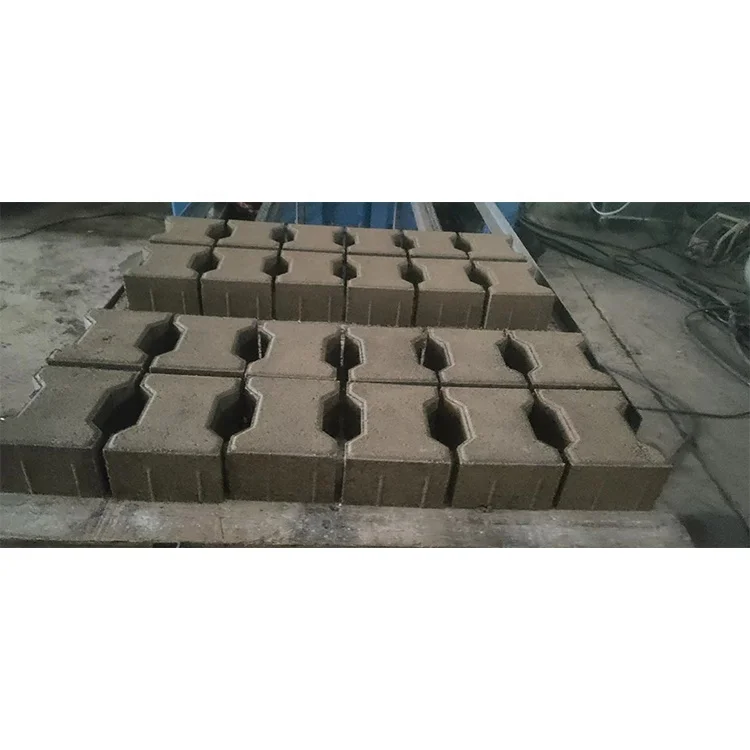
Matched system layout — The QT5-15 sits inside a synchronized block line where feeder, mixer, pallet return, and stacker are timed to its 15–20 second cycle so the press is never left waiting for the next board.
Technical Specifications
| Parameter | Value |
|---|---|
| Model | QT5-15 |
| Product Type | Stationary Automatic Concrete Block Making Machine |
| Overall Dimensions (L×W×H) | 7400 × 1950 × 2800 mm |
| Machine Weight | 6 T |
| Rated Hydraulic Pressure | 21 MPa |
| Main Vibration Form | Hydraulic platform vibration |
| Vibrating Frequency | 2800–4500 rolls/minute |
| Press Cycle Time | 15–20 seconds |
| Total Motor Power | 26.5 kW |
| Pallet Size | 1100 × 550 mm |
| Control System | PLC with fault diagnosis and remote monitoring |
| Automation Level | Full automatic |
| Voltage & Phase | Configurable to buyer site requirements |
| Output (240×115×90 mm solid brick, 16 pcs/mould) | 23,040–28,800 pcs per 8-hour shift |
| Output (400×115×53 mm brick, 32 pcs/mould) | 61,440–70,400 pcs per 8-hour shift |
| Output (400×200×200 mm hollow block, 5 pcs/mould) | 7,200–9,600 pcs per 8-hour shift |
| Standard Compliance | CE declaration available |
| Warranty | One year on complete machine |
Application Suitability
| Application | Material or Output |
|---|---|
| Hollow block production for load-bearing and partition walls | Cement, crushed stone, sand, and fly ash blends |
| Solid brick manufacturing for structural and paving use | Dense aggregate mixes with fine sand |
| Paving brick and interlocking paver runs | Coarse aggregate with high compressive strength requirements |
| Multi-cellular and porous brick runs | Lightweight aggregate or aerated concrete mixes |
| On-site production by construction contractors | Locally sourced gravel, river sand, and cement |
Why Quoted Output Rarely Matches Real Shift Totals on a Block Line
Capacity numbers only mean something when the block format, cycle time, and supporting equipment are stated together.
I once stood on a site in West Africa watching a stationary block machine sit idle for forty seconds every cycle. The press itself was fast, but the pan mixer could not deliver fresh batch in time, and the pallet return conveyor was undersized. The rated capacity on paper never had a chance. When planning a concrete block making machine production line, the real question is how every station — feeding, mixing, pressing, stacking, curing — locks into the same rhythm. A bottleneck anywhere in the chain drags the whole shift down [NEED_CITE: synchronization of station cycle times in block production lines].
How the Line Stations Synchronize Around the Press
The QT5-15 completes a press cycle in 15 to 20 seconds, which sets the heartbeat for every upstream and downstream station. The raw material batching and mixing stage must discharge a finished batch within that same window, or the hopper runs dry and the press pauses. Pallet feeding has to deliver a clean, cured pallet to the press table before the mould lifts. Downstream, the automatic stacker must clear finished boards fast enough so the next wet product has a landing spot. In a concrete block making machine production line, the press is only as productive as the slowest supporting station.
Where Bottlenecks Hide Until the First Shift Starts
Mixing is the most common culprit. A pan mixer sized for a smaller press will take longer to blend than the QT5-15 takes to press, and every cycle the line waits. Pallet quantity is another trap — if the curing racks hold only a fraction of a shift’s output, boards pile up on the floor and manual handling takes over [NEED_CITE: pallet circulation requirements for stationary block plants]. Specifying the full concrete block making machine production line together, from feeder motor rating to stacking arm reach, prevents these mismatches before steel is cut.
What the Press Numbers Actually Mean on the Floor
The 21 MPa hydraulic pressure combined with platform vibration at 2800–4500 rolls per minute determines block density and demoulding strength. Higher vibration frequency compacts fine aggregate more tightly, which matters for thin-wall hollow blocks where green strength prevents collapse when the mould lifts. The 1100 × 550 mm pallet size dictates how many cavities each mould can hold — five for a 400×200×200 mm hollow block, sixteen for a standard solid brick. Pallet material also affects vibration transfer; bamboo, PVC, and steel boards each respond differently to the same frequency range. The 26.5 kW total motor load must be matched to site voltage and phase to avoid tripping breakers during peak draw.
When a Mismatched Line Configuration Costs More Than the Machine Itself
I have seen buyers focus every negotiation minute on the press price and accept whatever pallet size and mixer capacity came bundled. Three months later the curing yard was jammed with boards that did not fit the existing forklift forks, and a separate pallet rack system had to be fabricated locally at short notice. The concrete block making machine production line had been quoted as a package, but the supporting equipment did not speak to the buyer’s actual site conditions [NEED_CITE: common mismatches between quoted pallet specs and site handling equipment]. The lesson repeats across projects: every item around the press needs to be checked against local reality.
Why Buyers Spec the Whole Line from One Source
Block machinery is the single production focus here, which means the QT5-15, its moulds, pallets, and handling equipment are designed as one system rather than sourced from separate vendors and bolted together at the port. Each line proposal starts from the buyer’s target block format and local aggregate, so capacity calculations reflect what will actually run on site. Pallet size is confirmed against the curing yard layout and the forklift already in the shed. Voltage, frequency, and PLC display language are locked in before production starts, avoiding commissioning delays. Mould design covers the formats the buyer’s market actually buys, with custom drawings when standard options do not fit.
Documentation & Verification
- Line layout drawing with capacity stated per block format for the QT5-15
- Machine specification sheet covering hydraulic pressure, vibration frequency, and motor ratings
- Mould drawing and format list showing cavity count for each block type
- Pallet specification matched to buyer curing rack dimensions and forklift capacity
- Voltage, frequency, and PLC language confirmation signed off before production
- Factory test record with photographs taken before crate packing
Installation, Commissioning & Support
- Foundation plan sized to the 7400 × 1950 mm footprint and 6 T operating weight
- Dedicated power circuit planned around the 26.5 kW total motor draw and confirmed voltage
- Machine shipped in dismantled modules with reassembly sequence documented
- PLC parameters tuned on site to match buyer aggregate mix and block format
- Operator training covers mould change procedure and cycle time adjustment per format
- Wear parts list with hydraulic seal and vibration motor replacement intervals defined
What We Need to Quote the Right Line
Tell us which block formats your market moves — hollow, solid, paving — and the daily output you need per format. Share your local aggregate type, cement grade, and whether you have existing curing racks or forklifts so we can match pallet size. Confirm your site voltage, frequency, phase, and preferred PLC display language so the concrete block making machine production line arrives ready to wire.
Frequently Asked Questions
Q: How is output capacity calculated per block format, and what cycle time does each require?
A: Every output figure is tied to a specific block dimension and cavity count. For the QT5-15, a 400×200×200 mm hollow block yields 5 pieces per mould across a 15–20 second cycle, giving 7,200 to 9,600 pieces per 8-hour shift. Smaller solid bricks with more cavities per mould produce higher piece counts over the same shift. The line layout document states the assumed format for each capacity number.
Q: How do feeding, mixing, pallet handling, and stacking stay in sync with the press?
A: Each station is sized so its task finishes within the 15–20 second press window. The mixer discharge rate, pallet feeder speed, and stacker arm cycle are all matched to the QT5-15 rhythm. If any station takes longer, the press waits and shift output drops. The line proposal includes a station-by-station timing chart to confirm alignment before fabrication.
Q: What supporting equipment is included, and what must the buyer source locally?
A: The quotation covers the press, moulds, pallets, raw material feeder, mixer, pallet feeder, stacker, and curing rack handling as one package. Items typically sourced locally include the main power transformer, compressed air supply if needed, and the curing yard structure. The proposal clearly separates included and excluded items so nothing is assumed.
Q: How is pallet size and material chosen for each project?
A: The 1100 × 550 mm pallet is confirmed against the buyer’s existing curing rack spacing and forklift fork width. Material — bamboo, PVC, or steel — is selected based on vibration transfer requirements and local humidity. A pallet that does not match the handling equipment already on site creates manual work that defeats the purpose of an automatic line.


