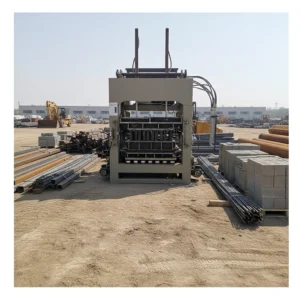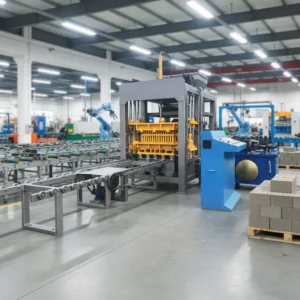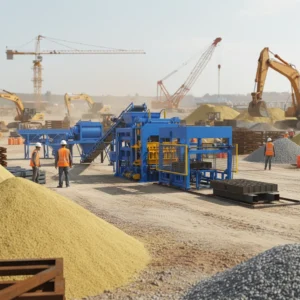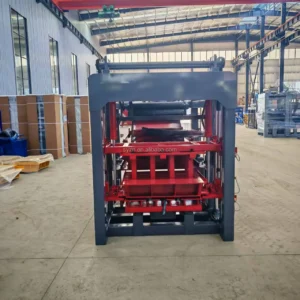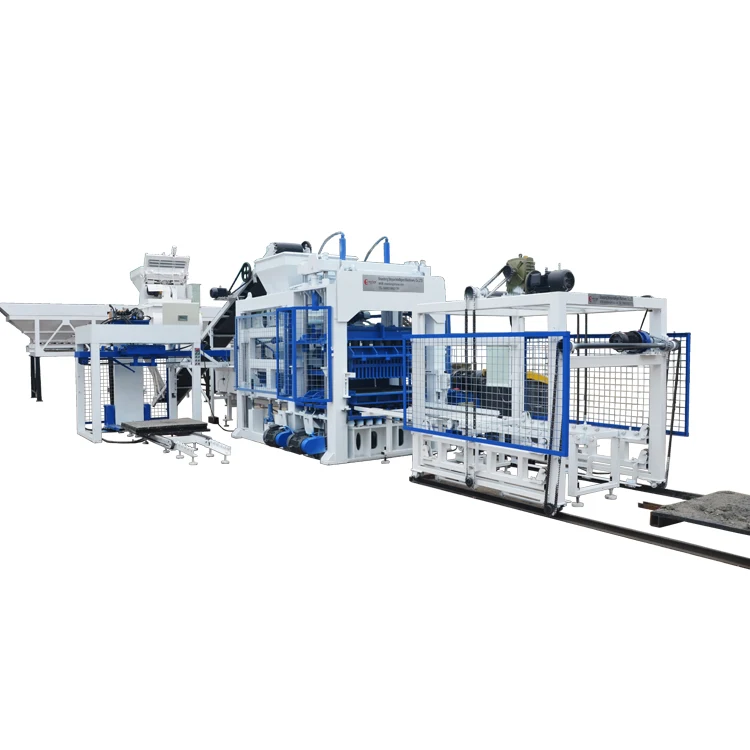
Matched Line Configuration — The QT10-15 cement block machine is specified alongside its raw material feeding, mixing, pallet handling, and stacking stations so that no single station creates a bottleneck during continuous production.
Technical Specifications
| Parameter | Value |
|---|---|
| Product Type | Cement Block Making Machine |
| Model | QT10-15 |
| Control System | PLC control cabinet |
| Hydraulic System | Independent integrated hydraulic station |
| Vibration Mode | Vertical station mode resonance, automatic FM-AM |
| Mould Change System | Simple replacement for multi-format production |
| Cycle Time (400×200×200mm hollow block) | 15–20s |
| Output Capacity (400×200×200mm hollow block, 10 pcs/mould) | 1,800–2,400 pcs/hour; 14,400–19,200 pcs/8hr shift |
| Cycle Time (400×150×200mm hollow block) | 15–20s |
| Output Capacity (400×150×200mm hollow block, 12 pcs/mould) | 2,160–2,880 pcs/hour; 17,280–23,040 pcs/8hr shift |
| Cycle Time (240×115×53mm solid brick) | 15–20s |
| Output Capacity (240×115×53mm solid brick, 62 pcs/mould) | 8,928–11,160 pcs/hour; 71,424–89,280 pcs/8hr shift |
| Cycle Time (200×100×60mm paving block) | 20–25s |
| Output Capacity (200×100×60mm paving block, 27 pcs/mould) | 5,184–6,480 pcs/hour; 41,472–51,840 pcs/8hr shift |
| Cycle Time (225×112.5×60mm paving block) | 20–25s |
| Output Capacity (225×112.5×60mm paving block, 24 pcs/mould) | 4,032–5,040 pcs/hour; 32,256–40,320 pcs/8hr shift |
| Core Line Components | Pallet feed machine, block making machine, storage hopper, conveyor, hydraulic unit, PLC control cabinet |
| Assembly State | Factory-assembled, dismantled for container shipment |
| Warranty | 1 year for the whole machine (excluding spare parts) |
| Payment Terms | 30% T/T deposit, 70% balance before delivery |
| Voltage & Frequency | Basis to be confirmed against buyer’s local standard |
| Overall Dimensions | Basis to be confirmed against manufacturer catalog |
| Net Weight | Basis to be confirmed against manufacturer catalog |
| Pallet Size | Basis to be confirmed against manufacturer catalog |
| Hydraulic Pressure | Basis to be confirmed against manufacturer catalog |
| Vibration Force | Basis to be confirmed against manufacturer catalog |
| PLC Display Language | Basis to be confirmed against manufacturer catalog |
| Certification Scope | CE (referenced in company documentation scope, verify per unit) |
Application Suitability
| Application | Material or Output |
|---|---|
| Hollow block production | Crushed stone, sand, cement, and water mix for 400×200×200mm and 400×150×200mm formats |
| Solid brick production | Fine aggregate and cement blend for 240×115×53mm standard bricks |
| Paving block production | Graded aggregate with pigment and cement for 200×100×60mm and 225×112.5×60mm interlocking pavers |
| Multicellular brick production | Lightweight aggregate or standard mix for partition and non-load-bearing wall units |
| On-site construction block making | Local aggregate sourced near project sites for development and housing contractors |
Why "Pieces Per Hour" Means Nothing Without the Supporting Line
A press rated at 2,400 hollow blocks per hour is only as productive as the slowest station feeding it.
Quoted cycle times for the QT10-15 block machine production line assume every upstream and downstream station keeps pace. In practice, I have watched a mixer that could not deliver a fresh batch every 20 seconds force the press into idle mode, cutting real shift output in half. The conveyor speed, pallet feed rate, and stacking rhythm must all match the press cycle, or the buyer pays for capacity that never materializes [NEED_CITE: line balancing principles in concrete block manufacturing]. When the line is specified as a matched system rather than assembled from separate suppliers, these timing conflicts are resolved before the equipment ships.
How Each Station Connects to the Press Cycle
The storage hopper feeds raw material into the mixer at a rate calculated from the QT10-15 block machine production line cycle time and mould cavity count. A ten-cavity hollow block mould completing a cycle every 15 to 20 seconds demands a continuous supply of consistent mix, meaning the mixer discharge and conveyor transfer must overlap without gaps. If the conveyor runs too slowly, the press waits; too fast, and material builds up and segregates before reaching the hopper.
Pallet Flow and Curing Rack Synchronization
The pallet feed machine delivers boards to the press at the exact moment the previous mould cycle completes. Once blocks are pressed, the pallet carrying them moves downstream toward the stacking and curing area. The curing rack capacity and forklift rotation must absorb the continuous pallet flow; otherwise, pallets queue on the floor and the press stops [NEED_CITE: pallet circulation and curing logistics in block plants]. Specifying pallet size against the buyer’s existing rack dimensions and forklift fork width prevents costly retrofits after commissioning.
Interpreting Vibration, Pressure, and Mould Variables
The independent integrated hydraulic station sits apart from the main frame, isolating valves and seals from the intense vibration generated during each pressing cycle. This separation extends component life across long shifts. The vertical station mode resonance system uses automatic FM-AM adjustment, meaning the vibration frequency shifts depending on which mould is mounted — a dense paving block mould requires a different resonance profile than a lightweight hollow block mould. Hydraulic pressure and vibration force together determine the final block density and compressive strength; if either value is set without reference to the buyer’s local aggregate and mix design, blocks may crack during curing or fail load tests. The PLC control cabinet coordinates these variables and logs cycle parameters, giving operators a repeatable baseline when switching between formats.
The Hidden Cost of a Mismatched Line Layout
When supporting equipment is sourced separately and bolted on after the press arrives, timing mismatches surface during the first production run. A conveyor that was not sized for the QT10-15 cycle rate will starve the hopper, and a pallet feeder running on a different control logic will misalign boards, causing jammed pallets and cracked green blocks [NEED_CITE: integration issues in retrofitted block production lines]. Downtime spent re-engineering connections and rewriting PLC handshake signals erases any savings from buying components piecemeal. The longer the line runs mismatched, the more waste accumulates in raw material and labour.
Why Sourcing the Full Line Together Matters
Block machinery is the single focus here, so the QT10-15 press, moulds, pallets, and handling equipment are specified as one matched system. Configuration is set against the buyer’s actual mix design and local aggregate, not a catalogue default. Mould design covers the formats the buyer’s market actually sells, with custom drawings available for non-standard shapes. Automation level is selectable — a buyer can begin with semi-automatic pallet handling and add automatic stacking later as volume grows. Installation and commissioning include operator training so the crew understands how each station’s timing affects the next.
Documentation & Verification
- Line layout and capacity calculation document stating the block format assumed for each output figure
- Machine specification sheet with hydraulic pressure and vibration force confirmed against the buyer’s mix design
- Mould drawing and format list with pallet specification matched to curing rack and forklift dimensions
- Voltage, frequency, and PLC display language confirmation recorded before production begins
- Factory test record documenting cycle times and block dimensions across all ordered mould formats
- Packing photographs and customs documentation support for container shipment
Installation, Commissioning & Support
- Foundation plan specifies load-bearing requirements for the QT10-15 hydraulic unit vibration isolation pads
- Dedicated electrical circuit sized for the PLC control cabinet and independent hydraulic station power draw
- Machine arrives dismantled for container loading and is reassembled on-site by the commissioning team
- First-run parameter tuning matches vibration frequency and hydraulic pressure to the buyer’s local aggregate
- Operator training covers mould change procedure and PLC fault-code interpretation across all formats
- Wear parts list identifies hydraulic seals and vibration springs with recommended replacement intervals
What to Prepare Before Requesting a Quote
To configure a QT10-15 block machine production line that matches your actual production conditions, share your target block formats and required daily output per format. Include details on locally available raw materials — aggregate type, grading, and cement supply — so the hydraulic and vibration settings can be calculated correctly. Confirm your site voltage, frequency, and preferred PLC display language, along with the pallet size and curing rack layout already in use or planned.
Frequently Asked Questions
Q: How is daily output calculated per block format, and what cycle time does each format require?
A: Output figures are derived from the mould cavity count and the cycle time range for each specific block format. For the 400×200×200mm hollow block with 10 cavities, the cycle runs 15 to 20 seconds, yielding 14,400 to 19,200 pieces across an eight-hour shift. Other formats have their own cavity counts and cycle ranges, all stated in the specification sheet so the buyer can plan against the format they will actually produce.
Q: Which supporting equipment stations are included in the line quotation, and which are optional?
A: The standard line scope covers the pallet feed machine, block making machine, storage hopper, conveyor, hydraulic unit, and PLC control cabinet. Additional stations such as automatic stacking, curing rack handling, and cubing systems are configured based on the buyer’s automation preference and can be added during the initial order or as a later expansion.
Q: How must the mixer output and conveyor speed match the press cycle to avoid idle press time?
A: The mixer must discharge a full batch within the interval between consecutive press cycles so the storage hopper never runs empty. Conveyor speed is set to transfer that batch without material buildup or segregation. Both values are calculated from the QT10-15 cycle time and the mould cavity volume to maintain continuous press operation.
Q: What pallet size and material does the QT10-15 require, and how does it relate to curing specs?
A: Pallet dimensions are selected to match the mould footprint and the buyer’s existing curing rack spacing and forklift fork width. Material choice — typically steel or bamboo composite — depends on the block weight and the curing environment humidity. Confirming these details before production ensures pallets integrate with downstream handling without modification.
Q: What voltage and PLC language confirmation is needed before the line ships?
A: The buyer must confirm local supply voltage, frequency, and phase configuration so motors and the PLC control cabinet are wired correctly. The PLC display language is set to the operator’s preference before the factory test. Both items are documented in writing before production begins to prevent commissioning delays upon arrival.