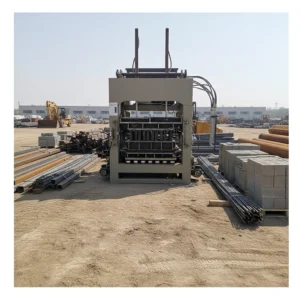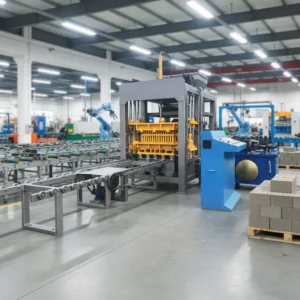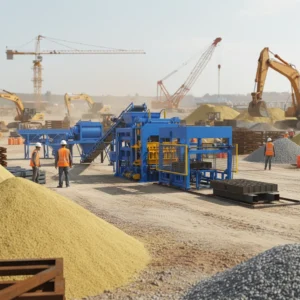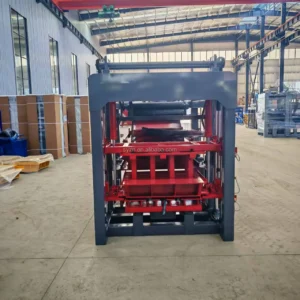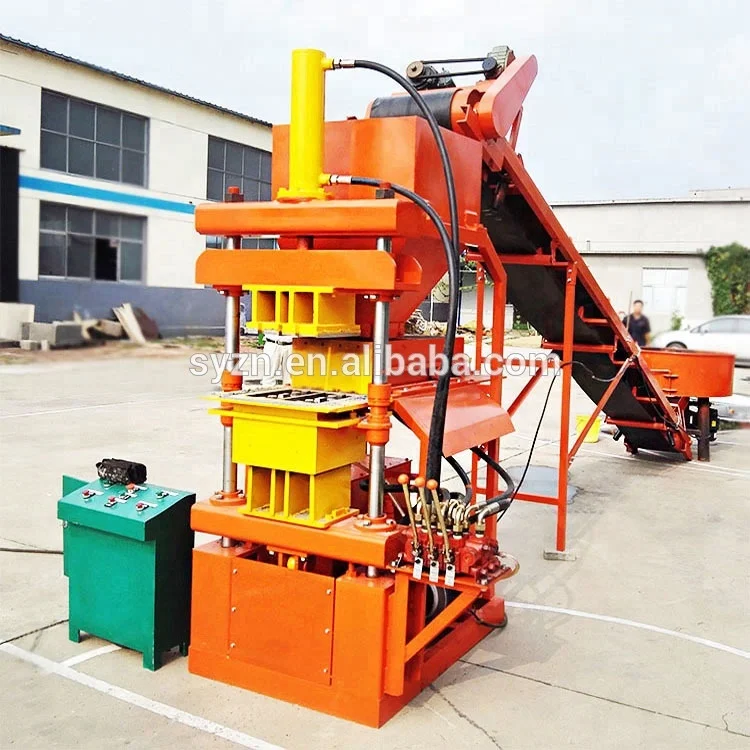
Balanced Line Throughput — every upstream feeder, mixer, pallet return, and stacking unit is matched to the LY2-10 press cycle so no station waits on another.
Technical Specifications
| Parameter | Value |
|---|---|
| Model | LY2-10 |
| Product Type | Clay Block Making Machine |
| Machine Power | 7.5 kW |
| Molding Cycle | 10 s |
| Output Capacity | 6000 pcs/8h (basis not stated in source — confirm block format and material) |
| Output per Hour | 750 pcs/h (basis not stated in source — confirm block format and material) |
| Mould Format Options | 300×150×100 mm, 250×125×75 mm, 230×220×115 mm |
| Automation Level | Semi-automatic |
| Raw Materials | Clay, soil, earth, mud, concrete, cement, fly ash |
| Overall Dimensions | 1300×1800×2400 mm |
| Voltage & Frequency | Configurable to site supply (basis to be confirmed) |
| Pallet Size | To be matched with curing area layout |
| Hydraulic Pressure | To be confirmed per buyer specification |
| Vibration Force | To be confirmed per buyer specification |
Application Suitability
| Application | Material or Output |
|---|---|
| Interlocking clay brick production | Locally sourced clay and soil mixes |
| Cement block manufacturing | Cement, sand, and fly ash blends |
| Small-scale brick plant operations | Mud and earth with minimal cement addition |
| Contractor on-site block making | Variable aggregate from project excavation |
What "6000 Pieces Per Shift" Actually Means for Your Line Layout
A peak press cycle tells you nothing about daily output unless the entire clay block making machine production line is specified around a confirmed block format.
When I sourced equipment for contractors across the Gulf, the most expensive mistake was never the press itself — it was discovering after arrival that the pallet return took fifteen seconds while the press cycled in ten. That mismatch meant the press sat idle one-third of the time, and the rated capacity was pure fiction. The LY2-10 completes a molding cycle in ten seconds, but that number only matters if the raw material feeder, the mixer discharge rate, the pallet feed mechanism, and the curing rack handling are all tuned to keep that same rhythm. [NEED_CITE: production line balancing principles for concrete and clay block plants]
Matching the Feeder and Mixer to a Ten-Second Press Rhythm
The LY2-10 requires a consistent material charge every ten seconds to maintain its molding cycle. A pan mixer or twin-shaft mixer must discharge a batch volume that aligns with the mould cavity fill requirement, and the raw material feeder must meter clay, soil, or fly ash at a rate that prevents the mixer from running dry. When any upstream station falls behind, the clay block making machine production line stalls at the most expensive point — the press.
Pallet Circulation and Curing Rack Coordination
Semi-automatic operation means pallets are loaded and unloaded with operator involvement, but the circulation path still needs definition. The pallet size must match the curing area dimensions and the forklift the buyer already operates. If pallets are too large for the existing rack spacing, or too heavy for the available handling equipment, cured blocks pile up on the workshop floor and output drops to whatever manual labor can move. [NEED_CITE: pallet handling standards for block curing yards]
Reading the Specifications That Actually Matter
The 7.5 kW motor rating defines the electrical load the press station places on your site transformer, and it must be factored into the total connected load alongside the mixer, feeder motors, and any hydraulic power pack. The three listed mould formats — 300×150×100 mm, 250×125×75 mm, and 230×220×115 mm — each produce one piece per cycle, so switching between them changes the volumetric output of the line significantly even though the cycle time remains ten seconds. The semi-automatic control level means the operator initiates each press stroke, which keeps the electrical and hydraulic system simpler but places the pacing responsibility on trained staff. Raw material range covers clay, soil, earth, mud, concrete, cement, and fly ash, meaning the feeder and mixer must be configured for the specific moisture content and particle size of whatever the buyer sources locally.
The Hidden Cost of an Incomplete Line Quotation
A quotation that covers only the LY2-10 press and omits pallets, the pallet feeder, the stacking station, and curing rack handling leaves the buyer to fill those gaps with manual labor and improvised equipment. I watched a plant in the Emirates lose an entire shift’s output because the stacking was done by hand and the curing racks were not included in the scope — blocks cracked before they reached the yard. [NEED_CITE: common scope gaps in block plant equipment quotations]
Why Procurement Here Covers the Full Line
The LY2-10 is specified as a press station within a coordinated clay block making machine production line, not as a standalone unit. Mould design and supply cover the formats the buyer’s market actually sells, including custom drawings for interlocking profiles. Automation level is selectable so a buyer can begin with the semi-automatic LY2-10 and add automatic pallet feeding and stacking later. Configuration is set against the buyer’s actual mix design and local aggregate rather than a catalogue default. Installation includes operator training so the ten-second cycle is achieved from the first production day.
Documentation & Verification
- Line layout drawing showing every station from feeder to curing rack with cycle times annotated
- Capacity calculation sheet stating the exact block format and mix assumed for the 750 pcs/h figure
- Mould drawings for each of the three interlocking formats with wear part lists
- Hydraulic and electrical schematics with voltage and frequency confirmed to site supply
- Factory test record run on the buyer’s specified mould format before dispatch
Installation, Commissioning & Support
- Foundation plan sized to the 1300×1800 mm footprint with vibration isolation requirements
- Electrical connection matching the 7.5 kW load with dedicated circuit breaker specification
- Machine delivered in dismantled state with reassembly sequence and bolt torque schedule
- First-run commissioning with mould change drill practiced across all three format sizes
- Operator training covering semi-automatic press stroke initiation and mould alignment checks
- Wear parts list identifying hydraulic seals and vibration mounts with reorder intervals
Preparing a Complete Line Inquiry
To scope the full clay block making machine production line around the LY2-10, we need your target block format from the available mould options, the daily output you must deliver, and the specific raw material you plan to source locally. Share your site voltage and frequency, the dimensions of your curing area, and the forklift or handling equipment already on site so pallet and stacking stations are matched correctly from the start.
Frequently Asked Questions
Q: How is the line capacity verified per block format rather than quoted as a single peak number?
A: The capacity calculation states the exact mould format, material mix, and block thickness assumed. Since the LY2-10 produces one piece per cycle across all three listed formats, switching from a 300×150×100 mm brick to a 230×220×115 mm brick changes the volumetric output even though the ten-second cycle remains constant. Every station in the line is then balanced to that specific format’s material demand.
Q: Which upstream and downstream stations are included so the press is never left waiting?
A: The line scope covers the raw material feeder, the mixer, the pallet feed mechanism, the LY2-10 press station, and the curing rack handling system. Each station’s cycle time is calculated to match the ten-second molding rhythm so material arrives before the press needs it and pallets return before the next stroke.
Q: How are pallet size, material, and circulation matched to the buyer’s existing curing area?
A: We confirm the dimensions of your curing racks, the spacing between them, and the forklift capacity available on site before specifying pallets. The pallet material — bamboo, PVC, or steel — is selected based on the local climate and the curing duration your mix design requires.
Q: What voltage, frequency, and control language options are confirmed before shipment?
A: Site voltage and frequency are confirmed during the quotation stage and written into the production order. The 7.5 kW motor is wound to match, and any control panel labels and operator instructions are produced in the buyer’s specified language before the machine leaves the factory.
Q: How does the line accommodate the buyer’s local raw material rather than a catalogue default?
A: The feeder and mixer are configured after reviewing the buyer’s actual clay, soil, or fly ash sample, including moisture content and particle size distribution. The mix design is validated against the target block strength requirement so the LY2-10 receives material it can compress consistently.