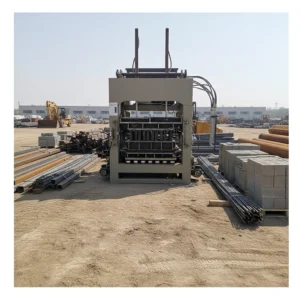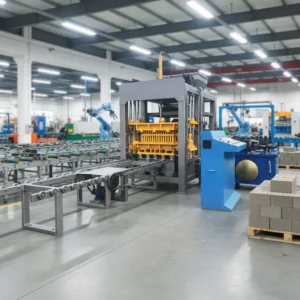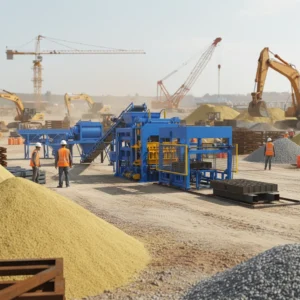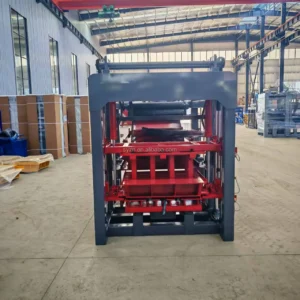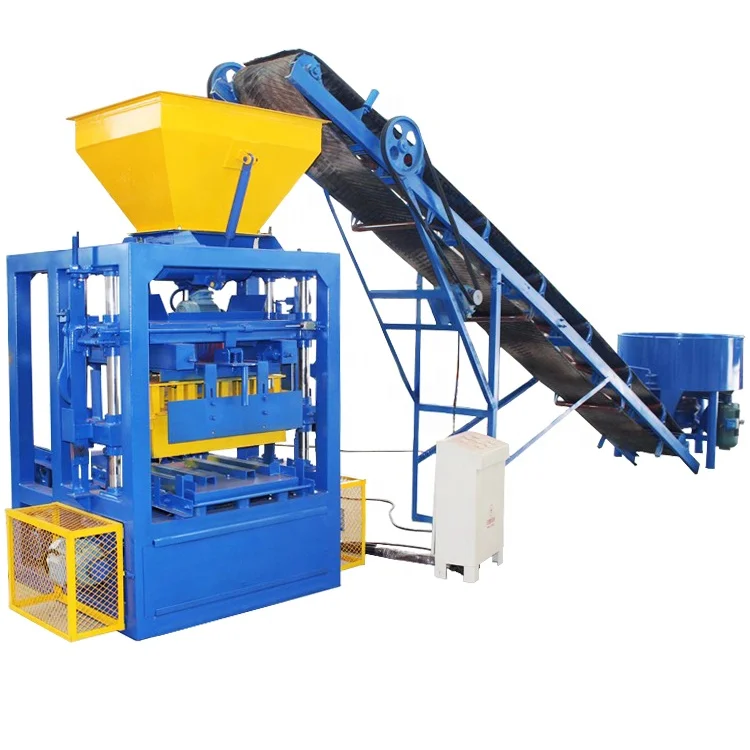
Matched Line Integration — The QTJ4-26 is specified with its JQ350 mixer, pallet size and feeding stations as one balanced system, so no single station dictates the line’s real output.
Technical Specifications
| Parameter | Value |
|---|---|
| Model | QTJ4-26 |
| Product Type | Concrete Block Making Machine |
| Overall Dimensions (L×W×H) | 2060×1730×2580 mm |
| Moulding Cycle | 26 s |
| Vibration Frequency | 4200 r/min |
| Exciting Power (Vibration Force) | 35.5 kN |
| Rated Power | 14.25 kW |
| Mixer Model | JQ350 |
| Pallet Size | 850×450×20 mm |
| Net Weight | 1800 kg |
| Guide System | Four guide pillars with automatic mould movement |
| Vibration Type | Dual vibrating motors under mould, vertical direct vibration with upper mould pressing |
| Applied Products | Concrete hollow blocks (8 inch, 6 inch), solid bricks |
| Raw Materials | Crushed stones, sand, cement, dust, fly ash |
| Output Capacity (Hollow Block 390×190×190 mm) | 480 pcs/h, 3800 pcs/8h (4 pcs/mould) |
| Output Capacity (Hollow Block 400×150×200 mm) | 600 pcs/h, 4800 pcs/8h (5 pcs/mould) |
| Output Capacity (Solid Brick 240×115×53 mm) | 2100 pcs/h, 17000 pcs/8h (18 pcs/mould) |
Application Suitability
| Application | Material or Output |
|---|---|
| Small to medium block production plants | Crushed stone, sand, cement and fly ash mixes for hollow and solid formats |
| On-site construction block manufacturing | Mobile setup producing 8-inch and 6-inch hollow blocks from locally available aggregate |
| Interlocking brick and solid brick runs | Solid brick format at 2100 pcs/h based on 240×115×53 mm, 18 pcs per mould |
| Building project contractors adding formats | Quick mould change between hollow block and solid brick on the same pallet size |
What "480 Blocks per Hour" Leaves Out About Your Line
Quoted capacity means nothing if the mixer cannot feed the press on time.
I have stood on shop floors where a block machine sat idle for ten seconds every cycle, waiting for the mixer to discharge. The press was rated for a solid throughput, but the actual concrete block making machine production line delivered far less because the JQ350 mixer output was never matched to the 26-second moulding cycle. When upstream material feeding falls behind, the press starves, pallets move through empty, and the curing rack fills at half the planned rate. Buyers look at the hourly number on the quotation and assume the entire line will sustain it [NEED_CITE: line synchronization principles in block production].
Mixer-to-Press Timing in a Complete Block Setup
The JQ350 mixer is paired with the QTJ4-26 so that each batch discharges in time for the next moulding cycle. A 26-second cycle leaves a narrow window for material delivery, and any delay at the mixer cascades through the entire concrete block making machine production line. The feeding station must move the mixed material from the mixer outlet to the press hopper without bottleneck, keeping the hopper level consistent across consecutive cycles.
Pallet Sizing and Downstream Handling Flow
The 850×450×20 mm pallet is not just a press accessory — it defines the curing rack spacing, the forklift fork width and the stacking pattern in the yard. If the pallet size does not match the curing area already on site, the buyer ends up re-racking blocks by hand or purchasing new racks. Specifying pallet dimensions early means the entire downstream workflow, from press discharge to cured product storage, is planned around one consistent unit [NEED_CITE: pallet handling standards in concrete product manufacturing].
Reading the Specs That Actually Shape Daily Output
The 35.5 kN vibration force working with dual vibrating motors under the mould determines how densely the concrete is compacted. Higher vibration frequency at 4200 r/min shortens the time needed for full compaction, but only if the hydraulic pressure from the upper mould pressing is sufficient to hold the mix in place. The four guide pillars with automatic mould movement keep alignment consistent across cycles, which directly affects block dimensional accuracy. Rated power of 14.25 kW covers both vibration motors and the mould movement mechanism, meaning the electrical supply must sustain that draw continuously without voltage drop — a factor often overlooked until commissioning day arrives.
When Supporting Equipment Gets Quoted Separately
A buyer receives a quotation for the press alone and assumes the mixer, pallet feeder and stacking stations are included. When the machine arrives, the line is incomplete, and sourcing compatible supporting equipment locally introduces mismatches in cycle timing and pallet size. The result is a concrete block making machine production line that runs below its rated capacity because the stations were never specified as one system [NEED_CITE: common quotation gaps in block machinery procurement].
Why Specifying the Whole Line Matters Here
Block machinery is our single focus, so the press, mould, pallet and handling equipment are specified together rather than assembled from separate suppliers. The JQ350 mixer is selected to match the QTJ4-26 cycle, not pulled from a generic catalogue. Pallet size is confirmed against the buyer’s existing curing area and forklift before production begins. Configuration is set against the buyer’s actual mix design and local aggregate, ensuring the vibration force and pressure produce consistent block strength. Mould design covers the formats the buyer’s market actually sells, with custom drawings available.
Documentation & Verification
- Line layout showing station spacing and material flow for the QTJ4-26 setup
- Capacity calculation stating block format and mould cavity count per figure
- Pallet specification matched to buyer’s curing rack and forklift dimensions
- Voltage and PLC display language confirmed before production starts
- Factory test record run on buyer’s specified block format and mix
- Hydraulic and electrical schematic for on-site troubleshooting
Installation, Commissioning & Support
- Foundation must support 1800 kg net weight plus dynamic vibration load
- Dedicated electrical circuit rated for 14.25 kW continuous draw at confirmed voltage
- Machine arrives with mould and guide pillars pre-assembled for faster setup
- First run includes cycle timing verification between mixer discharge and press
- Operator training covers mould change procedure and pallet feed alignment
- Wear parts list covers vibration motor bearings and guide pillar bushings
What to Prepare Before Requesting a Quote
Share the block formats your market demands, the daily volume you need per format, and the raw materials you can source locally. Tell us your site voltage and frequency, the curing space available, and what forklift or handling equipment you already operate. This lets us configure the concrete block making machine production line around your actual conditions rather than a default layout.
Frequently Asked Questions
Q: How is daily output verified per block format on the QTJ4-26?
A: Each output figure is tied to a specific block size and mould cavity count. For example, 480 pcs/h applies to 390×190×190 mm hollow blocks with a 4-cavity mould. If your main product is a different format, we calculate the capacity for that format and provide it in the proposal before you commit.
Q: Which supporting equipment comes with the QTJ4-26 quotation?
A: The JQ350 mixer is specified as part of the line. Pallet feeding, stacking and curing rack handling can be included or quoted separately depending on your automation preference. We confirm which stations are in scope before the quotation is issued so there are no surprises on arrival.
Q: How must the mixer cycle match the press on this line?
A: The JQ350 must discharge a full batch within the 26-second moulding cycle so the press hopper never runs empty. If the mixer takes longer, the press waits and real throughput drops. We calculate batch size and discharge timing together during the layout stage.
Q: What pallet size is recommended for my existing curing area?
A: The QTJ4-26 uses 850×450×20 mm pallets. We confirm this size against your curing rack spacing and forklift fork dimensions before production. If your existing setup uses a different pallet, we discuss whether a press adjustment or a rack modification is the more practical path.